Key Takeaway
Training breaks your body down. Recovery builds it back stronger. An athlete recovery peptide stack can accelerate the recovery process, helping you train harder, more frequently, and with less downtime from injuries.
Training breaks your body down. Recovery builds it back stronger. An athlete recovery peptide stack can accelerate the recovery process, helping you train harder, more frequently, and with less downtime from injuries.
Key Takeaways: - The Athlete Recovery Stack - Timing Around Training - Recovery Benefits and Timeline - Important: Competitive Athletes
This guide covers the most effective peptide combinations for athletic recovery, practical protocols, and important considerations for competitive athletes.
The Athlete Recovery Stack
The most effective recovery stack combines healing peptides with GH improvement.
Core stack: - BPC-157: 250-500mcg subcutaneous, twice daily - TB-500: 2.5mg subcutaneous, twice weekly (loading), then weekly (maintenance) - CJC-1295 (100mcg) + Ipamorelin (200mcg) at bedtime
BPC-157 handles localized tissue repair. TB-500 provides systemic healing and anti-inflammatory support. The CJC-1295/Ipamorelin combination optimizes GH for recovery, sleep, and body composition.
Free Download: Wolverine Stack Card Athlete-specific protocol card with training-day timing, recovery metrics, and progressive return guidelines. Get yours free) we'll email it to you instantly. [Download Your Free Stack Card]
Timing Around Training
Pre-training: Some athletes inject BPC-157 30-60 minutes before training to support tissue protection during the session. This is optional and not universally recommended.
Post-training: CJC-1295/Ipamorelin can be injected post-workout (fasted) to apply the exercise-induced GH window. Wait at least 2 hours after your last meal.
Bedtime: CJC-1295/Ipamorelin at bedtime amplifies the nighttime GH surge for overnight recovery. This is the most common timing approach.
TB-500: Inject on non-training days when possible, allowing the peptide to work during rest periods. Twice weekly on rest days during loading phase.
BPC-157: Daily regardless of training schedule. Morning and evening dosing provides consistent therapeutic levels.
Track your training load, recovery metrics, and injection schedule in the .
Recovery Benefits and Timeline
Week 1-2: Reduced post-training soreness. Faster recovery between sessions. Improved sleep quality from GH peptides.
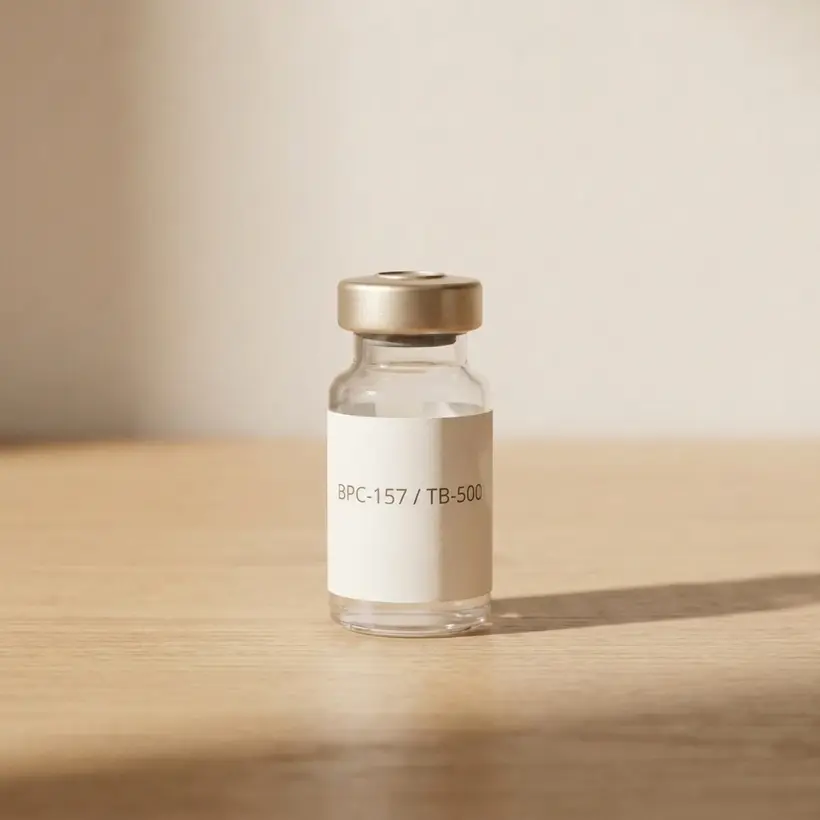
From the FormBlends catalog
BPC-157 / TB-500 Blend
The ultimate recovery stack in one vial · From $249/mo · compounded by a licensed 503A pharmacy, dispensed only after provider review.
View BPC-157 / TB-500 Blend →Week 2-4: Active injuries begin improving. Training tolerance increases. Energy levels stabilize or improve.
Week 4-8: Significant healing progress on existing injuries. Ability to increase training volume or intensity. Body composition improvements from improved GH.
Month 2-3: Full recovery stack benefits established. Reduced injury frequency. Better performance markers.
Your can monitor your response and adjust the protocol. Use the for accurate peptide preparation.
Important: Competitive Athletes
WADA-banned substances: TB-500 (Thymosin Beta-4) and GH peptides (CJC-1295, Ipamorelin) are prohibited by WADA. BPC-157's status varies by sport and organization. If you compete in tested sports, verify every compound with your sport's anti-doping authority before use.
Non-competitive athletes: These restrictions don't apply to recreational athletes, weekend warriors, or fitness enthusiasts not subject to anti-doping testing.
Read about and the for more detail.
Sport-Specific Protocol Modifications
Different sports create different stress patterns on the body. Your recovery stack should match the specific demands of your training.
Endurance athletes (runners, cyclists, triathletes): - BPC-157: Focus on tendon and joint protection. Inject near common overuse injury sites (Achilles, IT band, patellar tendon) when relevant - TB-500: Standard protocol. Endurance athletes benefit from TB-500's systemic anti-inflammatory effects, since high-volume training creates widespread low-grade inflammation - CJC-1295/Ipamorelin: Prioritize bedtime dosing. Endurance athletes need overnight recovery more than post-workout GH pulses because training sessions are long and glycogen-depleting - Additional consideration: Monitor iron and ferritin levels more frequently. GH peptides don't replace iron, and endurance athletes are prone to iron depletion through foot-strike hemolysis and sweat losses
Strength and power athletes (weightlifters, powerlifters, sprinters): - BPC-157: Higher doses (500mcg twice daily) during heavy training blocks. Inject near joints under the most load (shoulders, elbows, knees) - TB-500: Standard loading, but consider extending the loading phase to 6 weeks during peak training periods - CJC-1295/Ipamorelin: Post-workout dosing on training days (fasted) to capitalize on the exercise-induced GH amplification effect. Bedtime dosing on rest days - Additional consideration: Track strength metrics weekly. If lifts stall or decline despite adequate nutrition and sleep, the recovery protocol may need adjustment
Combat and contact sport athletes (MMA, boxing, rugby, football): - BPC-157: 500mcg twice daily is standard due to the high tissue damage from contact training. Rotate injection sites based on which areas took the most impact during recent sessions - TB-500: Extended loading (2.5mg twice weekly for 6-8 weeks) given the repetitive trauma exposure - CJC-1295/Ipamorelin: Standard bedtime protocol. Sleep quality is often disrupted in contact sport athletes due to accumulated head impacts and pain. GH peptides can help restore restorative sleep patterns - Additional consideration: Brain health monitoring. If you participate in contact sports, regular cognitive assessments alongside your peptide protocol are worthwhile. Report any new headaches, concentration problems, or mood changes to your provider immediately
Recreational athletes and weekend warriors: - BPC-157: 250mcg twice daily is typically sufficient. Inject near the body part that takes the most stress from your primary activity - TB-500: May not be necessary unless recovering from a specific injury. Start with BPC-157 alone and add TB-500 only if healing support is needed - CJC-1295/Ipamorelin: Standard bedtime protocol. Focus on sleep quality improvement as the primary benefit - Additional consideration: Recreational athletes often have less controlled training schedules. Consistency with injections matters more than perfect training-day timing improvement
Recovery Metrics Every Athlete Should Track
You can't improve recovery by feel alone. Quantifying your recovery status gives you and your provider the data needed to adjust your protocol and your training.
Daily recovery indicators: - Heart rate variability (HRV): Measure first thing in the morning before getting out of bed. Higher HRV indicates better autonomic recovery. A declining HRV trend over 3-5 days signals accumulated fatigue. Many athletes use HRV to decide training intensity each day - Resting heart rate: Track alongside HRV. An improved morning resting heart rate (5+ beats above your baseline) suggests incomplete recovery. GH peptides should help bring this number down over your first 2-4 weeks on protocol - Subjective readiness score (1-10): Ask yourself "how ready do I feel to train today?" before checking any data. Log this daily. Over time, correlate your subjective score with objective metrics to calibrate your self-awareness
Weekly performance markers: - Training volume tolerance: Can you complete your planned training volume without excessive fatigue? If you're cutting sessions short more than once per week, recovery isn't keeping up with demand - Strength baselines: Pick 2-3 key lifts and test them weekly under standardized conditions. Improving or stable numbers indicate adequate recovery. Declining numbers despite consistent training signal recovery deficit - Muscle soreness duration: DOMS (delayed-onset muscle soreness) that resolves within 24-48 hours is normal. DOMS lasting beyond 72 hours suggests your recovery protocol or training load needs adjustment
Monthly assessments: - Body composition (DEXA, InBody, or consistent caliper measurements): Lean mass should be preserved or increasing. Fat mass should be stable or declining. Unfavorable shifts suggest recovery or nutrition issues - Joint range of motion: Compare to your baseline measurements. Loss of range of motion indicates accumulated inflammation or tissue tightness - Injury status: Document any new aches, pains, or movement compensations. Early detection prevents minor issues from becoming major injuries
Bring all tracking data to your provider check-ins. Your uses this data to fine-tune your protocol alongside lab results.
Frequently Asked Questions
Can I use this stack during a competition season?
If you aren't subject to anti-doping testing, yes. If you're tested, most components are prohibited. For tested athletes, work with your provider to find compliant alternatives.
How long should I run the recovery stack?
Standard protocols run 8-12 weeks. Athletes with chronic injuries may run longer under provider supervision. Cycling (3 months on, 1 month off) is recommended for the GH peptide component.
Will this stack improve my athletic performance?
The stack supports recovery, which allows you to train more effectively. Better recovery leads to better performance over time. The peptides don't directly enhance performance like stimulants or anabolic agents.
Can I combine this with creatine and protein supplements?
Yes. Standard sports supplements like creatine, protein powder, and electrolytes are compatible with peptide protocols. No known interactions exist.
Should I adjust my nutrition while on the recovery stack?
Protein intake becomes more important. Target 0.8-1.2g per pound of bodyweight daily to give your body the raw materials for tissue repair. GH peptides support muscle protein synthesis, but they need adequate amino acids to work with. Caloric intake should match your training demands. Don't cut calories aggressively while running a recovery protocol.
Start Your Progress Today
Every transformation starts with a single step. Talk to a licensed FormBlends provider about whether this approach is right for you, consultations are free and confidential.
Medical References
- Goldstein AL, Hannappel E, Sosne G, Kleinman HK. Thymosin beta4: a multi-functional regenerative peptide. Basic properties and clinical applications. Expert Opin Biol Ther. 2012;12(1):37-51. [PubMed | DOI]
Sources &. References
- Sikiric P, Hahm KB, Blagaic AB, et al. Stable Gastric Pentadecapeptide BPC 157, Robert's Cytoprotection, Adaptive Cytoprotection, and Therapeutic Effects. Curr Pharm Des. 2018;24(18):1990-2001. Doi:10.2174/1381612824666180515125918
- Chang CH, Tsai WC, Lin MS, et al. The promoting effect of pentadecapeptide BPC 157 on tendon healing involves tendon outgrowth, cell survival, and cell migration. J Appl Physiol. 2011;110(3):774-780. Doi:10.1152/japplphysiol.00945.2010
- Seiwerth S, Brcic L, Vuletic LB, et al. BPC 157 and blood vessels. Curr Pharm Des. 2014;20(7):1121-1125. Doi:10.2174/13816128113199990421
- Bock-Marquette I, Saxena A, White MD, et al. Thymosin beta4 activates integrin-linked kinase and promotes cardiac cell migration, survival and cardiac repair. Nature. 2004;432(7016):466-472. Doi:10.1038/nature03000
- Malinda KM, Sidhu GS, Mani H, et al. Thymosin beta4 accelerates wound healing. J Invest Dermatol. 1999;113(3):364-368. Doi:10.1046/j.1523-1747.1999.00708.x
- Ionescu M, Frohman LA. Pulsatile secretion of growth hormone (GH) persists during continuous stimulation by CJC-1295, a long-acting GH-releasing hormone analog. J Clin Endocrinol Metab. 2006;91(12):4792-4797. Doi:10.1210/jc.2006-1702
This content is provided for informational and educational purposes only. It isn't a substitute for professional medical advice, diagnosis, or treatment. Always seek the advice of a licensed healthcare provider with any questions about a medical condition or treatment plan.
Last updated: 2026-03-24
Ready when you are
BPC-157 / TB-500 Blend
The ultimate recovery stack in one vial · From $249/mo · compounded by a licensed 503A pharmacy, dispensed only after provider review.
View BPC-157 / TB-500 Blend →