
Trust Signals
Evidence standard: All efficacy claims graded by study type (RCT, cohort, animal, in vitro). No manufacturer-funded studies presented without disclosure. Conflicts: FormBlends formulates compounded peptide products; we note where this creates a potential bias.
Key Takeaways
- PT-141 (bremelanotide) is the only peptide for women with FDA approval for a sexual health indication; the RECONNECT phase 3 trials enrolled roughly 1,200 premenopausal women and showed a statistically significant increase in satisfying sexual events versus placebo.
- Topical cosmetic peptides such as palmitoyl tripeptide-1 and acetyl hexapeptide-3 have before-and-after data from small industry-sponsored studies, but no large independent RCTs match the retinoid evidence base.
- The biggest factor limiting topical peptide results is skin penetration: most unmodified peptides are too polar and too large to cross the stratum corneum at therapeutically relevant concentrations without lipid conjugation or a penetration enhancer.
- The Rhode Peptide Lip Treatment's visible before-and-after improvement is real, but most immediate plumping is driven by hyaluronic acid and emollient occlusion, not collagen remodeling, which takes weeks.
- A certificate of analysis showing HPLC purity above 98 percent and mass spectrometry sequence confirmation is the minimum quality signal for any research-grade or compounded peptide product.
Direct Answer: What Do Peptides Actually Do for Women Before and After Use?
Peptides women before and after: the honest summary is that results exist but vary sharply by peptide type, route, and timeframe. Sexual health peptides like PT-141 have FDA-level RCT proof. Cosmetic peptides have small real effects on skin texture and lip hydration that typically require 8 to 12 weeks to emerge. Neither category produces dramatic before-and-after transformations without appropriate expectations set.
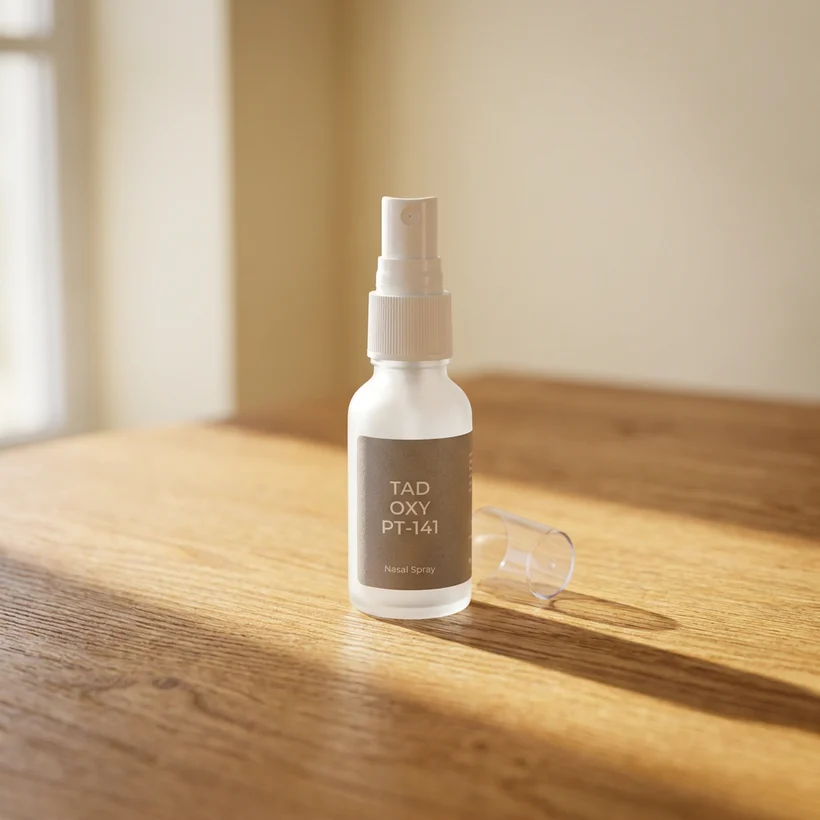
From the FormBlends catalog
Tadalafil/Oxytocin/PT-141 Nasal Spray
Nasal sexual wellness combination reviewed for provider-directed use · From $179/mo · compounded by a licensed 503A pharmacy, dispensed only after provider review.
View Tadalafil/Oxytocin/PT-141 Nasal Spray →Table of Contents
- Evidence Ledger: Which Peptides Have Real Before-and-After Data?
- Mechanism With Numbers: How Peptides Signal Change
- What Real Before-and-After Skin Results Look Like (and How Long They Take)
- Peptide Lip Treatment Before and After: Rhode and the Category Honestly Assessed
- Sexual Health Peptides: PT-141 Before-and-After Data in Women
- What Most Pages Get Wrong About Peptide Results
- Honest Head-to-Head: Peptides vs. Proven Alternatives
- Operational Label Literacy: How to Judge a Peptide Product
- FAQ
- Sources
- Footer Disclaimers
Evidence Ledger: Which Peptides Have Real Before-and-After Data?
| Peptide | Indication | Best Evidence Type | Effect Direction | Confidence |
|---|---|---|---|---|
| PT-141 / bremelanotide | Female hypoactive sexual desire disorder | 2 Phase 3 RCTs (RECONNECT program, roughly 1,200 women combined) | Significant increase in satisfying sexual events vs. placebo | High |
| Palmitoyl tripeptide-1 + tetrapeptide-7 (Matrixyl 3000) | Facial wrinkle depth, skin firmness | Industry-sponsored human studies, small N | Positive for wrinkle depth reduction vs. vehicle | Moderate (low independence) |
| Acetyl hexapeptide-3 (Argireline) | Periorbital wrinkle reduction | Small human studies, some split-face designs | Modest positive vs. vehicle | Low to Moderate |
| Palmitoyl tripeptide-38 (Matrixyl Synthe'6) | Perioral lines, lip volume adjacent area | Manufacturer in vitro plus small human data | Positive directional | Low |
| Copper peptide GHK-Cu | Wound healing, skin remodeling | Human wound studies, some cosmetic studies | Positive for wound healing; cosmetic data thinner | Moderate for wound, Low for anti-aging cosmetic |
| Oligopeptide-1 (EGF) | Skin regeneration | Mostly in vitro and animal; some small human trials | Positive in controlled settings | Low for topical cosmetic use |
Mechanism With Numbers: How Peptides Signal Change
Peptides work primarily as signaling molecules, not structural building blocks. Palmitoyl tripeptide-1 (glycine-histidine-lysine with a palmitoyl chain) mimics a collagen fragment that the dermis interprets as collagen breakdown, upregulating TGF-beta and subsequent collagen I, III, and IV synthesis. GHK-Cu has been shown in cell culture and gene expression research to influence a broad range of biological pathways, including inflammation, antioxidant response, and tissue remodeling genes, though the full scale of this effect and its relevance to cosmetic concentrations in living skin remain incompletely characterized. Gene expression changes observed in vitro do not prove dermal collagen deposition in living skin at the low concentrations present in a typical cosmetic formulation.
PT-141 binds melanocortin receptor 4 (MC4R) in the central nervous system, activating hypothalamic pathways that modulate sexual arousal. Its half-life after subcutaneous injection is approximately 2.7 hours. Unlike topical peptides, it achieves meaningful systemic concentrations because it bypasses the stratum corneum entirely. This distinction between injectable and topical bioavailability is the single most important mechanistic fact this category of content routinely ignores.
What the mechanism does NOT prove: collagen synthesis in cell culture at micromolar peptide concentrations does not predict how much collagen is synthesized in the dermis of a living person when a product contains a small fraction of that peptide in an aqueous base that cannot penetrate the stratum corneum efficiently.
What Real Before-and-After Skin Results Look Like (and How Long They Take)
Realistic timelines from published cosmetic peptide studies:
- 4 weeks: Subjective improvements in hydration and skin feel are commonly reported, largely attributable to the moisturizing vehicle co-formulated with the peptide.
- 8 weeks: The earliest timepoint at which statistically significant reductions in wrinkle depth are reported in most Matrixyl-family studies. Effect sizes are typically modest, in the range of a 10 to 20 percent reduction in wrinkle depth by profilometry, in studies where such measurements are taken.
- 12 weeks: Maximum studied duration in most cosmetic trials. Results plateau for most women rather than continuing to compound.
Women with more photodamaged or thinner perimenopausal skin may see more visible change because baseline collagen deficit is greater. However, no large trial has stratified results by menopausal status for cosmetic peptides.
Peptide Lip Treatment Before and After: Rhode and the Category Honestly Assessed
The Rhode Peptide Lip Treatment contains peptides (the brand lists "peptide complex" without full INCI disclosure on some packaging, which is itself a label-literacy warning sign), along with hyaluronic acid, shea butter, and a vanilla fragrance base. Before-and-after images circulated on social media show genuine visible improvement in lip texture, hydration, and plumpness.
Breaking down what is causing what:
- Immediate effect (within minutes): Occlusive emollients (shea butter, similar waxes) physically fill in surface lip lines. Hyaluronic acid creates a surface hydration film. These effects are real and visible but temporary and not peptide-driven.
- Medium-term effect (weeks of daily use): If the peptide fraction is palmitoyl tripeptide-38 or a similar matrix-signaling peptide at a meaningful concentration, some contribution to perioral collagen signaling is biologically plausible. The evidence behind this specific claim is low confidence because Rhode has not published clinical data for this product, and lip skin has different barrier properties than facial skin.
Sexual Health Peptides: PT-141 Before-and-After Data in Women
PT-141 (bremelanotide) is the only peptide with robust controlled trial before-and-after data specifically for women's sexual health. The RECONNECT trials, two phase 3 randomized, double-blind, placebo-controlled studies, enrolled premenopausal women with hypoactive sexual desire disorder (HSDD). Combined enrollment was roughly 1,200 women. The primary endpoint was change in number of satisfying sexual events (SSEs) per month and change in distress score on a validated scale (FSDS-DAO).
Both trials showed statistically significant improvement in SSEs and distress versus placebo. The FDA approved bremelanotide as Vyleesi in June 2019 for this indication. The drug is administered as a subcutaneous auto-injector approximately 45 minutes before anticipated sexual activity, not taken daily. Nausea occurred in roughly 40 percent of study participants, and transient blood pressure increases were observed, which is why it carries a precaution in patients with cardiovascular risk.
Compounded PT-141 exists in the research market. It is not FDA-approved in that form and purity standards depend entirely on the compounding pharmacy's quality controls.
What Most Pages Get Wrong About Peptide Results
This is the section commodity pages omit.
Penetration is the bottleneck, not the peptide sequence. The stratum corneum is a lipid bilayer matrix designed to exclude water-soluble molecules. Most peptides are hydrophilic and have molecular weights well above the 500 Dalton rule of thumb for dermal penetration. Palmitoyl conjugation (the "palmitoyl" prefix in many cosmetic peptide names) adds a fatty acid chain to improve lipid solubility, which does meaningfully improve penetration compared to unmodified peptides. But "improved" compared to almost zero is not the same as "sufficient for pharmacological effect." Independent penetration studies using tape-stripping or mass spectrometry of skin biopsies after topical peptide application are sparse.
Stability in formulation is not guaranteed. Many peptides hydrolyze in aqueous solution over time, especially at pH extremes or in the presence of oxidizing agents. A product that tested potent at manufacture may contain substantially degraded peptide by the time it reaches a consumer, particularly if stored in clear packaging at room temperature. Palmitoyl peptides are more stable than unmodified peptides due to the fatty acid conjugate, but still benefit from cool, dark storage. There is no standardized cosmetic industry rule requiring stability testing to a specific endpoint, so "use within 12 months of opening" guidance is often conservative without being based on product-specific kinetics.
Vehicle effects are consistently underreported. In virtually every cosmetic peptide study, the vehicle (base cream or serum without peptide) also shows improvement versus untreated skin. Studies that do not include a vehicle-only control arm cannot isolate the peptide contribution. Readers should look for split-face or vehicle-controlled designs.
Honest Head-to-Head: Peptides vs. Proven Alternatives
| Outcome | Topical Peptides | Tretinoin (0.025 to 0.1%) | Peptides Win? |
|---|---|---|---|
| Collagen synthesis evidence quality | Low to Moderate (small, mostly industry-funded) | High (multiple independent RCTs over 30+ years) | No |
| Wrinkle depth reduction magnitude | Modest (roughly 10 to 20% in best studies) | Greater, documented histologically | No |
| Tolerability in sensitive skin | Generally excellent, low irritation | Retinoid dermatitis common in early weeks | Yes |
| Pregnancy safety | Unknown systemic exposure; no formal data | Contraindicated in pregnancy | Neutral (both have concerns) |
| Photosensitivity | None reported | Increases UV sensitivity; requires SPF | Yes (peptides) |
| Cost per clinical study supporting use | Lower cost products; weaker studies | Prescription; decades of independent research | Context-dependent |
| Sexual Health Outcome in Women | PT-141 (bremelanotide) | Flibanserin (Addyi) | Notes |
|---|---|---|---|
| FDA approval for HSDD | Yes (2019, premenopausal) | Yes (2015, premenopausal) | Both approved |
| Dosing | As-needed subcutaneous injection | Daily oral tablet | PT-141 more flexible |
| Main side effect | Nausea (roughly 40%), transient BP increase | Somnolence, alcohol interaction contraindication | Different risk profiles |
| Mechanism | MC4R agonism, central arousal pathway | Serotonin 1A agonist / 2A antagonist | Different CNS targets |
Operational Label Literacy: How to Judge a Peptide Product
For topical cosmetic peptides:
- Find the exact INCI name, not just "peptide" or "peptide complex." Examples of real INCI names: palmitoyl tripeptide-1, acetyl hexapeptide-3, palmitoyl tetrapeptide-7, copper tripeptide-1.
- Position in the ingredient list matters only roughly. Cosmetic regulations require listing ingredients above 1 percent in descending order; those below 1 percent can be listed in any order. Many active peptides are effective at concentrations below 1 percent, so position alone does not disqualify an ingredient, but a peptide listed after fragrance is likely at a very low concentration.
- Check packaging: opaque, airless pump containers protect peptides better than clear jars exposed to light and air repeatedly.
- Look for chelating agents like disodium EDTA in the formulation, which protect against metal-ion-catalyzed peptide oxidation.
For research-grade or compounded injectable peptides:
- Request a certificate of analysis (COA) from the supplier. It should include: HPLC purity (98 percent or above is standard), mass spectrometry confirmation of molecular weight matching the theoretical mass of the correct sequence, and absence of endotoxin (LAL test result).
- Lyophilized (freeze-dried) peptide powder is generally more stable than reconstituted solution. Once reconstituted in bacteriostatic water, most peptides should be refrigerated and used within a few weeks; degradation rates vary by peptide and are not uniform.
- A vial that arrives cloudy after reconstitution, or that was not shipped cold, may indicate degradation or contamination. Do not use it.
- Dose units matter: PT-141 clinical dosing used in RECONNECT trials was 1.75 mg subcutaneous. Compounded doses should match this reference point; doses substantially higher increase side effect risk without established added benefit.
FAQ
How long before women see results from skin peptides?
Most well-designed topical peptide trials measuring collagen density or wrinkle depth run 8 to 12 weeks. Visible softening of fine lines is sometimes reported at 4 weeks, but statistically significant changes in skin texture in published studies generally require at least 8 weeks of consistent daily use.
Do peptide lip treatments actually work, or is it marketing?
Peptides like palmitoyl tripeptide-38 and palmitoyl oligopeptide have small but real supporting studies for perioral line reduction. The Rhode peptide lip treatment contains peptides alongside hyaluronic acid and shea butter; most visible plumping in before-and-after photos is immediate and driven by moisturization, not collagen remodeling.
What results do sexual health peptides produce in women?
PT-141 (bremelanotide) is the most studied peptide for female sexual desire. In two pivotal phase 3 RCTs (RECONNECT trials, combined enrollment roughly 1,200 premenopausal women with HSDD), participants reported a statistically significant increase in satisfying sexual events versus placebo. FDA approved it in 2019 as Vyleesi.
Is the Rhode peptide lip treatment before and after real?
Before-and-after photos for the Rhode peptide lip treatment reflect genuine hydration and barrier improvements from the full formulation. The peptide fraction contributes to any collagen-signaling benefit, but attributing all visible results solely to peptides overstates the evidence. Hyaluronic acid and emollients explain much of the immediate effect.
What peptides have the strongest before-and-after evidence for women's skin?
Matrixyl 3000 (palmitoyl tripeptide-1 plus palmitoyl tetrapeptide-7) has been evaluated in several industry-sponsored studies showing wrinkle depth reductions versus vehicle. Argireline (acetyl hexapeptide-3) has a small number of human studies. Neither has independent large-scale RCT data comparable to retinoids.
Can peptides replace retinoids for anti-aging in women?
No, not on current evidence. Retinoids (tretinoin in particular) have decades of independent RCT data for collagen synthesis, epidermal thickening, and pigment correction. Peptides offer a gentler alternative with a weaker and shorter evidence base. They are reasonable for women who cannot tolerate retinoids, not a straight replacement.
How do I read a peptide product label to judge quality?
Look for the INCI name of the specific peptide (e.g., palmitoyl tripeptide-1, not just "peptide complex"), its position in the ingredient list, and whether the product is in opaque packaging to limit light degradation. Presence of chelators like EDTA also matters for stability.
What are the real failure modes of topical peptides?
The biggest failure mode is insufficient skin penetration. Most peptides are too large and too hydrophilic to cross the stratum corneum at meaningful concentrations without a penetration enhancer or lipid conjugate. A product can list a good peptide at a reasonable concentration and still deliver negligible active ingredient to the dermis.
How quickly does PT-141 work in women?
PT-141 (bremelanotide) has an onset of roughly 45 minutes after subcutaneous injection and a duration of effect studied up to 24 hours. It is dosed on an as-needed basis, not daily. Nausea is the most common side effect and occurred in roughly 40 percent of participants in RECONNECT trial data.
Does peptide quality differ between brands?
Yes, substantially. Peptide purity and correct sequence are not guaranteed by the label. A certificate of analysis (COA) from a third-party lab showing HPLC purity above 98 percent and mass spectrometry confirmation of the correct molecular weight is the minimum standard for research-grade or compounded peptide products.
Are peptides safe for women during pregnancy or breastfeeding?
Safety data for most cosmetic and research peptides during pregnancy or breastfeeding is absent. PT-141 (bremelanotide) carries an FDA warning against use during pregnancy. For topical cosmetic peptides, systemic exposure is very low but formal safety studies in pregnant women do not exist. Consult a physician before any use.
Sources
- Simon JA, Kingsberg SA, Portman D, et al. Long-term safety and efficacy of bremelanotide for hypoactive sexual desire disorder. Obstetrics and Gynecology. 2019;134(5):909-917.
- Kingsberg SA, Clayton AH, Portman D, et al. Bremelanotide for the treatment of hypoactive sexual desire disorder: two randomized phase 3 trials. Obstetrics and Gynecology. 2019;134(5):899-908. (RECONNECT trials)
- U.S. Food and Drug Administration. FDA approves new treatment for hypoactive sexual desire disorder in premenopausal women. FDA News Release. June 21, 2019.
- Pickart L, Vasquez-Soltero JM, Margolina A. GHK peptide as a natural modulator of multiple cellular pathways in skin regeneration. BioMed Research International. 2015. (GHK pathway research context)
- Pickart L, Thaler M. Tripeptide in human serum which prolongs survival of normal liver cells and stimulates growth in neoplastic liver. Nature New Biology. 1973;243(124):85-87. (GHK original identification)
- Lupo MP, Cole AL. Cosmeceutical peptides. Dermatologic Therapy. 2007;20(5):343-349.
- Gorouhi F, Maibach HI. Role of topical peptides in preventing or treating aged skin. International Journal of Cosmetic Science. 2009;31(5):327-345.
- Schagen SK. Topical peptide treatments with effective anti-aging results. Cosmetics. 2017;4(2):16.
- Rabe JH, Mamelak AJ, McElgunn PJ, Morison WL, Sauder DN. Photoaging: mechanisms and repair. Journal of the American Academy of Dermatology. 2006;55(1):1-19. (Retinoid comparison context)
- Lipinski CA. Drug-like properties and the causes of poor solubility and poor permeability. Journal of Pharmacological and Toxicological Methods. 2000;44(1):235-249. (500 Dalton rule basis)
Related peptide guides
Ready when you are
Tadalafil/Oxytocin/PT-141 Nasal Spray
Nasal sexual wellness combination reviewed for provider-directed use · From $179/mo · compounded by a licensed 503A pharmacy, dispensed only after provider review.
View Tadalafil/Oxytocin/PT-141 Nasal Spray →