
Trust Signals
Conflicts: FormBlends sells peptide-related products. We concede where the evidence does not support a product category.
Medical decisions require a licensed clinician.
Key Takeaways
- PT-141 (bremelanotide) is the only FDA-approved peptide for low libido, cleared specifically for premenopausal women with HSDD at 1.75 mg subcutaneous as needed.
- Topical lip peptides such as palmitoyl pentapeptide-4 signal collagen synthesis in vitro, but molecular weights above roughly 500 Da face significant dermal penetration barriers, limiting real-tissue remodeling evidence.
- Kisspeptin-10 increased LH pulse amplitude in published human studies from the Dhillo group at Imperial College London, providing the strongest mechanistic link between a peptide and the testosterone axis.
- Bioactive casein tripeptides IPP and VPP showed roughly 3 to 5 mmHg systolic blood pressure reduction in a 2010 meta-analysis by Cicero et al., the best human evidence for a dietary peptide complex with vascular effects.
- Retinol has stronger clinical evidence for skin remodeling than any topical peptide; combining retinol with vitamin C in the same formula risks oxidative degradation of retinol unless pH and packaging are tightly controlled.
What Is Lip Treatment with Peptides, and Does It Work?
A lip treatment with peptides typically delivers signal peptides (palmitoyl pentapeptide-4, tripeptide-1) or neurotransmitter-inhibiting peptides (acetyl hexapeptide-3) in a humectant-rich base. In vitro evidence for collagen signaling is real, but dermal delivery is the limiting factor, not the peptide itself. Visible plumping in most products comes primarily from humectant-driven hydration within hours, not collagen remodeling over weeks. That distinction matters when comparing price points.
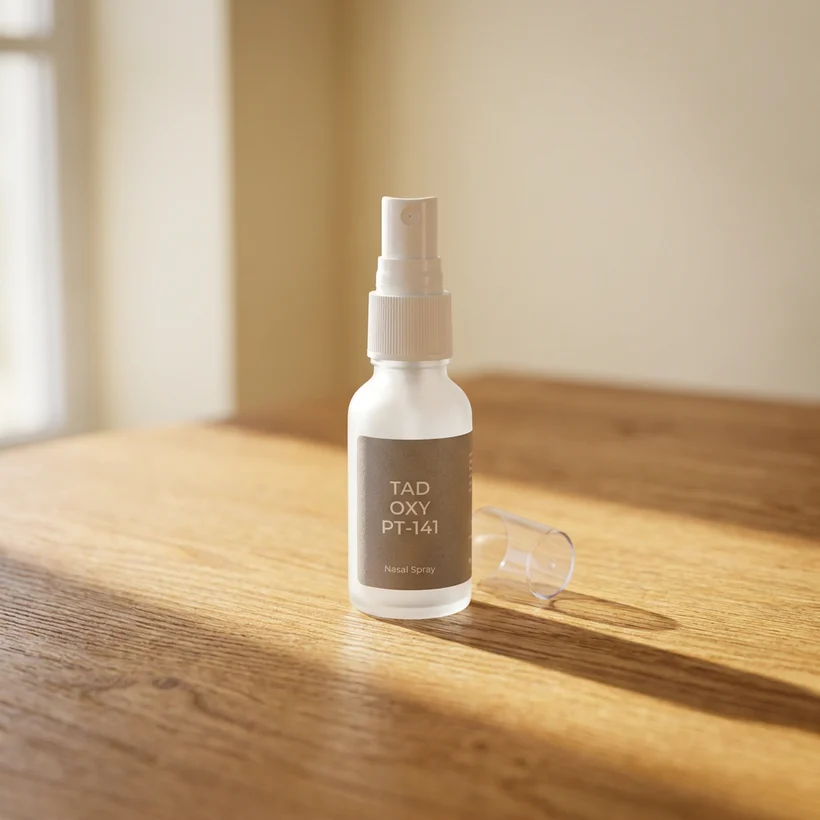
From the FormBlends catalog
Tadalafil/Oxytocin/PT-141 Nasal Spray
Nasal sexual wellness combination reviewed for provider-directed use · From $179/mo · compounded by a licensed 503A pharmacy, dispensed only after provider review.
View Tadalafil/Oxytocin/PT-141 Nasal Spray →Table of Contents
- Evidence Ledger Table
- Mechanism with Numbers
- Lip Treatment with Peptides: What the Science Actually Shows
- What Peptide Helps with Libido?
- Peptides and Testosterone Stack
- Dietary Supplement with Peptide Complex for Vascular System Support
- Peptide Stack for Women
- Peptide Stacks for Men
- What Most Pages Get Wrong
- Chemistry Behind the Rules of Thumb
- Honest Head-to-Head: Peptides vs. Real Alternatives
- Operational and Label Literacy
- FAQ
- Sources
Evidence Ledger: What Is Actually Proven?
| Claim | Best Evidence Type | Effect Direction | Confidence |
|---|---|---|---|
| Palmitoyl pentapeptide-4 increases collagen in human skin | In vitro fibroblast studies; limited split-face cosmetic trials | Positive (small) | Low |
| PT-141 (bremelanotide) improves HSDD in premenopausal women | Phase 3 RCT (RECONNECT trials, n=1247 combined) | Positive, statistically significant | High |
| Kisspeptin-10 increases LH and testosterone axis signaling | Human clinical studies (Dhillo et al., multiple publications) | Positive | Moderate |
| Casein tripeptides IPP/VPP reduce blood pressure | Multiple RCTs, meta-analysis (Cicero et al., 2010) | Positive (small magnitude) | Moderate |
| BPC-157 improves vascular or sexual function in humans | Animal models only | Positive in rodents, unknown in humans | Very Low |
| Retinol outperforms topical peptides for collagen remodeling | Multiple human RCTs for retinol; peptide data mostly in vitro | Retinol superior | High |
| CJC-1295/ipamorelin stack improves sexual function | No controlled human trials for sexual outcomes | Unknown | Very Low |
| Argireline relaxes perioral muscles, reduces lip wrinkles | Small manufacturer-sponsored cosmetic studies | Possibly positive (high bias risk) | Very Low |
Mechanism with Numbers: How These Peptides Actually Work
Topical signal peptides (lip and skin). Palmitoyl pentapeptide-4 is a fragment related to collagen I and III degradation products. In fibroblast cultures, it upregulates procollagen I, collagen III, and fibronectin synthesis. The palmitoyl chain increases lipophilicity and theoretically improves stratum corneum partitioning, but molecular weight is still roughly 802 Da (palmitoylated form). Most dermatology pharmacokinetic data suggests consistent transdermal delivery drops significantly above 500 Da, the "500 Da rule" described by Bos and Meinardi (2000). That does not mean zero delivery, but it does mean the dose reaching the dermis is a fraction of the applied dose, and no human study has quantified that fraction for palmitoyl pentapeptide-4 specifically.
PT-141 (bremelanotide). This cyclic heptapeptide analog of alpha-MSH binds melanocortin receptors MC3R and MC4R in the hypothalamus and limbic system. It does not act on vascular smooth muscle (unlike PDE5 inhibitors). In the pooled RECONNECT phase 3 trials, women receiving 1.75 mg subcutaneously reported a statistically significant increase in satisfying sexual events compared to placebo. The FDA approved bremelanotide (Vyleesi) in June 2019 for this indication. Common adverse effects include transient nausea (roughly 40% in trials) and transient blood pressure increases.
Kisspeptin-10. Kisspeptin peptides bind the KISS1R (GPR54) receptor on GnRH neurons in the hypothalamus, triggering pulsatile GnRH release, which drives LH and FSH secretion, which in turn stimulates gonadal testosterone and estrogen production. Dhillo and colleagues at Imperial College London published multiple human studies showing that IV kisspeptin-10 administration produces measurable LH pulses in both men and women. This is the clearest mechanistic bridge between an exogenous peptide and the testosterone axis in humans, though oral and subcutaneous bioavailability data in non-IV routes are much less established.
Casein-derived vascular peptides. IPP (isoleucine-proline-proline) and VPP (valine-proline-proline) are tripeptides released from casein during fermentation. They inhibit angiotensin-converting enzyme (ACE), the same target as pharmaceutical ACE inhibitors, but with far lower potency (IC50 values in the micromolar range versus nanomolar for lisinopril). Their clinical effect of roughly 3 to 5 mmHg systolic BP reduction reflects that weaker binding. The mechanism is well-understood; the effect size is honest.
Lip Treatment with Peptides: What the Science Actually Shows
The strongest evidence for any topical lip treatment is for humectants (hyaluronic acid, glycerin) increasing hydration and transient volume within hours. Peptides in a lip treatment formula add a plausible long-term collagen signaling layer, but no independent human RCT has confirmed that a peptide-containing lip product produces measurable collagen increase in lip tissue specifically. Cosmetic studies funded by manufacturers (Leuba et al. style publications) show surface improvement in wrinkle depth, but these are not replicated independently.
Acetyl hexapeptide-3 (argireline) targets SNAP-25, a SNARE complex protein involved in acetylcholine vesicle fusion, theoretically reducing muscle contraction around the perioral area. The mechanism is real at sufficient concentration. The question is whether topical application delivers a meaningful concentration to the neuromuscular junction depth. No peer-reviewed, independent human trial confirms this in lip tissue.
Practical upshot: A lip treatment with peptides is a reasonable low-risk cosmetic product. Do not pay a premium expecting the same evidence tier as a pharmaceutical. The hydration-occlusion base is doing most of the visible work.
What Peptide Helps with Libido?
PT-141 (bremelanotide, brand name Vyleesi) is the only peptide with FDA approval for low libido. It is indicated for premenopausal women with acquired, generalized hypoactive sexual desire disorder (HSDD). The dose is 1.75 mg subcutaneous injection at least 45 minutes before anticipated sexual activity, no more than once per 24 hours and no more than approximately 8 times per month per prescribing information.
Male use of PT-141 has been explored in clinical studies (Safarinejad and Hosseini published early data) but PT-141 does not carry FDA approval for men. It is sometimes used off-label in clinical settings under physician supervision. The nausea rate in trials is meaningful and patients should be counseled on the transient blood pressure effect.
Kisspeptin has indirect libido-relevant data via gonadotropin axis stimulation and some fMRI evidence for increased sexual brain activity, but it is not approved for this use and remains investigational.
What Peptides and Testosterone Stack Makes Mechanistic Sense?
The most mechanistically coherent peptides to stack alongside testosterone axis management are those that act upstream in the HPG axis: kisspeptin analogs and gonadorelin (GnRH). Gonadorelin is used clinically to maintain testicular function and endogenous LH signaling in men on testosterone replacement therapy, preventing the suppression of the HPT axis that exogenous testosterone alone causes. This is a real clinical application used by some prescribers, not just community speculation.
Growth hormone secretagogues (CJC-1295, ipamorelin, tesamorelin) are sometimes discussed alongside testosterone stacks. Tesamorelin is FDA-approved for HIV-associated lipodystrophy. CJC-1295 and ipamorelin are not approved drugs. Their pairing with testosterone for body composition is entirely without controlled human trial evidence for that combination specifically.
Dietary Supplement with Peptide Complex for Vascular System Support
The most evidence-backed category here is food-derived bioactive peptides with ACE-inhibitory activity. The casein-derived tripeptides IPP and VPP have been studied in multiple human RCTs, summarized in a 2010 meta-analysis by Cicero et al. in the Journal of Human Hypertension, finding a pooled systolic blood pressure reduction of roughly 4 mmHg in hypertensive subjects. That is a real, reproducible, modest effect.
Marine collagen peptides have some evidence for endothelial-adjacent outcomes (skin capillary support, connective tissue integrity) but direct vascular smooth muscle or antihypertensive human data is much weaker. BPC-157 promotes angiogenesis in rodent wound models via VEGF pathway upregulation, which is scientifically interesting but does not translate into a human vascular health claim. No human clinical trials have tested BPC-157 for vascular outcomes as of this writing.
For a consumer choosing a dietary supplement with peptide complex for vascular system support, IPP/VPP fermented milk products (marketed as Evolus in some markets) represent the category with the most honest human evidence. Products built around BPC-157 or unnamed "peptide complexes" for vascular support should be evaluated skeptically unless specific peptide sequences and human trial citations are provided.
Peptide Stack for Women: What Has Evidence?
| Goal | Peptide Option | Evidence Level | Notes |
|---|---|---|---|
| Low libido / HSDD | PT-141 (bremelanotide) | High (FDA-approved) | Premenopausal women; nausea risk |
| Skin and lip collagen support | Oral collagen peptides (hydrolyzed type I/III) | Moderate | Several RCTs showing skin elasticity improvement |
| HPG axis support (fertility-adjacent) | Kisspeptin-10 (investigational) | Low (human but small trials) | Not approved; clinical research setting only |
| Vascular / blood pressure | IPP/VPP casein peptides | Moderate | Small antihypertensive effect in RCTs |
| Body composition / GH axis | Ipamorelin, CJC-1295 | Very Low for women specifically | No approved use; very limited female-specific trial data |
Peptide Stacks for Men: What Is Actually Used and Why?
| Goal | Peptide Option | Evidence Level | Notes |
|---|---|---|---|
| Erectile / sexual function | PT-141 (off-label in men) | Low to Moderate | Phase 2 data exists; not FDA-approved for men |
| Maintain LH on TRT | Gonadorelin (GnRH) | Moderate (mechanism-established) | Clinical use in some TRT protocols |
| GH axis / body composition | Tesamorelin | High (FDA-approved for specific indication) | Off-label use for general body composition is unapproved |
| Recovery / healing adjacent | BPC-157 | Very Low (animal data only) | No approved human use; research compound |
| Testosterone axis stimulation (PCT) | Kisspeptin (investigational) | Low (small human trials) | No approved indication; clinical research only |
What Most Pages Get Wrong About Peptide Stacks
The penetration problem for topical peptides is bigger than anyone admits. Most content about lip treatment with peptides discusses mechanism (collagen signaling) as if topical application guarantees dermal delivery. It does not. The 500 Da molecular weight guideline for significant passive transdermal flux (Bos and Meinardi, Contact Dermatitis, 2000) means that most signal peptides, even with lipophilic modifications, face a structural delivery barrier. Some studies use tape stripping or microneedling pretreatment to bypass this. Without those adjuncts, a peptide-only topical product is working primarily from the surface down, not the dermis up.
Paula's Choice 1% retinol treatment with peptides and vitamin C: the stability problem. Combining retinol with ascorbic acid (vitamin C) in a single formula creates a pH conflict. Retinol degrades faster in acidic environments; ascorbic acid requires a pH below roughly 3.5 for meaningful skin penetration. Peptides in the same formula are largely chemically stable in that range but may lose activity if the formula is optimized for vitamin C's low pH because some peptides undergo hydrolysis at extreme pH. Products claiming all three actives in one stable formula should be scrutinized for packaging (airtight, opaque) and should carry a short period-after-opening recommendation. The existence of this conflict explains why Paula's Choice and most serious formulators keep these actives in separate products or use derivative forms (retinyl esters, ascorbyl glucoside) that are more stable but also less potent.
The "stack" framing obscures individual-level variation. Peptide stack content implies additive or synergistic effects. For most combinations, there is no combinatorial human trial data. Effects may be additive, may be redundant, or may interfere depending on shared receptor targets. PT-141 combined with a PDE5 inhibitor, for example, has additive cardiovascular effects that prescribers must account for, not a clean synergy.
Chemistry Behind the Rules of Thumb
Why store peptides frozen and away from light. Peptide bonds are susceptible to hydrolysis (water attack at the amide bond), accelerated by heat and acidic or basic conditions. Lyophilized (freeze-dried) peptides have had water removed, substantially slowing this reaction. Reconstituted peptide solutions are thermodynamically less stable because water is now present. UV light can cause oxidation of methionine, tryptophan, and cysteine residues specifically. A peptide containing cysteine, like some melanocortin-related compounds, is particularly vulnerable to air oxidation leading to disulfide-linked dimers that have different (often reduced) receptor activity. This is why amber glass vials, refrigeration after reconstitution, and use within a defined window matter chemically, not just as generic cautionary advice.
Why retinol and vitamin C should not share a formula without careful engineering. Ascorbic acid is a reducing agent (electron donor). Retinol, when it oxidizes to retinaldehyde and then retinoic acid, undergoes a series of oxidation steps that ascorbic acid can theoretically interrupt. The practical problem is that ascorbic acid itself rapidly oxidizes to dehydroascorbic acid at the pH ranges where retinol is most stable (near neutral). At low pH where ascorbic acid is more stable, retinol ester hydrolysis accelerates. The net result is that without careful antioxidant co-stabilizers and inert packaging, the two actives compete for and consume the formula's stability margin. This is chemistry, not marketing differentiation.
Honest Head-to-Head: Peptides vs. Alternatives
| Goal | Peptide Option | Best Alternative | Who Wins | Why |
|---|---|---|---|---|
| Lip and perioral collagen | Palmitoyl pentapeptide-4 topical | Topical retinol 0.1-1% | Retinol wins | Multiple human RCTs for retinol; peptide data mostly in vitro |
| Low libido (women) | PT-141 (bremelanotide) | Flibanserin (Addyi) | Comparable; different profiles | PT-141 is on-demand vs. flibanserin daily; nausea vs. CNS sedation tradeoff |
| Blood pressure / vascular | IPP/VPP casein peptides | ACE inhibitor (lisinopril) | Lisinopril wins clearly | Far greater potency; RCT evidence for cardiovascular outcomes |
| Testosterone axis (men, hypogonadism) | Kisspeptin, gonadorelin | Exogenous testosterone (TRT) | TRT wins for established hypogonadism | TRT has decades of human data; peptides preserve axis but less proven for symptom relief |
| Body composition / GH | CJC-1295 / ipamorelin | Tesamorelin (approved) or lifestyle | Tesamorelin for approved use; lifestyle for general population | CJC-1295 / ipamorelin lack human trial evidence for body composition outcomes |
Operational and Label Literacy: How to Evaluate a Peptide Product
For topical lip products containing peptides:
- Find the peptide in the INCI ingredient list by its INCI name (e.g., "palmitoyl pentapeptide-4" not just "peptide complex"). Vague terms like "oligopeptide" or "peptide blend" without INCI names are uninformative.
- Position in the ingredient list matters. Ingredients listed after phenoxyethanol (a common preservative at roughly 1%) are typically present below 1% concentration, which may be below functional threshold for peptides that require higher concentrations to signal fibroblasts in vitro.
- Look for the period-after-opening (PAO) symbol (an open jar with a number). For any formula with an active ingredient, honor this date.
For injectable or research-grade peptides (COA checklist):
- Purity: at least 98% by HPLC. Anything below 95% is poor quality for research use.
- Molecular weight confirmation: mass spectrometry (MS) result should match the theoretical molecular weight of the stated peptide sequence within standard instrument error.
- Endotoxin: for any injectable-intended peptide, look for LAL (limulus amebocyte lysate) testing with a result below 1 EU/mg.
- Issuing lab: the COA must come from an ISO 17025-accredited third-party analytical lab, not the peptide vendor's internal lab.
- Reconstitution math example: if a vial contains 5 mg of peptide and you add 2.5 mL of bacteriostatic water, the concentration is 2 mg/mL or 2000 mcg/mL. A 1.75 mg dose of PT-141 would be 0.875 mL from that solution. Always calculate before drawing.
Signs of degradation: Clear peptide solutions that have turned yellow or shown particulate should not be used. Lyophilized cakes that appear wet, discolored, or have failed to form a solid cake after lyophilization suggest moisture breach during storage or shipping. Topical peptide products showing phase separation, unusual smell, or color change past PAO date should be discarded.
Frequently Asked Questions
What is the best lip treatment with peptides?
Topical peptides used in lip treatments include palmitoyl pentapeptide-4 (Matrixyl) and argireline (acetyl hexapeptide-3). They signal collagen synthesis in vitro, but penetration through the stratum corneum is limited by molecular weight. Products combining a peptide with a humectant and an occlusive carrier show the most visible plumping, mainly from hydration rather than proven collagen remodeling at the tissue level.
What peptides and testosterone stack is most studied?
Kisspeptin-10 and GnRH analogs are the most mechanistically grounded peptides studied alongside testosterone axis support. Kisspeptin administration has been shown in human studies to increase LH pulse amplitude, which can transiently raise testosterone. Stacking a GnRH-axis peptide with exogenous testosterone is largely theoretical in healthy adults and lacks controlled trial data.
What dietary supplement with peptide complex for vascular system support is evidence-backed?
Marine-derived collagen peptides and certain bioactive peptides from dairy (casein-derived tripeptides IPP and VPP) have the most human trial data for mild ACE-inhibitory effects and modest blood pressure reduction. Effect sizes are small, roughly 3 to 5 mmHg systolic in meta-analyses, and they are not replacements for pharmaceutical antihypertensives.
What is a good peptide stack for women focused on sexual health?
For women, kisspeptin-10 has shown signal for increasing sexual brain processing in fMRI studies (Dhillo group, Imperial College). PT-141 (bremelanotide) is FDA-approved for hypoactive sexual desire disorder in premenopausal women, making it the only regulatory-cleared peptide option in this space. Other stacks are investigational.
What peptide stacks for men are most commonly used for sexual health?
PT-141 (bremelanotide) has male sexual dysfunction data and acts centrally via MC4R. Some men use it alongside PDE5 inhibitors, though the combination carries additive cardiovascular risk. CJC-1295 or ipamorelin stacked with testosterone optimization is popular in performance communities but lacks controlled trial evidence for sexual outcomes specifically.
How does Paula's Choice 1% retinol treatment with peptides and vitamin C compare to peptide-only products?
Retinol has far stronger evidence for collagen induction and skin remodeling than any topical peptide. The challenge is formulation stability: retinol oxidizes in the presence of ascorbic acid (vitamin C) unless the pH and packaging are carefully controlled. Peptides in the same formula are largely unaffected by retinol but may degrade under the low-pH conditions optimized for vitamin C.
What peptide helps with libido?
Bremelanotide (PT-141) is the only FDA-approved peptide for low libido, specifically in premenopausal women diagnosed with HSDD. It acts on melanocortin receptors (MC3R and MC4R) in the CNS rather than on vascular tissue, distinguishing it mechanistically from PDE5 inhibitors.
Can peptides improve vascular function relevant to sexual health?
BPC-157 has shown pro-angiogenic effects in rodent models through upregulation of VEGF signaling, but human vascular data is absent. Bioactive casein peptides (IPP, VPP) have modest ACE-inhibitory evidence in humans. Neither has controlled human evidence for sexual vascular outcomes specifically.
Is it safe to combine peptides with testosterone?
Combining GnRH-axis peptides like kisspeptin or gonadorelin with exogenous testosterone can suppress endogenous LH signaling further or work against the peptide's intended axis stimulation depending on direction of use. Combination protocols require clinical supervision. No large human safety trials exist for most peptide-plus-testosterone stacks.
How do I read a peptide product COA for a lip treatment or supplement?
Check that the COA is from an ISO-accredited third-party lab, not the manufacturer's in-house lab. For topical lip peptides, confirm the sequence name matches the INCI name. For injectable or oral peptides, look for purity above 98% by HPLC, endotoxin testing below 1 EU/mg, and molecular weight confirmation by mass spectrometry.
What does a degraded peptide look like and how do I know it has lost potency?
Degraded peptide solutions often show visible particulate, cloudiness, or a color change from clear to yellow or brown. For lyophilized peptides, clumping or a wet appearance before reconstitution suggests moisture exposure and oxidation. Topical peptide products that have separated, changed smell, or exceeded their PAO symbol date are likely degraded.
Sources
- Bos JD, Meinardi MM. The 500 Dalton rule for the skin penetration of chemical compounds and drugs. Exp Dermatol. 2000;9(3):165-169.
- Dhillo WS, et al. Kisspeptin-54 stimulates the hypothalamic-pituitary gonadal axis in human males. J Clin Endocrinol Metab. 2005;90(12):6609-6615.
- Clayton AH, et al. Bremelanotide for female sexual dysfunctions in premenopausal women: a randomized, placebo-controlled dose-finding trial. Womens Health (Lond). 2016;12(3):325-337.
- Simon JA, et al. Efficacy and safety of bremelanotide for hypoactive sexual desire disorder among women in 2 randomized phase 3 trials. Obstet Gynecol. 2019;134(5):899-908. (RECONNECT trials)
- Cicero AF, et al. Antihypertensive effect of lactotripeptides: a systematic review and meta-analysis. J Hum Hypertens. 2010;24(3):163-172.
- FDA. Vyleesi (bremelanotide) prescribing information. June 2019. Accessible at FDA.gov.
- Proksch E, et al. Oral supplementation of
Related peptide guides
Browse the full catalog →Ready when you are
Tadalafil/Oxytocin/PT-141 Nasal Spray
Nasal sexual wellness combination reviewed for provider-directed use · From $179/mo · compounded by a licensed 503A pharmacy, dispensed only after provider review.
View Tadalafil/Oxytocin/PT-141 Nasal Spray →