Key Takeaway
Athletes push their bodies hard. This TB-500 athletic recovery sports injury resource covers the important information you need to make informed decisions. Muscles tear. Tendons strain. Joints ache. Recovery determines how quickly you can get back to training.
Athletes push their bodies hard. This TB-500 athletic recovery sports injury resource covers the important information you need to make informed decisions. Muscles tear. Tendons strain. Joints ache. Recovery determines how quickly you can get back to training. That's why TB-500 for athletic recovery and sports injury repair has gained attention among recreational and competitive athletes alike.
Key Takeaways: - Discover why athletes are interested in tb-500 - Common Athletic Injuries Where TB-500 Is Explored - Integrating TB-500 with Your Training Program - Important Considerations for Athletes
TB-500 (synthetic Thymosin Beta-4) has been studied for tissue repair, inflammation reduction, and wound healing. For athletes dealing with nagging injuries or slow recovery, these properties are appealing. Here is what you need to know.
Why Athletes Are Interested in TB-500
Athletic training creates a cycle of damage and repair. Every workout causes microscopic damage to muscle fibers, tendons, and connective tissue. Your body repairs this damage, making the tissue stronger. That's how you get fitter.
But sometimes the damage outpaces repair. Overuse injuries develop. Tendons become inflamed. Old injuries linger. Recovery between sessions slows down. These are the situations where athletes start looking for additional support.
TB-500's studied properties align with several needs athletes face:
Tissue repair. Animal Laboratory and animal Preliminary data suggest that thymosin beta-4 may accelerate the repair of various tissue types, including muscle, tendon, and ligament. For athletes dealing with strains, sprains, or chronic tendinopathy, this repair support is the primary draw.
"Compounding pharmacies serve a critical role in healthcare, but patients need to understand the difference between a properly regulated 503B facility and an unregulated operation. Ask about PCAB accreditation and third-party testing.") Dr. Scott Brunner, PharmD, Alliance for Pharmacy Compounding
Angiogenesis. New blood vessel formation means better blood flow to injured or overworked tissues. More blood flow means more oxygen and nutrients for repair. This is especially relevant for tendons and ligaments, which have naturally limited blood supply.
Inflammation management. Acute inflammation after a workout is normal and necessary. But chronic inflammation from overuse or injury impairs performance and recovery. TB-500's anti-inflammatory properties may help manage excessive inflammation without eliminating the beneficial acute response.
Cell migration. TB-500 promotes the movement of repair cells to damage sites. For athletes with multiple areas of stress or microtrauma, this systemic cell migration effect may support overall recovery.
TB-500 is prescribed by licensed providers for clinical indications. It isn't a performance-enhancing drug in the traditional sense. Its role is supporting your body's natural repair processes, not artificially boosting performance beyond normal capacity.
Common Athletic Injuries Where TB-500 Is Explored
Providers may consider TB-500 for athletes dealing with various types of injuries. Here are some of the most common scenarios.
Tendon injuries. Achilles tendinopathy, patellar tendinopathy (jumper's knee), tennis elbow, and rotator cuff tendinopathy are among the most common. These overuse injuries involve chronic damage to tendon tissue and respond poorly to rest alone. TB-500's tendon repair research in animal models is some of the most compelling in the peptide space.
Free Download: Peptide Protocol Planner (12-Week) Track your TB-500 protocol alongside your training schedule. Includes dose logging, injection site rotation, and recovery milestone tracking for athletes. Get yours free (we'll email it to you instantly. [Email Input] [Download Button]
Muscle strains. Hamstring strains, calf tears, and muscle pulls are common in sports involving sprinting, jumping, or sudden direction changes. While mild strains heal on their own, recurring strains or significant tears may benefit from additional healing support.
Ligament injuries. Ankle sprains, knee ligament sprains, and other ligament injuries involve tissues with poor blood supply. TB-500's angiogenesis properties may be particularly relevant here.
Joint issues. Chronic joint pain from years of training can involve damage to cartilage, synovium, and surrounding soft tissues. TB-500 is being explored as part of complete joint care approaches.
Post-surgical rehabilitation. Athletes recovering from ACL reconstruction, labrum repair, or other surgical procedures may explore TB-500 to potentially support the rehabilitation process. See our for more on this topic.
If you're dealing with a sports injury, the first step is proper diagnosis. Work with a sports medicine provider or orthopedist to understand exactly what is injured. Then discuss treatment options) including potential peptide therapy (with your .
Integrating TB-500 with Your Training Program
If your provider prescribes TB-500, you'll want to improve your training around your treatment protocol.
From the FormBlends catalog
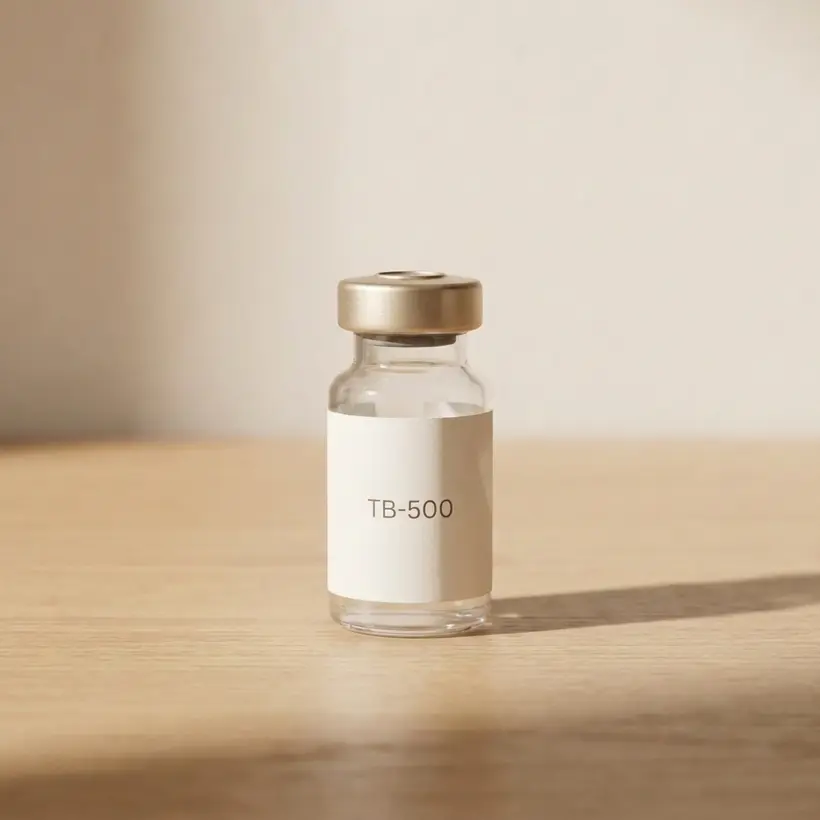
TB-500 (Thymosin Beta-4)
Universal repair peptide for tissue regeneration · From $49/mo · compounded by a licensed 503A pharmacy, dispensed only after provider review.
Learn about TB-500 (Thymosin Beta-4) →Continue training smart. TB-500 supports healing, but it doesn't make you invincible. Respect your injury. Follow your physical therapist's guidance on load management. Progressive loading) gradually increasing stress on the injured tissue (is supported by research for many tendon and ligament injuries.
Time your injections strategically. Some athletes prefer injecting on rest days or light training days. This allows any minor injection site discomfort to resolve before hard training sessions. Discuss timing with your provider.
Prioritize nutrition. Your body needs building blocks for tissue repair. Protein intake matters) aim for 0.8-1.2 grams per pound of body weight for athletic recovery. Vitamin C supports collagen synthesis. Adequate calories fuel the repair process. If you're also on GLP-1 medication for weight management, review our for athletes with reduced appetite.
Sleep is non-negotiable. Growth hormone (important for tissue repair) is released primarily during deep sleep. Aim for 8-9 hours if you're training hard and recovering from injury. Poor sleep undermines both your training and your recovery.
Track everything. Log your TB-500 doses, training sessions, pain levels, and recovery milestones in the . This data helps your provider adjust your protocol and helps you see patterns in your recovery. Some athletes notice specific correlations between injection timing and training quality.
Consider combining TB-500 with if your provider recommends it. The is popular among athletes because the two peptides may target different aspects of the repair process.
Important Considerations for Athletes
Competition regulations. If you compete in sanctioned sports, check with your governing body about TB-500. Rules vary by organization and sport. Some athletic organizations prohibit certain peptides in competition. It's your responsibility to ensure compliance with your sport's anti-doping rules.
TB-500 isn't a shortcut. Peptide therapy doesn't replace proper training, nutrition, rest, and rehabilitation. It may support your body's healing processes, but the fundamentals still matter most. An athlete with perfect recovery support but poor training habits won't get far.
Be patient. Tissue repair takes time even with optimal support. Most athletes notice gradual improvements over 4-8 weeks. Complete recovery from significant injuries may take months. Setting realistic expectations prevents frustration and premature return to full training.
Work with providers who understand athletes. Not all healthcare providers are familiar with the demands of athletic training. FormBlends providers understand both peptide therapy and the unique recovery needs of active people. That combination matters for appropriate protocol design.
Frequently Asked Questions
How long until I can train at full intensity on TB-500?
Return-to-training timelines depend on the type and severity of your injury, not the peptide protocol. TB-500 may support faster healing, but your provider and physical therapist should clear you for full-intensity training based on functional assessments, not a fixed timeline. Rushing back increases re-injury risk.
Can recreational athletes benefit from TB-500?
Yes. You don't need to be a professional athlete to benefit from tissue repair support. Weekend warriors, recreational runners, gym enthusiasts, and anyone dealing with sports-related injuries may be candidates. Talk to your FormBlends provider about your specific situation.
Should I stop training while on TB-500?
Usually no. Most providers encourage continued, modified training during TB-500 therapy. Complete rest can lead to deconditioning and may actually slow recovery for some injuries. Your physical therapist can design a training program that supports healing while maintaining fitness.
Can I use TB-500 preventively before a competition or training block?
TB-500 is prescribed for clinical indications, not as a preventive measure. If you have an existing injury or chronic condition, your provider may recommend treatment before a demanding training period. Using TB-500 without a clinical indication isn't appropriate practice.
How does TB-500 compare to PRP or stem cell therapy for sports injuries?
Each approach works through different mechanisms. PRP uses concentrated growth factors from your blood. Stem cell therapy aims to introduce regenerative cells. TB-500 promotes cell migration and angiogenesis. Some providers use multiple approaches in combination. Discuss the options with your provider to determine what fits your injury and budget.
Let's Make This Happen
The research is clear. The options are available. The only question is whether it's right for you. A FormBlends provider can help you decide (no pressure, no commitment.
Medical References
- Goldstein AL, Hannappel E, Sosne G, Kleinman HK. Thymosin beta4: a multi-functional regenerative peptide. Basic properties and clinical applications. Expert Opin Biol Ther. 2012;12(1):37-51. [PubMed | DOI]
Sources &. References
- Bock-Marquette I, Saxena A, White MD, et al. Thymosin beta4 activates integrin-linked kinase and promotes cardiac cell migration, survival and cardiac repair. Nature. 2004;432(7016):466-472. Doi:10.1038/nature03000
- Malinda KM, Sidhu GS, Mani H, et al. Thymosin beta4 accelerates wound healing. J Invest Dermatol. 1999;113(3):364-368. Doi:10.1046/j.1523-1747.1999.00708.x
Nothing in this article should be construed as medical advice. The information provided is educational only. Always consult with your healthcare provider before beginning, modifying, or discontinuing any medication or treatment. FormBlends connects patients with licensed providers for individualized care.
Last updated: 2026-03-24
Ready when you are
TB-500 (Thymosin Beta-4)
Universal repair peptide for tissue regeneration · From $49/mo · compounded by a licensed 503A pharmacy, dispensed only after provider review.
Learn about TB-500 (Thymosin Beta-4) →