Key Takeaway
Best protocol for combining TB-500 with GLP-1 medications. Physician-guided dosing, loading and maintenance phases, cycle timing, and monitoring strategies.
The best protocol for combining TB-500 with GLP-1 medications uses a phased structure: establish the GLP-1 medication first, introduce TB-500 with a loading dose, transition to maintenance, and cycle on and off based on your recovery needs. This approach gives your physician clear data at each stage, allows precise attribution of effects and side effects, and maximizes the complementary benefits of metabolic weight management and tissue repair. Every protocol is individualized by your prescribing physician.
How TB-500 and GLP-1 Medications
TB-500: Built for Recovery
TB-500 is a synthetic fragment of thymosin beta-4, the body's most abundant actin-sequestering protein. Its role in the body is helping with tissue repair by enabling cells to migrate to injury sites, forming new blood vessels to supply healing tissue, and reducing inflammatory signals that impede recovery.
TB-500 is particularly effective for connective tissue injuries, joint recovery, muscle repair, and reducing chronic inflammation. It's administered subcutaneously and follows a characteristic loading-then-maintenance dosing pattern that builds tissue concentration before transitioning to a sustaining dose.
GLP-1 Medications: Built for Metabolic Transformation
GLP-1 receptor agonists represent the most effective pharmaceutical approach to weight management currently available. The class includes semaglutide (Wegovy, Ozempic), tirzepatide (Zepbound, Mounjaro), and liraglutide (Saxenda). They work by mimicking the incretin hormone GLP-1 to suppress appetite, improve insulin sensitivity, and produce sustained weight loss.
All GLP-1 medications follow graduated titration schedules that start low and increase over weeks to months, which is critical for managing gastrointestinal side effects.
Can You Combine Them?
Yes. TB-500 and GLP-1 medications are fully compatible from a pharmacological standpoint. They target different receptor systems (actin/cell migration versus incretin receptors), use different metabolic clearance routes (both proteolytic but through independent enzyme systems), and have no identified pharmacokinetic interaction.

Potential Benefits of This Protocol
Musculoskeletal Recovery During Active Weight Loss
Exercise is important during GLP-1 therapy for both weight loss and lean mass preservation. TB-500 supports the musculoskeletal system by accelerating repair of exercise-induced damage, helping patients maintain consistent training schedules.
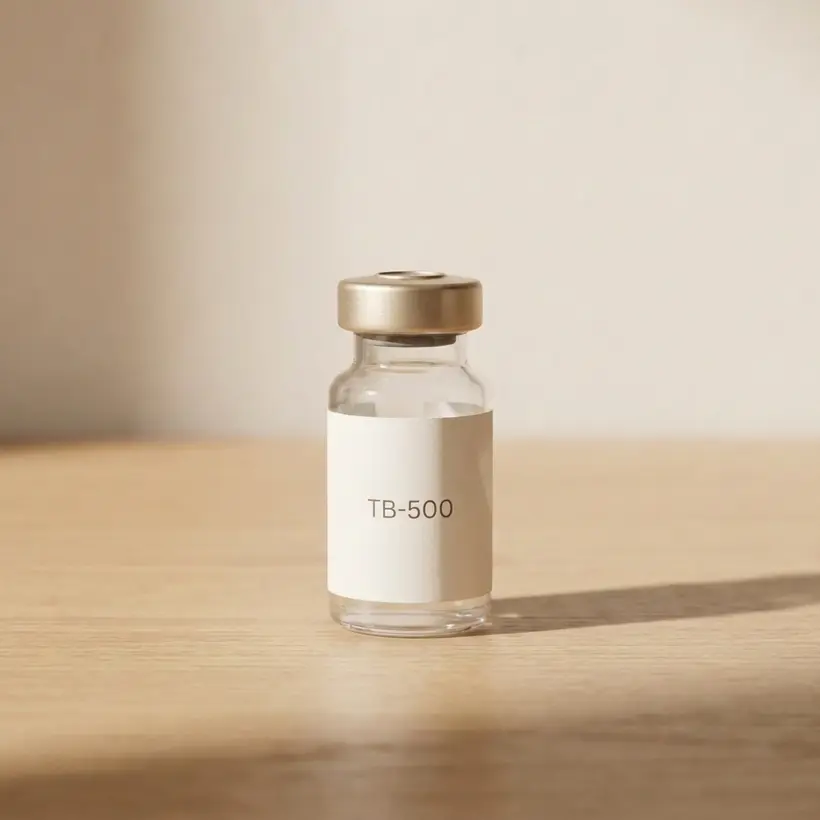
From the FormBlends catalog
TB-500 (Thymosin Beta-4)
Universal repair peptide for tissue regeneration · From $49/mo · compounded by a licensed 503A pharmacy, dispensed only after provider review.
Learn about TB-500 (Thymosin Beta-4) →Joint Health Through the Weight Loss Transition
As weight decreases and activity increases, joints transition from weight-related stress to activity-related stress. TB-500's connective tissue repair properties support joints through this transition.
Anti-Inflammatory Complement
GLP-1 medications reduce metabolic inflammation. TB-500 reduces tissue-level inflammation. The protocol addresses chronic inflammation from two independent directions.
Tissue Adaptation Support
Significant weight loss demands structural remodeling throughout the body. TB-500's angiogenic and repair properties support this adaptation process.
Protocol Considerations: The Complete Framework
Your physician customizes every element below. This framework reflects established clinical practice.
Pre-Protocol: Baseline Assessment
Before starting either compound, your physician performs a thorough evaluation: medical history review, current medication assessment, baseline blood work (metabolic panel, liver function, kidney function, inflammatory markers, thyroid function, lipid panel), body composition measurements, and discussion of your goals and activity level. This baseline data is important for tracking progress and making informed protocol adjustments.
Week 1 to 4: GLP-1 Foundation
Start your GLP-1 medication at its initial titration dose. For semaglutide: 0.25 mg weekly. For tirzepatide: 2.5 mg weekly. For liraglutide: 0.6 mg daily with weekly increases. From $299
This solo period serves three purposes: establishing your GI tolerance baseline, confirming your appetite and metabolic response, and identifying any side effects attributable to the GLP-1 medication alone. Check in with your physician at week 2 and week 4.
Week 4 to 10: TB-500 Loading Phase
After confirming stable GLP-1 tolerance, introduce TB-500 at loading doses to build tissue concentration rapidly.
- Dose: 5 to 10 mg per week, based on body weight and physician assessment.
- Frequency: Split into 2 to 3 subcutaneous injections per week.
- Duration: 4 to 6 weeks.
- Injection sites: Rotate between abdomen, thigh, and upper arm. Always use a different site than your GLP-1 injection.
During loading, GLP-1 titration continues on its standard schedule. Most patients are increasing their GLP-1 dose during this period. Monitor for any new symptoms and report them to your physician. Because you established your GLP-1 baseline in weeks 1 to 4, new symptoms during this phase can be more confidently attributed to TB-500.
Week 10 to 20: TB-500 Maintenance Phase
After loading, reduce TB-500 to a maintenance dose that sustains the repair effects without the higher loading concentration.
- Dose: 2.5 to 5 mg per week.
- Frequency: 1 to 2 subcutaneous injections per week.
- Duration: 4 to 10 weeks, based on your recovery goals and physician assessment.
During maintenance, your GLP-1 medication approaches or reaches its target dose. This is often where the most dramatic weight loss occurs, and TB-500 maintenance provides ongoing tissue support during this peak transformation period.
Week 20+: TB-500 Off-Cycle and Protocol Review
After completing a full TB-500 cycle (8 to 16 weeks total), discontinue TB-500 for at least 4 weeks. GLP-1 medication continues at its established dose. During the off-cycle, your physician evaluates which benefits persist, whether another TB-500 cycle is warranted, your current recovery needs and activity level, and any protocol adjustments for the next cycle.
Many patients run 2 to 3 TB-500 cycles over the course of a year. Some need only one cycle during the most active weight loss phase. The decision depends entirely on your individual response and goals.
Advanced Protocol: Adding BPC-157
For patients who also need gastrointestinal support during GLP-1 therapy, some physicians add BPC-157 to this protocol. BPC-157 provides gastroprotective benefits that complement TB-500's musculoskeletal focus. The three-compound protocol (GLP-1 + TB-500 + BPC-157) requires careful physician management but addresses metabolic, structural, and GI health simultaneously.
Monitoring Schedule
- Weeks 1 to 12: Check-ins every 2 to 4 weeks. Close monitoring during initiation and titration of both compounds.
- Weeks 12+: Monthly check-ins during maintenance and cycling phases.
- Blood work: Every 8 to 12 weeks throughout the protocol. Includes metabolic panel, liver and kidney function, inflammatory markers (CRP, ESR), CBC, and any additional markers your physician deems relevant.
- Body composition: Tracked at each visit. Weight, measurements, and optional DEXA or bioimpedance for precise lean mass and fat mass data.
Who Should Consider This Protocol
- Physically active GLP-1 patients who need structured musculoskeletal recovery support.
- Patients with joint or connective tissue concerns starting or continuing GLP-1 therapy.
- Patients undergoing significant weight loss who want to support tissue adaptation during body recomposition.
- Patients with chronic inflammatory conditions seeking complementary anti-inflammatory therapy alongside GLP-1 treatment.
- Patients motivated by performance and recovery who want to improve both weight loss and physical function.
Not appropriate for patients who are pregnant or nursing, under 18, have active malignancies, or have contraindications to GLP-1 medications.
Frequently Asked Questions
Which GLP-1 medication works best with TB-500?
TB-500 is equally compatible with all GLP-1 receptor agonists. The choice of GLP-1 medication (semaglutide versus tirzepatide versus liraglutide) is based on your metabolic goals, tolerance, insurance coverage, and physician recommendation. TB-500 dosing and cycling doesn't change based on which GLP-1 medication you use.
What if I can't tolerate the TB-500 loading dose?
TB-500 is generally well-tolerated, with side effects limited to occasional injection site reactions and mild lightheadedness. If you experience issues, your physician may reduce the loading dose, extend the loading phase at a lower dose, or modify the injection frequency. The protocol is flexible and adjusted based on your response.
Can I run TB-500 continuously instead of cycling?
Cycling is the standard approach for TB-500. Continuous use hasn't been well-studied for long-term safety, and cycling allows periods of assessment to determine whether ongoing use is necessary. Your physician may recommend longer cycles for patients with significant recovery needs, but indefinite continuous use isn't standard practice.
How do I know if this protocol is working?
Track specific outcomes: exercise recovery time, joint comfort during and after activity, any changes in soreness or stiffness, and overall physical resilience. Your physician tracks objective data including body composition, inflammatory markers, and metabolic panel results. The combination of subjective experience and objective data determines protocol efficacy.
Medical References
- Goldstein AL, Hannappel E, Sosne G, Kleinman HK. Thymosin beta4: a multi-functional regenerative peptide. Basic properties and clinical applications. Expert Opin Biol Ther. 2012;12(1):37-51. [PubMed | DOI]
Build Your Protocol at FormBlends
The best protocol is one built for your specific situation by a physician who understands both GLP-1 pharmacology and peptide therapy. At FormBlends, our medical team creates personalized TB-500 and GLP-1 protocols, provides pharmaceutical-grade compounds, and monitors your progress from start to finish.
Start your consultation at FormBlends.com
Ready when you are
TB-500 (Thymosin Beta-4)
Universal repair peptide for tissue regeneration · From $49/mo · compounded by a licensed 503A pharmacy, dispensed only after provider review.
Learn about TB-500 (Thymosin Beta-4) →