Key Takeaway
Thymosin Beta-4 oral vs injection comparison. Bioavailability, effectiveness, and why subcutaneous injection is the standard route of administration.
Quick Answer: Thymosin Beta-4 oral vs injection favors injection for systemic tissue repair. TB-4 is a 43-amino-acid peptide that faces significant degradation in the gastrointestinal tract when taken orally. Subcutaneous injection delivers near-complete bioavailability and is the established clinical route. Some oral TB-4 fragments are being researched, but no oral formulation has demonstrated clinical equivalence to injection for systemic effects .
Why Injection Is Standard
TB-4's 43-amino-acid chain is vulnerable to the same digestive processes that break down dietary protein:
- Stomach acid: Hydrochloric acid denatures the peptide's tertiary structure
- Proteolytic enzymes: Pepsin, trypsin, and chymotrypsin cleave TB-4 into inactive fragments
- Poor absorption: Even if fragments survive digestion, the intestinal barrier limits absorption of large, hydrophilic molecules
- First-pass metabolism: The liver further degrades any peptide fragments that reach it
Subcutaneous injection bypasses all of these barriers, delivering intact TB-4 directly into the bloodstream with estimated bioavailability exceeding 95% .
Route Comparison
| Factor | Subcutaneous Injection | Oral |
|---|---|---|
| Bioavailability | ~95-100% | Estimated <5% |
| Clinical evidence | Established | Limited to fragments |
| Dose reliability | Precise | Highly variable |
| Systemic effects | Confirmed | Uncertain |
| Convenience | Requires injection | Simple to take |
| Cost per effective dose | Efficient | Wasteful (most destroyed) |
Oral TB-4 Fragment Research
Some companies are developing smaller fragments of TB-4 designed for oral bioavailability. The active region of TB-4 (the central actin-binding domain, amino acids 17-23) is a shorter peptide that may have better oral stability than full-length TB-4.
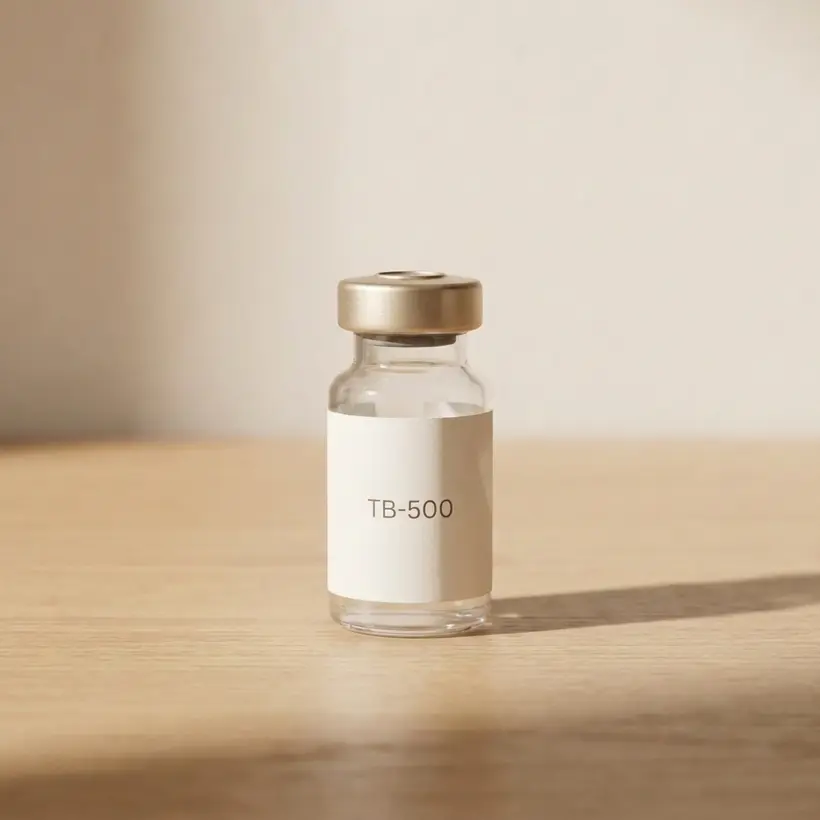
From the FormBlends catalog
TB-500 (Thymosin Beta-4)
Universal repair peptide for tissue regeneration · From $49/mo · compounded by a licensed 503A pharmacy, dispensed only after provider review.
Learn about TB-500 (Thymosin Beta-4) →View data table
| Category | Clinical Interest Score | Detail |
|---|---|---|
| BPC-157 | 88 | Tissue repair and gut healing |
| TB-500 | 82 | Injury recovery |
| Sermorelin | 78 | Growth hormone support |
| Ipamorelin | 75 | Anti-aging and recovery |
| GHK-Cu | 70 | Skin and tissue repair |
But several challenges remain:
- Oral fragment formulations haven't been validated in clinical trials
- It's unclear whether fragments retain the full range of TB-4's biological activity
- Dosing equivalency between oral fragments and injectable full-length TB-4 isn't established
Oral TB-4 for Local GI Effects
One potential exception to the injection preference is when the target is the GI tract itself. Oral TB-4 that isn't absorbed systemically still contacts the intestinal lining directly. This could theoretically provide local anti-inflammatory and tissue repair effects in the gut, though this hasn't been well-studied compared to oral BPC-157 for gut health, which has more evidence for oral GI effects.
Frequently Asked Questions
Are oral TB-4 supplements effective?
Products marketed as oral TB-4 or TB-500 supplements haven't been clinically validated. Most of the peptide is likely destroyed during digestion. For reliable TB-4 effects, subcutaneous injection prescribed by a physician is the evidence-based route.
Can I use TB-4 topically?
Topical TB-4 is being researched, particularly for corneal wounds and skin healing. Some compounding pharmacies offer topical formulations. Topical application bypasses GI degradation and delivers TB-4 directly to the target tissue, though systemic absorption from topical application is limited.
What if I can't do injections?
Discuss alternatives with your physician. Options may include topical formulations for specific skin/wound applications, or a different peptide that has better oral bioavailability for your treatment goal. The injections use very small insulin needles and most patients find them tolerable after the first few days.
Medical References
- Goldstein AL, Hannappel E, Sosne G, Kleinman HK. Thymosin beta4: a multi-functional regenerative peptide. Basic properties and clinical applications. Expert Opin Biol Ther. 2012;12(1):37-51. [PubMed | DOI]
Get the Right Delivery Method
At FormBlends, we prescribe clinically validated TB-4 formulations and guide you through comfortable injection technique.
Disclaimer: This article is for informational purposes only and doesn't constitute medical advice. Thymosin Beta-4 isn't FDA-approved for any medical condition. Always consult with a licensed healthcare provider. Individual results may vary.
Ready when you are
TB-500 (Thymosin Beta-4)
Universal repair peptide for tissue regeneration · From $49/mo · compounded by a licensed 503A pharmacy, dispensed only after provider review.
Learn about TB-500 (Thymosin Beta-4) →