
Deep research
About Thymalin
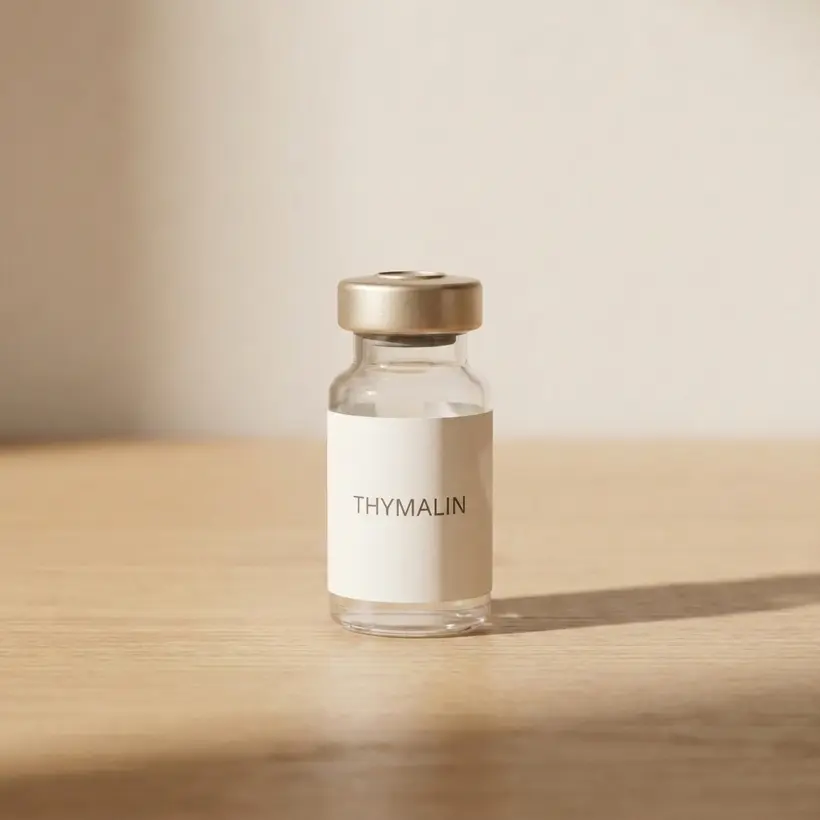
Thymalin is a complex of low-molecular-weight peptides (predominantly dipeptides and tripeptides, MW range 300-1000 Da) extracted from the calf thymus gland using acid-ethanol fractionation. It was developed by Prof. Vladimir Khavinson and Dr. Vyacheslav Morozov at the Saint Petersburg Institute of Bioregulation and Gerontology beginning in the 1970s. Thymalin received regulatory approval in the USSR in 1982 and has been used in Russian clinical medicine continuously since then for immune restoration, representing one of the longest clinical track records of any peptide bioregulator.
The thymus gland is the master organ of adaptive immunity, serving as the site where bone marrow-derived progenitor cells differentiate into mature, immunocompetent T-lymphocytes. During thymic education, T-cells undergo positive and negative selection to ensure they can recognize foreign antigens while tolerating self-antigens. The thymus begins involuting after puberty, progressively replaced by adipose tissue. By age 60, functional thymic tissue is reduced by more than 90%, and by age 75, the thymus produces negligible numbers of naive T-cells. This thymic involution is a primary driver of immunosenescence.
Thymalin acts as a bioregulator by restoring gene expression patterns in residual thymic epithelial cells and in peripheral T-lymphocytes. It upregulates expression of thymic hormones (thymulin, thymopoietin), increases the output of naive T-cells, and restores the balance between T-helper (CD4+) and T-cytotoxic (CD8+) populations. Clinical studies documented normalization of the CD4/CD8 ratio (from inverted ratios of 0.8-1.0 back to the normal 1.5-2.5 range) in 82% of treated elderly patients. Natural killer cell cytotoxic activity, which declines with age, was restored to levels comparable to younger adults.
The most significant clinical evidence comes from a prospective study of 266 elderly patients aged 60-74, published in the Bulletin of Experimental Biology and Medicine. Patients treated with thymalin combined with epithalamin (a pineal peptide) had a 2.0-fold reduction in mortality compared to untreated controls over a 6-year observation period. A 12-year follow-up confirmed the sustained survival benefit and showed reduced incidence of ischemic heart disease, hypertension, osteoarthritis, and respiratory infections in the treated group.
Pharmacokinetically, thymalin peptides are absorbed rapidly after intramuscular injection, with peak plasma levels at 30-60 minutes. The small peptide components are distributed to lymphoid tissues (thymus remnant, spleen, lymph nodes) where they exert their bioregulatory effects. The biological effects of a single 10-day course of thymalin persist for 4-6 months, consistent with the gene-regulatory mechanism that produces lasting changes in cellular gene expression patterns rather than transient receptor activation.
Storage and handling: lyophilized thymalin should be stored at 2-8C (refrigerated) and protected from light. For reconstitution, add sterile 0.9% sodium chloride or bacteriostatic water to the vial and allow the powder to dissolve completely without shaking. Reconstituted solutions should be used within 24 hours if stored at room temperature or within 7 days if refrigerated. The typical clinical protocol involves daily intramuscular injections for 5-10 consecutive days, repeated every 4-6 months.
Safety data encompasses over 15 million patient-treatments across Russia and Eastern Europe since 1982. No serious adverse events have been attributed to thymalin in clinical use. Injection site reactions (pain, mild redness) are the most commonly reported side effect. No immunotoxicity, allergic reactions, autoimmune phenomena, or organ toxicity have been documented. Thymalin does not cause immune overstimulation; rather, it normalizes immune function in both immunodeficient and immune-dysregulated states, consistent with its bioregulatory (rather than immunostimulant) mechanism.