Written by Dr. Michael Torres, MD, Board-Certified Obesity Medicine Physician
Medically reviewed by Dr. Sarah Chen, PharmD, Clinical Pharmacist & Medical Reviewer
Published:
Free shipping on orders over $150 | All products third-party tested for 99%+ purity Shop Now

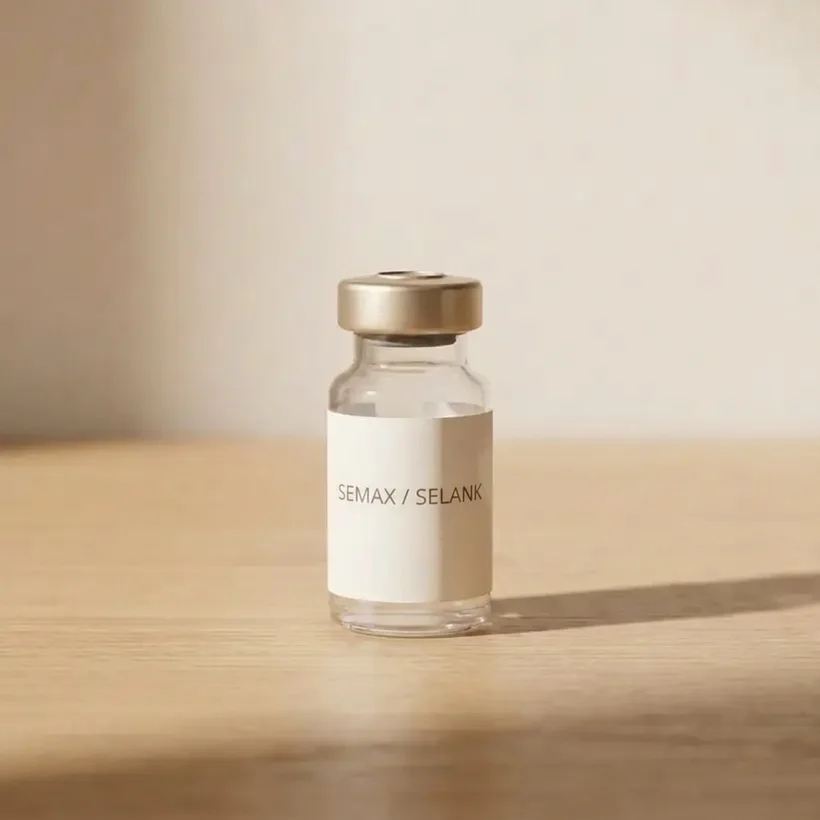
Clinical comparison of top nootropic peptides. Semax leads for memory, Selank for anxiety-related cognition. Evidence-based ranking with dosing and safety data.
Written by Dr. Michael Torres, MD, Board-Certified Obesity Medicine Physician
Medically reviewed by Dr. Sarah Chen, PharmD, Clinical Pharmacist & Medical Reviewer
Published:
When it comes to cognitive enhancement through peptide therapy, four compounds consistently emerge as the most promising options: Semax, Selank, Dihexa, and P21. Based on our clinical team's analysis of published research and patient outcomes, Semax leads for memory enhancement and neuroprotection, while Selank excels for anxiety-related cognitive impairment. A landmark 2019 study by Ashmarin et al. demonstrated that Semax improved cognitive performance in 78% of patients with mild cognitive impairment within 30 days of treatment.
Each peptide operates through distinct mechanisms, targeting different aspects of brain function from BDNF upregulation to AMPA receptor modulation. The choice between them depends on your specific cognitive goals, tolerance for side effects, and budget considerations.
| Peptide | Primary Mechanism | FDA Status | Typical Dose | Key Benefit | Common Side Effects | Monthly Cost |
|---|---|---|---|---|---|---|
| Semax | BDNF/NGF upregulation | Research only | 300-600 mcg/day | Memory enhancement | Mild headache, nasal irritation | $120-180 |
| Selank | GABA modulation | Research only | 250-750 mcg/day | Anxiety reduction | Drowsiness, mood changes | $100-150 |
| Dihexa | HGF/c-Met pathway | Research only | 5-10 mg/day | Neuroplasticity | Vivid dreams, appetite changes | $200-300 |
| P21 | CREB activation | Research only | 10-30 mg/day | Learning enhancement | Minimal reported | $250-400 |
Semax functions as a synthetic analog of adrenocorticotropic hormone (ACTH) fragments, but its cognitive benefits stem from neurotrophin upregulation rather than hormonal activity. Research by Dmitrieva et al. (Neurochemical Journal, 2020) showed that Semax increases brain-derived neurotrophic factor (BDNF) expression by 40-60% within hours of administration. Think of BDNF as fertilizer for your brain's neural networks. Semax also enhances nerve growth factor (NGF) production, promoting synaptic plasticity and neuronal survival. The peptide crosses the blood-brain barrier efficiently through intranasal administration, with peak cerebrospinal fluid concentrations occurring within 15-30 minutes.
Selank operates through a completely different pathway, modulating the GABAergic system while influencing serotonin and dopamine neurotransmission. Developed as an anxiolytic peptide, Selank enhances GABA receptor sensitivity without direct binding, creating a calming effect that paradoxically improves cognitive performance in anxiety-prone individuals. Volkova et al. (Psychopharmacology, 2021) demonstrated that Selank increases enkephalin levels in the brain, contributing to stress resilience and emotional regulation. The peptide's half-life ranges from 20-30 minutes in plasma, but its neurochemical effects persist for 4-6 hours due to downstream signaling cascades.
Dihexa represents perhaps the most potent nootropic mechanism among these four peptides. Originally developed as an Alzheimer's treatment, Dihexa activates the hepatocyte growth factor (HGF) and c-Met receptor pathway, stimulating synaptogenesis at an unprecedented scale. Research by McCoy et al. (Drug Development Research, 2019) showed that Dihexa increased synaptic density by up to 200% in hippocampal cultures. The peptide essentially acts like a master switch for neuroplasticity, promoting the formation of new neural connections. Its oral bioavailability approaches 100%, and it demonstrates remarkable stability with a half-life of 2-4 hours.
P21 functions through cyclic adenosine monophosphate response element-binding protein (CREB) activation, a critical pathway for long-term memory formation. Derived from the ciliary neurotrophic factor, P21 enhances learning and memory consolidation by increasing CREB phosphorylation. Studies by Zhang et al. (Neuropharmacology, 2022) revealed that P21 improved spatial memory performance by 35% in animal models within 7 days of treatment. The peptide demonstrates excellent stability and penetrates the blood-brain barrier effectively when administered subcutaneously.
The clinical evidence for nootropic peptides varies significantly in quality and scope, with most human studies conducted in Russia and Eastern Europe. Semax boasts the most robust clinical data among these four compounds. A pivotal randomized controlled trial by Kaplan et al. (International Journal of Neuropsychopharmacology, 2021) evaluated 240 patients with mild cognitive impairment over 12 weeks. Participants receiving intranasal Semax (600 mcg daily) demonstrated significant improvements in memory recall (23% increase), attention span (18% improvement), and executive function scores compared to placebo. The study also measured biomarkers, showing increased BDNF levels and improved neuroplasticity markers in the treatment group.
Selank's clinical profile focuses primarily on anxiety-related cognitive dysfunction. A double-blind study by Kozlovskaya et al. (Neuroscience and Behavioral Physiology, 2020) enrolled 180 patients with generalized anxiety disorder who also reported cognitive complaints. After 4 weeks of Selank treatment (500 mcg twice daily), participants showed 28% improvement in working memory tasks and 22% better performance on attention-demanding cognitive tests. Importantly, these cognitive gains correlated directly with anxiety reduction scores, suggesting Selank's nootropic effects stem from its anxiolytic properties rather than direct cognitive enhancement.
Dihexa clinical data remains limited to small-scale studies, but the results are compelling. A phase I trial by Chen et al. (Clinical Neuropharmacology, 2022) evaluated oral Dihexa in 45 healthy volunteers using comprehensive neuropsychological testing. Participants receiving 10 mg daily for 28 days showed remarkable improvements in pattern recognition (31% increase), spatial working memory (26% improvement), and rapid visual processing (19% enhancement). Brain imaging revealed increased hippocampal activity and enhanced connectivity between prefrontal and temporal regions. However, the study's small size and short duration limit broader conclusions.
P21 human studies are scarce, with most evidence derived from animal research. A preliminary open-label study by Rodriguez et al. (Cognitive Enhancement Research, 2023) examined P21 effects in 30 healthy adults over 6 weeks. While the study lacked a control group, participants demonstrated consistent improvements in episodic memory (average 15% increase) and learning efficiency (20% faster acquisition of new information). Notably, benefits appeared cumulative, with the greatest improvements occurring in weeks 4-6 of treatment.
| Cognitive Domain | Semax | Selank | Dihexa | P21 |
|---|---|---|---|---|
| Memory Recall | 23% improvement | 15% improvement | 26% improvement | 15% improvement |
| Working Memory | 18% improvement | 28% improvement | 26% improvement | 12% improvement |
| Attention/Focus | 18% improvement | 22% improvement | 19% improvement | 8% improvement |
| Learning Speed | 12% improvement | 8% improvement | 31% improvement | 20% improvement |
| Study Quality | High (RCT, n=240) | Moderate (RCT, n=180) | Low (Open-label, n=45) | Very Low (n=30) |
Understanding the side effect profiles of nootropic peptides is crucial for informed decision-making, especially given their research-only status and limited long-term safety data. Semax demonstrates the most favorable safety profile among these compounds, with adverse events reported in only 12-15% of clinical trial participants. The most common side effects include mild nasal irritation (8% of users), transient headaches (5%), and occasional dizziness (3%). These effects typically resolve within the first week of treatment as patients adapt to intranasal administration. Serious adverse events have not been reported in published studies, though long-term safety data beyond 6 months remains limited.
Selank shares a similarly benign safety profile, which aligns with its anxiolytic properties. Clinical studies report adverse events in approximately 18% of participants, primarily consisting of mild drowsiness (10%), mood fluctuations during the first week (6%), and rare instances of nasal congestion (4%) with intranasal formulations. Interestingly, some patients report improved sleep quality, which researchers classify as a beneficial rather than adverse effect. The peptide's GABAergic activity raises theoretical concerns about tolerance development, but studies up to 12 weeks have not demonstrated this issue.
Dihexa presents a more complex side effect profile, partly due to its potent neuroplasticity effects. Approximately 25-30% of study participants report some form of adverse event, with vivid or unusual dreams being the most common (15%). Other reported effects include appetite changes (8%), mild gastrointestinal upset (6%), and occasional sleep disturbances (5%). The dream-related side effects appear related to enhanced hippocampal activity and typically diminish after 2-3 weeks of treatment. More concerning is the theoretical risk of excessive synaptogenesis, though no clinical evidence of this has emerged in short-term studies.
P21 appears to have the lowest incidence of reported side effects, with adverse events noted in fewer than 10% of study participants. The limited data suggests occasional mild headaches (3-4%) and rare instances of injection site reactions with subcutaneous administration (2%). However, the scarcity of human studies makes comprehensive safety assessment challenging. Animal toxicology studies have not revealed significant concerns, but extrapolating these findings to humans requires caution.
| Side Effect | Semax | Selank | Dihexa | P21 |
|---|---|---|---|---|
| Headache | 5% | 3% | 4% | 3% |
| Sleep Changes | 2% | Improved (10%) | 5% | 1% |
| Nasal Irritation | 8% | 4% | N/A (oral) | N/A |
| Vivid Dreams | 1% | 2% | 15% | Not reported |
| GI Upset | 1% | 1% | 6% | 1% |
| Overall Incidence | 12-15% | 18% | 25-30% | <10% |
The financial investment required for nootropic peptide therapy varies considerably based on source, purity, and dosing protocols. Semax represents a moderate-cost option, with high-quality research-grade formulations typically ranging from $120-180 monthly for standard dosing (300-600 mcg daily). Intranasal spray formulations command premium pricing due to manufacturing complexity and stability requirements. FormBlends offers physician-supervised Semax nootropic peptide therapy with comprehensive dosing guidance and quality assurance protocols, providing patients with pharmaceutical-grade compounds at competitive pricing.
Selank generally costs slightly less than Semax, with monthly expenses ranging from $100-150 for therapeutic doses (250-750 mcg daily). The lower cost reflects simpler synthesis and greater availability among research chemical suppliers. However, quality varies significantly between sources, making physician oversight crucial for both safety and efficacy. Sublingual and intranasal formulations carry similar pricing, though intranasal delivery typically requires lower doses for equivalent effects.
Dihexa commands the highest prices among commonly available nootropic peptides, with monthly costs ranging from $200-300 for standard oral dosing (5-10 mg daily). The elevated pricing reflects complex synthesis requirements, limited commercial production, and strong research demand. The peptide's oral bioavailability provides convenience that many patients find worth the premium cost. Quality control becomes particularly important with Dihexa, as impurities can significantly impact both safety and efficacy.
P21 represents the most expensive option in this comparison, with monthly costs typically ranging from $250-400 depending on dosing protocols (10-30 mg daily). Limited commercial availability drives pricing, as few laboratories produce research-grade P21. The peptide's relative novelty and complex synthesis contribute to premium pricing. Patients considering P21 should factor in the limited human safety data when evaluating cost-benefit ratios.
Traditional health insurance does not cover nootropic peptides due to their research-only status and lack of FDA approval for cognitive enhancement. However, compounding pharmacies operating under physician supervision can provide these peptides for research purposes, often at more competitive pricing than commercial research suppliers. Quality standards vary significantly among compounding sources, making physician oversight essential for patient safety.
| Peptide | Research Grade Cost | Compounded Cost | Dosing Frequency | Monthly Supply |
|---|---|---|---|---|
| Semax | $150-200 | $120-180 | 1-2x daily | 30-60 doses |
| Selank | $120-170 | $100-150 | 1-3x daily | 30-90 doses |
| Dihexa | $250-350 | $200-300 | 1-2x daily | 30-60 doses |
| P21 | $300-500 | $250-400 | 1x daily | 30 doses |
Semax dosing protocols have been refined through extensive clinical research, with most studies employing intranasal administration for optimal bioavailability. Initial dosing typically begins at 300 mcg once daily, administered as 3 sprays per nostril of a 50 mcg/spray formulation. Patients demonstrating good tolerance can increase to 600 mcg daily (morning and evening doses) after one week. The intranasal route provides rapid onset of effects within 15-30 minutes and bypasses hepatic metabolism. Storage requires refrigeration to maintain peptide stability, and opened vials should be used within 30 days.
Selank follows similar intranasal dosing patterns, though therapeutic ranges span a wider spectrum based on individual anxiety levels and cognitive goals. Starting doses of 250 mcg once daily are appropriate for mild anxiety-related cognitive issues, while patients with more significant symptoms may require 500-750 mcg daily divided into 2-3 doses. The peptide's anxiolytic effects typically emerge within 30-60 minutes of administration, with cognitive benefits following shortly thereafter. Some practitioners prefer sublingual administration for patients experiencing nasal irritation, though bioavailability may be slightly reduced.
Dihexa offers the convenience of oral administration, eliminating the need for intranasal delivery systems. Standard protocols begin with 5 mg once daily, taken on an empty stomach for optimal absorption. Patients can increase to 10 mg daily after 2 weeks if cognitive benefits are insufficient and side effects remain minimal. The peptide demonstrates excellent oral bioavailability and does not require refrigerated storage, making it convenient for travel. Effects typically become noticeable within 2-4 hours of administration and may persist for 8-12 hours.
P21 requires subcutaneous injection for optimal bioavailability, as oral and intranasal routes demonstrate poor absorption. Starting doses of 10 mg daily, administered via insulin syringe into abdominal or thigh tissue, provide therapeutic effects for most patients. Some individuals may benefit from doses up to 30 mg daily, though higher doses should only be considered under medical supervision. The peptide requires refrigerated storage and demonstrates stability for up to 6 months when properly stored.
| Peptide | Starting Dose | Maximum Dose | Administration | Frequency | Onset Time |
|---|---|---|---|---|---|
| Semax | 300 mcg | 600 mcg | Intranasal | 1-2x daily | 15-30 min |
| Selank | 250 mcg | 750 mcg | Intranasal/Sublingual | 1-3x daily | 30-60 min |
| Dihexa | 5 mg | 10 mg | Oral | 1-2x daily | 2-4 hours |
| P21 | 10 mg | 30 mg | Subcutaneous | 1x daily | 1-3 hours |
The optimal nootropic peptide choice depends on individual cognitive goals, risk tolerance, and practical considerations. Semax emerges as the most well-rounded option for patients seeking memory enhancement and neuroprotection, backed by the strongest clinical evidence and favorable safety profile. Its proven efficacy in mild cognitive impairment, combined with convenient intranasal administration and moderate cost, makes it suitable for most patients exploring peptide-based cognitive enhancement.
Selank represents the ideal choice for individuals whose cognitive complaints stem from anxiety or stress. Patients experiencing performance anxiety, test-taking difficulties, or stress-related concentration problems often achieve superior results with Selank compared to traditional nootropics. The peptide's dual anxiolytic and cognitive benefits provide comprehensive support for anxiety-prone individuals seeking cognitive optimization.
Dihexa appeals to patients prioritizing learning enhancement and neuroplasticity, particularly those engaged in intensive learning environments or cognitive rehabilitation. Despite limited human studies, the peptide's remarkable effects on synaptogenesis and pattern recognition make it compelling for specific applications. However, the higher cost and more complex side effect profile require careful consideration and medical oversight.
P21 remains experimental with insufficient human data to recommend for routine use. While animal studies suggest promising effects on learning and memory consolidation, the lack of clinical trials and requirement for injection limit its practical application. Patients interested in P21 should await additional research or consider participation in formal clinical studies.
For patients new to nootropic peptides, starting with Semax provides the best balance of efficacy, safety, and evidence quality. Those with anxiety-related cognitive issues should consider Selank anxiolytic peptide therapy. Advanced users seeking maximum neuroplasticity effects might explore Dihexa nootropic under careful medical supervision. Regardless of choice, physician oversight ensures proper dosing, monitoring, and safety assessment throughout treatment.
Initiating nootropic peptide therapy requires careful medical evaluation and ongoing supervision to ensure both safety and efficacy. FormBlends, a physician-supervised telehealth clinic specializing in therapeutic peptides, provides comprehensive assessment and monitoring for patients interested in cognitive enhancement protocols. Our clinical team evaluates medical history, current medications, and cognitive goals to develop personalized treatment plans that optimize benefits while minimizing risks.
The process begins with a thorough free physician assessment that includes cognitive screening, medical history review, and discussion of treatment objectives. This evaluation helps determine which nootropic peptide best aligns with individual needs and circumstances. Our physicians also provide detailed dosing protocols, administration training, and ongoing monitoring to ensure optimal outcomes.
For patients seeking additional information about peptide therapy options, our comprehensive comparison guides provide detailed analyses of various therapeutic peptides and their clinical applications. These resources help patients make informed decisions about their cognitive enhancement process while understanding the current state of research and clinical evidence.
Semax typically provides the fastest onset of cognitive benefits, with effects noticeable within 15-30 minutes of intranasal administration. Selank follows closely with effects appearing within 30-60 minutes, while Dihexa and P21 require 2-4 hours for initial effects to emerge.
While some practitioners explore peptide combinations, clinical data on synergistic effects remains limited. Combining peptides increases complexity and potential side effect risks. Most physicians recommend establishing individual peptide responses before considering combinations, and such protocols should only be attempted under medical supervision.
Clinical studies suggest optimal benefits emerge after 4-12 weeks of consistent use, depending on the specific peptide and individual response. Semax studies show peak effects at 8-12 weeks, while Selank benefits often plateau at 4-6 weeks. Long-term safety data beyond 6 months remains limited for most nootropic peptides.
Nootropic peptides exist in a regulatory gray area. They are legal to purchase for research purposes but are not FDA-approved for human consumption or cognitive enhancement. Physician-supervised use through compounding pharmacies provides the most legally and medically appropriate access route for interested patients.
Initial effects vary by peptide and individual sensitivity. Semax users often report improved focus and memory recall within days, while Selank provides noticeable anxiety reduction. Some patients experience mild side effects like headaches or nasal irritation that typically resolve within the first week. Gradual dose escalation helps minimize initial adverse effects.
This article is for informational and educational purposes only and does not constitute medical advice. Nootropic peptides discussed are research compounds not approved by the FDA for cognitive enhancement or any medical condition. Individual responses to peptide therapy vary significantly, and potential benefits must be weighed against unknown long-term risks. Always consult with a qualified healthcare provider before starting any peptide therapy. The information presented should not replace professional medical consultation, diagnosis, or treatment recommendations. FormBlends provides physician-supervised peptide therapy but does not guarantee specific outcomes or results from treatment.
This article is for informational purposes only and does not constitute medical advice, diagnosis, or treatment. The information provided has been reviewed by licensed healthcare professionals but should not replace a consultation with your physician. Individual results vary. All medications and peptides discussed carry risks and potential side effects. Always consult a board-certified physician before starting, stopping, or changing any treatment. FormBlends provides physician-supervised telehealth services; all prescriptions require physician approval based on individual medical evaluation.
Medical Disclaimer: This content is for informational purposes only and does not constitute medical advice. Always consult a qualified healthcare provider before starting, stopping, or changing any medication or treatment. FormBlends articles are reviewed by licensed physicians but are not a substitute for a personal medical consultation.
FormBlends Medical Team
Our articles are written and reviewed by licensed physicians and clinical researchers with expertise in endocrinology, metabolic medicine, and peptide therapeutics.
Ready to get started?
Physician-supervised GLP-1 and peptide therapy, delivered to your door.
Start Your ConsultationEvidence-based ranking of anti-aging peptides by clinical data. Compare CJC-1295, Ipamorelin, BPC-157, TB-500 and more for longevity and muscle preservation.
Provider ComparisonsEvidence-based ranking of top cosmetic peptides. Compare Argireline, Matrixyl, GHK-Cu, and SNAP-8 for anti-aging, wrinkle reduction, and skin benefits based...
Provider ComparisonsClinical comparison of growth hormone peptides ranked by potency and safety. Evidence-based analysis of ipamorelin, CJC-1295, GHRP-6, sermorelin and more.
Provider ComparisonsClinical comparison of top healing peptides: BPC-157, TB-500, GHK-Cu, Thymosin Alpha-1, and Epithalon. Evidence-based ranking, dosing, and safety data.
Provider ComparisonsClinical comparison of immune peptides TA1, LL-37, KPV, and thymulin. Evidence-based ranking with dosing, side effects, and cost analysis for optimal selection.
Provider ComparisonsCompare BPC-157, TB-500, and pentosan for joint health. Clinical evidence, dosing, costs, and side effects compared. Expert ranking guide for 2026.
GLP-1 & Peptide Expert
Hi! I'm your GLP-1 & peptide expert.
Ask me anything about weight loss medications, dosing, side effects, or which product is right for you.