Key Takeaway
The alcohol swab step is one of the simplest parts of your injection routine) but it's also one of the most skipped and most misunderstood. This alcohol swab injection prep resource covers the important information you need to make informed decisions.
The alcohol swab step is one of the simplest parts of your injection routine) but it's also one of the most skipped and most misunderstood. This alcohol swab injection prep resource covers the important information you need to make informed decisions. Proper injection prep with an alcohol swab reduces the risk of bacteria entering your skin or your peptide vial. It takes about 30 seconds when done correctly. Here is exactly how to do it right every time.
Key Takeaways: - Learn how to swab your injection site - Discover why 70% isopropyl alcohol works best - Common Swabbing Mistakes - When and What to Swab: Quick Reference
How to Swab Your Injection Site
Using an alcohol swab correctly is straightforward once you know the technique. Here is the step-by-step process.
Step 1[1]: Open a fresh swab. Tear the foil packet along the notch. Pull out the swab without touching the pad surface with your fingers. Hold it by the edges or the dry corner.
Step 2: Place the swab at the center of your injection site. Press firmly enough that the alcohol makes contact with your skin. You want the pad wet against the skin, not hovering above it.
Step 3: Move in a circular motion outward. Start at the center of where you plan to inject and spiral outward in increasingly larger circles. This pushes bacteria away from the injection point rather than dragging it inward.
Step 4: Let it air dry for 30 seconds. This is the step most people rush. The alcohol needs time to evaporate. During those 30 seconds, the alcohol continues killing bacteria on the skin surface. Injecting through wet alcohol stings. Air drying eliminates that sting.
"Compounding pharmacies serve a critical role in healthcare, but patients need to understand the difference between a properly regulated 503B facility and an unregulated operation. Ask about PCAB accreditation and third-party testing.", Dr. Scott Brunner, PharmD, Alliance for Pharmacy Compounding
Step 5: Don't blow on it. Your breath contains bacteria. Don't fan it, blow on it, or wave anything over it. Just wait.
That's it. The entire process takes under a minute.
Why 70% Isopropyl Alcohol Works Best
The standard pre-injection alcohol swab contains 70% isopropyl alcohol. This specific concentration is more effective at killing bacteria than higher concentrations.
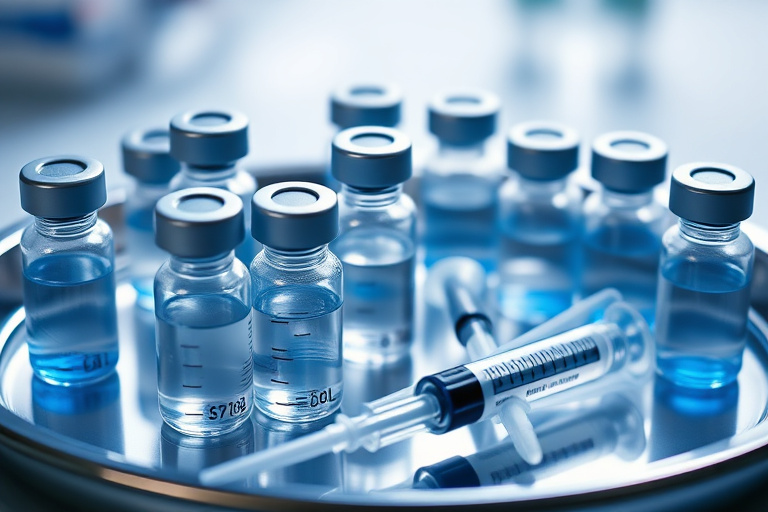
Why not 90% or 99%? Higher concentrations of alcohol evaporate too quickly. They also cause the outer layer of bacteria to harden (coagulate) before the alcohol penetrates inside the cell. The 70% concentration contains enough water to keep the bacterial cell wall permeable, allowing the alcohol to enter and kill the organism.
Free Download: Dose Conversion Table Pair your clean prep technique with exact dosing. Our printable dose conversion table covers every common peptide vial and syringe combination. Get yours free (we'll email it to you instantly. [Download Now]
Pre-packaged alcohol swabs from any pharmacy are standardized at 70% isopropyl alcohol. They're individually wrapped and sterile. Don't substitute hand sanitizer, rubbing alcohol from a bottle at home, or antiseptic wipes meant for surfaces. These may contain additives that shouldn't contact an injection site.
If you're on a daily peptide protocol, buy alcohol swabs in bulk. Boxes of 100 or 200 are inexpensive and ensure you always have a fresh swab for every draw and every injection.
Common Swabbing Mistakes
Small errors in swab technique can undermine the entire purpose. Here are the most common mistakes.
Check your GLP-1 eligibility
Use our free BMI Calculator to see if you may qualify for provider-reviewed GLP-1 therapy.
Try the BMI Calculator →Not swabbing the vial stopper. Many people swab their skin but forget to swab the rubber stopper on their peptide vial. You need to swab both) the stopper before drawing and the skin before injecting. Each gets its own fresh swab.
Wiping back and forth. Back-and-forth wiping drags bacteria from the outer area back across the injection point. Always use the circular motion outward (center to edges.
Injecting before the alcohol dries. Wet alcohol on the skin burns when a needle passes through it. It also potentially pushes alcohol into the subcutaneous tissue, causing irritation. Wait the full 30 seconds.
Touching the cleaned area. After swabbing, don't touch the clean spot with your fingers. If you accidentally touch it, swab again with a fresh pad.
Reusing a swab. One swab, one surface. Don't use the same swab on the vial stopper and then on your skin. Don't use a swab from a previous injection. Each swab is single-use.
Skipping the swab entirely. Some people think swabbing is optional because they just showered or because their hands are clean. It isn't optional. Your skin always has bacteria on it, even immediately after washing. The swab reduces) though doesn't eliminate (bacterial load at the injection point.
For a full walkthrough of injection technique beyond the swab step, check out our or the .
When and What to Swab: Quick Reference
Here is a summary of every surface that needs swabbing during a standard peptide injection.
Before drawing from the vial: Swab the rubber stopper of your peptide vial. Fresh swab, circular motion, 30 seconds to dry.
Before drawing BAC water (during reconstitution calculator): Swab the BAC water vial stopper. Same technique.
Before injecting: Swab your injection site on the skin. Fresh swab, circular motion from center outward, 30 seconds to dry.
That means you use a minimum of two swabs per injection session (vial stopper + skin) and three swabs when reconstituting (peptide stopper + BAC water stopper + skin). Buy accordingly.
Track your injection prep and dose schedule with the . It includes injection site rotation reminders so you always know where to prep next. You can also use the to confirm your dose before you draw.
Frequently Asked Questions
Can I use hand sanitizer instead of alcohol swabs?
No. Hand sanitizers often contain emollients, fragrances, or other additives that shouldn't be applied to an injection site. Use only individually wrapped 70% isopropyl alcohol prep pads designed for medical use.
How long does it really take for the alcohol to dry?
About 30 seconds in most environments. In humid climates it may take slightly longer. In dry or warm rooms it may dry faster. Wait until the skin no longer looks wet or shiny before injecting.
Do I need to swab if I am using a pre-filled syringe?
You still need to swab your injection site on the skin. Pre-filled syringes eliminate the need to swab a vial stopper since you aren't drawing from a vial, but your skin still needs to be prepped.
Is there a difference between brands of alcohol swabs?
All medical-grade alcohol prep pads use 70% isopropyl alcohol on a sterile pad. Brand differences are minimal. Choose whichever is available and affordable. Just make sure they're individually wrapped and labeled as sterile.
What if I run out of alcohol swabs mid-protocol?
Pick up more from any pharmacy) they're available over the counter without a prescription. In an absolute pinch, you can use a cotton ball or gauze pad saturated with 70% isopropyl alcohol from a bottle, but individually wrapped swabs are preferred for sterility.
What's Your Next Move?
You have the information. Now let a licensed provider help you put it into action. FormBlends makes it simple, answer a few questions and get a personalized recommendation.
Medical References
- Wilding JPH, Batterham RL, Calanna S, et al. Once-Weekly Semaglutide in Adults with Overweight or Obesity. N Engl J Med. 2021;384(11):989-1002. [PubMed | ClinicalTrials.gov | DOI]
- Davies M, Færch L, Jeppesen OK, et al. Semaglutide 2.4 mg once a week in adults with overweight or obesity, and type 2 diabetes (STEP 2). Lancet. 2021;397(10278):971-984. [PubMed | ClinicalTrials.gov | DOI]
- Wadden TA, Bailey TS, Billings LK, et al. Effect of Subcutaneous Semaglutide vs Placebo as an Adjunct to Intensive Behavioral Therapy on Body Weight in Adults With Overweight or Obesity (STEP 3). JAMA. 2021;325(14):1403-1413. [PubMed | ClinicalTrials.gov | DOI]
- Rubino D, Abrahamsson N, Davies M, et al. Effect of Continued Weekly Subcutaneous Semaglutide vs Placebo on Weight Loss Maintenance in Adults With Overweight or Obesity (STEP 4). JAMA. 2021;325(14):1414-1425. [PubMed | ClinicalTrials.gov | DOI]
- Garvey WT, Batterham RL, Bhatt DL, et al. Two-year effects of semaglutide in adults with overweight or obesity (STEP 5). Nat Med. 2022;28(10):2083-2091. [PubMed | ClinicalTrials.gov | DOI]
Sources &. References
- Sikiric P, Hahm KB, Blagaic AB, et al. Stable Gastric Pentadecapeptide BPC 157, Robert's Cytoprotection, Adaptive Cytoprotection, and Therapeutic Effects. Curr Pharm Des. 2018;24(18):1990-2001. Doi:10.2174/1381612824666180515125918
- Chang CH, Tsai WC, Lin MS, et al. The promoting effect of pentadecapeptide BPC 157 on tendon healing involves tendon outgrowth, cell survival, and cell migration. J Appl Physiol. 2011;110(3):774-780. Doi:10.1152/japplphysiol.00945.2010
- Seiwerth S, Brcic L, Vuletic LB, et al. BPC 157 and blood vessels. Curr Pharm Des. 2014;20(7):1121-1125. Doi:10.2174/13816128113199990421
- Bock-Marquette I, Saxena A, White MD, et al. Thymosin beta4 activates integrin-linked kinase and promotes cardiac cell migration, survival and cardiac repair. Nature. 2004;432(7016):466-472. Doi:10.1038/nature03000
- Malinda KM, Sidhu GS, Mani H, et al. Thymosin beta4 accelerates wound healing. J Invest Dermatol. 1999;113(3):364-368. Doi:10.1046/j.1523-1747.1999.00708.x
- Ionescu M, Frohman LA. Pulsatile secretion of growth hormone (GH) persists during continuous stimulation by CJC-1295, a long-acting GH-releasing hormone analog. J Clin Endocrinol Metab. 2006;91(12):4792-4797. Doi:10.1210/jc.2006-1702
This article is for educational purposes only and doesn't constitute medical advice. Always consult with a licensed healthcare provider before starting, changing, or stopping any medication or supplement. FormBlends connects you with licensed providers who can evaluate your individual health needs.
Last updated: 2026-03-24
See your options in about 2 minutes
Take the free quiz and see what fits you. Quick, private, and no commitment to continue.
See my options →