Key Takeaway
If you're new to peptide therapy, the idea of giving yourself injections can feel intimidating. This subcutaneous injection technique peptides resource covers the important information you need to make informed decisions. That's completely normal.
If you're new to peptide therapy, the idea of giving yourself injections can feel intimidating. This subcutaneous injection technique peptides resource covers the important information you need to make informed decisions. That's completely normal. But here is the truth: subcutaneous injection technique for peptides is simpler than you think. The needles are tiny. The injection is shallow. And after your first few times, it becomes routine.
Key Takeaways: - Supplies You Need - Step-by-Step Injection Process - Injection Site Rotation - Troubleshooting Common Issues
Most peptides are administered subcutaneously, meaning just under the skin into the fatty tissue layer. This guide walks you through every step so you can inject with confidence.
Supplies You Need
Before your first injection, gather everything. You'll need your reconstituted peptide vial, insulin syringes (typically 29 or 31 gauge, 0.5 mL or 1 mL), alcohol swabs, and a sharps container for used needles.
Insulin syringes are perfect for peptide injections. They come with the needle already attached, are pre-sterile, and are sized for the small volumes used in peptide therapy. The 29 to 31 gauge needles are extremely thin, about the width of two human hairs.
"What makes tirzepatide particularly interesting is the dual GIP/GLP-1 mechanism. We're seeing that GIP receptor activation appears to amplify the metabolic effects in ways we didn't fully anticipate from the preclinical data.") Dr. Ania Jastreboff, MD, PhD, Yale School of Medicine, lead author of SURMOUNT-1[1]
Your pharmacy will specify the syringe size based on your prescribed dose. Most peptide doses use volumes under 0.5 mL, so a 0.5 mL insulin syringe offers the best accuracy. For larger volumes, use a 1 mL syringe.
Always use a new syringe for each injection. Never reuse needles. Used needles are dull, which makes injections more painful and increases infection risk. Dispose of all used needles in a proper sharps container. Many pharmacies provide these or you can purchase one at any drugstore.
Step-by-Step Injection Process
Wash your hands thoroughly with soap and water. This is the most important step for preventing infection. Dry them with a clean towel.
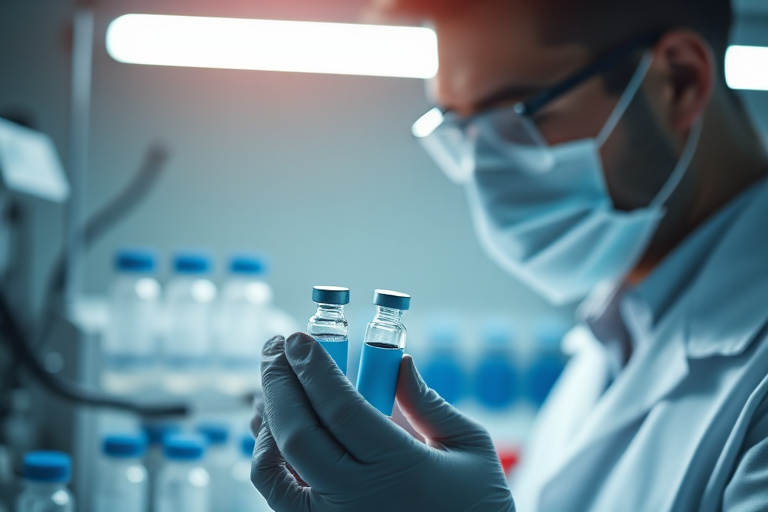
Clean the top of your peptide vial with an alcohol swab. Let it air dry for a few seconds. Do the same at your chosen injection site.
Free Download: Reconstitution calculator Cheat Sheet Never second-guess your peptide prep. Our free cheat sheet covers mixing ratios, syringe measurements, and injection steps. Get yours free, we'll email it to you instantly. [Email Input] [Download Button]
Draw up your dose. Insert the needle through the rubber stopper on the vial. Turn the vial upside down. Pull the plunger back to draw the prescribed amount. Check for air bubbles. If you see any, tap the syringe gently and push them out before adjusting to your correct dose.
Pinch a fold of skin at your injection site. This creates a clear target for the subcutaneous layer. Insert the needle at a 45 to 90 degree angle depending on how much fatty tissue you have. For most people, 90 degrees (straight in) works fine with insulin syringes.
Push the plunger slowly and steadily. Don't rush. After injecting, wait 5 seconds before withdrawing the needle. This helps ensure the full dose is delivered. Release the skin pinch and apply light pressure with a clean alcohol swab if needed.
Injection Site Rotation
Rotating your injection sites prevents tissue damage, reduces pain, and improves absorption consistency. Use a different spot each time you inject.
Check your GLP-1 eligibility
Use our free BMI Calculator to see if you may qualify for provider-reviewed GLP-1 therapy.
Try the BMI Calculator →The abdomen is the most popular injection site. Use the area around your belly button, staying at least two inches away from the navel itself. You have a large area to work with, making rotation easy.
Other common sites include the outer thigh, the back of the upper arm, and the love handle area. Each offers good subcutaneous tissue depth for comfortable injections.
Create a rotation system. Some people mentally divide their abdomen into quadrants and move clockwise. Others alternate between abdomen and thighs. The key is consistency: don't inject the same exact spot repeatedly.
If you notice any injection site that becomes hardened, painful, or discolored, avoid that area and tell your . These signs may indicate tissue irritation that needs time to recover.
Use our to ensure accurate dose preparation every time. Accurate dosing and proper technique work together for the best results.
Troubleshooting Common Issues
Bleeding after injection is normal and minor. Apply gentle pressure with a clean swab. A small drop of blood doesn't mean you did anything wrong. It just means you nicked a tiny capillary.
Bruising occasionally happens, especially if you inject too quickly or hit a small blood vessel. It's cosmetic and harmless. Rotating sites helps minimize bruising.
Pain during injection is usually minimal with insulin syringes. If injections consistently hurt, try letting the alcohol dry completely before injecting, using a fresh needle each time, and injecting slowly. Some people find that numbing the area with ice for 30 seconds beforehand helps.
If you have questions about your technique or experience unusual reactions, your can help. Many providers are happy to walk you through injection technique during your consultation.
Frequently Asked Questions
How deep do I insert the needle?
For subcutaneous injections with insulin syringes, insert the full length of the needle at a 45 to 90 degree angle into a pinched skin fold. The needle is short enough that it stays in the subcutaneous layer.
Can I inject peptides into muscle?
Unless your provider specifically instructs intramuscular injection, always inject subcutaneously. Most peptides are designed for subcutaneous administration. The absorption rate and effectiveness may differ with intramuscular injection.
What if I see air bubbles in my syringe?
Small air bubbles in a subcutaneous injection aren't dangerous, but they can affect dose accuracy. Tap the syringe gently to move bubbles to the top, then push the plunger slightly to expel them before injecting.
How do I dispose of used needles?
Place all used needles and syringes in a designated sharps container. Never throw loose needles in regular trash. When your sharps container is full, many pharmacies accept them for safe disposal.
Does the injection site affect how well the peptide works?
Absorption can vary slightly between sites. The abdomen generally provides the most consistent absorption. Follow your provider's recommendation for preferred injection sites for your specific peptide, like or others.
Your Personalized Plan Is Waiting
No two patients are the same, and your protocol shouldn't be either. FormBlends providers create customized treatment plans based on your health profile, goals, and preferences.
Medical References
- Jastreboff AM, Aronne LJ, Ahmad NN, et al. Tirzepatide Once Weekly for the Treatment of Obesity. N Engl J Med. 2022;387(3):205-216. [PubMed | ClinicalTrials.gov | DOI]
Sources &. References
- Pickart L, Vasquez-Soltero JM, Margolina A. GHK Peptide as a Natural Modulator of Multiple Cellular Pathways in Skin Regeneration. BioMed Res Int. 2015;2015:648108. Doi:10.1155/2015/648108
- Pickart L, Vasquez-Soltero JM, Margolina A. GHK and DNA: Resetting the Human Genome to Health. BioMed Res Int. 2014;2014:151479. Doi:10.1155/2014/151479
- Sikiric P, Hahm KB, Blagaic AB, et al. Stable Gastric Pentadecapeptide BPC 157, Robert's Cytoprotection, Adaptive Cytoprotection, and Therapeutic Effects. Curr Pharm Des. 2018;24(18):1990-2001. Doi:10.2174/1381612824666180515125918
- Chang CH, Tsai WC, Lin MS, et al. The promoting effect of pentadecapeptide BPC 157 on tendon healing involves tendon outgrowth, cell survival, and cell migration. J Appl Physiol. 2011;110(3):774-780. Doi:10.1152/japplphysiol.00945.2010
- Seiwerth S, Brcic L, Vuletic LB, et al. BPC 157 and blood vessels. Curr Pharm Des. 2014;20(7):1121-1125. Doi:10.2174/13816128113199990421
- Bock-Marquette I, Saxena A, White MD, et al. Thymosin beta4 activates integrin-linked kinase and promotes cardiac cell migration, survival and cardiac repair. Nature. 2004;432(7016):466-472. Doi:10.1038/nature03000
- Malinda KM, Sidhu GS, Mani H, et al. Thymosin beta4 accelerates wound healing. J Invest Dermatol. 1999;113(3):364-368. Doi:10.1046/j.1523-1747.1999.00708.x
The information in this article is intended for educational use only and shouldn't be considered medical advice. Consult a qualified healthcare provider before making any changes to your medication or supplement regimen. FormBlends helps with connections with licensed providers for personalized medical guidance.
Last updated: 2026-03-24
See your options in about 2 minutes
Take the free quiz and see what fits you. Quick, private, and no commitment to continue.
See my options →