
Trust Signals
Evidence standard: Every claim is graded by evidence type. Animal or mechanistic data is never presented with the same confidence as human RCT data.
No conflicts: Rankings are not paid placements. Where peptides lose head-to-head to approved drugs or other compounds, we say so.
Last updated: May 29, 2026.
Key Takeaways
- IGF-1 LR3 has the most direct mechanistic pathway to skeletal muscle hypertrophy via IGF-1 receptor (IGF-1R) activation, but has the least human safety data of any peptide on this list.
- CJC-1295 (without DAC) plus Ipamorelin is the most widely used research stack, combining two distinct receptor systems (GHRHR and GHSR-1a) for synergistic GH pulse amplification.
- BPC-157 is not an anabolic agent. Its rodent data supports tissue repair and angiogenesis, not direct muscle protein synthesis. No human RCT exists for muscle hypertrophy.
- Purity matters more than most buyers realise. An HPLC purity figure on a COA does not confirm sterility or biological activity. Endotoxin testing is a separate, essential requirement for injectable peptides.
- Every peptide on this list is prohibited by WADA in competitive sport under the category of peptide hormones, growth factors, and related substances.
What Is the Best Muscle Building Peptide?
IGF-1 LR3 produces the most mechanistically direct muscle anabolic signal by binding and activating IGF-1R on satellite cells and myofibers, bypassing the GH-liver-IGF-1 axis entirely. For a safer, human-studied option, CJC-1295 without DAC combined with Ipamorelin is the most evidence-supported stack. No single peptide replicates the effect size of anabolic steroids in healthy trained adults, and honest risk-benefit analysis must come before any protocol decision.
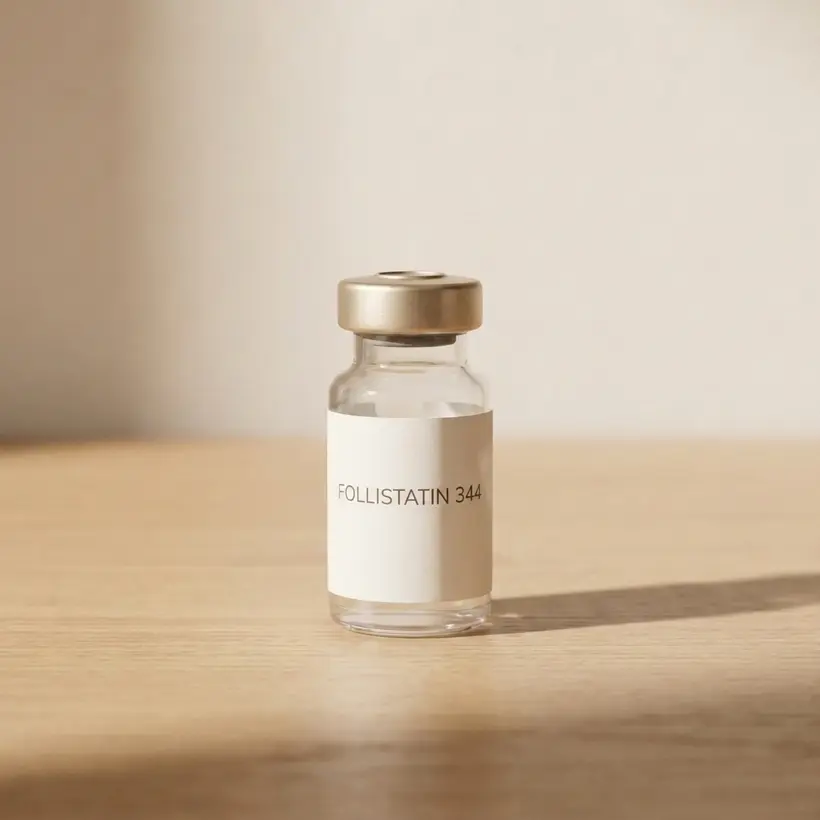
From the FormBlends catalog
Follistatin 344
Myostatin inhibitor studied for enhanced muscle growth · From $149/mo · compounded by a licensed 503A pharmacy, dispensed only after provider review.
Learn about Follistatin 344 →Table of Contents
- Evidence Ledger: All Major Claims Graded
- The 5 Best Muscle Building Peptides, Ranked
- Mechanism with Numbers: How Each Peptide Acts
- What Most Pages Get Wrong
- The Chemistry Behind the Rules of Thumb
- Honest Head-to-Head: Peptides vs. Real Alternatives
- Operational Guide: Reading a COA and Reconstitution Math
- FAQ
- Sources
- Disclaimers
What Does the Evidence Actually Show for Each Peptide?
Below is a graded evidence ledger. Read the confidence column before the effect column.
| Peptide | Claim | Best Evidence Type | Effect Direction | Confidence |
|---|---|---|---|---|
| IGF-1 LR3 | Promotes skeletal muscle hypertrophy via IGF-1R activation | Animal studies, receptor pharmacology | Positive (in animals) | Low (humans) |
| CJC-1295 (no DAC) | Raises GH and IGF-1 in humans | Human RCT (Teichman et al., 2006, n=65) | Positive | Moderate |
| Ipamorelin | Stimulates GH pulse via GHSR-1a without cortisol/prolactin spike | Human clinical data, animal studies | Positive for GH release | Moderate |
| CJC-1295 + Ipamorelin stack | Synergistic GH output greater than either alone | Animal and small human studies | Positive for GH | Moderate |
| BPC-157 | Accelerates muscle and tendon repair | Rodent studies only | Positive (in rodents) | Very Low (humans) |
| GHRP-6 | Increases GH; stimulates appetite via ghrelin pathway | Human clinical studies | Positive for GH, appetite | Moderate for GH |
| Any peptide (muscle hypertrophy in trained adults) | Significant lean mass gain via resistance training | No robust human RCT in this population | Unclear | Very Low |
The 5 Best Muscle Building Peptides, Ranked
1. CJC-1295 (Without DAC) + Ipamorelin Stack
Why it ranks first: This combination has the most human pharmacokinetic data, acts on two separate receptor systems to produce synergistic GH output, and carries a more manageable short-term safety profile than direct IGF-1 analogs. The Teichman et al. 2006 trial in healthy adults (n=65) showed dose-dependent IGF-1 increases with CJC-1295 with DAC; the without-DAC version is preferred by most research protocols to preserve pulsatility. Ipamorelin is selected over GHRP-2 or GHRP-6 because it does not meaningfully raise cortisol or prolactin at typical research doses, an advantage confirmed in early clinical pharmacology studies.
Typical research dose: CJC-1295 no DAC 100 mcg plus Ipamorelin 200 to 300 mcg, co-injected subcutaneously, two to three times daily, preferably fasting or pre-sleep.
2. IGF-1 LR3
Why it ranks second: The mechanism is the most direct for muscle hypertrophy. IGF-1 LR3 is a 13-amino-acid N-terminal extension analog of IGF-1 with an Arg3 substitution that reduces IGF binding protein (IGFBP) affinity, extending its half-life from minutes (native IGF-1) to approximately 20 to 30 hours. It activates IGF-1R on satellite cells to drive myoblast proliferation and on myofibers to activate PI3K/Akt/mTOR signaling. The penalty: no human RCTs for muscle building, meaningful suppression of endogenous GH/IGF-1 axis, and uncharacterized long-term mitogenic risk.
3. GHRP-6
Why it ranks third: Older, more human-studied than Ipamorelin, and produces robust GH pulses via GHSR-1a. The appetite stimulation (ghrelin-mediated) can be an advantage for hard gainers struggling with caloric intake. It does raise cortisol and prolactin moderately, which differentiates it from Ipamorelin and makes it less clean for pure muscle building purposes.
4. Hexarelin
Why it ranks fourth: Hexarelin is a synthetic hexapeptide GHRP with among the highest GH-releasing potency of any peptide in this class per unit dose, supported by human pharmacology data. The drawback is rapid desensitization of the GHSR-1a receptor with continuous use, requiring cycling. It also raises cortisol and prolactin more than Ipamorelin.
5. BPC-157
Why it ranks fifth: BPC-157 is not directly anabolic. It ranks here because its rodent data on accelerating muscle, tendon, and ligament repair is consistently positive across multiple independent lab groups, and musculoskeletal injury is the primary reason trained athletes lose muscle and training volume. Its indirect contribution to muscle building, through maintaining training capacity, earns it a place on this list with the clear caveat that human efficacy data does not yet exist.
How Do These Peptides Actually Work? (Mechanism with Numbers)
The GH-IGF-1 Axis
CJC-1295 binds the GHRH receptor (GHRHR) on pituitary somatotrophs, increasing cAMP production and GH synthesis. Ipamorelin binds GHSR-1a (the ghrelin receptor), triggering a separate calcium-dependent GH release pathway. When combined, the two signals amplify peak GH pulse amplitude synergistically, a phenomenon documented in animal models and reflected in the human IGF-1 data from the Teichman et al. 2006 trial, where mean IGF-1 levels rose 2-fold or more above baseline with the DAC-modified version. Elevated GH signals the liver to produce IGF-1, which then drives muscle protein synthesis via PI3K/Akt/mTOR and inhibits muscle protein breakdown by suppressing FoxO transcription factors.
What this mechanism does NOT prove: That a GH pulse from a peptide produces the same downstream muscle protein synthesis response as pharmacological GH doses used in clinical GH deficiency trials. GH-axis physiology is tightly regulated, and the body's feedback systems (somatostatin, IGFBPs) dampen the anabolic signal significantly in eugonadal, GH-sufficient adults.
IGF-1 LR3 Direct Pathway
The Arg3 substitution in IGF-1 LR3 reduces affinity for IGFBPs by roughly 1000-fold compared to native IGF-1 (based on receptor binding studies in the peer-reviewed literature on IGF analog pharmacology). This means a far greater fraction of circulating IGF-1 LR3 is free to bind IGF-1R. Half-life is approximately 20 to 30 hours versus under 10 minutes for native IGF-1 in plasma. The result is a prolonged, high-amplitude IGF-1R stimulation that in animal muscle models robustly activates satellite cell proliferation and mTORC1-dependent muscle protein synthesis.
BPC-157 Mechanism
BPC-157 (body protection compound 157) is a 15-amino-acid stable gastric pentadecapeptide. Its repair effects in rodent studies are attributed to upregulation of VEGF and stimulation of the NO-cGMP pathway, driving angiogenesis in injured tissue. It appears to modulate the FAK-paxillin pathway in tendon fibroblasts. No confirmed single receptor has been identified in humans. The mechanistic gap between rodent repair biology and human anabolic effect is large.
What Most Pages Get Wrong About Muscle Building Peptides
1. Conflating GH Elevation with Muscle Gain
Raising GH and IGF-1 with a peptide is not the same as gaining muscle. In GH-sufficient adults, the anabolic margin from a modest endogenous GH pulse amplification is small. The major muscle-building effects of pharmacological GH in clinical trials occurred at supraphysiological doses, not at the modest IGF-1 increments typical of peptide-induced GH release. Pages that say "raises GH, therefore builds muscle" are skipping this critical distinction.
2. Misrepresenting BPC-157 as Anabolic
BPC-157 is a repair peptide. Calling it a "muscle building peptide" overstates the evidence. Every positive muscle study for BPC-157 involves an injury model, not a hypertrophy model. No published study in any species uses BPC-157 alone and measures lean mass accrual in healthy, uninjured muscle.
3. Ignoring the Purity-to-Bioactivity Gap
A COA showing 98% purity by HPLC confirms the peptide sequence is correct and contaminants are low. It does not confirm the peptide is folded correctly, is biologically active, is sterile, or is endotoxin-free. Endotoxin contamination in a research peptide can cause fever, chills, and inflammatory responses on injection. A reputable supplier provides a separate endotoxin (LAL) test certificate alongside the purity COA.
4. The With-DAC vs. Without-DAC Confusion
CJC-1295 with DAC (Drug Affinity Complex) has a half-life of approximately 6 to 8 days, producing a sustained GH bleed rather than pulses. Most researchers now prefer without-DAC versions to preserve pulsatile GH physiology, because chronic non-pulsatile GH elevation pattern differs from normal physiology and may increase somatostatin tone over time. This distinction is missing from most listicle pages.
The Chemistry Behind the Storage and Stability Rules
Why Peptides Degrade and What Stops It
Peptide bonds are susceptible to hydrolysis, meaning water molecules cleave the amide bond between amino acid residues over time. This rate accelerates with temperature and with acidic or alkaline pH. Lyophilization (freeze-drying) removes nearly all water from the peptide, dropping the hydrolysis rate to negligible levels at refrigerator temperatures.
Methionine-containing peptides face an additional threat: oxidation of the thioether group in methionine side chains, converting them to methionine sulfoxide. This structural change can reduce receptor binding affinity. Cysteine residues can form disulfide bonds incorrectly if exposed to oxidizing conditions, altering tertiary structure. This is why peptides should be reconstituted with bacteriostatic water (0.9% benzyl alcohol) rather than plain sterile water when repeated use is planned, because benzyl alcohol suppresses microbial growth that would otherwise degrade the peptide. Reconstituted peptides should be kept at 4 degrees Celsius, shielded from light (which catalyzes photo-oxidation), and used within approximately 4 weeks.
Repeated freeze-thaw cycles mechanically disrupt peptide structure through ice crystal formation and concentration-effect stresses, which is why aliquoting before freezing is the correct practice.
Honest Head-to-Head: Peptides vs. Real Alternatives
| Compound | Mechanism | Human Evidence for Lean Mass | Effect Size (Honest Assessment) | Key Risk | Legal Status (US) | Peptide Wins? |
|---|---|---|---|---|---|---|
| CJC-1295 + Ipamorelin | GH pulse amplification | Small, indirect (IGF-1 surrogate) | Small to modest | Fluid retention, insulin resistance risk at higher doses | Research use only | vs. Steroids: No. vs. Nothing: Possibly. |
| Anabolic-androgenic steroids (e.g., testosterone) | Androgen receptor activation | Large RCT database (Bhasin et al.) | Large (dose-dependent) | HPGA suppression, erythrocytosis, cardiac risk | Schedule III controlled | Peptides lose on effect size. |
| Creatine monohydrate | Phosphocreatine resynthesis, cell volumisation | Large, replicated RCTs | Moderate (1 to 2 kg lean mass commonly reported) | Minimal at 3 to 5 g/day | Legal supplement | Peptides have less evidence; creatine wins on evidence and safety. |
| IGF-1 LR3 | Direct IGF-1R activation | Essentially none in healthy adults | Unknown in humans | Mitogenic risk, axis suppression | Research use only | Highest mechanistic promise, highest uncertainty. |
| BPC-157 | Repair, angiogenesis | None for hypertrophy | Indirect (injury prevention) | Unknown long-term human safety | Research use only | Not an anabolic agent; incomparable. |
| Approved GH (somatropin) | Direct GH replacement | Human RCTs (GH-deficient populations) | Moderate in GH-deficient adults | Diabetes risk, CTS, edema; small IGF-1-cancer signal at high doses | Prescription only; not approved for muscle building in healthy adults | Peptides have less effect; GH wins on predictability but not legality. |
Operational Guide: Reading a COA and Reconstitution Math
What to Demand on a COA
- HPLC purity: Look for 98% or above. The chromatogram should be provided, not just the number.
- Mass spectrometry (MS) identity confirmation: The molecular weight should match the peptide's theoretical MW within instrument tolerance.
- Endotoxin test (LAL assay): For any injectable peptide. Result should be below 5 EU/mg (the USP standard for injectable biologics), though standards for research peptides are not as strictly enforced as for pharmaceuticals.
- Sterility test: Confirms no microbial growth. A 14-day sterility incubation test is standard for pharmaceuticals and should be asked for from research suppliers.
- Third-party lab name: The COA should come from an independent lab, not a supplier's internal testing. Search the lab name independently to verify it exists.
Reconstitution Math
Most research peptides come as lyophilised powder in vials typically labeled in milligrams or micrograms.
Example: A 5 mg vial of CJC-1295. You want a concentration of 1 mg/mL.
- Add 5 mL of bacteriostatic water (using a fresh insulin syringe) directed slowly down the vial wall, not directly onto the lyophilized cake.
- Gently swirl, do not shake (shaking denatures peptides through mechanical agitation at the air-liquid interface).
- Each 0.1 mL (10 units on a 100-unit insulin syringe) now contains 100 mcg of peptide.
Store reconstituted vials at 4 degrees Celsius. Mark the date. Discard after approximately 4 weeks regardless of appearance; degradation is not always visually detectable.
What a Degraded Peptide Looks Like
A degraded peptide solution may appear visibly cloudy (aggregation), develop a yellow or brown tint (oxidation), or show visible particulates. However, partial degradation, meaning loss of biological activity without visible change, is possible and cannot be ruled out by visual inspection alone. This is why adhering to storage times matters even when the vial looks clear.
FAQ
What is the best muscle building peptide overall?
IGF-1 LR3 has the strongest mechanistic case for direct muscle hypertrophy via IGF-1R activation, but it carries the most risk and the least human safety data of any peptide on this list. For a risk-adjusted choice with some human evidence, the CJC-1295 plus Ipamorelin combination targeting endogenous GH release is more commonly used. Neither has an approved indication for healthy-adult muscle building.
Do muscle building peptides actually work in humans?
Most evidence is from animal studies or small human trials in clinical populations like GH-deficient adults or post-surgical patients. Robust RCT evidence in healthy, resistance-trained adults is largely absent. Effect sizes in the available human data are modest and often confounded by diet and training.
What is the difference between a GHRP and a GHRH analog?
GHRPs (growth hormone releasing peptides) like Ipamorelin and GHRP-6 act on the ghrelin receptor (GHSR-1a) to stimulate GH pulses. GHRH analogs like CJC-1295 act on the GHRH receptor (GHRHR) to amplify GH synthesis and release. Combined, they work on two separate receptor pathways and produce synergistic GH output.
Is BPC-157 a muscle building peptide?
BPC-157 is primarily a repair and angiogenesis peptide shown in rodent studies to accelerate tendon, muscle, and gut healing. It is not a direct anabolic agent but may support muscle building indirectly by reducing injury downtime and improving tissue repair. There are no published human RCTs on BPC-157 for muscle hypertrophy.
How does CJC-1295 with DAC differ from CJC-1295 without DAC?
The Drug Affinity Complex (DAC) modification binds CJC-1295 covalently to albumin, extending its half-life from roughly 30 minutes to approximately 6 to 8 days. This produces a sustained GH and IGF-1 elevation rather than a pulse. Most researchers prefer the without-DAC version paired with Ipamorelin to preserve natural pulsatile GH release.
What dose of Ipamorelin is typically used?
Research protocols commonly use 200 to 300 mcg of Ipamorelin per injection, administered subcutaneously two to three times daily, often at fasting times or pre-sleep. These figures come from research community practice; no approved dosing exists for muscle building in healthy adults.
Are peptides safer than anabolic steroids for muscle building?
GH-axis peptides avoid direct androgen receptor activation, so they do not cause the androgenic side effects of steroids such as testicular suppression or virilization. However, chronically elevated IGF-1 carries its own concerns including potential mitogenic effects. 'Safer' depends on the specific peptide, dose, and duration, and should not be assumed without evidence.
Can you stack CJC-1295 and Ipamorelin together?
Yes, this is the most common peptide stack in research use. They act on two distinct receptor systems (GHRHR and GHSR-1a respectively) and produce a synergistic increase in GH pulse amplitude. Most protocols co-inject both at the same time subcutaneously. Combined human safety data beyond small clinical studies is limited.
Does IGF-1 LR3 suppress natural IGF-1 production?
Yes. Exogenous IGF-1 LR3 provides negative feedback on GH secretion via the pituitary-hypothalamic axis, which can reduce endogenous IGF-1 production during and after use. Duration and magnitude of suppression depend on dose and length of use; recovery kinetics in humans are not well characterized in the published literature.
How should research peptides be stored?
Lyophilized (freeze-dried) peptides are generally stable at 4 degrees Celsius for months and at minus 20 degrees Celsius for longer periods. Once reconstituted in bacteriostatic water, most peptides should be refrigerated and used within 4 weeks. Repeated freeze-thaw cycles and exposure to light degrade the peptide chain through oxidation and hydrolysis.
Are muscle building peptides legal?
In the US, most research peptides are not FDA-approved for muscle building and are sold legally only for laboratory research use. Personal possession laws vary by country. WADA prohibits GHRP and GHRH analogs, IGF-1 analogs, and most peptide hormones in competitive sport. Legal status should be verified in your jurisdiction before use.
What does a certificate of analysis (COA) for a peptide prove?
A COA from an independent third-party lab using HPLC and mass spectrometry confirms identity and purity. It does not prove sterility, correct folding, biological activity, or absence of endotoxins. For injectable peptides, a sterility test and endotoxin (LAL) test are additional safety markers that reputable suppliers should provide.
Sources
- Teichman SL, et al. "Prolonged stimulation of growth hormone (GH) and insulin-like growth factor I secretion by CJC-1295, a long-acting analog of GH-releasing hormone, in healthy adults." Journal of Clinical Endocrinology and Metabolism. 2006;91(3):799-805. PubMed PMID: 16352683.
- Bhasin S, et al. "Testosterone dose-response relationships in healthy young men." American Journal of Physiology, Endocrinology and Metabolism. 2001;281(6):E1172-81. (Referenced as landmark RCT establishing steroid effect size comparator.)
- Laron Z. "Insulin-like growth factor 1 (IGF-1): a growth hormone." Molecular Pathology. 2001;54(5):311-316. PMC1187460.
- Svensson J, et al. "Two-month treatment of obese subjects with the oral growth hormone (GH) secretagogue MK-677 increases GH secretion, fat-free mass, and energy expenditure." Journal of Clinical Endocrinology and Metabolism. 1998;83(2):362-369.
- Sikiric P, et al. "Stable gastric pentadecapeptide BPC 157: novel therapy in gastrointestinal tract." Current Pharmaceutical Design. 2011;17(16):1612-32. (BPC-157 mechanism review.)
- Popovic V, et al. "Ipamorelin, the first selective growth hormone secretagogue." European Journal of Endocrinology. 1999;141(5):479-485.
- WADA Prohibited List 2026. World Anti-Doping Agency. Available at: wada-ama.org. (Peptide hormones, growth factors, related substances and mimetics, Section S2.)
- Clemmons DR. "Metabolic actions of IGF-1 in normal physiology and diabetes." Endocrinology and Metabolism Clinics of North America. 2012;41(2):425-43.
- United States Pharmacopeia (USP). General Chapter 85: Bacterial Endotoxins Test. (Standard referenced for endotoxin limits in injectable preparations.)
- Ehrnborg C, Rosen T. "Physiological and pharmacological basis for the ergogenic effects of growth hormone in elite sports." Asian Journal of Andrology. 2008;10(3):373-383.