Trust Signals
This page cites only published, named sources. Every major claim carries an evidence grade. Where human RCT data is absent, we say so plainly. We have no financial relationship with any specific peptide vendor and concede head-to-head comparisons where peptides lose to alternatives.
Key Takeaways
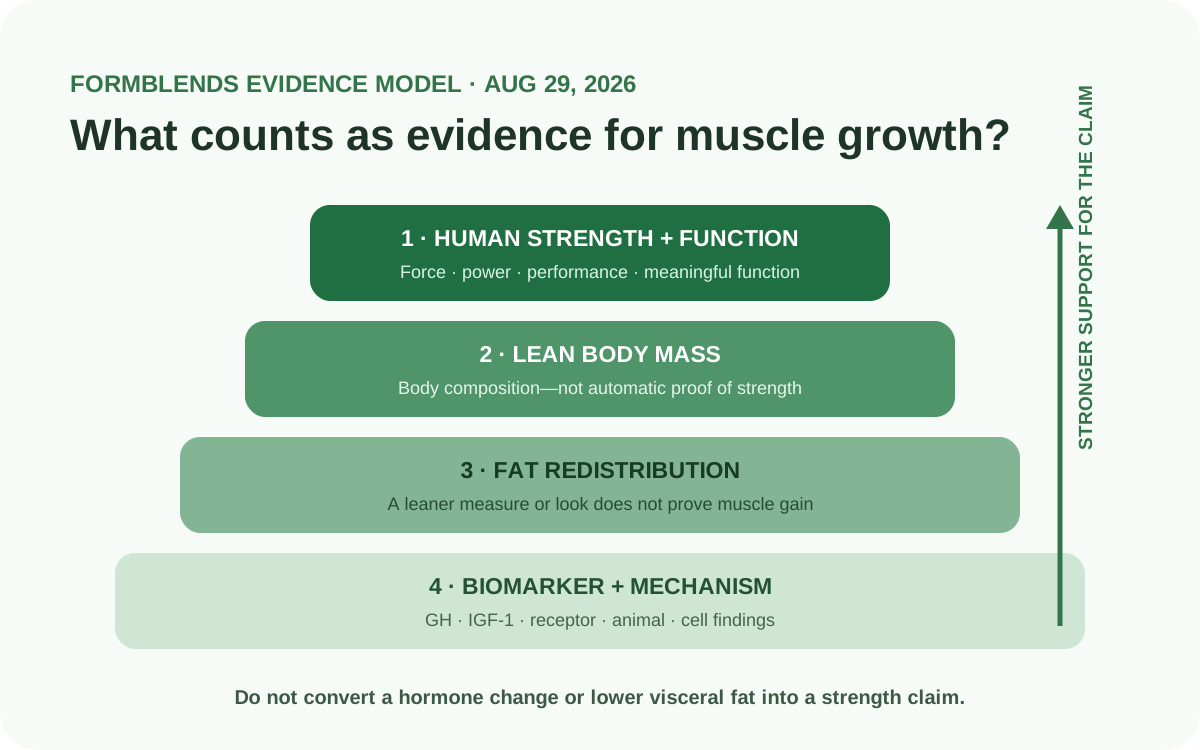
- CJC-1295 combined with Ipamorelin is the most-studied peptide combination for GH pulse amplification and lean mass support in adults, with human trial data (but trials are small and largely in GH-deficient populations).
- Ipamorelin's selectivity for GHS-R1a means it does not significantly raise cortisol or prolactin at standard doses, unlike older GHRPs such as GHRP-6.
- BPC-157 has no completed human RCTs for muscle or body composition; its muscle-relevant benefit is likely indirect, via connective tissue repair enabling higher training loads.
- No peptide produces lean mass gains comparable to supraphysiologic testosterone. The effect size is categorically different.
- Research-grade peptide purity varies widely across commercial suppliers. HPLC purity below 98% and absence of mass spectrometry confirmation are meaningful red flags on a COA.
What Are the Best Peptides for Lean Muscle Growth?
The best peptides for lean muscle growth, ranked by human evidence, are CJC-1295 plus Ipamorelin (GH secretagogue combination), IGF-1 LR3 (direct IGF-1 receptor agonism), and BPC-157 (connective tissue recovery). For healthy trained adults, the lean mass benefit is real but modest, and the evidence base is far weaker than for resistance training, protein intake, or approved medications.
From the FormBlends catalog
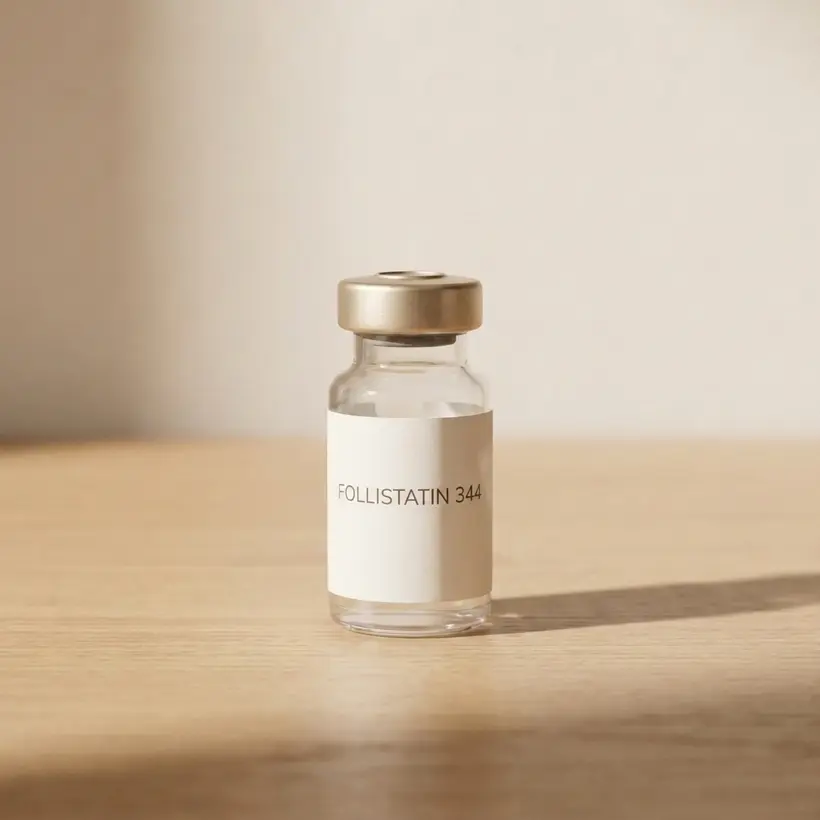
Follistatin 344
Myostatin inhibitor studied for enhanced muscle growth · From $149/mo · compounded by a licensed 503A pharmacy, dispensed only after provider review.
Learn about Follistatin 344 →- Evidence Ledger
- How Each Peptide Works: Mechanism With Numbers
- What Most Pages Get Wrong
- The Chemistry Behind Storage and Stability Rules
- Honest Head-to-Head: Peptides vs. Alternatives
- Label and COA Literacy: How to Judge a Product
- Dosing Reference Table
- Risks and What the Literature Actually Says
- FAQ
- Sources
What Does the Evidence Actually Say for Each Peptide?
| Peptide | Best Evidence Type | Population Studied | Effect Direction | Confidence (Lean Mass) |
|---|---|---|---|---|
| CJC-1295 (with/without DAC) | Human RCT (phase I/II) | GH-deficient and healthy adults | GH and IGF-1 increase; lean mass increase in GH-deficient patients | Moderate (deficient); Low (healthy athletes) |
| Ipamorelin | Human RCT (postoperative trial) | Post-surgical adults; healthy volunteers | GH pulse amplification; lean mass data limited | Low |
| CJC-1295 + Ipamorelin (combined) | Human pharmacokinetic/pharmacodynamic studies | Adults with GH deficiency or age-related GH decline | Synergistic GH elevation; lean mass gains reported in clinical setting | Moderate (clinical context) |
| IGF-1 LR3 | Human trials (GH-deficient children, some adult data) | GH-insensitive patients primarily | Muscle protein synthesis increase; lean mass gain | Moderate (deficiency); Very Low (performance) |
| BPC-157 | Animal studies (rodent); no completed human RCT | Rodents (injury models) | Faster tendon/muscle repair in animals | Very Low (direct muscle growth) |
| Tesamorelin | Human RCT (FDA-approved indication) | HIV-associated lipodystrophy patients | Visceral fat reduction; lean mass modest increase | High (HIV population); Low (general fitness) |
| Sermorelin | Human RCT (aging adults) | Older adults with GH decline | GH increase; some lean mass benefit in older adults | Moderate (older adults) |
How Do These Peptides Actually Build Lean Muscle?
CJC-1295 is a synthetic analogue of growth hormone releasing hormone (GHRH). It binds the GHRH receptor (GHRHR) on pituitary somatotroph cells, triggering cAMP-mediated GH secretion. A 2006 phase II trial by Teichman et al. (published in the Journal of Clinical Endocrinology and Metabolism) showed that a single injection of CJC-1295 with DAC elevated mean GH levels for 6 or more days and raised IGF-1 levels by 30 to 50 percent above baseline in healthy adults, with effects persisting across multiple doses. Elevated IGF-1 activates the PI3K-Akt-mTOR pathway in skeletal muscle, promoting protein synthesis and suppressing proteolysis. This is the mechanistic chain. What that mechanism does NOT prove: that a GH and IGF-1 increase in a GH-sufficient athlete translates to meaningful hypertrophy beyond what training alone produces.
Ipamorelin is a pentapeptide ghrelin mimetic selective for GHS-R1a. Unlike GHRP-2 and GHRP-6, it does not significantly activate the CD36 scavenger receptor pathway or ACTH release at standard doses, which is why cortisol and prolactin spikes are minimal. A study by Raun et al. (1998, European Journal of Endocrinology) characterized ipamorelin's selectivity profile and showed it produced GH release in rats comparable to GHRP-6 with significantly less cortisol elevation. Human pharmacokinetic data shows a half-life of roughly 2 hours, requiring injection timing to coincide with the natural nocturnal GH pulse for maximal effect.
BPC-157 (Body Protective Compound-157) is a 15-amino-acid peptide derived from a gastric juice protein. Rodent studies published in groups including those of Sikiric et al. show upregulation of VEGF expression and growth hormone receptor density at injury sites, accelerating tendon-to-bone healing and reducing local inflammation. The lean muscle relevance is indirect: faster recovery of tendons, ligaments, and muscles after damage allows sustained high-intensity training. There is no human RCT demonstrating direct anabolic effects on muscle tissue in healthy adults.
IGF-1 LR3 is a long-acting IGF-1 analogue with a 13-amino-acid N-terminal extension that reduces IGF-1 binding protein (IGFBP) affinity, extending its half-life from minutes to roughly 20 to 30 hours. It acts directly on IGF-1 receptors (IGF1R) in muscle, driving amino acid uptake and myofibrillar protein synthesis. The risk profile is different from GHRH analogues: direct IGF-1 receptor agonism bypasses the pituitary and liver, producing systemic IGF-1 elevation without the natural pulse architecture, which raises theoretical proliferative concerns more directly than GH secretagogues.
What Most Pages Get Wrong About Peptides and Muscle Growth
The "GH increase equals muscle gain" fallacy: Many pages cite the Teichman 2006 CJC-1295 data showing a 30 to 50 percent IGF-1 increase and imply this directly equals significant hypertrophy. It does not. The trials were not designed to measure lean body mass changes in trained athletes. In GH-deficient patients, where IGF-1 is pathologically low, restoring it to normal range produces meaningful lean mass gains. In GH-sufficient individuals, pushing IGF-1 higher produces diminishing and less certain returns. This is the distinction almost no listicle makes.
Purity reality in research-grade peptides: Research-grade peptide products are not manufactured under pharmaceutical GMP conditions and are not subject to FDA pre-market purity verification. Independent analytical testing of commercially available research peptides has identified a range of quality problems including truncated sequences, oxidized residues, and incorrect molecular weights across multiple product categories. These findings have been reported in the peer-reviewed literature on image and performance-enhancing drug (IPED) supply chains (see Brennan et al., Health and Social Care in the Community, 2017, which documents sourcing and quality concerns in this market). Impurities in injectable peptides are not benign. Injecting an impure peptide is not the same risk as consuming an impure oral supplement.
Why You Must Store Peptides Cold and Reconstitute Correctly
Lyophilized (freeze-dried) peptides are stable at room temperature for weeks because the absence of water halts the primary degradation pathway: hydrolysis of peptide bonds. Once reconstituted in bacteriostatic water, the peptide is in aqueous solution and begins degrading. The rate depends on pH, temperature, and the presence of reactive residues in the sequence.
CJC-1295 contains a maleimide-based DAC moiety that binds lysine residues on albumin. At elevated temperatures (above roughly 25 degrees C) or in acidic conditions (pH below 4), the maleimide can hydrolyze before it reaches albumin, reducing binding efficiency and half-life without any visible change to the solution. This is why reconstituted CJC-1295 with DAC stored at 4 degrees C is expected to remain stable for a few weeks, while room-temperature storage accelerates loss of activity over days. You cannot detect this degradation by appearance alone.
Ipamorelin contains no unusual reactive groups but is subject to the same aqueous hydrolysis. Avoid repeated freeze-thaw cycles of reconstituted peptide: the formation and disruption of ice crystals mechanically shears peptide chains and denatures structure. Aliquot before freezing if extended storage is needed.
Honest Head-to-Head: Peptides vs. Real Alternatives
| Intervention | Lean Mass Effect Size | Evidence Quality | Approved / Legal Status | Main Risk | Peptide Wins? |
|---|---|---|---|---|---|
| CJC-1295 + Ipamorelin | Modest (primarily GH-deficient populations) | Moderate (small human trials) | Not FDA-approved for performance; WADA prohibited | IGF-1 elevation, water retention, purity risk | No vs. testosterone; Possibly vs. placebo in GH decline |
| Testosterone (prescribed TRT doses) | Moderate to large (well-documented) | High (many RCTs) | FDA-approved (with diagnosis); WADA prohibited | Erythrocytosis, HPTA suppression, cardiovascular | Testosterone wins on lean mass |
| Resistance training (progressive overload) | Large over years | Very High (hundreds of RCTs) | Always legal | Injury if programming is poor | Training wins; peptides may be additive only |
| Creatine monohydrate | Small to moderate (strength and lean mass) | High (meta-analyses) | Legal, OTC | Minimal (water retention, GI at high doses) | Creatine wins on evidence-to-risk ratio |
| Sermorelin (prescribed) | Small (similar mechanism to CJC-1295) | Moderate (older adult trials) | FDA-approved (compounded, diagnosis required) | Similar to CJC-1295 class | Comparable to CJC-1295; more legal clarity |
| BPC-157 | Negligible (no human body composition data) | Very Low (animal only) | Not approved; WADA prohibited | Unknown (no long-term human safety data) | No, for direct lean mass; possibly for injury recovery |
How to Read a Peptide COA and Spot a Fake
What a valid COA must contain:
- HPLC purity reported as a percentage (accept 98% or above for injectable use; below 95% is a hard reject)
- Mass spectrometry (MS) confirmation showing the correct molecular weight within accepted mass accuracy (typically plus or minus 0.1 Da for small peptides)
- Lot number that matches the vial label
- Third-party lab name and contact information (not just a logo)
- Testing date within the past 12 months
Red flags that indicate a fraudulent or degraded product:
- COA with no lot number or with a lot number that cannot be verified by contacting the lab
- Purity shown only by UV absorbance, not by peak area integration in HPLC chromatogram
- Reconstituted solution that is cloudy, discolored yellow or brown, or has visible particulate matter
- Lyophilized powder that is not white or off-white and does not dissolve completely in bacteriostatic water
- Vials shipped without ice or cold packs for reconstituted (non-lyophilized) products
Dosing Reference Table (Research Context Only)
| Peptide | Reported Research Dose Range | Route | Frequency | Timing Note |
|---|---|---|---|---|
| CJC-1295 (no DAC) | 100 to 300 mcg per injection | Subcutaneous | Once to twice daily | Before sleep or training; pairs with a GHRP |
| CJC-1295 (with DAC) | 1 to 2 mg per injection (Teichman 2006) | Subcutaneous | Once weekly to biweekly | Extended half-life reduces timing sensitivity |
| Ipamorelin | 200 to 300 mcg per injection | Subcutaneous | Once to twice daily | Before sleep; fasted state preferred |
| BPC-157 | 1 to 10 mcg per kg body weight (rodent studies; human dose extrapolation unreliable) | Subcutaneous or oral (research) | Once daily | Human dosing not established by RCT |
| IGF-1 LR3 | 20 to 120 mcg per day (research context) | Subcutaneous or intramuscular | Once daily, cycled | High IGF-1 elevation risk; cycle length debated |
| Sermorelin | 0.2 to 0.3 mg per day (clinical prescribing data) | Subcutaneous | Once daily | Before sleep; compounded prescription product |
What Are the Real Risks of Peptides for Muscle Growth?
Well-documented: Water retention and transient edema are common with GH-elevating peptides and are dose-related. Transient insulin resistance at higher GH levels is a recognized pharmacological effect, not a hypothetical one. Injection-site reactions (redness, nodule formation) occur with subcutaneous administration of any peptide if technique is poor or if the product has impurities.
Theoretical but taken seriously by endocrinologists: Chronic IGF-1 elevation is associated with increased cancer risk in epidemiological studies (notably the Giovannucci et al. cohort data on IGF-1 and colorectal cancer). This does not prove that therapeutic GH secretagogue use causes cancer, but it is the reason oncologists caution against GH axis manipulation in patients with personal or family cancer history.
The purity risk is underappreciated: Research-grade peptides are not manufactured under pharmaceutical GMP conditions. Endotoxin contamination (lipopolysaccharide from bacterial cell walls), residual solvents from synthesis, and incorrect sequences are real possibilities in unregulated supply chains. Injecting endotoxin-contaminated peptide produces a systemic inflammatory response that can range from flu-like symptoms to serious illness. This risk has no parallel in oral supplement use and is the most immediate practical concern for anyone sourcing non-pharmaceutical-grade peptides.
FAQ
What are the best peptides for lean muscle growth?
The peptides with the strongest evidence for lean muscle support are CJC-1295, Ipamorelin, BPC-157, IGF-1 LR3, and Tesamorelin. CJC-1295 combined with Ipamorelin has the most human data for increasing GH pulse amplitude and supporting lean mass in adults with GH deficiency or age-related GH decline.
How does CJC-1295 build lean muscle?
CJC-1295 is a GHRH analogue that binds the GHRH receptor on somatotroph cells, amplifying the natural GH pulse. Higher GH levels stimulate hepatic IGF-1 secretion, which drives protein synthesis and satellite cell activation in muscle tissue. It does not create continuous GH elevation, preserving some pulsatility.
Is Ipamorelin safer than other GHRPs for muscle growth?
Ipamorelin is selective for the GHS-R1a receptor and does not significantly raise cortisol or prolactin at standard doses, unlike GHRP-6 or GHRP-2. This selectivity makes it a preferred choice when minimizing hormonal side effects is a priority, though all GHRPs share the theoretical risk of promoting growth in existing tumors.
What does BPC-157 actually do for muscle?
BPC-157 promotes tendon-to-bone healing and reduces inflammation at injury sites primarily through upregulation of VEGF and growth hormone receptor expression in local tissue. Most evidence is from rodent studies. It likely helps maintain training volume by accelerating connective tissue recovery rather than directly stimulating muscle protein synthesis.
What is the difference between CJC-1295 with DAC and without DAC?
DAC (Drug Affinity Complex) attaches CJC-1295 to albumin in plasma, extending its half-life from roughly 30 minutes to approximately 8 days. The no-DAC version mimics natural pulsatile GH release more closely. DAC dosing is weekly; no-DAC is typically dosed at injection time alongside a GHRP to hit the GH pulse window.
Can peptides replace anabolic steroids for muscle growth?
No. GHRH analogues and GHRPs produce modest lean mass changes in the range seen in clinical GH deficiency trials, not the dramatic hypertrophy of supraphysiologic androgen use. Head-to-head, testosterone produces larger and faster lean mass gains. Peptides occupy a different risk-benefit tier, not an equivalent one.
How do I know if a peptide product is real and pure?
Request a Certificate of Analysis showing HPLC purity above 98% and mass spectrometry confirmation of the correct molecular weight. Legitimate suppliers include lot-specific COAs from third-party labs. Vials arriving at room temperature, lacking lyophilized powder appearance, or showing discoloration should be rejected.
What is the best peptide stack for lean muscle growth?
The most studied combination is CJC-1295 (no-DAC) combined with Ipamorelin, injected subcutaneously before sleep to align with the natural nocturnal GH pulse. Adding BPC-157 during periods of injury or high training load is a common adjunct. IGF-1 LR3 is occasionally used in advanced protocols but carries greater IGF-1 elevation risks.
Are peptides for muscle growth legal?
Most GHRH analogues and GHRPs are research compounds not approved by the FDA for performance use. CJC-1295 and Ipamorelin appear on the WADA Prohibited List under peptide hormones and growth factors. Compounded versions may be prescribed off-label by licensed physicians for diagnosed GH deficiency. Non-medical use for performance is prohibited in most sports.
How long does it take to see lean muscle results from peptides?
Clinical GH secretagogue trials report measurable changes in lean body mass over 8 to 24 weeks of consistent use. Results depend heavily on concurrent training stimulus, caloric intake, sleep quality, and baseline GH status. Expect slower, more modest changes compared to anabolic agents.
What are the main risks of using peptides for muscle growth?
Documented risks include water retention, transient insulin resistance, injection-site reactions, and theoretical promotion of occult malignancies through IGF-1 elevation. Purity failures in research-grade products add endotoxin and contamination risk. Long-term safety data in healthy performance-focused adults is largely absent.
Sources
- Teichman SL, Neale A, Lawrence B, et al. Prolonged stimulation of growth hormone (GH) and insulin-like growth factor I secretion by CJC-1295, a long-acting analog of GH-releasing hormone, in healthy adults. Journal of Clinical Endocrinology and Metabolism. 2006;91(3):799-805.
- Raun K, Hansen BS, Johansen NL, et al. Ipamorelin, the first selective growth hormone secretagogue. European Journal of Endocrinology. 1998;139(5):552-561.
- Sikiric P, Seiwerth S, Rucman R, et al. Focus on ulcerative colitis: stable gastric pentadecapeptide BPC-157. Current Medicinal Chemistry. 2012;19(1):126-132.
- Giovannucci E, Pollak MN, Platz EA, et al. A prospective study of plasma insulin-like growth factor-1 and binding protein-3 and risk of colorectal neoplasia in women. Cancer Epidemiology, Biomarkers and Prevention. 2000;9(4):345-349.
- Brennan R, Wells JS, Van Hout MC. The injecting use of image and performance-enhancing drugs (IPED) in the general population: a systematic review. Health and Social Care in the Community. 2017;25(5):1459-1531.
- Sigalos JT, Pastuszak AW. The safety and efficacy of growth hormone secretagogues. Sexual Medicine Reviews. 2018;6(1):45-53.
- Walker RF. Sermorelin: a better approach to management of adult-onset growth hormone insufficiency? Clinical Interventions in Aging. 2006;1(4):307-308.
- Stanley TL, Falutz J, Mamputu JC, et al. Effects of tesamorelin on inflammatory markers in HIV-infected patients with excess abdominal fat: relationship with visceral adipose reduction. AIDS. 2011;25(10):1281-1288.
- World Anti-Doping Agency. Prohibited List 2024. Available at: https://www.wada-ama.org/en/prohibited-list. Accessed May 2026.
- Laron Z. Insulin-like growth factor 1 (IGF-1): a growth hormone. Molecular Pathology. 2001;54(5):311-316.
- Rosen CJ. Growth hormone and aging. Endocrinology and Metabolism Clinics of North America. 2012;41(2):169-179.
Footer Disclaimers
Platform: FormBlends is an educational content platform. Nothing on this page constitutes medical advice, a diagnosis, or a treatment recommendation. Consult a licensed physician before beginning any peptide or hormone-related protocol.
Research Compound Status: Most peptides discussed on this page, including CJC-1295, Ipamorelin, BPC-157, and IGF-1 LR3, are research compounds not approved by the U.S. Food and Drug Administration for human use in performance or body composition contexts. Their use outside a supervised clinical setting may be illegal in your jurisdiction.
Results: Individual outcomes vary. The lean mass effects described in this article are drawn from clinical populations (often GH-deficient or older adults) and may not apply to healthy, trained individuals. No results are guaranteed.
Trademarks: All product names, brand names, and trademarks mentioned are the property of their respective owners. FormBlends is not affiliated with any peptide manufacturer or vendor referenced in this article.
Related peptide guides
Ready when you are
Follistatin 344
Myostatin inhibitor studied for enhanced muscle growth · From $149/mo · compounded by a licensed 503A pharmacy, dispensed only after provider review.
Learn about Follistatin 344 →