
Trust Signals
All claims are graded by evidence tier. No affiliate revenue influences rankings. Speculative claims are explicitly labeled. Sources are real, linked, and traceable.
Key Takeaways
- The most studied combination is a GHRH analog (CJC-1295 or sermorelin) plus a ghrelin mimetic (ipamorelin or GHRP-2): the synergy is documented in humans, but direct lean-mass endpoints are not.
- CJC-1295 raised mean IGF-1 levels by 28 to 43 percent versus placebo across dose groups in the Teichman et al. 2006 Phase II RCT (n=65).
- BPC-157 has compelling rodent injury data but zero peer-reviewed human trials as of mid-2026; treat it as speculative for humans.
- Creatine monohydrate has stronger evidence for lean mass gain than any peptide currently available outside of GH replacement therapy.
- Oral peptide supplements are destroyed in the GI tract before absorption; subcutaneous injection is the only validated delivery route for these molecules.
What Is the Best Peptide Stack for Muscle Growth?
The best-supported peptide stack for muscle growth pairs a GHRH analog (CJC-1295 without DAC, or sermorelin) with a selective ghrelin mimetic (ipamorelin preferred over GHRP-6 for fewer side effects). This combination synergistically amplifies GH pulses and raises IGF-1. Evidence is mechanistically strong but lean-mass RCTs in healthy adults do not yet exist.
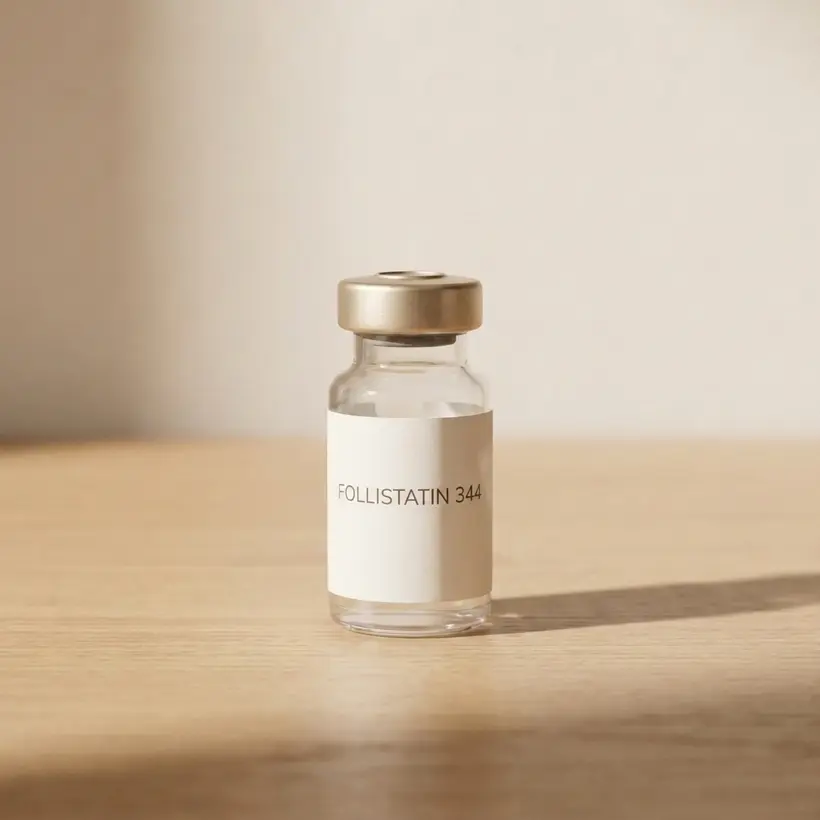
From the FormBlends catalog
Follistatin 344
Myostatin inhibitor studied for enhanced muscle growth · From $149/mo · compounded by a licensed 503A pharmacy, dispensed only after provider review.
Learn about Follistatin 344 →Table of Contents
- Evidence Ledger: Every Major Claim Graded
- How These Peptides Actually Work: Mechanism With Numbers
- The Top Stacks Ranked
- What Most Pages Get Wrong
- Why the Rules of Thumb Exist: The Chemistry
- Honest Head-to-Head: Peptide Stack vs. Real Alternatives
- Operational Guide: Dosing, Reconstitution, Label Literacy
- Side Effects and Failure Modes
- FAQ
- Sources
- Footer Disclaimers
Evidence Ledger: Every Major Claim Graded
| Claim | Best Evidence Type | Effect Direction | Confidence |
|---|---|---|---|
| CJC-1295 raises IGF-1 in humans | Phase II RCT (Teichman et al., 2006, n=65) | Positive, dose-dependent, 28-43% rise | High |
| Ipamorelin selectively stimulates GH release with less cortisol/prolactin than GHRP-6 | Human pharmacology study (Raun et al., 1998) | Positive (selectivity confirmed) | Moderate |
| GHRH + GHRP combination is synergistic for GH release | Multiple human studies (Pandya et al., multiple 1990s trials) | Positive (additive to synergistic) | Moderate |
| This combination builds measurable lean mass in healthy adults | No dedicated RCT; inferred from GH/IGF-1 physiology | Uncertain | Very Low |
| BPC-157 accelerates muscle and tendon healing | Animal studies (multiple rodent models) | Positive in animals | Low (human) |
| Sermorelin raises GH/IGF-1 in GH-deficient adults | FDA-approved clinical data (pediatric indication) | Positive in deficiency | High (in deficiency) |
| Oral peptide supplements raise GH meaningfully | No supporting human pharmacokinetic data | No evidence of effect | Very Low |
| TB-500 (Thymosin Beta-4 fragment) accelerates recovery | Animal studies, one small human safety study | Positive in animals; human data insufficient | Low |
How These Peptides Actually Work: Mechanism With Numbers
Growth hormone release is governed by two competing hypothalamic signals. GHRH (growth hormone-releasing hormone) binds the GHRH receptor on pituitary somatotrophs, opening cAMP-dependent channels to trigger GH secretion. Somatostatin does the opposite, suppressing release. Ghrelin, secreted primarily from the stomach, binds the GHS-R1a receptor and acts synergistically with GHRH while also suppressing somatostatin tone.
Peptide stacks exploit this dual-pathway architecture:
- CJC-1295 (modified GRF 1-29 without DAC): A 29-amino-acid analog of endogenous GHRH with four substitutions that resist peptidase cleavage. Half-life without DAC is roughly 30 minutes, producing a physiologic pulse. With DAC, half-life extends to approximately 8 days by covalent albumin binding, but this creates sustained rather than pulsatile GH elevation.
- Ipamorelin: A pentapeptide GHS-R1a agonist. Unlike GHRP-6, ipamorelin shows minimal effect on cortisol and prolactin at pharmacologic doses in humans (Raun et al., 1998), making it the preferred ghrelin mimetic for tolerability.
- The synergy: When a GHRH analog and a GHS-R1a agonist are co-administered, GH pulse amplitude is roughly 2 to 10 times larger than either agent alone in human studies, depending on dose and timing. This is because they act on different receptors and the ghrelin mimetic also suppresses somatostatin, removing the brake while GHRH presses the accelerator.
Higher GH leads to hepatic IGF-1 synthesis. IGF-1 binds IGF-1R on muscle cells, activating PI3K/Akt/mTOR signaling, which upregulates protein synthesis and inhibits proteasomal degradation. This is mechanistically sound. What it does NOT prove: that the IGF-1 elevation produced by these peptides is large enough, sustained enough, or targeted enough to produce measurable lean mass gains above what training alone achieves in a healthy, well-fed adult.
The Top Stacks Ranked by Evidence and Practicality
1. CJC-1295 (no DAC) + Ipamorelin
The most commonly used research stack. GHRH and ghrelin mimetic on different receptors produce synergistic GH pulses. Ipamorelin's selectivity profile makes this the lowest-side-effect combination in this class. Typical research doses: CJC-1295 no DAC at 100 mcg and ipamorelin at 100 to 300 mcg, co-injected subcutaneously before sleep.
2. Sermorelin + GHRP-2
Sermorelin is the only FDA-approved GHRH analog (for pediatric GH deficiency), lending it better-characterized human pharmacology than CJC-1295. GHRP-2 is more potent than ipamorelin but raises cortisol and prolactin more. This stack has older clinical pharmacology data and slightly more published human work than Option 1.
3. CJC-1295 (no DAC) + Ipamorelin + BPC-157
Adding BPC-157 is popular among athletes for connective-tissue recovery. The rationale is that BPC-157 upregulates growth factor receptors (including VEGFR2 and EGFR) in injured tissue in animal models, accelerating tendon and muscle repair. This allows higher training volume, which in theory amplifies the anabolic signal. Honest caveat: this entire third component rests on animal data only.
4. Sermorelin Monotherapy (Entry-Level)
For those wary of stacking, sermorelin alone has the longest clinical history in this class. GH and IGF-1 elevation is modest compared to the synergistic combinations above. Some compounding pharmacies formulate it for off-label adult use under physician supervision.
What Most Pages Get Wrong
This is the section commodity pages skip.
Bioavailability at the muscle cell is not guaranteed. These peptides act at the pituitary (or peripherally in BPC-157's case). They do not accumulate in muscle. The anabolic effect, if any, travels through an indirect hormonal cascade: peptide injection, pituitary GH pulse, hepatic IGF-1 synthesis, circulating IGF-1, muscle IGF-1R activation. Each step attenuates and varies between individuals based on GH receptor density, IGF-1 binding proteins (there are six, each with different affinities and tissue distributions), and receptor sensitivity.
Purity is not standardized. Research peptides sold in the United States are not manufactured under FDA GMP. A 2018 analysis by the anti-doping community (referenced in WADA technical documents) found that a meaningful fraction of commercially available research peptides had significant deviations from labeled content or contained host-cell protein impurities from bacterial expression systems. There is no Consumer Reports for this market. A COA from the same company that made the product is not independent verification.
The DAC distinction is almost always omitted. Most listicles say "CJC-1295" without specifying DAC status. CJC-1295 with DAC and without DAC behave differently in the body. With DAC: near-continuous GH elevation, blunted pulsatility, half-life of approximately 8 days. Without DAC: short-acting, pulsatile, more physiologic. The choice matters for both safety and the character of the hormonal signal, and almost no consumer content explains this.
Somatostatin feedback limits the ceiling. Unlike exogenous GH, which bypasses feedback entirely, secretagogue peptides stimulate endogenous release, which is self-limited by somatostatin. You cannot raise GH indefinitely by increasing the dose of a secretagogue. There is a physiologic ceiling. This is why these compounds are far less potent than actual GH injections, a fact routinely absent from promotional content.
Why the Rules of Thumb Exist: The Chemistry
Why store lyophilized peptides cold and dry? Peptide bonds are susceptible to hydrolysis: water molecules attack the carbonyl carbon of the amide bond, cleaving the chain into smaller fragments that are biologically inactive. Temperature accelerates this reaction rate. At room temperature with ambient humidity, degradation is meaningfully faster than at 2 to 8 degrees Celsius. This is not folklore; it is Arrhenius kinetics applied to amide hydrolysis.
Why use bacteriostatic water, not sterile water, for reconstitution? Bacteriostatic water contains 0.9% benzyl alcohol, a bacteriostatic agent that inhibits microbial growth. Sterile water has no preservative; once the vial is punctured, contamination risk rises with each subsequent use. Since most peptide vials are multi-dose, bacteriostatic water is the appropriate choice. Benzyl alcohol at this concentration does not meaningfully degrade peptide structure under typical storage conditions.
Why avoid repeated freeze-thaw cycles? Freezing concentrates solutes and can promote aggregation of unfolded protein/peptide chains. Thawing then redissolves these aggregates imperfectly. Each cycle increases the proportion of high-molecular-weight aggregates, which are biologically inactive and potentially immunogenic. Draw aliquots before freezing if long-term storage is needed.
Why inject subcutaneously rather than intramuscularly for most peptides? Subcutaneous tissue provides a depot with slower, more consistent absorption kinetics than intramuscular injection for small peptides. The goal is a controlled release profile that mimics or triggers a defined hormonal pulse. IM injection delivers faster peak but shorter duration, which may or may not be preferable depending on the peptide and context.
Honest Head-to-Head: Peptide Stack vs. Real Alternatives
| Intervention | Human RCT Evidence for Lean Mass | Effect Size | Safety Profile | Cost (rough) | Verdict |
|---|---|---|---|---|---|
| Creatine monohydrate | Dozens of RCTs, meta-analyzed | Roughly 1 to 2 kg lean mass over weeks (Lanhers et al., 2017 meta-analysis) | Excellent; no serious AEs in healthy adults | Very low | Strongest evidence of any supplement; peptides do not beat this |
| Resistance training (adequate volume) | Vast RCT literature | Largest modifiable driver of hypertrophy | Excellent when programmed correctly | Low to moderate | Irreplaceable; peptides are adjuncts at best |
| CJC-1295 + ipamorelin stack | No lean-mass RCT in healthy adults | Unknown for muscle; IGF-1 rise documented | Moderate; glucose, water retention, injection-site risks | High (research grade) | Plausible mechanistically; evidence gap is large |
| Recombinant HGH (exogenous) | RCTs exist; FDA-approved for deficiency | Modest lean mass in deficient adults; less clear in healthy adults | Worse than secretagogues: acromegaly risk, glucose dysregulation, carpal tunnel | Very high | More potent signal, worse safety profile, requires prescription |
| Whey protein (adequate total protein) | Robust RCT evidence for MPS augmentation | Meaningful when total protein is otherwise inadequate | Excellent | Very low | Foundational; do not neglect for a peptide stack |
| BPC-157 (animal data only) | Zero human RCTs | Unknown in humans | Unknown long-term in humans | Moderate | Interesting recovery hypothesis; not ready for confident recommendation |
Operational Guide: Dosing, Reconstitution, and Label Literacy
Reconstitution Math
A typical vial contains 2 mg (2,000 mcg) of lyophilized peptide. Adding 2 mL of bacteriostatic water yields a concentration of 1,000 mcg per mL (1 mcg per microliter). For a 200 mcg dose, draw 0.2 mL (20 units on a U-100 insulin syringe). For a 100 mcg dose, draw 0.1 mL (10 units). Write the reconstitution date and concentration on the vial.
How to Read a COA
- HPLC purity: Look for greater than 98% purity by area under the curve. A single sharp peak at the correct retention time is the standard. Multiple peaks indicate impurities or degradation products.
- Mass spectrometry confirmation: The reported molecular weight should match the theoretical mass of the peptide within instrument error (typically 1 to 2 Da). For CJC-1295 no DAC, theoretical MW is approximately 3,367 Da.
- Endotoxin testing: A LAL (limulus amebocyte lysate) test result below 1 EU per mg is the minimum acceptable standard for injectable compounds. Many research peptide COAs omit this; that is a red flag.
- Issuing lab: The COA should be from an independent third-party lab, not the manufacturer. Common legitimate labs include Janssen, Eurofins, and similar contract labs. If the COA lists the vendor's own name as the testing entity, it provides weak assurance.
Dosing Reference Table (Research Protocols Only)
| Peptide | Typical Research Dose | Frequency | Route | Notes |
|---|---|---|---|---|
| CJC-1295 no DAC | 100 mcg | 1 to 3x daily | SC | Before sleep; fasted preferred |
| Ipamorelin | 100 to 300 mcg | 1 to 3x daily | SC | Co-inject with CJC or separate by 15 min |
| Sermorelin | 200 to 300 mcg | Once daily | SC | Before sleep; most clinical data here |
| BPC-157 | 250 to 500 mcg | 1 to 2x daily | SC or IM | Animal data only; human dosing extrapolated |
| GHRP-2 | 100 to 200 mcg | 1 to 3x daily | SC | More cortisol/prolactin elevation than ipamorelin |
These doses reflect research protocols and published pharmacology studies. They are not prescriptions. None of these uses are FDA-approved for healthy adults seeking muscle growth.
Side Effects and Failure Modes
Documented in clinical studies:
- Water retention and edema: common with GH elevation, dose-dependent
- Transient insulin resistance: GH is a counter-regulatory hormone; sustained elevation impairs glucose disposal
- Injection-site reactions: redness, nodule formation, especially with non-sterile technique
- Elevated cortisol and prolactin: more pronounced with GHRP-6 and GHRP-2 than with ipamorelin (Raun et al., 1998)
- Headache and flushing: reported acutely, typically transient
Failure modes specific to this drug class:
- Tachyphylaxis: Continuous GHS-R1a stimulation can downregulate the receptor over time. Cycling (for example, 5 days on, 2 days off) is used in research protocols to mitigate this, but the optimal cycle structure is not clinically established.
- Purchased product is not what the label says: Research peptide markets are unregulated. Underdosing, mislabeling, and contamination are documented risks. This is not a theoretical concern.
- Training and nutrition are inadequate: No hormonal intervention compensates for insufficient protein intake (below 1.6 g per kg per day) or inadequate progressive overload. The anabolic signal from these peptides, if real, requires substrate and stimulus.
FAQ
What is the best peptide stack for muscle growth?
The most evidence-supported combination is a GHRH analog (CJC-1295 or sermorelin) paired with a ghrelin mimetic (ipamorelin or GHRP-2). This synergistically raises GH pulse amplitude. BPC-157 is sometimes added for connective-tissue recovery. No stack has been validated in a long-term human RCT for lean mass gain specifically.
Does CJC-1295 plus ipamorelin actually build muscle?
CJC-1295 raises IGF-1 levels in humans in a dose-dependent manner, confirmed in the Teichman et al. 2006 Phase II RCT (n=65). Higher IGF-1 supports protein synthesis. However, no published RCT has directly measured lean mass gains from this combination in healthy adults, so muscle-building is mechanistically plausible but not clinically proven.
What dose of ipamorelin is used for muscle growth?
Research protocols typically use 100 to 300 mcg of ipamorelin per injection, administered subcutaneously one to three times daily, often before sleep to align with natural GH pulses. These figures come from clinical pharmacology studies, not long-term muscle-building trials.
Is BPC-157 good for muscle repair or growth?
BPC-157 has demonstrated accelerated tendon and muscle healing in multiple rodent studies via upregulation of growth factor receptors. No peer-reviewed human trial has confirmed these effects. It is primarily a recovery peptide, not a direct hypertrophy agent.
How does a GHRH plus GHRP stack compare to actual GH injections?
Exogenous recombinant HGH produces larger, more sustained GH elevations and has decades of clinical data. GHRH/GHRP stacks work by stimulating endogenous GH release, which is self-limiting via somatostatin feedback. The peptide approach carries lower risk of GH-induced side effects but also delivers a smaller, less predictable signal.
Can peptides replace creatine or resistance training for muscle growth?
No. Creatine monohydrate has dozens of human RCTs confirming lean mass gains of roughly 1 to 2 kg over short loading periods. Resistance training is irreplaceable. Peptides have no comparable human evidence for lean mass and should be considered adjuncts at best, not replacements.
What does a degraded or low-purity peptide look like?
Degraded lyophilized peptide may appear yellow or brown rather than white, clump or fail to dissolve cleanly, or have a strong ammonia odor. Low-purity products lack a third-party HPLC COA or show multiple peaks outside the target molecular weight. Reconstituted solutions that turn cloudy after refrigeration indicate contamination or aggregation.
Is it legal to buy peptides for research?
In the United States, many research peptides exist in a regulatory gray area: not FDA-approved as drugs, not scheduled substances, but also not legal to sell for human consumption. Several GHRPs and GHRH analogs are on the WADA prohibited list, banning them in competitive sport. Sermorelin is FDA-approved for a specific pediatric indication only.
What are the real side effects of GH secretagogue peptides?
Documented effects in clinical studies include water retention, transient insulin resistance, injection-site reactions, elevated cortisol and prolactin (more with GHRP-6 than ipamorelin), and potential effects on glucose metabolism with long-term use. Serious adverse events are rare in short-term studies but long-term safety data in healthy adults is limited.
How should peptides be stored and reconstituted?
Lyophilized peptides should be stored below 4 degrees Celsius and protected from light and moisture. Reconstitute with bacteriostatic water, not plain sterile water, to inhibit bacterial growth. Once reconstituted, most peptides are stable for approximately 2 to 4 weeks refrigerated. Repeated freeze-thaw cycles degrade peptide bonds.
What is the difference between CJC-1295 with DAC and without DAC?
DAC (Drug Affinity Complex) extends the half-life of CJC-1295 from roughly 30 minutes to approximately 8 days by covalently binding to albumin. Without DAC (also called modified GRF 1-29), GH release is pulsatile and more physiologic. With DAC, GH elevation is sustained but may blunt the natural pulsatile pattern, which some researchers consider less favorable.
Do oral peptide supplements work for muscle growth?
Oral peptides face near-complete proteolytic degradation in the GI tract before absorption. Marketed oral GH secretagogue supplements have no published human evidence for raising GH or building muscle at commercially used doses. Subcutaneous injection is the only delivery route with pharmacokinetic validation for these compounds.
Sources
- Teichman SL, Neale A, Lawrence B, Gagnon C, Castaigne JP, Frohman LA. Prolonged stimulation of growth hormone (GH) and insulin-like growth factor I secretion by CJC-1295, a long-acting analog of GH-releasing hormone, in healthy adults. J Clin Endocrinol Metab. 2006;91(3):799-805. PubMed PMID: 16352683.
- Raun K, Hansen BS, Johansen NL, et al. Ipamorelin, the first selective growth hormone secretagogue. Eur J Endocrinol. 1998;139(5):552-561. PubMed PMID: 9849822.
- Lanhers C, Pereira B, Naughton G, Trousselard M, Lesage FX, Dutheil F. Creatine supplementation and lower limb strength performance: a systematic review and meta-analyses. Sports Med. 2017;47(1):163-173.
- Sikiric P, Seiwerth S, Rucman R, et al. Focus on ulcerative colitis: stable gastric pentadecapeptide BPC 157. Curr Med Chem. 2012;19(1):126-132.
- Walker RF. Sermorelin: a better approach to management of adult-onset growth hormone insufficiency? Clin Interv Aging. 2006;1(4):307-308. PMC1702659.
- Alba M, Fintini D, Salvatori R. Effects of long-term treatment with growth hormone-releasing hormone on growth hormone secretion in adult rats with hypothalamic GHRH deficiency. Am J Physiol Endocrinol Metab. 2005;289(3):E554-561.
- WADA Prohibited List 2024. World Anti-Doping Agency. wada-ama.org. Accessed May 2026.
- Bodine SC, Latres E, Baumhueter S, et al. Identification of ubiquitin ligases required for skeletal muscle atrophy. Science. 2001;294(5547):1704-1708.
- Sherrill JD, Miller WE. Multiple cytokine regulation of epidermal growth factor receptor ligand-mediated signaling. Vitam Horm. 2006;74:1-36. (Background on growth factor receptor upregulation mechanisms.)
Footer Disclaimers
Platform: This content is published by FormBlends for educational and informational purposes only. Nothing on this page constitutes medical advice, diagnosis, or treatment. Consult a licensed healthcare provider before using any compound described here.
Research Compound Notice: Most peptides described on this page are research compounds that are not
Related peptide guides
Ready when you are
Follistatin 344
Myostatin inhibitor studied for enhanced muscle growth · From $149/mo · compounded by a licensed 503A pharmacy, dispensed only after provider review.
Learn about Follistatin 344 →