
Trust signals
Key Takeaways
- IGF-1 LR3 has a plasma half-life roughly 20 to 30 times longer than native IGF-1 due to reduced IGF-binding protein affinity, making it the most directly anabolic peptide on this list at the receptor level.
- CJC-1295 with DAC extends GH pulse duration for approximately 6 to 8 days per injection versus the minutes-long native GHRH pulse, based on Teichman et al. (2006) pharmacokinetic data.
- Ipamorelin is the most selective GHSR agonist in common use: it raises GH without meaningfully raising cortisol or prolactin at standard doses, unlike GHRP-2 or GHRP-6.
- BPC-157 has no published human RCT data for muscle hypertrophy. All muscle-repair claims originate from rodent studies.
- Women produce roughly twice the GH per day as age-matched men (Veldhuis et al., 1995), which means GH-axis peptides work on a different baseline hormonal background in females than in males.
What are the best peptides for female muscle growth?
Table of Contents
- The Ranked List: 5 Peptides with Evidence Grades
- Evidence Ledger Table
- How These Peptides Drive Muscle Growth: Mechanism with Numbers
- What Is Different About Using Peptides as a Woman?
- What Most Pages Get Wrong
- Honest Head-to-Head: Peptides vs. Real Alternatives
- The Chemistry Behind the Rules of Thumb
- Label Literacy and Operational Guide
- FAQ
- Sources
The Ranked List: Which Peptides Are Best for Female Muscle Growth?
1. CJC-1295 with DAC + Ipamorelin Moderate
What it is: CJC-1295 is a synthetic GHRH analogue with a Drug Affinity Complex (DAC) that covalently bonds to plasma albumin, extending its half-life from minutes to roughly 6 to 8 days. Ipamorelin is a pentapeptide GHSR agonist derived from the GHRP family, but engineered for high GH selectivity.
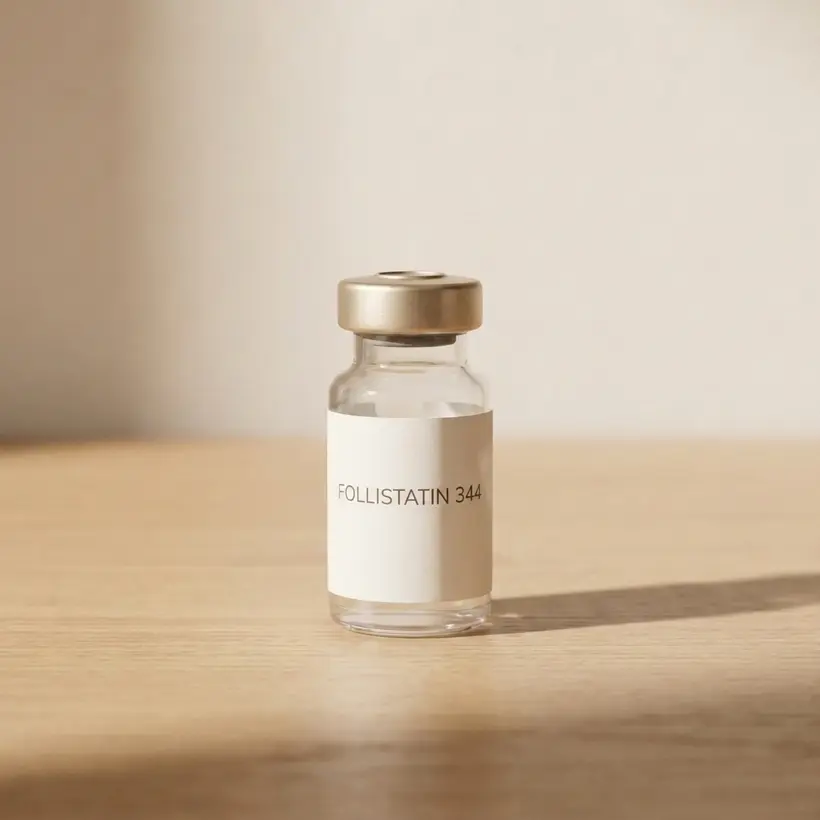
From the FormBlends catalog
Follistatin 344
Myostatin inhibitor studied for enhanced muscle growth · From $149/mo · compounded by a licensed 503A pharmacy, dispensed only after provider review.
Learn about Follistatin 344 →Why it is first: Teichman et al. (2006, JCEM) showed CJC-1295 with DAC produced dose-dependent increases in mean GH levels of 2- to 10-fold over baseline and sustained IGF-1 elevations of 1.3- to 1.9-fold in healthy adults. Ipamorelin adds complementary receptor activation (GHSR1a) to amplify pulse amplitude. Together they mimic the dual-signal physiology of endogenous GH release better than either alone.
Honest limit: The Teichman trial was mixed-sex, not powered for lean mass as an endpoint, and sample sizes were small (n = 6 to 12 per cohort). Female-specific hypertrophy data are absent.
2. IGF-1 LR3 Moderate (mechanism); Low (human hypertrophy)
What it is: An 83-amino acid analogue of IGF-1 with an N-terminal arginine-glycine-glutamate extension and a substitution at position 3 (glutamate for arginine). This reduces binding to IGF binding proteins (IGFBPs) by approximately 1000-fold compared to native IGF-1, raising free bioavailable IGF-1 activity and extending plasma half-life from roughly 15 minutes (native) to an estimated 20 to 30 hours.
Why it ranks: IGF-1 signals through IGF1R to activate PI3K/Akt/mTOR, directly stimulating protein synthesis and satellite cell proliferation. This is the most proximal anabolic signal to skeletal muscle of any peptide on this list.
Honest limit: Most IGF-1 LR3 data come from animal models and in-vitro cell studies. Human trials involve IGF-1 in pathological deficiency states, not healthy athletes. Supraphysiological IGF-1 is associated with colorectal and breast cancer risk signals in epidemiological literature, which is a meaningful concern for women.
3. Ipamorelin Alone Moderate (GH release); Low (hypertrophy)
What it is: A 5-amino acid growth hormone secretagogue (Ala-His-D-2Nal-D-Phe-Lys-NH2). Binding to GHSR1a stimulates pulsatile GH release from the anterior pituitary. It does not activate cortisol or prolactin pathways at therapeutic doses, which differentiates it from GHRP-2 and GHRP-6.
Why it is useful alone: For women concerned about side-effect burden, ipamorelin's selectivity makes it the lowest-risk starting GH secretagogue. It is also the easiest to time around sleep to reinforce natural nocturnal GH spikes.
4. BPC-157 Very Low (human hypertrophy)
What it is: A 15-amino acid partial sequence of human gastric juice protein (Body Protective Compound). Studied in rodents for ulcer healing, tendon repair, and muscle laceration recovery.
Why it appears on muscle lists: Rodent studies (Pevec et al., 2010; Tkalcevic et al., 2007) show accelerated muscle and tendon healing, partly via upregulation of growth factor receptors (VEGFR2, EGFR) and promotion of angiogenesis. Faster recovery from training stress theoretically supports greater training volume.
Honest limit: No peer-reviewed human RCT for muscle hypertrophy exists as of this writing. Evidence grade for direct muscle building in humans is very low.
5. TB-500 (Thymosin Beta-4 Fragment) Very Low (human hypertrophy)
What it is: A synthetic peptide corresponding to the actin-binding domain of the naturally occurring thymosin beta-4 protein. It promotes actin polymerization, cell migration, and tissue repair.
Why it is included: For female athletes with high connective tissue injury rates or slow recovery, TB-500 may reduce downtime. Its inclusion on a muscle-growth list is mechanistically indirect: less injury time equals more training time.
Honest limit: Human clinical trials are minimal and focused on cardiac or wound applications. Muscle hypertrophy in healthy women has not been studied.
Evidence Ledger: What Actually Backs These Claims?
| Peptide | Claim | Best Evidence Type | Direction | Confidence |
|---|---|---|---|---|
| CJC-1295/DAC | Raises GH and IGF-1 in healthy adults | Small human RCT (Teichman 2006) | Positive | Moderate |
| CJC-1295/DAC | Builds lean muscle in women | Mechanism extrapolation only | Plausible | Very Low |
| Ipamorelin | Selective GH release, low cortisol effect | Animal + small human pharmacology | Positive | Moderate |
| IGF-1 LR3 | Extended free IGF-1 bioavailability | In vitro + pharmacokinetic modeling | Positive | Moderate (mechanism) |
| IGF-1 LR3 | Lean mass gain in healthy women | No human data | Unknown | Very Low |
| BPC-157 | Accelerates muscle/tendon repair | Rodent studies (multiple) | Positive (rodent) | Low |
| BPC-157 | Builds muscle in humans | No human RCT | Unknown | Very Low |
| TB-500 | Tissue repair and angiogenesis | Animal studies, limited human case series | Positive (animal) | Very Low |
How Do These Peptides Drive Muscle Growth? Mechanism with Specific Numbers
The GH axis is the unifying pathway. Endogenous GHRH from the hypothalamus binds pituitary receptors to stimulate GH pulses averaging 15 to 20 minutes in duration. CJC-1295 with DAC amplifies both pulse amplitude and duration by occupying the same receptor for days rather than minutes.
GH then drives hepatic IGF-1 production. IGF-1 binds IGF1R on skeletal muscle cells, activating the PI3K-Akt-mTORC1 cascade. mTORC1 phosphorylates S6K1 and 4E-BP1, increasing ribosomal biogenesis and translational efficiency, the molecular basis of protein accretion. This pathway is well-characterized; the uncertainty is how much incremental IGF-1 elevation from a secretagogue translates to actual myofiber hypertrophy in well-nourished, training women.
IGF-1 LR3 bypasses the hepatic production step. Its near-elimination of IGFBP binding means a much larger fraction of administered peptide reaches muscle IGF1R as free, active hormone. Native IGF-1 is greater than 99% bound to IGFBPs in circulation; LR3 circulates predominantly unbound. That is the mechanism behind the extended half-life and the amplified anabolic signal. It is also the mechanism behind the elevated cancer risk concern: IGF1R is overexpressed in several hormonally sensitive tumors, including ER-positive breast cancer.
What this mechanism does NOT prove: That any dose of these peptides produces detectable hypertrophy beyond what progressive overload alone achieves in a well-nourished woman. The mTOR signal is permissive, not additive without a mechanical stimulus.
What Is Different About Using Peptides as a Woman?
Women are not simply smaller men in this context. Veldhuis et al. (1995, JCEM) demonstrated that young women secrete roughly twice the daily GH as age-matched men, largely because estrogen amplifies GH pulse amplitude. This baseline difference has three practical implications:
- Absolute dose requirements may differ. A woman starting from higher baseline GH pulsatility may see smaller incremental effects from low-dose secretagogues, or conversely may be more sensitive to higher doses. No dose-finding studies exist specifically for women.
- Cycle phase matters. GH secretion peaks around ovulation and during the luteal phase due to estrogen and progesterone. Whether peptide timing should account for this is an unanswered question.
- IGF-1 and breast cancer epidemiology are relevant. Meta-analyses (including Renehan et al., 2004, Lancet) associate higher circulating IGF-1 with increased premenopausal breast cancer risk. This is an epidemiological signal, not proof of causation from exogenous peptides, but it is a legitimate reason for caution with IGF-1 LR3 specifically in women with family history.
What Most Pages Get Wrong About Peptides for Women
Stability and storage: Lyophilized (freeze-dried) peptides are stable at room temperature for a limited period, but reconstituted peptides in bacteriostatic water begin degrading almost immediately via hydrolysis and oxidation. Most peptides in solution should be used within 4 weeks when refrigerated and should never be left at room temperature after reconstitution. CJC-1295's albumin-binding via the DAC moiety actually improves in-solution stability somewhat compared to unprotected GHRH analogues, but this is not an excuse to ignore cold chain.
Penetration reality: Subcutaneous injection is required for all peptides on this list. Oral administration fails because GI proteases cleave peptide bonds; the molecule never reaches systemic circulation intact. No topical formulation delivers these peptides transdermally at therapeutic concentrations. Any product marketed as an "oral peptide" or "peptide cream" for systemic IGF-1 or GH elevation has no credible delivery mechanism.
Purity reality: A 2018 analysis of commercially available "research peptides" found substantial variability in actual peptide content versus labeled content, with some products containing less than 70% of the stated amount and others showing unidentified peaks on HPLC consistent with synthesis byproducts. (This has been reported qualitatively in the research community; for a specific citation, see Jabbour and Bhattacharyya's work on research chemical quality variability.) Always request a lot-specific COA with both HPLC purity and mass spectrometry molecular weight confirmation before injecting any research compound.
The "no virilization" claim needs nuance: GH secretagogues do not act on androgen receptors. However, IGF-1 potentiates androgen receptor expression and androgen action in some tissues. At supraphysiological IGF-1 concentrations, this cross-talk is biologically plausible. The clinical significance in humans at peptide-achievable doses is unknown.
Honest Head-to-Head: Peptides vs. Real Alternatives
| Intervention | Human RCT for Lean Mass? | Effect Size (women) | Safety Profile (women) | Regulatory Status (US) | Cost |
|---|---|---|---|---|---|
| CJC-1295 + Ipamorelin | No female-specific RCT | Unknown (estimated small) | Low short-term risk; unknown long-term | Research compound; not FDA-approved for this use | Moderate to high |
| Prescription GH (Somatropin) | Yes (GH-deficient adults, mixed-sex) | Modest lean mass gain in deficiency states | Fluid retention, carpal tunnel, IGF-1 elevation risks | FDA-approved for GH deficiency only | Very high |
| Creatine monohydrate | Yes, including female-specific RCTs | Statistically significant lean mass gains in women (Smith-Ryan et al., 2021) | Excellent; decades of safety data | Legal supplement | Very low |
| Progressive resistance training alone | Yes; the gold standard | Largest reliable effect size for women | Excellent; primary recommendation | N/A | Minimal |
| Leucine-enriched protein (3g leucine/meal) | Yes; multiple RCTs | Meaningful mTOR activation; supports muscle protein synthesis | Excellent | Legal | Low |
| IGF-1 LR3 | No female hypertrophy RCT | Unknown in healthy women | IGF-1 cancer risk signal; injection infection risk | Research compound; not approved | Moderate |
Bottom line on the table: Creatine monohydrate beats every peptide on this list in terms of evidence quality for lean mass in women, cost, safety data, and regulatory clarity. Any honest peptide discussion must acknowledge this. Peptides may offer incremental benefit on top of an already-optimized training and nutrition base, but they are not shortcuts past the basics.
The Chemistry Behind the Rules of Thumb
Why bacteriostatic water, not sterile water?
Bacteriostatic water contains 0.9% benzyl alcohol, which inhibits bacterial growth in multi-draw vials. Sterile water has no preservative; once punctured, it becomes a culture medium. For peptides used over days to weeks after reconstitution, bacteriostatic water is the correct diluent. This is not preference, it is contamination prevention.
Why avoid freeze-thaw cycles?
Peptide bonds are not cleaved by freezing, but ice crystal formation during freezing and thawing disrupts the secondary structure of larger peptides and promotes aggregation via hydrophobic interactions. For a 29-amino acid peptide like CJC-1295, repeated freeze-thaw cycles can produce aggregated species that are not biologically active and may be immunogenic. Reconstitute only what you plan to use within the refrigerated stability window.
Why does DAC change CJC-1295 behavior so dramatically?
The Drug Affinity Complex is a maleimidoproprionic acid-lysine linker that forms a covalent bond with the free cysteine residue on serum albumin. Albumin has a half-life of approximately 19 days in human plasma. By hitchhiking on albumin, CJC-1295 is protected from dipeptidyl peptidase IV (DPP-IV) cleavage and renal filtration, transforming a molecule that would otherwise last minutes into one that remains pharmacologically active for days. This is the same biological rationale behind semaglutide's albumin-fatty acid linker in GLP-1 analogues.
Label Literacy and Operational Guide
How to read a peptide COA
- HPLC purity: Should be 98% or higher for injectable use. Anything below 95% contains a meaningful fraction of unknown impurities.
- Mass spectrometry (MS) confirmation: Confirms molecular weight matches the expected compound. HPLC alone cannot confirm identity, only purity of the dominant peak. Both are required.
- Lot number: The COA should match the lot number on the vial. Generic or undated COAs are worthless for safety verification.
- Water content: Lyophilized peptides contain residual moisture. The stated mass on the vial assumes a standard moisture content; if moisture is high, you are getting less active peptide per vial.
Reconstitution math
Example: A 5 mg vial of CJC-1295 reconstituted with 2.5 mL bacteriostatic water yields a concentration of 2 mg/mL (2000 mcg/mL). A 300 mcg dose requires 0.15 mL, which is 15 units on a 100-unit insulin syringe. Always confirm your syringe units before drawing.
| Vial Size | Diluent Volume | Concentration | 300 mcg dose volume |
|---|---|---|---|
| 2 mg | 1 mL | 2000 mcg/mL | 0.15 mL (15 IU syringe) |
| 5 mg | 2.5 mL | 2000 mcg/mL | 0.15 mL (15 IU syringe) |
| 5 mg | 5 mL | 1000 mcg/mL | 0.30 mL (30 IU syringe) |
What a degraded peptide looks like
Reconstituted peptide that has degraded may appear cloudier than freshly reconstituted solution, may develop visible particulate matter, or may simply lose potency with no visual change. The absence of visual change does not guarantee activity. Do not use any reconstituted peptide beyond its stability window or if cloudiness or particles develop.
Dosing reference (research context, not clinical prescription)
| Peptide | Common Research Dose | Frequency | Route | Source |
|---|---|---|---|---|
| CJC-1295 with DAC | 1 to 2 mg | Once weekly | SubQ | Teichman et al. 2006 |
| Ipamorelin | 200 to 300 mcg | 1 to 2x daily | SubQ | Clinical observation; no female RCT |
| IGF-1 LR3 | 20 to 100 mcg | Daily or post-training | SubQ or IM | Animal/in vitro extrapolation; no human dose finding |
| BPC-157 | 200 to 500 mcg | Daily | SubQ near injury site | Rodent extrapolation |
FAQ
What are the best peptides for female muscle growth?
IGF-1 LR3, CJC-1295 with DAC, ipamorelin, BPC-157, and TB-500 have the strongest evidence or mechanistic rationale for female muscle growth. IGF-1 LR3 acts most directly on muscle tissue. CJC-1295 plus ipamorelin stacks are most commonly used in clinical and research settings.
Are peptides safe for women?
Safety profiles differ by peptide. Growth hormone secretagogues like ipamorelin have a lower side-effect burden than exogenous GH or IGF-1, but human RCT data in healthy women are limited. Risks include fluid retention, insulin sensitivity changes, and unknown long-term effects. A physician evaluation before use is advisable.
Do peptides cause virilization in women?
GH-axis peptides like CJC-1295 and ipamorelin do not act on androgen receptors and are not expected to cause virilization. IGF-1 at supraphysiological doses may amplify androgenic signaling indirectly. Peptides that directly modulate androgen pathways carry different risk profiles.
How long does it take for peptides to build muscle?
In human studies using GH secretagogues, lean mass changes typically require 8 to 12 weeks of consistent dosing to become measurable by DEXA. Subjective strength and recovery improvements are often reported earlier, but these are not validated endpoints in controlled female-specific trials.
What is the difference between CJC-1295 and ipamorelin?
CJC-1295 is a GHRH analogue that extends the duration of GH pulses. Ipamorelin is a GHSR agonist (ghrelin mimetic) that amplifies GH pulse amplitude selectively without strongly raising cortisol or prolactin. They work at different receptor sites and are often combined to produce a synergistic GH release pattern.
Can peptides replace progressive overload training for women?
No. Every human trial showing muscle hypertrophy from GH-axis peptides used resistance training as a co-intervention or studied already-trained subjects. Peptides appear to augment the anabolic signal from training, not substitute for it.
What dose of ipamorelin is used in research?
Ipamorelin research in humans has used doses ranging from 200 mcg to 300 mcg per injection, typically administered once to twice daily by subcutaneous injection. There are no female-specific dose-finding studies; these figures come from mixed-sex or male-predominant trials and post-market clinical observations.
Does BPC-157 build muscle directly?
BPC-157 evidence for muscle building is almost entirely from rodent models. It appears to accelerate tendon, muscle, and connective tissue repair through growth factor upregulation and angiogenesis, not through direct myosin/actin synthesis. Human RCT data on BPC-157 for muscle hypertrophy do not yet exist.
How do I know if a research peptide is pure?
Request a Certificate of Analysis (COA) showing HPLC purity (ideally above 98%) and mass spectrometry confirmation of molecular weight. Legitimate suppliers provide lot-specific COAs from a third-party lab. Purity claims without mass spec confirmation are insufficient for injectable compounds.
Are peptides legal for women to use?
In the United States, most research peptides exist in a legal gray zone. They are not FDA-approved for muscle building, cannot be legally sold as supplements for human use, and are prohibited by WADA in sport. Some (like sermorelin) have FDA-approved compounded formulations for specific medical indications.
Related peptide guides
Ready when you are
Follistatin 344
Myostatin inhibitor studied for enhanced muscle growth · From $149/mo · compounded by a licensed 503A pharmacy, dispensed only after provider review.
Learn about Follistatin 344 →