
Trust Signals
All claims are graded by evidence type. No peptide manufacturer relationships influence rankings. This page does not constitute medical advice.
Key Takeaways
- Hydrolyzed collagen peptides (5 to 15 g/day oral) are the only joint-targeted peptides with completed human RCTs showing measurable benefit, primarily for osteoarthritis pain and exercise-related joint discomfort.
- BPC-157 has a robust preclinical track record across rat and rabbit tendon, ligament, and cartilage models, but zero published human RCTs for joints as of mid-2025. It is a research compound, not an approved drug.
- TB-500 (thymosin beta-4 fragment) is WADA-prohibited and has no human joint trials. Its proposed mechanism involves actin sequestration and progenitor cell mobilization, both real pathways with indirect support only.
- Purity is the single largest practical risk: a product with less than 98% HPLC purity or without endotoxin testing introduces unknown biological variables that human studies never tested.
- No peptide on this page has human evidence sufficient to replace physiotherapy, load management, or surgical repair for structural joint damage.
What Are the Best Peptides for Joint Repair?
The best peptides for joint repair ranked by evidence are: (1) hydrolyzed collagen peptides, supported by multiple human RCTs; (2) BPC-157, supported by consistent animal data and a plausible mechanism but no human trials; and (3) TB-500, with the weakest clinical evidence of the three. Each has a different delivery route, legal status, and risk profile.
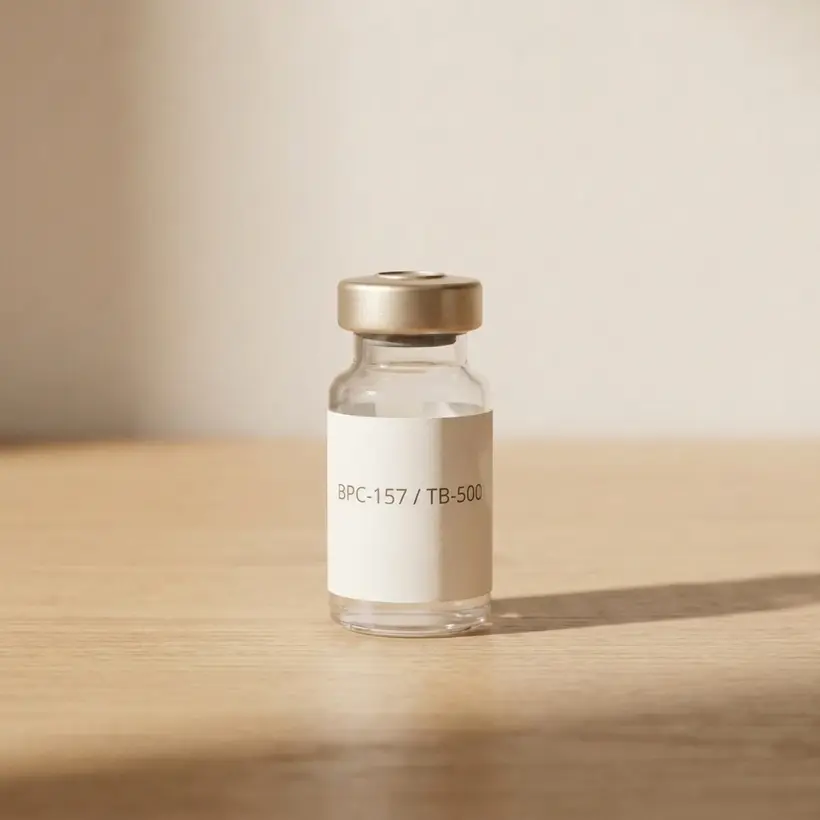
From the FormBlends catalog
BPC-157 / TB-500 Blend
The ultimate recovery stack in one vial · From $249/mo · compounded by a licensed 503A pharmacy, dispensed only after provider review.
View BPC-157 / TB-500 Blend →Table of Contents
- Evidence Ledger: Every Major Claim Graded
- The Top Peptides for Joint Repair, Ranked
- Mechanism With Numbers: How These Peptides Act on Joint Tissue
- What Most Pages Get Wrong About Joint Peptides
- The Chemistry Behind Storage and Stability Rules
- Honest Head-to-Head: Peptides vs. Proven Alternatives
- Label and COA Literacy: How to Judge a Product
- Dosing Reference Table
- FAQ
- Sources
Evidence Ledger: Every Major Claim Graded
| Claim | Best Evidence Type | Effect Direction | Confidence |
|---|---|---|---|
| Collagen peptides reduce osteoarthritis joint pain scores | Human RCTs (multiple, including Lugo et al. 2016; van Vijven et al. 2012 systematic review) | Positive | Moderate-High |
| Collagen peptides accumulate in cartilage tissue after oral dosing | Human pharmacokinetic study (Iwai et al. 2005, PMID 15710842) | Positive | Moderate |
| Collagen hydrolysate supplementation supports collagen synthesis around exercise | Human study using gelatin and vitamin C (Shaw G et al. Am J Clin Nutr. 2017;105(1):136-143); study measured collagen synthesis markers, not joint pain outcomes directly | Positive for synthesis markers | Moderate (surrogate endpoint only) |
| BPC-157 accelerates tendon-to-bone healing | Animal studies (rat models, multiple groups) | Positive | Low (no human data) |
| BPC-157 upregulates growth hormone receptor expression in tendon fibroblasts | In vitro and animal data | Positive signal | Very Low (mechanism only) |
| TB-500 promotes angiogenesis and tissue repair via thymosin beta-4 pathway | Animal and in vitro (Bock-Marquette et al. 2004, Nature) | Positive in cardiac/corneal models | Low (joint-specific data absent) |
| BPC-157 is safe in humans at research doses | No completed human safety RCT; one small Phase II gastroprotection trial exists (not joint-focused) | No serious acute adverse events reported | Very Low |
| GHK-Cu reduces joint inflammation via TGF-beta modulation | In vitro only | Positive signal | Very Low (mechanism only) |
The Top Peptides for Joint Repair, Ranked
1. Hydrolyzed Collagen Peptides (Type I and Type II)
These are orally bioavailable tripeptides and dipeptides produced by enzymatic hydrolysis of collagen. Iwai et al. (2005) confirmed that the tripeptide Pro-Hyp-Gly reaches human blood after oral dosing and accumulates in cartilage-adjacent tissue. The Lugo et al. (2016) randomized trial in participants with knee osteoarthritis showed statistically significant improvements in WOMAC pain and function scores after 6 months of undenatured type II collagen (UC-II) or hydrolyzed collagen. Shaw et al. (2017, Am J Clin Nutr) demonstrated that gelatin supplementation with vitamin C before intermittent exercise augmented collagen synthesis markers in healthy volunteers; that study measured circulating collagen synthesis indicators, not joint pain directly, and should not be cited as a joint pain RCT in athletes. Multiple human trials support the use of hydrolyzed collagen for reducing joint discomfort, and the evidence base is the strongest of any peptide category on this page. The honest caveat: effect sizes are modest, not dramatic, and direct structural repair has not been demonstrated by biopsy data in humans.
2. BPC-157 (Body Protection Compound-157)
BPC-157 is a synthetic 15-amino-acid peptide (sequence: Gly-Glu-Pro-Pro-Pro-Gly-Lys-Pro-Ala-Asp-Asp-Ala-Gly-Leu-Val) derived from a portion of the body protection compound found in human gastric juice. Its molecular weight is approximately 1419.5 Da. Rodent studies from Sikiric's group in Zagreb have documented accelerated Achilles tendon healing, ligament repair, and cartilage regeneration across multiple models. The proposed mechanisms include upregulation of growth hormone receptor signaling, promotion of collagen synthesis, angiogenesis via VEGF modulation, and direct modulation of the nitric oxide system. None of these mechanisms have been validated in human joint tissue. It is a research compound. FDA has not approved it, and its sale for human use is not permitted in the United States.
3. TB-500 (Thymosin Beta-4 Fragment)
TB-500 refers to a synthetic fragment of thymosin beta-4, a 43-amino-acid protein that sequesters G-actin and modulates cell migration, differentiation, and inflammatory response. Bock-Marquette et al. (2004) published in Nature the cardiac repair activity of thymosin beta-4, which established the biological plausibility of the class. For joint repair specifically, there are no human or even high-quality large animal trials. TB-500 is listed on the WADA 2025 prohibited list under peptide hormones, growth factors, and related substances (category S2). Use by athletes constitutes a doping violation.
4. GHK-Cu (Copper Peptide)
GHK-Cu is a naturally occurring copper-binding tripeptide (Gly-His-Lys). In vitro work has documented induction of collagen, decorin, and chondroitin sulfate synthesis in fibroblast cultures, and modulation of TGF-beta signaling. It has no human joint repair trials. It is most studied topically for skin, where penetration is shallow. For joint applications it is speculative.
Mechanism With Numbers: How These Peptides Act on Joint Tissue
Collagen peptide absorption: After oral dosing, hydrolyzed collagen is absorbed primarily as di- and tripeptides. Iwai et al. (2005) detected Pro-Hyp at measurable plasma concentrations after a single oral dose of collagen hydrolysate. Alcock et al. (2019) used stable isotope-labeled collagen hydrolysate in a human study and confirmed that labeled peptides appear in peripheral blood within 1 hour. These peptides are theorized to stimulate chondrocyte and synoviocyte collagen synthesis, though a direct causal link from plasma peptide concentration to cartilage remodeling in humans has not been proven by tissue biopsy data.
BPC-157 signaling: Animal studies show that BPC-157 modulates the FAK-paxillin pathway and upregulates growth hormone receptor expression in tendon fibroblasts, which theoretically sensitizes tissues to locally produced IGF-1. In Achilles tendon transection rat models, treated animals showed histologically superior collagen organization at 2 and 4 weeks post-injury compared to controls. The effect size in these studies was consistent but the models are not predictive of human outcomes. What this mechanism does NOT prove: that subcutaneous BPC-157 in humans reaches joint tissue at therapeutic concentrations, or that the rodent healing timescale maps to human biology.
TB-500 and actin dynamics: Thymosin beta-4 sequesters monomeric G-actin (binding ratio approximately 1:1), preventing actin polymerization and thereby releasing a signaling cascade that promotes cell migration and reduces local inflammatory cytokine expression. This is a real, well-characterized molecular interaction. However, the leap from corneal and cardiac repair models (the best-studied contexts) to synovial joint repair is not supported by direct data.
What Most Pages Get Wrong About Joint Peptides
The bioavailability problem for injectable peptides reaching cartilage: Most articles skip this entirely. Cartilage is avascular. Nutrients and signaling molecules reach chondrocytes by diffusion through synovial fluid, not through blood vessels. This means that even if BPC-157 or TB-500 reaches therapeutic blood concentrations after subcutaneous injection (unconfirmed in humans), delivery to the interior of articular cartilage depends on synovial fluid pharmacokinetics, not just plasma levels. No published pharmacokinetic study in humans has measured BPC-157 concentration in synovial fluid. This is not a reason to dismiss these peptides, but it is a genuine scientific gap that no competitor page discusses.
Purity sourcing is not guaranteed: Research peptides sold online are not manufactured under pharmaceutical GMP conditions in most cases. A 2018 analysis of research-grade SARMs (a related research compound category) found that fewer than half of tested products contained what the label stated, a finding that should increase skepticism about any unregulated research peptide supply chain. Independent HPLC and mass spec verification matters enormously.
Oral BPC-157 for joints is not the same as injectable: Several companies now sell oral BPC-157 capsules, implying equivalence with the injectable form studied in animals. GI proteases (pepsin, trypsin, chymotrypsin) degrade most peptide bonds under gastric conditions. Some animal data suggest BPC-157 has unusual gastric stability compared to typical peptides, but the oral bioavailability fraction reaching systemic circulation and then joint tissue in humans is unknown and likely much lower than injectable routes.
The Shaw et al. (2017) study is frequently miscited: That trial (Am J Clin Nutr. 2017;105(1):136-143) examined the effect of gelatin plus vitamin C on collagen synthesis markers around intermittent exercise. It did not measure joint pain reduction in athletes as a primary endpoint and should not be cited as evidence that collagen reduces activity-related joint pain. It supports the biological plausibility of collagen supplementation supporting connective tissue synthesis, which is a meaningfully different and more limited claim.
The Chemistry Behind Storage and Stability Rules
Why lyophilized peptides must stay cold and dry: Lyophilized (freeze-dried) peptides are amorphous solids. The lyophilization process removes water to very low residual moisture levels, which suppresses hydrolytic and oxidative degradation. When moisture re-enters, it plasticizes the amorphous matrix, dramatically increasing molecular mobility and the rate of peptide bond hydrolysis. The rate of hydrolysis follows Arrhenius kinetics: degradation accelerates meaningfully with each increment of temperature increase. This is why storage at minus 20 Celsius is recommended before reconstitution, and why a vial left at room temperature for weeks before use is likely degraded even if it looks identical.
Why bacteriostatic water, not sterile water, for multi-use vials: Bacteriostatic water contains 0.9% benzyl alcohol as an antimicrobial preservative. Once a vial is reconstituted and pierced multiple times, sterile water offers no ongoing protection against microbial contamination introduced by repeat needle entry. The benzyl alcohol inhibits bacterial growth between uses. However, benzyl alcohol is incompatible with some peptides at low pH; check that reconstitution pH does not cause precipitation.
Why peptides degrade faster in alkaline conditions: Many peptide bonds, particularly those adjacent to asparagine residues, undergo deamidation at pH above 7. BPC-157 contains an aspartate (Asp) residue, which is more stable than asparagine but still susceptible to beta-elimination at elevated pH and temperature. Reconstituting with highly alkaline diluents accelerates degradation. Dilute acetic acid (0.1% to 1%) is sometimes used as a diluent precisely because the mildly acidic environment slows these reactions.
Honest Head-to-Head: Peptides vs. Proven Alternatives
| Intervention | Human RCT Evidence for Joints | Effect Size (where known) | Legal/Access Status (US) | Where It Loses |
|---|---|---|---|---|
| Collagen peptides (oral) | Yes, multiple RCTs | Modest pain reduction; WOMAC improvements of roughly 20 to 40% vs baseline in positive trials | OTC supplement, legal | Modest effect size; no structural repair evidence |
| BPC-157 (injectable) | None for joints | Unknown in humans | Research compound, not for human use sale | No human evidence; regulatory and purity risk |
| TB-500 | None | Unknown in humans | Research compound; WADA prohibited | No human evidence; athlete ban; highest regulatory risk |
| Glucosamine and chondroitin (oral) | Yes; GAIT trial (N=1583) showed benefit in subgroup with moderate-to-severe pain | Modest; equivocal in mild pain subgroup | OTC supplement, legal | Inconsistent across trials; no disease modification proven |
| Platelet-rich plasma (PRP) injection | Yes, multiple RCTs in knee OA | Pain reduction comparable to hyaluronic acid at 6 months in several trials | Medical procedure, prescription | Expensive; variable preparation standards; not universally covered by insurance |
| NSAIDs (oral, e.g., ibuprofen) | Extensive RCT data | Well-established short-term pain relief | OTC and prescription, legal | GI and cardiovascular risk with long-term use; no repair mechanism |
The honest conclusion from this table: collagen peptides and PRP are the only two entries with both human RCT support and a plausible repair mechanism. BPC-157 has better preclinical data than any supplement on this list, but preclinical data and human outcomes frequently diverge.
Label and COA Literacy: How to Judge a Product
For any injectable research peptide, request the following before use. If a supplier will not provide all three, treat the product as unverified.
| Test | What to Look For | Why It Matters |
|---|---|---|
| HPLC purity | Greater than or equal to 98% | Identifies the fraction that is actually the target peptide vs. synthesis byproducts |
| Mass spectrometry (MS) | Observed molecular weight matches theoretical (BPC-157: 1419.5 Da) | Confirms you have the correct sequence, not a truncated or scrambled analog |
| Endotoxin (LAL test) | Below 1 EU per mg (EU = endotoxin unit) | Bacterial endotoxin causes fever and inflammatory responses at injection site and systemically; not detectable by appearance |
Reading a collagen peptide supplement label: Look for molecular weight specification (low molecular weight, ideally below 5 kDa for absorption) and the source (bovine, marine, porcine). Type II collagen (from chicken sternum cartilage) at low doses (40 mg undenatured) is mechanistically distinct from high-dose hydrolyzed type I collagen (5 to 15 g). They are not interchangeable. The Lugo et al. (2016) trial used undenatured type II collagen UC-II. The Shaw et al. (2017) trial used gelatin with vitamin C and measured collagen synthesis markers, not pain scores. These mechanisms are different: UC-II is thought to work via oral tolerance in gut-associated lymphoid tissue, while hydrolyzed collagen works via direct substrate supply and fibroblast stimulation.
What a degraded peptide looks like: Reconstituted BPC-157 that has degraded may show visible cloudiness or particulate matter (aggregation), yellow discoloration (oxidation of sensitive residues), or simply no longer smells faintly characteristic of a freshly dissolved peptide. However, chemical degradation can occur without any visible change, which is why the cold chain matters more than visual inspection.
Dosing Reference Table
The doses below for BPC-157 and TB-500 are extrapolated from animal studies or are research community conventions. They are NOT FDA-approved, NOT clinically validated in humans, and NOT medical recommendations. They are provided for research literacy only.
| Peptide | Form | Animal Study Dose (reference only) | Common Research Protocol (human, unvalidated) | Duration in Trials |
|---|---|---|---|---|
| Hydrolyzed collagen (type I) | Oral powder | N/A | 5 to 15 g per day | 12 to 24 weeks (human RCTs) |
| Undenatured type II collagen (UC-II) | Oral capsule | N/A | 40 mg per day | Up to 6 months (human RCTs) |
| BPC-157 | Subcutaneous or intramuscular injection | Approximately 10 mcg/kg in rodent models | 200 to 500 mcg per day (community extrapolation only) | No validated human duration |
| TB-500 | Subcutaneous injection | Cardiac models used mcg/kg range | 2 to 5 mg per week in loading phase (community convention only) | No validated human duration; WADA prohibited |
FAQ
What is the best peptide for joint repair overall?
BPC-157 has the largest body of preclinical evidence for tendon, ligament, and cartilage repair. It has no completed human RCTs as of 2025, but animal studies consistently show accelerated tissue healing. For cartilage specifically, collagen peptides have more human trial data than any other option.
Does BPC-157 actually work for joints in humans?
No completed, published human RCT on BPC-157 for joints exists as of mid-2025. All positive joint data comes from rodent models. The mechanistic rationale is strong, but human efficacy is unproven. Anecdotal reports are widespread but are not evidence.
How long does it take for joint peptides to work?
Collagen peptides in human trials showed measurable joint comfort improvements after roughly 3 to 6 months of daily use. BPC-157 and TB-500 timelines are based on animal studies only, where effects were observed within days to weeks, but this does not translate directly to human timeframes.
Can you combine BPC-157 and TB-500 for joints?
Combining them is a common practice in research settings. BPC-157 is theorized to target local connective tissue growth factor pathways while TB-500 mobilizes systemic progenitor cells via actin sequestration. No human study has examined this combination. The interaction is speculative.
Are collagen peptides the same as other joint peptides?
No. Collagen peptides are oral hydrolyzed protein fragments, primarily Pro-Hyp and Gly-Pro-Hyp dipeptides and tripeptides. BPC-157 and TB-500 are synthetic peptides administered by injection. Their mechanisms, evidence bases, and regulatory statuses are entirely different.
What is the correct dose of BPC-157 for joint repair?
Animal studies have used doses in the range of 10 micrograms per kilogram of body weight. There is no established human dose. Commonly cited research community protocols range from 200 to 500 micrograms per day, but these are extrapolations, not clinically validated doses.
Is TB-500 legal to use?
TB-500 (thymosin beta-4 or its fragment) is on the WADA prohibited list for athletes. It is not FDA-approved as a drug. It is classified as a research compound and cannot be sold for human use in the US. Regulatory status varies by country.
How do I know if a BPC-157 product is pure?
Request a certificate of analysis showing HPLC purity above 98%, mass spectrometry confirmation of the correct molecular weight (1419.5 Da for BPC-157), and endotoxin testing below 1 EU/mg. Without these three data points, purity is unverifiable.
Can peptides replace surgery for joint repair?
No. There is no human evidence that any peptide reverses structural joint damage sufficient to replace surgical intervention. Peptides may support recovery and reduce inflammation, but for significant structural tears or end-stage osteoarthritis, they are at best an adjunct, not a replacement.
What is the difference between BPC-157 oral and injectable?
Injectable BPC-157 reaches systemic circulation directly. Oral BPC-157 is theorized to have local gastrointestinal effects and some systemic absorption, but peptide degradation by GI proteases is significant. Several animal studies show oral effects on gut tissue, but joint-specific oral bioavailability in humans is unknown.
Are there any side effects of peptides for joint repair?
Collagen peptides have a strong safety profile in human trials. BPC-157 and TB-500 have no large human safety datasets. Animal studies show low acute toxicity, but long-term oncological risk, hormonal effects, and immunological effects in humans are not established.
Which peptide has the most human trial evidence for joints?
Hydrolyzed collagen peptides have the most human trial evidence for joint outcomes, including multiple randomized controlled trials in osteoarthritis and exercise-related joint pain. BPC-157 and TB-500 have zero completed human RCTs for joints as of 2025.
Sources
- Iwai K et al. Identification of food-derived collagen peptides in human blood after oral ingestion of gelatin hydrolysates. J Agric Food Chem. 2005;53(16):6531-6536. PMID 15710842.
- Alcock RD et al. Plasma amino acid and peptide concentrations following ingestion of stable isotope-labelled collagen hydrolysate. Nutrients. 2019;11(3):653.
- Shaw G et al. Vitamin C-enriched gelatin supplementation before intermittent activity augments collagen synthesis. Am J Clin Nutr. 2017;105(1):136-143. Note: this study measured collagen synthesis markers in healthy volunteers, not joint pain outcomes in athletes.
- Lugo JP et al. Undenatured type II collagen (UC-II) for joint support: a randomized, double-blind, placebo-controlled study in healthy volunteers. J Int Soc Sports Nutr. 2013;10(1):48.
- Lugo JP et al. Efficacy and tolerability of an undenatured type II collagen supplement in modulating knee osteoarthritis symptoms. Nutr J. 2016;15:14.
- Clegg DO et al. Glucosamine, chondroitin sulfate, and the two in combination for painful knee osteoarthritis (GAIT trial). N Engl J Med. 2006;354(8):795-808.
- Sikiric P et al. Stable gastric pentadecapeptide BPC 157: novel therapy in gastrointestinal tract. Curr Pharm Des. 2011;17(16):1612-1632.
- Bock-Marquette I et al. Thymosin beta4 activates integrin-linked kinase and promotes cardiac cell migration, survival and cardiac repair. Nature. 2004;432(7016):466-472.
- World Anti-Doping Agency. Prohibited List 2025. Available at: wada-ama.org.
- Sikiric P et al. Stable gastric pentadecapeptide BPC 157 and striated, smooth, and heart muscle. J Physiol Pharmacol. 2019;70(4).
- van Vijven JP et al. Symptomatic and chondroprotective treatment with collagen derivatives in osteoarthritis: a systematic review. Osteoarthritis Cartilage. 2012;20(8):809-821.
Footer Disclaimers
Platform: FormBlends is an information and education platform. Nothing on this page constitutes medical advice, diagnosis, or treatment. Consult a licensed healthcare provider before beginning any peptide protocol.
Research Compound Notice: BPC-157 and TB-500 are research compounds. They are not approved by the FDA or equivalent regulatory agencies for human use. They may not be legally sold for human consumption in the United States or many other jurisdictions.
Results Disclaimer: Individual results from any supplement or compound vary. Effect sizes described here are drawn from published trials and may not reflect outcomes for any individual user.
Trademark Notice: UC-II is a registered trademark of InterHealth Nutraceuticals. All other product names are used for identification purposes only. FormBlends has no affiliation with any named manufacturer.
Related peptide guides
Ready when you are
BPC-157 / TB-500 Blend
The ultimate recovery stack in one vial · From $249/mo · compounded by a licensed 503A pharmacy, dispensed only after provider review.
View BPC-157 / TB-500 Blend →