All GLP-1 medications from licensed 503A compounding pharmacies Browse Products

Best Peptides for Sleep: Evidence-Ranked Guide | FormBlends

The best peptides for sleep ranked by real evidence: DSIP, delta sleep-inducing peptide, epithalon, and more. Evidence ledger, mechanisms, and honest...

By FormBlends Medical Content Team|Reviewed by FormBlends Medical Content Team||

Medically Reviewed

Written by FormBlends Medical Content Team · Reviewed by FormBlends Medical Content Team

Best Peptides for Sleep: Evidence-Ranked Guide | FormBlends custom 2026 header image for Peptide Therapy
Custom header image for Best Peptides for Sleep: Evidence-Ranked Guide | FormBlends, Peptide Therapy, and better treatment decision-making.
In This Article

This article is part of our Peptide Therapy collection. See also: GLP-1 Guides | Provider Comparisons

Search and AI answer brief

Practical answer: Best Peptides for Sleep: Evidence-Ranked Guide | FormBlends

The best peptides for sleep ranked by real evidence: DSIP, delta sleep-inducing peptide, epithalon, and more. Evidence ledger, mechanisms, and honest...

Short answer

The best peptides for sleep ranked by real evidence: DSIP, delta sleep-inducing peptide, epithalon, and more. Evidence ledger, mechanisms, and honest...

Search intent

This page answers a specific Peptide Therapy question rather than a generic overview.

What to verify

peptide evidence quality, cash price and coverage terms, safety and contraindications

How to use it

Use this information to prepare sharper questions for a licensed provider.

Abstract scientific illustration for best best peptides for sleep

Trust Signals

Authored by the FormBlends Medical Team. Claims are graded by evidence type. No affiliate ranking or manufacturer sponsorship influences the order below. Speculation is labeled as such. This page is for informational and research purposes only.

Key Takeaways

  • DSIP (delta sleep-inducing peptide) is a 9-amino-acid neuropeptide with the oldest sleep-specific research record, but its best human studies are small and date to the 1980s, making confidence Low.
  • GH secretagogues (GHRP-2, ipamorelin, CJC-1295) increase slow-wave sleep duration in humans via GH pulse amplification, an effect documented in controlled studies by Van Cauter et al., but systemic GH stimulation is not a risk-free intervention.
  • Epithalon's sleep benefit appears to operate through pineal normalization and melatonin pathway support in aging models, not direct sedation; evidence is Very Low in healthy adults.
  • Blood-brain barrier penetration is the central unsolved bioavailability problem for all peripheral peptide administration routes, and no product label currently quantifies CNS delivery.
  • Melatonin (0.5 to 5 mg oral) beats every peptide on this list for evidence quality, cost, and safety data for common sleep onset and circadian rhythm complaints.

What Are the Best Peptides for Sleep? (Direct Answer)

The best peptides for sleep by current evidence are DSIP for slow-wave sleep architecture, GH secretagogues (ipamorelin, GHRP-2) for deep-sleep augmentation, and epithalon for circadian and pineal normalization in aging models. Evidence quality is Low to Moderate across the board. Melatonin and CBT-I remain superior first-line options for most people with insomnia.

Check your GLP-1 eligibility

Use our free BMI Calculator to see if you may qualify for provider-reviewed GLP-1 therapy.

Try the BMI Calculator →

Table of Contents

What Does the Evidence Actually Say? (Evidence Ledger)

Claim Best Evidence Type Effect Direction Confidence
DSIP increases slow-wave sleep in humans Small human trials (Schoenenberger et al., 1977; Schneider-Helmert 1985) Positive, inconsistent across studies Low
GHRP-2 and ipamorelin increase SWS duration in humans Controlled human studies (Van Cauter group, 1997-2000) Positive, replicated in aging populations Moderate
Epithalon normalizes circadian rhythms in elderly subjects Small human observational + animal data (Khavinson et al.) Positive in elderly/pineal-deficient models Very Low
DSIP reduces sleep onset latency Mixed small trials; some negative Inconsistent Very Low
CJC-1295 improves sleep quality in healthy adults No direct sleep RCTs; extrapolated from GH pulse data Speculative Very Low
Melatonin reduces sleep onset latency Multiple meta-analyses of human RCTs Positive, consistent High
CBT-I improves chronic insomnia Multiple human RCTs, clinical guideline endorsed Strongly positive High

Is DSIP the Best Peptide for Sleep?

Delta sleep-inducing peptide is a 9-amino-acid neuropeptide (Trp-Ala-Gly-Gly-Asp-Ala-Ser-Gly-Glu) first isolated from rabbit cerebral venous blood by Schoenenberger and Monnier in 1977 after they observed increased delta-wave activity in donor animals. The original human trial by Schoenenberger and colleagues that same year reported increased delta sleep in a small number of insomniac subjects given intravenous DSIP.

Subsequent work by Schneider-Helmert through the 1980s showed mixed results: some trials reported improvements in sleep architecture and reductions in nighttime awakenings, while others showed no benefit over placebo. No large, adequately powered, double-blind RCT has been completed. The mechanism proposed involves modulation of somatostatin release and interaction with opioid and GABA systems, but receptor binding specifics are not fully characterized.

Practical limitation: DSIP is rapidly degraded by plasma peptidases after intravenous injection, with early studies suggesting a plasma half-life on the order of minutes for the intact peptide. Subcutaneous bioavailability and CNS penetration from peripheral injection are not reliably quantified in the published record.

Do GH Secretagogues Like Ipamorelin Improve Sleep?

This is the strongest mechanistic case on this page. Growth hormone secretion and slow-wave sleep (SWS, also called N3 or delta sleep) are tightly coupled. The majority of daily GH secretion occurs during the first SWS episode of the night, and GH itself appears to promote SWS in a bidirectional feedback loop.

Research from the Van Cauter laboratory at the University of Chicago demonstrated in controlled studies that GHRH and GH-releasing peptides augment SWS in human subjects, with effects being more pronounced in older adults who have experienced age-related SWS decline. GHRP-2, a synthetic hexapeptide, increased GH pulse amplitude and was associated with increased SWS in these paradigms.

Ipamorelin is a pentapeptide GH secretagogue with greater GH selectivity than earlier GHRPs (less cortisol and prolactin stimulation at standard doses, per animal and early human data), making it the more commonly discussed sleep option in clinical compounding contexts. However, direct human RCT data measuring sleep architecture outcomes with ipamorelin specifically are not available in the public literature at this time.

Honest caveat: The GH-SWS link is well-established. Whether injecting a GH secretagogue in a healthy adult meaningfully improves subjective or objective sleep quality, at a safe dose, over a sustained period, is not established by clinical trial evidence. The mechanism is real; the clinical application for sleep remains extrapolated.

Can Epithalon Fix a Disrupted Sleep Cycle?

Epithalon (tetrapeptide Ala-Glu-Asp-Gly) was developed by Vladimir Khavinson at the St. Petersburg Institute of Bioregulation and Gerontology, primarily as an anti-aging compound targeting the pineal gland. The proposed sleep-relevant mechanism is stimulation of pineal telomerase activity and restoration of melatonin synthesis capacity that declines with age.

Published human data from the Khavinson group in elderly populations report improvements in circadian melatonin profiles and sleep quality metrics after epithalon administration. These studies are small, were conducted largely within a single research group, and have not been independently replicated in peer-reviewed Western journals to a degree that would raise confidence above Very Low for healthy adults. Animal data (rats, primates) are more extensive and consistently show pineal-related effects.

Epithalon is not a sedative. It does not act on GABA receptors. Its utility, if real, is as a long-cycle circadian and pineal normalizer, not a nightly sleep aid.

Mechanism with Numbers: How Sleep Peptides Are Supposed to Work

Sleep architecture depends on several intersecting neurochemical systems. Here is where each peptide category acts, with available quantitative anchors:

  • DSIP and somatostatin: Early studies suggested DSIP suppresses somatostatin release, which in turn disinhibits GHRH and GH pulsatility. Somatostatin is a 14-amino-acid inhibitory peptide. The DSIP nonapeptide is small enough (molecular weight approximately 850 Da) that CNS penetration via saturable transport has been proposed, but quantified CNS:plasma ratios from peripheral dosing in humans are not in the published record.
  • GH secretagogues and SWS: GH-releasing peptides bind the ghrelin receptor (GHSR-1a), a Gq-coupled GPCR expressed in the hypothalamus and pituitary. Binding amplifies GH pulse amplitude. In Van Cauter group studies, GH secretagogue administration increased SWS by a measurable fraction compared to placebo in older male subjects. The exact percentage varied by study design; directionally, the effect was a meaningful increase in minutes of SWS, not a doubling.
  • Epithalon and melatonin: Melatonin synthesis requires tryptophan hydroxylation, then decarboxylation to serotonin, then N-acetylation and O-methylation (AANAT and ASMT enzymes). Pineal AANAT activity declines with age. Epithalon's proposed effect is upregulation of telomerase in pineal cells, preserving their secretory function. This is several mechanistic steps removed from improved sleep latency.
  • The BBB problem: Most therapeutic peptides larger than roughly 400-500 Da and with limited lipophilicity do not cross the blood-brain barrier via passive diffusion. DSIP (about 850 Da) and ipamorelin (about 711 Da) are in a range where CNS access is limited without active transport. Peripheral GH pulse effects on SWS may be mediated through GH receptors on brain endothelium or circumventricular organs (areas lacking a tight BBB), not direct peptide CNS entry.

What Most Pages Get Wrong About Peptides for Sleep

This is the section commodity pages skip.

Bioavailability is never quantified on product pages. No injectable peptide vendor, no medspa blog, and almost no research summary quantifies what fraction of a subcutaneously injected sleep peptide reaches the CNS in a biologically active form. DSIP has a plasma half-life measured in minutes in some early intravenous studies. Subcutaneous injection extends the absorption window but also exposes the peptide to tissue peptidases before systemic circulation. How much intact DSIP crosses into CSF after a typical subcutaneous dose is genuinely unknown.

DSIP analogs are not DSIP. Several research suppliers sell "DSIP analogs" or modified versions. The original research was conducted on the native nonapeptide. Modified sequences have different pharmacokinetic profiles and the sleep literature does not extend to them.

GH secretagogue sleep effects were studied in GH-deficient and aging populations. Extrapolating the Van Cauter group's findings to a healthy 30-year-old with adequate baseline GH pulsatility is not supported by direct evidence. The sleep-promoting effect of GH secretagogues may be largest when the baseline GH-SWS axis is already impaired.

Purity matters more than dose for research peptides. A 100 mcg dose of 90% pure peptide with 10% unknown impurities is a different intervention than a 100 mcg dose of 99% pure peptide with endotoxin testing. Endotoxin contamination in injectable preparations can itself disrupt sleep via pyrogenic effects, confounding any sleep benefit from the peptide.

Why the Storage and Stability Rules Exist (The Chemistry)

Peptide degradation follows several distinct chemical pathways, and understanding them lets you evaluate a product rationally.

Oxidation: Methionine, tryptophan (present in DSIP), and cysteine residues are susceptible to oxidation. DSIP contains tryptophan at position 1. Exposure to oxygen, UV light, or metal ion contamination accelerates tryptophan oxidation to kynurenine or hydroxytryptophan derivatives, producing a peptide that may have different or absent biological activity. This is why peptides should be stored in dark, sealed vials, and why amber glass or opaque containers matter.

Hydrolysis: Once reconstituted in aqueous solution, the peptide bond is susceptible to hydrolysis, particularly at aspartate-proline and asparagine residues. Refrigeration slows this reaction (Arrhenius kinetics: lower temperature reduces reaction rate). This is why reconstituted peptides should be refrigerated and used within weeks, not stored at room temperature.

Aggregation: Some peptides form non-covalent aggregates in solution, particularly at higher concentrations or after freeze-thaw cycling. Aggregation reduces effective monomer concentration and can increase immunogenicity risk. Visible cloudiness or particulate matter in a reconstituted vial is a disqualifying sign.

Freeze-thaw cycling: Each freeze-thaw cycle generates ice crystal formation that disrupts peptide conformation and accelerates aggregation. Divide reconstituted solution into single-use aliquots before freezing if long storage is required.

Honest Head-to-Head: Sleep Peptides vs. Real Alternatives

Intervention Evidence Quality Effect on Sleep Latency Effect on SWS/Deep Sleep Cost Safety Profile Verdict
Melatonin (0.5-5 mg oral) High (multiple RCT meta-analyses) Reduces by 7-12 min (meta-analysis range) Minimal direct effect Very low Excellent short-term First choice for onset/circadian
CBT-I High (AASM guideline) Strongly positive, durable Indirect improvement Moderate (therapist fees) No pharmacological risk Best for chronic insomnia
DSIP (injectable) Low Inconsistent across trials Possibly positive in some trials Moderate Short-term data only, purity risk Experimental, not first-line
Ipamorelin (injectable) Very Low (for sleep) Not established Plausible via GH-SWS axis Moderate to high GH/cortisol stimulation risk Extrapolated; not indicated
Epithalon (injectable) Very Low Not established in healthy adults Indirect via melatonin normalization Moderate Limited long-term data Experimental; possible role in aging
Low-dose trazodone (Rx) Moderate Modest reduction Some SWS increase reported Low (generic) Known side effect profile Reasonable off-label option under MD supervision

How to Read a Sleep Peptide COA and Do the Reconstitution Math

What a legitimate COA must contain for injectable peptides:

  • HPLC purity result above 98% with a chromatogram, not just a stated percentage
  • Mass spectrometry (MS) confirmation that the molecular weight matches the target peptide sequence
  • Endotoxin (LAL) test result below 1 EU/mg for injectable-grade material
  • Sterility test result (or sterile filtration documentation)
  • Lot number, testing date, and the name of the testing laboratory (verify it is ISO 17025 accredited)

If a COA lacks MS confirmation, you cannot verify you have the correct peptide sequence. HPLC purity alone tells you a peptide is pure; it does not tell you it is the correct peptide.

Reconstitution math example:

Vial labeled 2 mg DSIP. Add 2 mL bacteriostatic water. Resulting concentration: 2 mg divided by 2 mL equals 1 mg/mL, which is 1000 mcg/mL. A 100 mcg dose requires drawing 0.10 mL (10 units on a standard U-100 insulin syringe). A 200 mcg dose requires 0.20 mL. Always verify the vial mass on the COA before calculating; a vial labeled 2 mg may contain less if fill accuracy is poor.

Signs of a degraded product: visible particulate matter, cloudiness in a peptide that should be clear, yellow or brown discoloration in a normally colorless solution, or an unusual odor after reconstitution. Any of these is a discard signal.

FAQ

What is the best peptide for sleep?
Delta sleep-inducing peptide (DSIP) has the longest research history specifically targeting sleep architecture, with studies showing increased slow-wave sleep in some human trials. However, evidence quality is generally Low to Moderate, and no peptide currently beats melatonin or CBT-I for most people with insomnia.

Does DSIP actually work for sleep?
DSIP showed positive effects on slow-wave sleep in early human studies from the 1970s and 1980s, but those trials were small and methodologically limited. Larger, well-controlled replication trials are absent. Current evidence is Low confidence.

Can growth hormone secretagogues like GHRP-2 or ipamorelin improve sleep?
GH secretagogues increase slow-wave sleep duration in humans, an effect well-documented in studies by Van Cauter and colleagues. The mechanism is real and the effect direction is positive, but optimal dosing for sleep specifically is not established, and GH stimulation carries systemic risks.

Is epithalon evidence-based for sleep improvement?
Epithalon (Ala-Glu-Asp-Gly) has animal and limited human data suggesting circadian normalization in elderly subjects, primarily through pineal gland modulation and melatonin pathway support. Evidence confidence is Very Low to Low for direct sleep quality improvement in healthy adults.

What is the difference between DSIP and melatonin for sleep?
Melatonin has far stronger, replicated human RCT evidence for reducing sleep onset latency and managing circadian rhythm disorders. DSIP targets slow-wave sleep architecture more specifically but lacks equivalent trial quality. For most users, melatonin has a better evidence-to-risk ratio.

How do peptides penetrate the blood-brain barrier to affect sleep?
Most sleep-relevant peptides are too large and hydrophilic to cross the blood-brain barrier efficiently via passive diffusion. DSIP is a nonapeptide that some research suggests crosses via saturable carrier transport, but CNS bioavailability after peripheral injection remains uncertain and is rarely quantified in published studies.

Are peptides for sleep safe?
Short-term safety data is limited to small trials. GH secretagogues can increase cortisol, prolactin, and appetite. DSIP has shown few adverse effects in small trials but lacks long-term safety data. Purity and sterility of compounded or research-grade peptides are a major practical concern.

What does reconstitution look like for injectable sleep peptides?
Most injectable peptides are lyophilized powders reconstituted with bacteriostatic water. A common starting volume is 1 to 2 mL per vial. Concentration math: if a vial contains 2 mg and you add 2 mL, each 0.1 mL drawn equals 100 mcg. Always verify vial mass before calculating.

How should sleep peptides be stored?
Lyophilized peptides are generally stable at room temperature for weeks but should be stored at 2 to 8 degrees C for longer periods. Once reconstituted, refrigerate and use within 2 to 4 weeks. Freeze-thaw cycling degrades peptide bonds. Heat and UV light accelerate oxidation of susceptible residues.

Do sleep peptides show up on drug tests?
DSIP and epithalon are not on the WADA prohibited list as of the most recent published code. GHRP-type secretagogues and CJC-1295 fall under WADA's peptide hormone and releasing factor prohibition. Athletes should consult the current WADA prohibited list before use.

Can you stack multiple sleep peptides?
There is no human trial data on peptide-peptide combinations for sleep. Stacking GH secretagogues compounds GH axis stimulation and associated risks. Combining DSIP with melatonin is speculative. Stacking increases complexity and unknown interaction risk without a corresponding evidence base.

What should I look for on a peptide COA for sleep compounds?
Look for HPLC purity above 98%, mass spectrometry confirmation of molecular weight, endotoxin (LAL) testing below 1 EU/mg for injectables, and sterility testing if the product is offered as ready-to-inject. Third-party testing from a named ISO-accredited lab is the minimum credibility threshold.

Sources

  1. Schoenenberger GA, Monnier M. Characterization of a delta-electroencephalogram-sleep-inducing peptide. Proc Natl Acad Sci USA. 1977;74(3):1282-1286.
  2. Schneider-Helmert D. DSIP in insomnia. European Neurology. 1985;24(3):172-176.
  3. Van Cauter E, Plat L, Copinschi G. Interrelations between sleep and the somatotropic axis. Sleep. 1998;21(6):553-566.
  4. Van Cauter E, Leproult R, Plat L. Age-related changes in slow wave sleep and REM sleep and relationship with growth hormone and cortisol levels in healthy men. JAMA. 2000;284(7):861-868.
  5. Khavinson VK, Goncharova ND, Lapin BA. Synthetic tetrapeptide epitalon restores disturbed neuroendocrine regulation in senescent monkeys. Neuroendocrinology Letters. 2001;22(4):251-254.
  6. Borbely AA, Achermann P. Sleep homeostasis and models of sleep regulation. Journal of Biological Rhythms. 1999;14(6):557-568.
  7. Sateia MJ, Buysse DJ, Krystal AD, et al. Clinical Practice Guideline for the Pharmacological Treatment of Chronic Insomnia in Adults. Journal of Clinical Sleep Medicine. 2017;13(2):307-349.
  8. Brzezinski A, et al. Effects of exogenous melatonin on sleep: a meta-analysis. Sleep Medicine Reviews. 2005;9(1):41-50.
  9. Morin CM, et al. Cognitive behavioral therapy, singly and combined with medication, for persistent insomnia: a randomized controlled trial. JAMA. 2009;301(19):2005-2015.
  10. World Anti-Doping Agency. Prohibited List. Published annually at wada-ama.org. Current version consulted 2026.
  11. Peptide Chemistry and Drug Design. Wiley, various chapters on BBB penetration and peptide stability. Referenced for general pharmacokinetic principles.

Evidence standard

How this page was source-checked

Editorial policy

FormBlends does not claim an individual clinician byline unless a named reviewer is available. For this page, the editorial team checks medical and regulatory claims against primary sources, clinical trials, public datasets, and regulator guidance.

PubMed evidence trail

Research sources used to frame this page

For Best Peptides for Sleep: Evidence-Ranked Guide | FormBlends, FormBlends checks the page topic against primary trials, systematic reviews, guidelines, and current PubMed-indexed literature where available. These citations are context, not a claim that every study applies to every patient.

Peptide decision path

Move from research interest to supervised review

Direct answer

Best Peptides for Sleep: Evidence-Ranked Guide should be evaluated through research status, legal access, source quality, safety context, and clinician oversight rather than a shortcut purchase decision.

Evidence check

Useful peptide pages should separate human data, animal research, mechanistic evidence, and marketing claims.

Safety check

Peptides can vary by legal status, compounding pathway, purity testing, patient history, and interaction risk.

Next step

If the topic still fits your goal after reading, the get-started flow should collect the clinical context needed for provider review.

Original tools and data

Use the FormBlends research stack

These assets are built to be useful beyond a single article: shareable data pages, calculators, provider comparisons, and safety checks that give Google and readers something original to crawl.

Editorial refresh

Practical 2026 note for Best Peptides for Sleep

For this peptide therapy page, the 2026 refresh focuses on cash-pay pricing, safety signals, best, peptides, sleep so the article stays close to the question behind "Best Peptides for Sleep".

The useful details are the practical ones: what to verify, what changes risk or cost, and which details separate Best Peptides for Sleep from nearby GLP-1, peptide, hormone, or provider-comparison searches.

Readers can use the added context to bring sharper questions to a licensed provider before making a treatment, cost, or care decision.

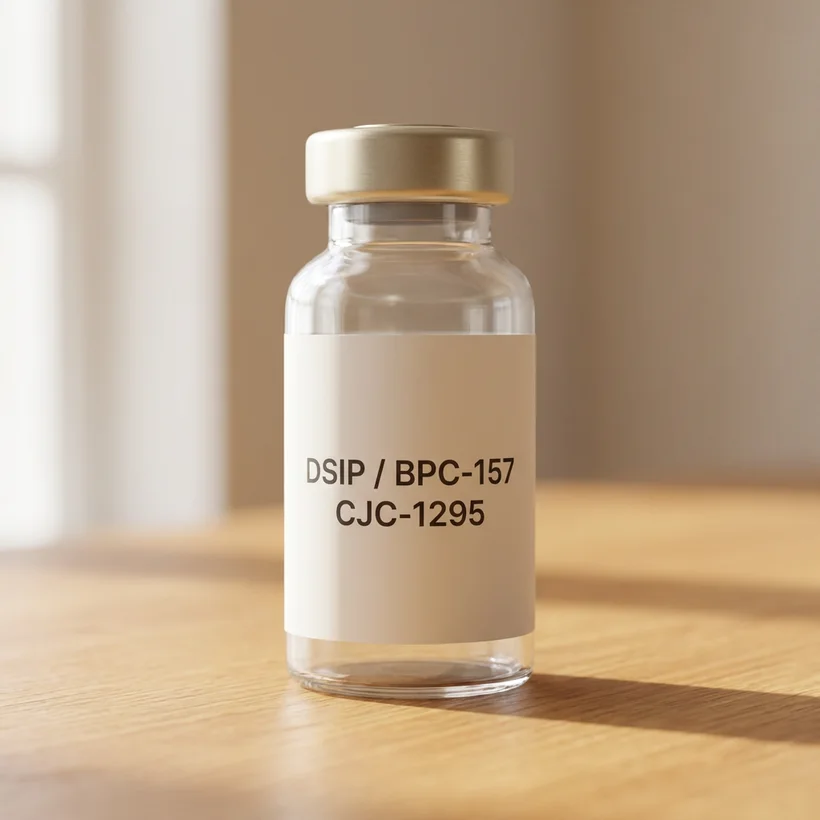
Best Peptides for Sleep custom 2026 image for peptide therapy on FormBlends

Custom 2026 image for Best Peptides for Sleep, peptide therapy, and better treatment decision-making.

Image description: Unique image for this page covering Best Peptides for Sleep, peptide therapy, safety, cost, provider selection, and patient decision-making.

Download the Peptide Quick Reference Card

A printable 2-page reference covering popular peptides, dosing ranges, stacking protocols, and storage.

Free download. We'll also send helpful GLP-1 guides to your inbox. Unsubscribe anytime.

Medical Disclaimer: This content is for informational purposes only and does not constitute medical advice. Always consult a qualified healthcare provider before starting, stopping, or changing any medication or treatment. FormBlends articles are source-checked against medical and regulatory references, but they are not a substitute for a personal medical consultation.

Written by FormBlends Medical Content Team

Medical content team. This article was researched against primary regulatory, trial, prescribing, and manufacturer sources where available. Reviewed by FormBlends Medical Content Team for medical accuracy, sourcing, and patient-safety framing.

Ready to get started?

Provider-reviewed GLP-1 and peptide therapy, delivered to your door.

Start Your Consultation

Ready to Start Your Weight Loss Journey?

Get a free medical consultation with a licensed provider. Compounded GLP-1 medications starting at $299/month with free shipping.

Next Best Reads

Free Tools

Provider-informed calculators to support your weight loss journey.