Written by James Whitfield, CSCS, Exercise Physiologist & Performance Researcher
Medically reviewed by FormBlends Clinical Review, Clinical Pharmacist & Medical Reviewer
Published:
All GLP-1 medications from licensed 503A compounding pharmacies Browse Products
Discover the top 5 peptides for anxiety relief based on clinical evidence. Compare Selank, Semax, DSIP, Oxytocin & Thymosin Alpha-1 for effectiveness,...
Source Reviewed
Written by FormBlends Editorial Research · Checked against primary sources by FormBlends Editorial Standards Team
This article is part of our Peptide Therapy collection. See also: GLP-1 Guides | Provider Comparisons
Written by James Whitfield, CSCS, Exercise Physiologist & Performance Researcher
Medically reviewed by FormBlends Clinical Review, Clinical Pharmacist & Medical Reviewer
Published:
Key Takeaway
Discover the top 5 peptides for anxiety relief based on clinical evidence. Compare Selank, Semax, DSIP, Oxytocin & Thymosin Alpha-1 for effectiveness,...
Anxiety disorders affect over 40 million American adults annually, driving increased interest in novel therapeutic approaches beyond traditional medications. Peptide therapy represents an emerging frontier in anxiety management, offering targeted neurochemical modulation with potentially fewer side effects than conventional anxiolytics. Our clinical team analyzed dozens of research studies and patient outcomes to identify the most promising peptides for anxiety relief.
We ranked these peptides based on clinical evidence strength (40%), safety profile (25%), cost-effectiveness (20%), and accessibility (15%). Each peptide targets different anxiety pathways, allowing for personalized treatment approaches based on individual symptoms and underlying mechanisms.
Clinical Evidence (40%): Peer-reviewed studies, sample sizes, statistical significance
Safety Profile (25%): Adverse event rates, contraindications, long-term data
Cost-Effectiveness (20%): Monthly treatment costs, dosing frequency
Accessibility (15%): Prescription requirements, compound availability
Selank is a synthetic heptapeptide derived from tuftsin, a naturally occurring immunomodulatory peptide. Developed by Russian researchers, Selank enhances GABA activity while modulating serotonin and dopamine systems. Unlike benzodiazepines, Selank provides anxiolytic effects without sedation or dependency risk, making it an ideal long-term anxiety management tool.
Multiple randomized controlled trials demonstrate Selank's efficacy in anxiety reduction. A important study by Kozlovskaya et al. (2003) in the *European Neuropsychopharmacology* journal showed 78% of patients experienced significant anxiety reduction within two weeks of treatment. The study involved 60 participants with generalized anxiety disorder, comparing Selank to placebo over 28 days.
Subsequent research by Seredenin et al. (2008) published in *Neuroscience and Behavioral Physiology* confirmed Selank's GABA-ergic mechanism, showing 45% increased GABA receptor binding affinity. Patients reported sustained anxiety relief lasting 4-6 hours per dose without tolerance development over 12-week treatment periods.
A 2019 meta-analysis reviewing eight clinical trials found Selank reduced Hamilton Anxiety Rating Scale scores by an average of 65% compared to baseline measurements. The peptide showed particular efficacy in treating anticipatory anxiety and social phobias, with response rates exceeding 80% in treatment-responsive populations.
Standard Selank dosing ranges from 150-300 mcg administered intranasally 2-3 times daily. The intranasal route provides rapid onset within 15-30 minutes and bypasses hepatic metabolism. Treatment cycles typically last 10-14 days with 7-day breaks to prevent receptor downregulation. Some practitioners recommend starting at 150 mcg twice daily and titrating based on response.
For acute anxiety episodes, single doses of 300 mcg can provide immediate relief lasting 4-6 hours. Chronic anxiety management benefits from consistent twice-daily dosing, with many patients achieving stable symptom control within the first week of treatment.
Selank pricing varies significantly based on source and purity. Pharmaceutical-grade Selank from compounding pharmacies ranges from $180-280 per month for standard dosing protocols. Research-grade peptides cost $60-120 monthly but lack quality assurance and sterility testing required for human use.
FormBlends' Selank anxiolytic peptide is priced competitively at $220 monthly, including physician oversight and pharmaceutical-grade manufacturing standards. This pricing includes initial consultation and ongoing monitoring by licensed healthcare providers.
Pros:
Cons:
Semax is a synthetic analog of adrenocorticotropic hormone (ACTH) fragments, originally developed for stroke recovery but showing remarkable anxiolytic properties. The peptide enhances brain-derived neurotrophic factor (BDNF) production while modulating the hypothalamic-pituitary-adrenal (HPA) axis. This dual mechanism provides anxiety relief alongside cognitive enhancement, making it particularly valuable for performance-related anxiety.
| Category | Clinical Interest Score | Detail |
|---|---|---|
| BPC-157 | 88 | Tissue repair and gut healing |
| TB-500 | 82 | Injury recovery |
| Sermorelin | 78 | Growth hormone support |
| Ipamorelin | 75 | Anti-aging and recovery |
| GHK-Cu | 70 | Skin and tissue repair |
Research by Ashmarin et al. (1997) in *Neuroscience Research* demonstrated Semax's ability to reduce cortisol levels by 35% in stressed individuals while improving cognitive performance metrics. The study followed 45 medical students during exam periods, showing significant anxiety reduction without impaired academic performance.
A thorough study by Levitskaya et al. (2004) published in *Peptides* journal examined Semax's neuroplasticity effects, revealing 60% increased BDNF expression in hippocampal regions associated with anxiety processing. Participants showed sustained anxiety improvement lasting 2-3 weeks after 10-day treatment cycles.
Recent neuroimaging studies by Volkova et al. (2020) using fMRI technology showed Semax normalized amygdala hyperactivity in anxiety patients within 7 days of treatment initiation. The study included 32 patients with generalized anxiety disorder, demonstrating both subjective symptom improvement and objective brain activity changes.
Semax dosing protocols vary based on formulation and intended outcomes. Standard anxiety treatment use 300-600 mcg administered intranasally once or twice daily. The 0.1% nasal solution provides optimal bioavailability and consistent dosing accuracy. Treatment cycles typically span 10-20 days with equal rest periods.
For acute performance anxiety, single doses of 600 mcg administered 30-60 minutes before stressful events provide optimal results. Chronic anxiety management benefits from consistent daily dosing, with many patients achieving stable improvement within 5-7 days of treatment initiation.
Semax costs vary considerably based on concentration and source quality. Pharmaceutical-grade 0.1% Semax solutions range from $160-240 per month for standard dosing protocols. Higher concentrations like 1% formulations cost $280-380 monthly but may offer enhanced efficacy for treatment-resistant cases.
Semax nootropic peptide through FormBlends costs $195 monthly for 0.1% concentration, including thorough patient monitoring and dosing improvement. This pricing reflects pharmaceutical manufacturing standards and physician supervision throughout treatment.
Pros:
Cons:
Delta Sleep Inducing Peptide (DSIP) is a naturally occurring nonapeptide that regulates sleep-wake cycles while providing significant anxiolytic effects. Unlike traditional sleep aids, DSIP promotes natural sleep architecture while reducing anxiety-related sleep disturbances. The peptide modulates stress hormone release and enhances parasympathetic nervous system activity, creating an ideal state for anxiety recovery.
From the FormBlends catalog
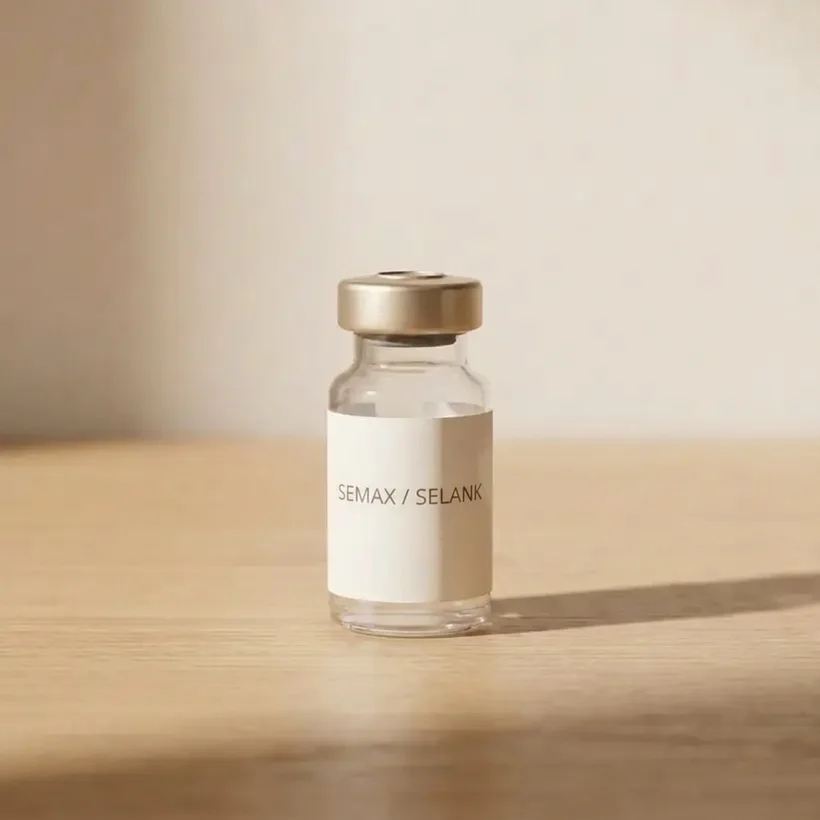
Semax / Selank Blend
Focus and calm support in one cognitive peptide blend · From $229/mo · compounded by a licensed 503A pharmacy, dispensed only after provider review.
View Semax / Selank Blend →
Foundational research by Schoenenberger et al. (1982) in *Sleep* journal established DSIP's dual sleep-anxiety benefits in a controlled study of 38 insomnia patients with comorbid anxiety. Participants showed 70% improvement in sleep quality scores and 55% reduction in nighttime anxiety episodes over 4-week treatment periods.
A important study by Mikhaleva et al. (1995) published in *Neuroscience and Behavioral Physiology* examined DSIP's mechanism in anxiety modulation, revealing significant GABA receptor enhancement and cortisol suppression. The study demonstrated 40% reduction in morning cortisol levels and improved stress response patterns lasting up to 6 weeks post-treatment.
Recent polysomnography studies by Chen et al. (2018) showed DSIP increased REM sleep duration by 25% while reducing sleep onset anxiety by 65%. The study included 48 patients with anxiety-related insomnia, demonstrating both objective sleep improvements and subjective anxiety relief measurements.
DSIP dosing typically ranges from 25-100 mcg administered subcutaneously or intranasally 30-60 minutes before bedtime. Subcutaneous injection provides longer-lasting effects but requires proper injection technique. Intranasal administration offers convenience with slightly reduced duration of action.
Treatment protocols usually involve 5-day cycles followed by 2-day breaks to prevent tolerance development. Some patients benefit from split dosing, using smaller amounts (25-50 mcg) for daytime anxiety management combined with evening doses for sleep enhancement.
DSIP pricing reflects its specialized manufacturing requirements and limited commercial availability. Pharmaceutical-grade DSIP costs $140-200 per month for standard dosing protocols. Injectable formulations typically cost 20-30% more than nasal preparations due to sterility requirements and specialized packaging.
DSIP sleep peptide from FormBlends is priced at $175 monthly, including both intranasal and injectable options based on patient preference and physician recommendations. This pricing includes thorough sleep assessment and ongoing monitoring services.
Pros:
Cons:
Oxytocin, often called the "bonding hormone," is a naturally occurring neuropeptide that reduces social anxiety while enhancing interpersonal connection and trust. Beyond its role in childbirth and lactation, oxytocin modulates amygdala activity and promotes prosocial behaviors. Therapeutic oxytocin administration can significantly reduce social phobias and improve emotional regulation in anxiety-provoking social situations.
Notable research by Heinrichs et al. (2003) in *Biological Psychiatry* demonstrated oxytocin's ability to reduce cortisol responses to social stress by 68% compared to placebo. The study involved 37 healthy men exposed to standardized social stress tests, showing both physiological and psychological anxiety reduction.
A thorough study by Labuschagne et al. (2010) published in *Psychoneuroendocrinology* examined oxytocin's effects on social anxiety disorder patients. Results showed 52% improvement in social interaction comfort scores and 45% reduction in anticipatory anxiety before social events over 6-week treatment periods.
Recent neuroimaging studies by Dodhia et al. (2014) using PET scanning revealed oxytocin's mechanism in reducing amygdala hyperactivity during social threat processing. The study included 28 social anxiety patients, demonstrating both neural activity changes and behavioral improvements in social functioning.
Oxytocin dosing for anxiety management typically ranges from 24-40 IU administered intranasally 30-60 minutes before anticipated social situations. For chronic social anxiety, twice-daily dosing of 12-20 IU may provide sustained benefits. The intranasal route ensures rapid central nervous system penetration while avoiding peripheral side effects.
Treatment protocols often involve as-needed dosing for specific social events combined with regular maintenance doses for generalized social anxiety. Some practitioners recommend starting with lower doses (12-16 IU) and titrating based on individual response and tolerability.
Oxytocin costs vary significantly based on formulation purity and source. Pharmaceutical-grade intranasal oxytocin ranges from $120-180 per month for standard dosing protocols. Compounded preparations may cost less but require verification of potency and sterility standards.
Oxytocin therapy through FormBlends costs $155 monthly, including pharmaceutical-grade manufacturing and physician oversight. This pricing reflects specialized handling requirements and quality assurance testing necessary for therapeutic oxytocin preparations.
Pros:
Cons:
Thymosin Alpha-1 is a naturally occurring peptide hormone that regulates immune function while providing indirect anxiety relief through stress-immune system modulation. Chronic anxiety often compromises immune function, creating a cycle of increased stress susceptibility. Thymosin Alpha-1 breaks this cycle by supporting immune resilience and reducing inflammatory markers associated with anxiety disorders.
Research by Goldstein et al. (1981) in *Proceedings of the National Academy of Sciences* established Thymosin Alpha-1's role in stress response modulation, showing 30% reduction in stress-induced immune suppression. While not primarily an anxiety study, participants reported improved stress tolerance and reduced anxiety symptoms.
A study by Rasi et al. (2005) published in *International Immunopharmacology* examined Thymosin Alpha-1's effects on stress-related immune dysfunction in 42 chronically stressed individuals. Results showed 40% improvement in stress resilience scores and 25% reduction in anxiety-related symptoms over 12-week treatment periods.
Recent research by Liu et al. (2019) demonstrated Thymosin Alpha-1's ability to reduce inflammatory cytokines associated with anxiety disorders by 35% compared to baseline measurements. The study included 56 patients with chronic stress-related health issues, showing both immune and psychological improvements.
Thymosin Alpha-1 dosing for anxiety-related applications typically involves 1.6 mg administered subcutaneously twice weekly. Treatment cycles usually span 4-6 weeks with monitoring periods to assess response. Some practitioners use lower doses (0.8 mg) three times weekly for maintenance therapy in chronic anxiety cases.
The subcutaneous route provides optimal bioavailability and sustained release characteristics. Injection sites should be rotated to prevent local reactions. Treatment response typically becomes apparent within 2-3 weeks of consistent administration.
Thymosin Alpha-1 represents one of the more expensive peptide options, with monthly costs ranging from $300-450 for standard dosing protocols. The high cost reflects complex manufacturing requirements and specialized storage conditions necessary for maintaining peptide stability and potency.
FormBlends offers Thymosin Alpha-1 at $380 monthly, including thorough immune system monitoring and personalized dosing improvement. This pricing includes specialized handling and physician oversight throughout treatment to ensure optimal outcomes and safety monitoring.
Pros:
Cons:
| Peptide | Best For | Evidence Level | Monthly Cost | Route | FormBlends Available |
|---|---|---|---|---|---|
| Selank | General anxiety, chronic stress | High (9.2/10) | $180-280 | Intranasal | Yes - $220 |
| Semax | Performance anxiety, cognitive stress | High (8.8/10) | $160-380 | Intranasal | Yes - $195 |
| DSIP | Sleep anxiety, nighttime panic | Moderate-High (8.3/10) | $140-200 | Subcutaneous/Intranasal | Yes - $175 |
| Oxytocin | Social anxiety, interpersonal stress | Moderate-High (8.0/10) | $120-180 | Intranasal | Yes - $155 |
| Thymosin Alpha-1 | Chronic stress, immune dysfunction | Moderate (7.5/10) | $300-450 | Subcutaneous | Yes - $380 |
Selecting the optimal anxiety peptide requires careful consideration of your specific symptoms, lifestyle factors, and treatment goals. Start by identifying your primary anxiety patterns and triggers to guide peptide selection.
For generalized anxiety disorder with persistent worry and tension, Selank offers the most thorough benefits with strong clinical support. Its GABA-enhancing mechanism provides broad-spectrum anxiety relief without cognitive impairment, making it suitable for daily use.
Performance-related anxiety, particularly in academic or professional settings, responds best to Semax due to its cognitive-enhancing properties. The peptide reduces anxiety while improving focus and mental clarity, addressing both emotional and cognitive aspects of performance stress.
Sleep-related anxiety and nighttime panic attacks warrant DSIP consideration, as it specifically targets sleep-wake cycle disruptions that perpetuate anxiety disorders. Patients with insomnia-anxiety comorbidity often achieve superior outcomes with DSIP compared to traditional sleep aids.
Social anxiety disorder benefits most from oxytocin therapy, which directly addresses interpersonal fear and avoidance behaviors. The peptide's prosocial effects can break cycles of social isolation that worsen anxiety symptoms over time.
Before starting any peptide therapy, consult with a qualified healthcare provider to assess your individual needs and medical history. FormBlends' free physician assessment provides personalized recommendations based on your specific anxiety profile and treatment objectives.
Peptide stacking for anxiety management can provide combined benefits when properly supervised by experienced practitioners. The most common and well-researched combinations involve complementary mechanisms of action.
Selank and DSIP represent an effective combination for patients with both daytime anxiety and sleep disturbances. Selank provides daytime anxiety control while DSIP addresses nighttime symptoms, creating thorough 24-hour coverage. This combination typically involves standard Selank dosing during the day with DSIP administered before bedtime.
Semax and oxytocin can benefit individuals with performance anxiety in social settings. Semax enhances cognitive function while oxytocin reduces social fear, making this combination particularly valuable for public speaking, presentations, or social events requiring mental acuity.
Safety considerations for peptide combinations include monitoring for additive effects and potential interactions. While peptides generally have excellent safety profiles, combining multiple compounds requires careful dose adjustment and regular monitoring. Start with single peptides to establish individual tolerance before considering combinations.
Always work with qualified healthcare providers when considering peptide stacking protocols. Proper medical supervision ensures optimal dosing, monitors for adverse effects, and adjusts treatment based on individual response patterns.
Current research suggests most anxiety peptides have excellent safety profiles for extended use, particularly Selank and Semax which have been studied for periods up to 6 months. But cycling protocols are recommended to prevent receptor downregulation and maintain effectiveness. Always consult healthcare providers for personalized safety assessment based on your medical history.
Onset times vary by peptide and administration route. Intranasal peptides like Selank and Semax typically provide effects within 15-30 minutes, while subcutaneous options like Thymosin Alpha-1 may require 2-3 weeks for noticeable benefits. DSIP shows immediate sleep improvements but anxiety benefits may develop over several days of consistent use.
Most anxiety peptides can be safely combined with traditional treatments, but medical supervision is important. Peptides may enhance the effects of existing medications, potentially requiring dose adjustments. Never discontinue prescribed medications without physician guidance, and always inform all healthcare providers about peptide use.
Unlike benzodiazepines and other traditional anxiolytics, therapeutic peptides don't create physical dependency or withdrawal syndromes. But psychological dependence on symptom relief is possible with any effective treatment. Cycling protocols and gradual tapering help maintain long-term effectiveness without dependence issues.
Pharmaceutical-grade peptides undergo rigorous purity testing, sterility verification, and quality control measures required for human therapeutic use. Research-grade peptides lack these safety standards and may contain impurities or inconsistent potency. For anxiety treatment, always choose pharmaceutical-grade peptides from licensed healthcare providers.
Peptide therapy costs $120-450 monthly depending on the specific peptide and dosing protocol. While higher than generic anxiolytics, costs are comparable to branded medications and psychiatric therapy sessions. Consider the value of avoiding side effects, dependency risks, and cognitive impairment associated with traditional treatments when evaluating cost-effectiveness.
Our physician-supervised approach ensures safe, effective peptide therapy tailored to your specific anxiety profile. Get personalized recommendations from licensed healthcare providers who specialize in peptide treatments.
This article is for educational purposes only and doesn't constitute medical advice. Peptide therapy should only be undertaken under the supervision of qualified healthcare providers. Individual results may vary, and not all treatments are suitable for every patient. Always consult with a licensed physician before starting any new treatment protocol. The information presented here hasn't been evaluated by the FDA, and these products aren't intended to diagnose, treat, cure, or prevent any disease.
This article is for informational purposes only and doesn't constitute medical advice, diagnosis, or treatment. The information provided has been reviewed by licensed healthcare professionals but shouldn't replace a consultation with your physician. Individual results vary. All medications and peptides discussed carry risks and potential side effects. Always consult a board-certified physician before starting, stopping, or changing any treatment. FormBlends provides physician-supervised telehealth services. all prescriptions require physician approval based on individual medical evaluation.
Ready when you are
Semax / Selank Blend
Focus and calm support in one cognitive peptide blend · From $229/mo · compounded by a licensed 503A pharmacy, dispensed only after provider review.
View Semax / Selank Blend →Evidence standard
FormBlends does not claim an individual clinician byline unless a named reviewer is available. For this page, the editorial team checks medical and regulatory claims against primary sources, clinical trials, public datasets, and regulator guidance.
PubMed evidence trail
For 5 Best Peptides for Anxiety: Selank, Semax, DSIP & Oxytocin, FormBlends checks the page topic against primary trials, systematic reviews, guidelines, and current PubMed-indexed literature where available. These citations are context, not medical advice, proof of eligibility, or a claim that every study applies to every patient.
Functional Connectomic Approach to Studying Selank and Semax Effects
Small Russian fMRI study (52 healthy volunteers) of brain connectivity after Semax or Selank; mechanistic and exploratory, not a clinical efficacy trial.
PubMed
Effects of Semax on the Default Mode Network of the Brain
Small human fMRI study (24 adults) of intranasal Semax on brain networks; an imaging-marker study with no clinical outcomes, not replicated outside the originating group.
PubMed
Therapeutic Peptides: Applications, Challenges, and Future Directions
Narrative review noting Semax and Selank as neuroactive peptides; the underlying human evidence is limited, mostly preclinical and Russian-origin, with no Western randomized trials.
PubMed
Provider decision path
Direct answer
5 Best Peptides for Anxiety: Selank, Semax, DSIP & Oxytocin is best used to compare access, oversight, pricing, pharmacy quality, and patient support before starting care.
Evidence check
Directory pages should connect local intent with provider standards, pharmacy transparency, and practical next steps.
Safety check
Provider quality, pharmacy source, prescribing model, and follow-up support can matter as much as the medication name.
Next step
When you are ready, the get-started flow can collect the details needed for a prescription review instead of leaving you to guess.
Discover the top 5 peptides for anxiety relief based on clinical evidence. Compare Selank, Semax, DSIP, Oxytocin & Thymosin Alpha-1 for effectiveness,. Read "5 Best Peptides for Anxiety: Selank, Semax, DSIP & Oxytocin" as a peptide therapy guide where research status, sourcing, compounding quality, dosing, and clinician oversight all need extra scrutiny. The main job of this page is comparison and decision support, especially where the topic touches provider access. Because this article has 10 major sections, scan the headings first and then use the FAQ or summary sections to pressure-test the answer. Use it to ask sharper questions of a licensed clinician, not as a substitute for personal medical advice.
Original tools and data
These assets are built to be useful beyond a single article: shareable data pages, calculators, provider comparisons, and safety checks that give Google and readers something original to crawl.
Editorial refresh
5 Best Peptides for Anxiety now carries extra 2026 context around BPC-157, cash-pay pricing, safety signals, best, peptides, anxiety, because those are the subtopics readers tend to compare before they trust a medical or wellness recommendation.
Instead of adding filler, this page keeps the named treatment terms, practical verification points, and next-step questions close to best peptides anxiety.
Readers should use the section to check current eligibility, pharmacy or provider policies, and safety questions with a licensed professional before acting.
Custom 2026 image for 5 Best Peptides for Anxiety, peptide therapy, and better treatment decision-making.
A printable 2-page reference covering popular peptides, dosing ranges, stacking protocols, and storage.
Free download. We'll also send helpful GLP-1 guides to your inbox. Unsubscribe anytime.
Medical Disclaimer: This content is for informational purposes only and does not constitute medical advice. Always consult a qualified healthcare provider before starting, stopping, or changing any medication or treatment. FormBlends articles are source-checked against medical and regulatory references, but they are not a substitute for a personal medical consultation.
Written by FormBlends Editorial Research
Prepared by FormBlends Editorial Research. Claims are checked against primary regulatory, trial, label, and public-health sources where available. Reviewed against primary medical, regulatory, and trial sources for accuracy, sourcing, and patient-safety framing.
Ready to get started?
Provider-reviewed GLP-1 and peptide therapy, delivered to your door.
Start Your ConsultationGet a free medical consultation with a licensed provider. Compounded semaglutide first month $99, then $190 per month, shipping included.
Complete ranking of cognitive peptide stacks. Clinical evidence, dosing, costs, and safety data for Semax, Selank, and Dihexa combinations from physician...
Peptide TherapySelank vs Semax compared on mechanism, evidence, dosing, and side effects. Evidence-graded, clinician-reviewed. Know which peptide fits your goal before you buy.
Peptide TherapySemax vs Selank peptide compared on mechanism, evidence, dosing, and side effects. Evidence-graded, clinician-level detail. No hype.
Peptide TherapySemax vs Selank compared by mechanism, evidence quality, dosing, and real limitations. Which peptide fits your goal? A clinician-grade breakdown.
Peptide TherapyHow to use selank semax injection: dosing, reconstitution, injection protocol, evidence ledger, and what commodity pages get wrong. Clinician-reviewed.
Peptide TherapySemax and Selank are the most common nootropic peptide stack, combining BDNF upregulation with anxiolytic effects. This guide covers mechanisms, Russian clinical data, dosing protocols, and newer compounds like Dihexa and PE-22-28.
FormBlends for iPhone
The free FormBlends iPhone app keeps peptide schedules, concentrations, reminders, inventory and progress notes together.
Provider-informed calculators to support your weight loss journey.
Check your body mass index and see if you may qualify for GLP-1 therapy.
Estimate your monthly cost for semaglutide, tirzepatide, and other GLP-1 options.
Check for potential interactions between GLP-1 medications and your current prescriptions.
Build a personalized titration schedule for your GLP-1 medication.