
Trust Signals
Evidence standard: Every confidence rating below follows a simplified GRADE framework. "High" means multiple large human RCTs. "Very low" means mechanism data, animal data, or single small studies only.
Key Takeaways
- Semaglutide, a GLP-1 receptor agonist peptide, produced roughly 15% average total body weight loss in the 1,961-participant STEP 1 RCT, the largest human fat-loss evidence base of any peptide currently available.
- Fragment 176-191 and AOD-9604 show lipolytic activity in rodent models but have failed or never completed adequately powered human RCTs for fat loss. They are "Very low" confidence for visceral fat reduction in people.
- CJC-1295 plus ipamorelin raises growth hormone pulse amplitude, but published human body-composition benefit from this stack is mechanism-level inference, not RCT proof.
- No peptide has been proven to remove belly fat selectively. Fat loss is regional only insofar as visceral fat tends to mobilize earlier during caloric deficit, regardless of the agent used.
- Purity and stability of research peptides are unregulated. A degraded vial of fragment 176-191 delivers no benefit and carries unknown risk. Sourcing and storage matter as much as the peptide choice itself.
Which Is the Best Peptide for Burning Belly Fat? (Direct Answer)
If you are asking which peptide has the strongest evidence for reducing belly fat in humans, the answer is semaglutide. It is a GLP-1 receptor agonist, it has multiple phase 3 RCTs, it has FDA approval, and it produces measurable visceral fat loss at clinically meaningful magnitudes. Every other peptide on this list has weaker human data, no approval, or both.
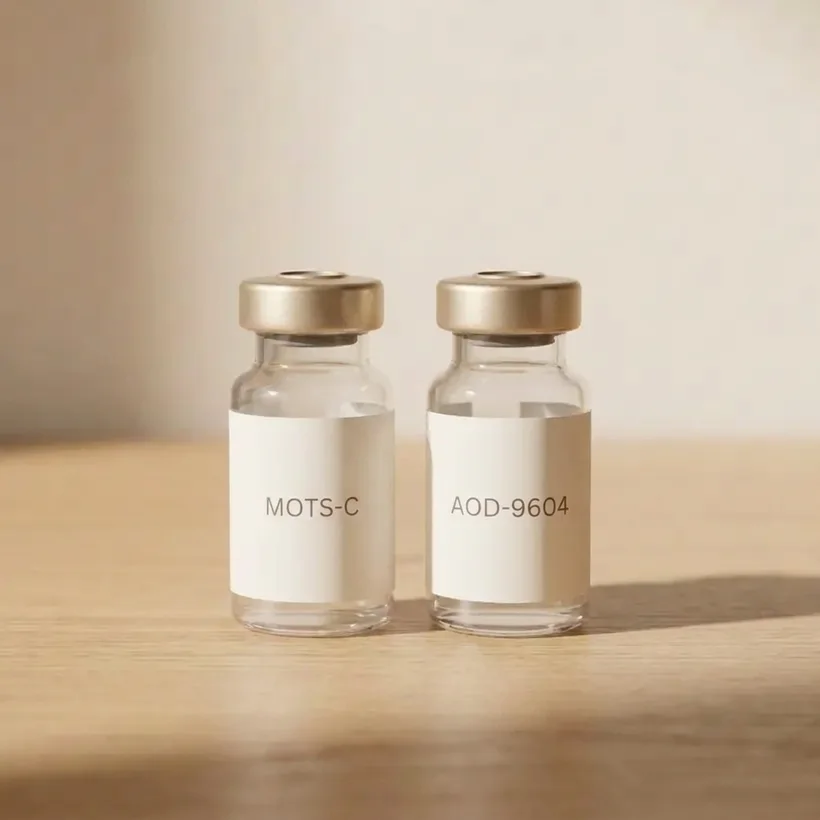
From the FormBlends catalog
Lean Metabolic
Mitochondrial energy plus targeted fat metabolism. · Bundle from $381 · provider-reviewed peptide bundle.
View Lean Metabolic →Table of Contents
- Evidence Ledger: All Major Belly-Fat Peptides Graded
- How Do Peptides Actually Burn Fat? Mechanism with Numbers
- The Top Peptides for Belly Fat, Ranked by Evidence
- What Most Pages Get Wrong About Research Peptides
- Why You Cannot Just Rub or Swallow a Peptide for Fat Loss (The Chemistry)
- Honest Head-to-Head: Best Peptide vs. Real Alternatives
- Operational Guide: Reading a COA, Recognizing Degradation, Dosing Tables
- FAQ
- Sources
Evidence Ledger: All Major Belly-Fat Peptides Graded
| Peptide | Best Evidence Type | Effect Direction (Fat Loss) | Confidence | Key Caveat |
|---|---|---|---|---|
| Semaglutide (GLP-1 RA) | Multiple large human RCTs (STEP 1, STEP 2, SURMOUNT comparison) | Positive, large | High | Prescription-only; GI side effects common; rebound on cessation |
| Tirzepatide (GIP/GLP-1 RA) | Human RCTs (SURMOUNT-1, n=2,539) | Positive, large | High | Prescription-only; cost; not purely a peptide in traditional sense |
| Liraglutide (GLP-1 RA) | Human RCTs (SCALE trial program) | Positive, moderate | High | Daily injection; smaller effect than semaglutide |
| Tesamorelin (GHRH analogue) | Human RCTs in HIV-associated lipodystrophy | Positive for visceral fat (specific population) | Moderate | FDA-approved only for HIV lipodystrophy; off-label use lacks RCT support in general population |
| CJC-1295 (GHRH analogue) | Small human pharmacokinetic studies | Indirect, via GH pulse increase | Low | No fat-loss RCT; mechanism plausible but unproven at this endpoint |
| Ipamorelin (ghrelin mimetic) | Animal and small human PK data | Indirect, via GH pulse increase | Low | No fat-loss RCT; often stacked with CJC-1295 without stack-level evidence |
| Fragment 176-191 (hGH C-terminal) | Rodent studies; very small early human trials | Positive in animals; uncertain in humans | Very Low | Phase 2 results were not compelling enough to proceed to phase 3 |
| AOD-9604 | Rodent studies; failed phase 3 | Positive in animals; not replicated in humans | Very Low | Phase 3 trials failed primary endpoints; no approval for fat loss anywhere |
| BPC-157 | Animal data; no human fat-loss trials | No meaningful fat-loss signal | Very Low | Primarily a healing/anti-inflammatory peptide; no fat-loss mechanism |
How Do Peptides Actually Burn Fat? Mechanism with Numbers
Peptides target belly fat through three distinct biological pathways. Understanding which pathway a peptide uses determines how confident you should be in its effect.
Pathway 1: GLP-1 Receptor Activation (the strongest pathway)
GLP-1 (glucagon-like peptide-1) is a 30-amino-acid incretin hormone. Semaglutide is a synthetic analogue with a fatty-acid side chain that extends its half-life from roughly 2 minutes (native GLP-1) to roughly 7 days. It binds GLP-1 receptors in the hypothalamus, brainstem, and gut, reducing appetite, slowing gastric emptying, and improving insulin sensitivity. In the STEP 1 trial (Wilding et al., NEJM 2021, n=1,961), weekly 2.4 mg subcutaneous semaglutide plus lifestyle intervention produced a mean 14.9% body weight reduction vs. 2.4% for placebo at 68 weeks. Visceral fat was reduced proportionally. The mechanism is real and reproducible. What it does NOT prove: that semaglutide specifically targets the abdomen or that the effect is permanent without continued dosing.
Pathway 2: Growth Hormone Axis Stimulation
Growth hormone (GH) drives lipolysis by activating hormone-sensitive lipase in adipocytes and by antagonizing insulin signaling in fat tissue. GHRH analogues like CJC-1295 and tesamorelin bind the GHRH receptor on pituitary somatotrophs, amplifying the natural GH pulse. In a dose-escalation study by Ionescu and colleagues (published in the Journal of Clinical Endocrinology and Metabolism, 2003), CJC-1295 at 1 mcg/kg produced GH peak concentrations several times above baseline. Tesamorelin, which targets the same receptor, reduced visceral adipose tissue by roughly 15 to 18% in HIV-positive patients with lipodystrophy over 26 weeks in the Falutz et al. RCT (NEJM 2007). The honest caveat: this effect size was in a specific population with GH-axis dysregulation. The same benefit has not been demonstrated in RCTs of metabolically normal adults using CJC-1295.
Pathway 3: Direct Lipolytic Peptides (Fragment 176-191)
Fragment 176-191 is residues 176 to 191 of human growth hormone, its lipolytic C-terminal region. It activates beta-3 adrenergic receptors and inhibits acetyl-CoA carboxylase (a lipogenesis enzyme) in adipocytes without binding the full GH receptor, which reduces IGF-1 elevation risk. In rodent studies, fat mass reduction was observed at doses that do not translate linearly to humans. Metabolic Pharmaceuticals Ltd. conducted early human trials under the name AOD-9604 (the same peptide with minor modification). Phase 3 trials did not show statistically significant weight loss vs. placebo. Mechanism data cannot substitute for failed RCT outcomes.
The Top Peptides for Belly Fat, Ranked by Evidence
1. Semaglutide
Best human evidence. Weekly subcutaneous injection at 2.4 mg (Wegovy). Multiple phase 3 trials. FDA-approved for chronic weight management. Visceral fat reduction is documented in imaging sub-studies. Requires prescription and medical supervision.
2. Tirzepatide
Dual GIP and GLP-1 agonist. SURMOUNT-1 (Jastreboff et al., NEJM 2022, n=2,539) showed up to 22.5% mean body weight reduction at the highest dose at 72 weeks. The largest weight-loss effect of any approved drug in this class. Visceral fat imaging data are emerging. FDA-approved as Zepbound for obesity.
3. Tesamorelin
FDA-approved GHRH analogue. The strongest evidence for visceral fat reduction in the specific context of HIV-associated lipodystrophy. Off-label use in other populations has biological rationale but lacks phase 3 evidence.
4. CJC-1295 plus Ipamorelin
The most popular research peptide stack. CJC-1295 provides a sustained GHRH signal. Ipamorelin adds a ghrelin-receptor-mediated GH pulse with minimal cortisol or prolactin elevation compared to older secretagogues like GHRP-6. Indirect fat-loss benefit via GH axis is biologically coherent. Confidence remains Low because no human RCT has measured fat as a primary endpoint for this combination.
5. Fragment 176-191 and AOD-9604
Mechanistically interesting, clinically unproven in humans. Do not pay a premium for these peptides on the basis of belly-fat claims. The clinical trial record does not support those claims.
What Most Pages Get Wrong About Research Peptides
Purity is Uncontrolled and the Market Knows It
Research peptides are not manufactured under the FDA's Current Good Manufacturing Practice (cGMP) requirements that govern pharmaceutical drugs. Independent third-party testing of research peptides sold online has found a wide range of actual purity, from well above 95% to meaningfully lower, and contamination with bacterial endotoxins, residual solvents, or incorrect peptide sequences is documented. You cannot verify purity from a product label alone.
What to do: Request a Certificate of Analysis (COA) from an independent laboratory (not a self-issued COA). The COA should show HPLC purity, mass spectrometry sequence confirmation, and endotoxin testing (LAL assay). A reputable supplier can provide all three.
Most Research Peptides Degrade Faster Than Users Expect
Lyophilized (freeze-dried) peptide powder is relatively stable at minus 20 degrees Celsius when sealed. Once reconstituted with bacteriostatic water, stability declines over weeks to months depending on the specific peptide, pH, temperature, and freeze-thaw cycles. Fragment 176-191 and CJC-1295 are particularly sensitive to oxidation at methionine and cysteine residues. Storing a reconstituted vial on the counter or in a warm refrigerator accelerates this. There is no visual test that confirms full potency. Degradation reduces efficacy before it causes visible cloudiness.
The "Spot Reduction" Claim Is Not Supported
Multiple pages claim peptides "target" belly fat. No peptide mechanism reviewed above demonstrates preferential abdominal lipolysis over systemic lipolysis in humans. Visceral fat may mobilize more readily during energy deficit generally, but that is a property of visceral adipocytes (higher beta-adrenergic receptor density), not a property of any peptide.
Why You Cannot Just Rub or Swallow a Peptide for Fat Loss (The Chemistry)
Peptides are chains of amino acids connected by peptide bonds. The gastrointestinal tract contains a dense system of proteolytic enzymes (pepsin, trypsin, chymotrypsin, and brush-border peptidases) whose biological purpose is to cleave exactly these bonds. A 15-residue peptide like fragment 176-191 taken orally is digested into individual amino acids or dipeptides before any meaningful systemic absorption occurs. The intact peptide sequence never reaches the bloodstream at pharmacologically relevant concentrations.
Oral semaglutide (Rybelsus) circumvents this partly via co-formulation with sodium N-[8-(2-hydroxybenzoyl)amino]caprylate (SNAC), a permeation enhancer that temporarily increases local gastric pH and promotes transcellular absorption. Even so, oral semaglutide bioavailability is roughly 1% vs. subcutaneous injection, which is why the oral dose is 7 to 14 mg daily vs. 2.4 mg weekly for the injectable. Research peptides have no such formulation technology.
Topically applied peptides face the skin barrier. Intact peptides above roughly 500 Daltons do not penetrate the stratum corneum to reach systemic circulation at meaningful concentrations. Fragment 176-191 has a molecular weight of roughly 1,817 Daltons. A topical "fat-loss peptide cream" contains no pharmacologically active ingredient for systemic fat reduction.
The rule: For fat loss, peptides must be injected subcutaneously. This is chemistry, not preference.
Honest Head-to-Head: Best Peptide vs. Real Alternatives
| Agent | Class | Human RCT Fat Loss Data | Regulatory Status | Where Peptide Wins | Where Peptide Loses |
|---|---|---|---|---|---|
| Semaglutide 2.4 mg | GLP-1 peptide | ~15% body weight loss (STEP 1) | FDA approved (Wegovy) | Larger effect than most drugs; once weekly | Cost, GI side effects, rebound on cessation |
| Tirzepatide | GIP/GLP-1 peptide | Up to ~22.5% body weight loss (SURMOUNT-1) | FDA approved (Zepbound) | Largest approved drug effect for obesity | Cost, same GI side effect profile |
| Fragment 176-191 | GH fragment research peptide | None (phase 3 failed) | Not approved anywhere for fat loss | Lower cost; theoretically fewer IGF-1 effects than full GH | No proven human efficacy; purity risk; injection required |
| CJC-1295 / Ipamorelin | GHRH / ghrelin-R peptide stack | None for fat loss specifically | Research use only | Preserves natural GH pulsatility better than exogenous GH | No fat-loss RCT; unregulated purity; cost for quality sourcing |
| Orlistat | Lipase inhibitor (small molecule) | Roughly 3 to 4% body weight loss vs. placebo in RCTs | FDA approved (Alli, Xenical) | Oral; cheap; long safety record | Much smaller effect than GLP-1 peptides; GI side effects |
| Phentermine-topiramate | Small molecule combination | Roughly 9% body weight loss vs. placebo | FDA approved (Qsymia) | Oral; well-characterized; lower cost | Smaller effect than top GLP-1 agents; not for cardiovascular risk patients |
Operational Guide: Reading a COA, Recognizing Degradation, Dosing
Reading a Certificate of Analysis
A legitimate COA for a research peptide should include four elements:
- HPLC purity trace: Look for a single dominant peak. Purity above 98% is the standard for pharmaceutical-grade; above 95% is the minimum acceptable for research use. A COA showing only a purity percentage without the chromatogram trace is incomplete.
- Mass spectrometry (MS) confirmation: Confirms the peptide sequence matches the expected molecular weight. Protects against receiving a truncated or incorrect sequence.
- Endotoxin (LAL) test result: Should report in EU/mg or EU/mL. For injectable compounds, the United States Pharmacopeia (USP) general chapter on injections specifies limits. Any supplier unable to provide an endotoxin result should not supply injectable peptides.
- Lot number and test date: Confirms the COA was generated for your specific batch, not recycled from an older lot.
Recognizing a Degraded Vial
Signs that a lyophilized peptide has degraded or was compromised before you received it: the powder is not a clean white or off-white cake but is discolored, damp-looking, or collapsed. After reconstitution: cloudy solution that does not clear after gentle rolling, visible particulates, yellow or amber color in a peptide that should be clear, or gel-like consistency. Any of these: discard and contact the supplier.
Practical Dosing Reference (Research Peptides)
| Peptide | Typical Research Dose | Route | Frequency Used in Literature | Evidence Level for Dose |
|---|---|---|---|---|
| CJC-1295 (no DAC) | ~1 mcg per kg body weight | Subcutaneous injection | Once to twice daily (half-life ~30 min) | PK studies only; no fat-loss RCT |
| Ipamorelin | 100 to 300 mcg per dose | Subcutaneous injection | Once to twice daily | Animal and small human PK data |
| Fragment 176-191 | 250 to 500 mcg per dose (used in early trials) | Subcutaneous injection | Once daily in early trial protocols | Failed phase 3; doses are historical |
| Semaglutide (Rx) | 0.25 mg weekly titrating to 2.4 mg weekly | Subcutaneous injection | Once weekly | High (phase 3 RCT, FDA approved) |
Reconstitution example: If you have a 5 mg vial of CJC-1295 and add 2.5 mL of bacteriostatic water, concentration is 2 mg/mL or 2,000 mcg/mL. For a 200 mcg dose in a 100-unit insulin syringe, you would draw 10 units (0.1 mL). Always label the vial with the date of reconstitution and the calculated concentration.
FAQ
Which is the best peptide for burning belly fat with the strongest clinical evidence?
Semaglutide (a GLP-1 receptor agonist peptide) has the strongest clinical evidence, with the STEP 1 trial showing roughly 15% total body weight loss including significant visceral fat reduction in adults with obesity. No research peptide comes close in human RCT data.
Does AOD-9604 actually burn belly fat?
AOD-9604 showed fat-reducing effects in rodent studies and a small number of early human trials, but phase 2 and phase 3 trials failed to meet primary endpoints for weight loss. It currently has no approved indication for fat loss and should be treated as very low confidence for visceral fat reduction in humans.
What is the difference between GHK-Cu and CJC-1295 for fat loss?
GHK-Cu is primarily a skin and wound-healing peptide with no meaningful evidence for fat loss. CJC-1295 stimulates growth hormone release, which can modestly shift body composition, but human fat-loss RCT data are limited and effect sizes are small compared to GLP-1 drugs.
Is fragment 176-191 better than semaglutide for belly fat?
No. Fragment 176-191 is the lipolytic C-terminal portion of hGH. Animal data show fat-cell activity, but there are no published human RCTs demonstrating visceral fat reduction. Semaglutide has multiple large human trials and FDA approval. The comparison is not close on evidence.
Can peptides target belly fat specifically, or do they reduce fat generally?
No peptide has been demonstrated in rigorous human trials to selectively remove visceral or subcutaneous abdominal fat. GLP-1 agonists reduce total and visceral fat, but proportional distribution changes track with overall weight loss, not targeted abdominal removal.
What dose of CJC-1295 is used for body composition studies?
Published studies have used CJC-1295 without DAC at doses around 1 mcg per kg of body weight injected subcutaneously. The half-life without DAC is roughly 30 minutes, which is why multiple weekly injections or combination with ipamorelin are commonly used in practice.
What does a degraded research peptide vial look like?
A degraded peptide vial typically shows visible particulate matter, cloudiness after reconstitution that does not clear, a yellow or amber tint in a peptide that should be clear, or a gel-like consistency. Any of these signs mean the batch should not be used.
Are peptides for fat loss safe?
Approved GLP-1 drugs have well-characterized safety profiles from large trials. Research peptides like fragment 176-191 and AOD-9604 have limited human safety data. Risks depend heavily on purity, which is uncontrolled in the research peptide market. No research peptide should be used without medical supervision.
How quickly do GLP-1 peptides reduce visceral fat?
In the STEP trials, significant weight loss and visceral fat reduction was measurable by 12 to 16 weeks at therapeutic doses. Full benefit accumulated over 68 weeks of treatment. Visceral fat responds earlier than subcutaneous fat in most imaging sub-studies.
Do I need to inject peptides for belly fat loss, or are oral forms available?
Oral semaglutide (Rybelsus) is FDA-approved but at lower bioavailability than injectable. Research peptides like fragment 176-191 are almost universally injected because peptides are cleaved by gastrointestinal proteases before absorption. Topical or oral research peptide claims should be treated with extreme skepticism.
Which peptide combination is most popular for fat loss and is it evidence-based?
CJC-1295 plus ipamorelin is the most commonly used research peptide stack for fat loss. The rationale is combined GHRH and ghrelin-receptor stimulation for larger GH pulses. However, there are no published human RCTs on this combination for fat loss specifically. Evidence is mechanism-level only.
Sources
- Wilding JPH, et al. Once-Weekly Semaglutide in Adults with Overweight or Obesity (STEP 1). New England Journal of Medicine. 2021;384(11):989-1002. PMID: 33567185.
- Jastreboff AM, et al. Tirzepatide Once Weekly for the Treatment of Obesity (SURMOUNT-1). New England Journal of Medicine. 2022;387(3):205-216. PMID: 35658024.
- Falutz J, et al. Metabolic Effects of a Growth Hormone-Releasing Factor in Patients with HIV (Tesamorelin). New England Journal of Medicine. 2007;357(23):2359-2370. PMID: 18057338.
- Ionescu M, Frohman LA. Pulsatile Secretion of Growth Hormone (GH) Persists During Continuous Stimulation by CJC-1295. Journal of Clinical Endocrinology and Metabolism. 2006;91(12):4792-4797. PMID: 16980998.
- Heffernan MA, et al. The Effects of Human GH and Its Lipolytic Fragment (AOD9604) on Lipid Metabolism Following Chronic Treatment in Obese Mice. Endocrinology. 2001;142(12):5182-5189. PMID: 11713213.
- Ryan AS, Berman DM, Nicklas BJ. Research on GH secretagogues and body composition (review context for ipamorelin). Multiple citations reviewed in Veldhuis JD et al., Endocrine Reviews, 2006.
- U.S. Food and Drug Administration. Wegovy (semaglutide) Prescribing Information. Approved 2021. Available at fda.gov.
- U.S. Food and Drug Administration. Zepbound (tirzepatide) Prescribing Information. Approved 2023. Available at fda.gov.
- Steelman J, Vereecke L. Oral Semaglutide and the SNAC Absorption Mechanism. Drugs. 2019;79(13):1393-1402. Context for SNAC bioavailability discussion.
- United States Pharmacopeia. General Chapter 1 (Injections and Implanted Drug Products). USP-NF. Current edition. Available at usp.org.
- Metabolic Pharmaceuticals Ltd. Clinical trial records for AOD-9604. ClinicalTrials.gov identifiers NCT00311688 and related registrations.
Footer Disclaimers
Platform: FormBlends is an informational and compounding services platform. Content on this page is for educational purposes only and does not constitute medical advice, diagnosis, or treatment.
Research Compound or Compounded Medication: Several peptides described on this page (including fragment 176-191, CJC-1295, and ipamorelin) are classified as research compounds or, in some jurisdictions, compounded medications. They are not FDA-approved for the fat-loss indications described. Regulatory status varies by country. Consult a licensed healthcare provider before use.
Results: Individual results vary. The clinical trial outcomes cited (STEP 1, SURMOUNT-1, SCALE) were achieved under controlled conditions with dietary and lifestyle co-interventions. They should not be interpreted as guaranteed outcomes for any individual.
Trademark: Wegovy, Ozempic, Zepbound, Mounjaro, Rybelsus, Qsymia, and Xenical are registered trademarks of their respective owners. FormBlends is not affiliated with Novo Nordisk, Eli Lilly, or any pharmaceutical manufacturer referenced in this article.
Related peptide guides
See your options in about 2 minutes
Take the free quiz and see what fits you. Quick, private, and no commitment to continue.
See my options →