Key Takeaway
Recovery is where progress happens. You break down muscle in the gym. You rebuild it during rest. Growth hormone plays a central role in that rebuilding process) and GH peptides for recovery have become increasingly popular among athletes and active adults looking for an edge in tissue repair and tr
Recovery is where progress happens. You break down muscle in the gym. You rebuild it during rest. Growth hormone plays a central role in that rebuilding process) and GH peptides for recovery have become increasingly popular among athletes and active adults looking for an edge in tissue repair and training capacity.
Key Takeaways: - Learn how growth hormone drives recovery - Best Peptides for Athletic Recovery - Structuring a Recovery Protocol - Important Considerations for Athletes
This guide covers the science behind GH and recovery, which peptides may help, and what realistic results look like.
How Growth Hormone Drives Recovery
Growth hormone isn't just about getting bigger. It's fundamentally a repair and regeneration hormone. When your pituitary releases GH, it triggers a cascade of recovery processes throughout your body.
Protein synthesis. GH stimulates the uptake of amino acids into muscle cells and increases protein synthesis. This is the basic building block of muscle repair. After a hard training session, improved GH levels may help your muscles rebuild faster and more completely.
Collagen synthesis. GH is one of the primary drivers of collagen production. Collagen is the structural protein in tendons, ligaments, cartilage, and fascia. For athletes dealing with joint stress or connective tissue strain, this is significant. Research has shown that GH administration can increase collagen synthesis by 30 to 100% in some tissues.
"The key to successful GLP-1 therapy is setting realistic expectations and supporting patients through the titration phase. The side effects are manageable for most people, but they need to know what to expect.", Dr. Caroline Apovian, MD, Harvard Medical School
Fat metabolism. GH promotes lipolysis (the breakdown of stored fat for energy. During recovery, this means your body can preferentially burn fat while preserving and rebuilding lean tissue.
IGF-1 mediation. Most of GH's recovery effects are mediated through insulin-like growth factor 1 (IGF-1), which is produced primarily in the liver in response to GH. IGF-1 is the downstream messenger that directly stimulates tissue growth and repair.
Sleep-dependent recovery. The largest GH pulse occurs during deep sleep. This is when most tissue repair happens. GH peptides may enhance this nighttime pulse, effectively turbocharging your body's natural overnight recovery process. Learn more about .
Best Peptides for Athletic Recovery
Not all GH peptides are created equal for recovery applications. Here's how the main options stack up.
is the most popular combination for recovery-focused protocols. CJC-1295 extends the GH release window. Ipamorelin amplifies the pulse without raising cortisol. Cortisol is catabolic) it breaks down tissue. Keeping cortisol low during recovery is critical for athletes. This combination delivers strong GH stimulation without the cortisol problem.
isn't technically a GH peptide, but it's frequently used alongside GH peptides for recovery. BPC-157 is a body protection compound that may support healing of tendons, ligaments, and gut tissue. When combined with GH peptides, some athletes report accelerated recovery from injuries and intense training.
Ipamorelin alone is a solid option for athletes who want clean GH stimulation with minimal side effects. No hunger spikes, no cortisol elevation, no water retention issues that could affect performance.
GHRP-6 produces a stronger raw GH pulse but comes with hunger and cortisol elevation. For athletes in a bulking phase who don't mind the appetite increase, it can work. For those managing body composition or cutting, the hunger is usually a dealbreaker.
MK-677 is convenient (oral dosing) but the insulin resistance risk and water retention can be problematic for performance athletes. The water weight can mask body composition changes and the blood sugar effects may impair energy regulation.
Free Download: Peptide Protocol Planner (12-Week) Map out your recovery-focused peptide protocol with our 12-week planner. Includes training-day dosing adjustments, recovery metrics, and progress tracking. Get yours free (we'll email it to you instantly.
[Download CTA Button]
Structuring a Recovery Protocol
Here's how to think about building a GH peptide protocol around your training schedule.
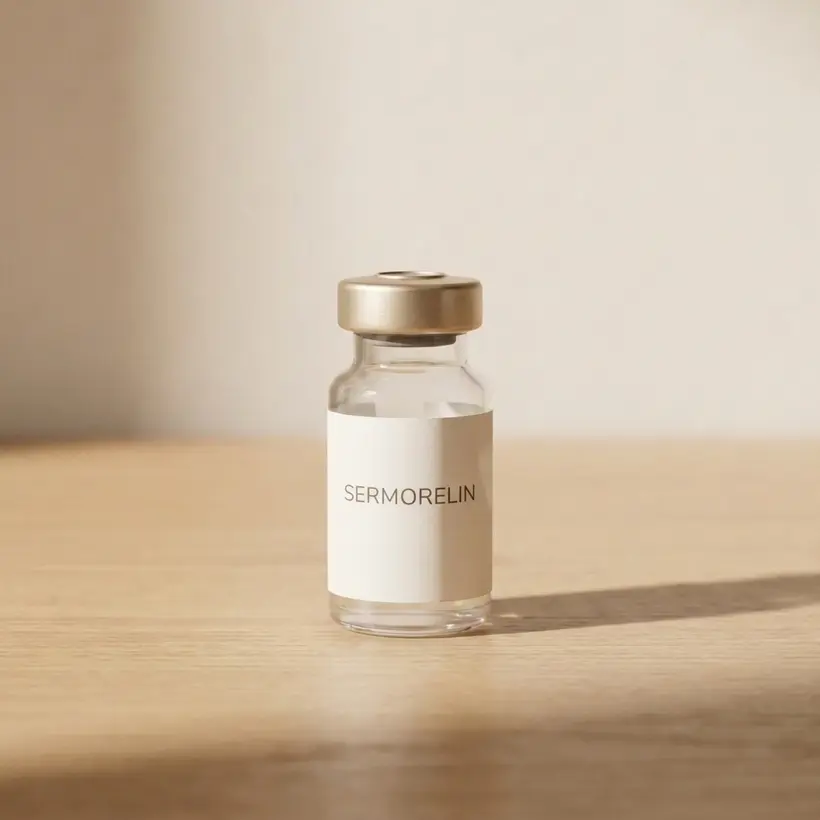
From the FormBlends catalog
Sermorelin
Bioidentical GHRH analog for natural growth hormone pulsatility · From $175/mo · compounded by a licensed 503A pharmacy, dispensed only after provider review.
View Sermorelin →Timing around training. Many providers recommend dosing GH peptides in the evening, 20 to 30 minutes before bed. This amplifies the natural nighttime GH pulse when most recovery happens. Some athletes add a second dose post-workout (at least 2 hours after eating) to boost the acute recovery response.
Nutrition combined effect. GH peptides work best when your nutrition supports recovery. Adequate protein intake (1.6 to 2.2g per kg of body weight) provides the raw materials for muscle repair. Post-workout meals should be consumed at least 2 hours before your evening peptide dose to avoid insulin-mediated GH blunting. Check out our guide on .
Tracking recovery metrics. Subjective measures like muscle soreness, sleep quality, and training readiness are valuable. But objective data is even better. Heart rate variability (HRV), grip strength, and performance metrics can help you and your provider assess whether the protocol is working. The can help you log these data points.
Protocol duration. Most recovery protocols run 8 to 12 weeks. This aligns with typical training mesocycles. Some athletes cycle peptides) 12 weeks on, 4 weeks off (to maintain receptor sensitivity.
Stacking considerations. If you're recovering from a specific injury, your provider may recommend combining GH peptides with tissue-specific peptides like BPC-157 or . This "healing stack" approach targets both systemic GH elevation and local tissue repair.
Important Considerations for Athletes
A few things every athlete should know before starting GH peptide therapy.
Anti-doping rules. All GH secretagogues are banned by WADA and most major sports organizations. If you compete in tested sports, GH peptides aren't an option. This includes CJC-1295, Ipamorelin, GHRP-6, MK-677, and all related compounds. Discuss this with your provider before starting.
Blood work baseline. Get full blood work before starting. This should include IGF-1, testosterone, thyroid panel, complete metabolic panel, and inflammatory markers like CRP. This gives you and your provider a clear picture of where you're starting.
Recovery isn't just GH. Peptides are one piece of the puzzle. Sleep, nutrition, stress management, and training programming all matter enormously. The best peptide protocol in the world won't overcome chronic sleep deprivation, inadequate nutrition, or overtraining.
Individual response varies. Some athletes respond dramatically to GH peptides. Others notice more subtle improvements. Age, baseline GH levels, training status, and genetics all play a role. Set realistic expectations and give your protocol at least 8 weeks before evaluating results.
Working with a is important for improving your protocol safely.
Frequently Asked Questions
How quickly will I notice recovery improvements from GH peptides?
Most athletes report improved sleep quality within the first week, which itself enhances recovery. Noticeable improvements in muscle soreness, training readiness, and recovery speed typically appear within 3 to 4 weeks. Connective tissue benefits may take 8 to 12 weeks.
Can I take GH peptides during a caloric deficit?
Yes. GH peptides may actually be particularly beneficial during a cut. Growth hormone promotes fat oxidation and helps preserve lean tissue during caloric restriction. But the GH response to peptides may be slightly blunted in a severe deficit.
Are GH peptides better than BPC-157 for injury recovery?
They serve different purposes. GH peptides improve systemic growth hormone, supporting overall tissue repair and recovery. works more locally on specific tissues. Many providers prescribe both together for thorough injury recovery support.
Will GH peptides help with tendon and ligament recovery?
Growth hormone is a primary driver of collagen synthesis, which is important for tendon and ligament repair. GH peptides may support these tissues by improving GH and IGF-1 levels. The effects are gradual) connective tissue heals slowly by nature. Your provider can incorporate the guidance for proper peptide preparation.
Can women athletes use GH peptides for recovery?
Absolutely. Women respond well to GH peptide therapy for recovery purposes. Dosing may differ (many providers start women at slightly lower doses. The benefits for recovery, body composition, and connective tissue health apply equally. Learn more in our guide on .
Start your progress Today
Every transformation starts with a single step. Talk to a licensed FormBlends provider about whether this approach is right for you) consultations are free and confidential.
Sources &. References
- Ionescu M, Frohman LA. Pulsatile secretion of growth hormone (GH) persists during continuous stimulation by CJC-1295, a long-acting GH-releasing hormone analog. J Clin Endocrinol Metab. 2006;91(12):4792-4797. Doi:10.1210/jc.2006-1702
The information in this article is intended for educational use only and shouldn't be considered medical advice. Consult a qualified healthcare provider before making any changes to your medication or supplement regimen. FormBlends helps with connections with licensed providers for personalized medical guidance.
Last updated: 2026-03-24
Ready when you are
Sermorelin
Bioidentical GHRH analog for natural growth hormone pulsatility · From $175/mo · compounded by a licensed 503A pharmacy, dispensed only after provider review.
View Sermorelin →