Key Takeaway
If you're looking to improve your growth hormone levels, you have two main paths: growth hormone peptides vs HGH injections. Both raise GH levels, but they do it in fundamentally different ways.
If you're looking to improve your growth hormone levels, you have two main paths: growth hormone peptides vs HGH injections. Both raise GH levels, but they do it in fundamentally different ways. Understanding these differences can help you have a more informed conversation with your provider about which approach fits your goals, budget, and health profile.
Key Takeaways: - Learn how gh peptides and hgh work differently - Side Effect Comparison - Cost and Accessibility Comparison - Results Comparison: What to Expect
This guide breaks down the key differences so you can make a confident decision.
How GH Peptides and HGH Work Differently
The most important distinction between GH peptides and HGH injections is the mechanism of action.
HGH injections deliver synthetic growth hormone (somatropin) directly into your body. This is exogenous GH. It bypasses your pituitary gland entirely. When you inject HGH, your blood GH levels rise immediately and predictably. The dose you inject is the amount of GH you get, period.
GH peptides like CJC-1295 and Ipamorelin work indirectly. They stimulate your pituitary gland to produce and release your own growth hormone. This is endogenous GH production. The peptides act as signals that tell your pituitary to do more of what it already does naturally.
This difference has several practical implications.
"We now have cardiovascular outcomes data showing semaglutide reduces MACE events by 20% in people with obesity, independent of diabetes status. The SELECT trial[1] changed how we think about these medications.") Dr. A. Michael Lincoff, MD, Cleveland Clinic, lead author of SELECT
Release pattern. Your body naturally releases GH in pulses, primarily at night. GH peptides preserve this pulsatile pattern. HGH injections create a more constant, non-physiological elevation. Some researchers believe the natural pulsatile pattern is healthier and more effective for tissue repair and fat metabolism.
Feedback regulation. When you inject exogenous HGH, your body recognizes the high GH levels and may reduce its own production. Over time, this can lead to pituitary suppression. GH peptides work with your pituitary, not against it. Your body's feedback mechanisms remain intact, which may reduce the risk of dependency.
Dose control. With HGH, what you inject is what you get. With peptides, your body still regulates the final GH output. This built-in safety mechanism means it's harder to accidentally push GH levels dangerously high with peptides compared to HGH.
For a deeper understanding of specific GH peptides, explore our and our .
Side Effect Comparison
Both GH peptides and HGH can cause side effects, but the profiles differ.
View data table
| Category | Clinical Interest Score | Detail |
|---|---|---|
| BPC-157 | 88 | Tissue repair and gut healing |
| TB-500 | 82 | Injury recovery |
| Sermorelin | 78 | Growth hormone support |
| Ipamorelin | 75 | Anti-aging and recovery |
| GHK-Cu | 70 | Skin and tissue repair |

HGH injection side effects can include significant water retention, joint pain, carpal tunnel syndrome, insulin resistance, and potential pituitary suppression with long-term use. Higher doses carry more risk. Because exogenous HGH provides a constant GH elevation, side effects tend to be more pronounced.
GH peptide side effects are generally milder. Common effects include injection site reactions, mild headaches, flushing, and temporary water retention. Because peptides work through natural regulation, extreme GH spikes are less likely. Read our detailed guide on for comparison with other therapies.
Insulin sensitivity is a concern with both approaches. Growth hormone opposes insulin's action. But the risk may be lower with peptides because GH levels aren't constantly improved. Your provider will monitor fasting glucose and HbA1c regardless of which approach you use.
Long-term safety data is more extensive for HGH, which has been used clinically since the 1980s. GH peptides have a shorter track record but have shown favorable safety profiles in available studies and clinical practice.
Free Download: Peptide Protocol Planner (12-Week) Compare protocols side by side with our 12-week planner. Includes dosing logs, lab tracking, and space for notes on your response. Get yours free (we'll email it to you instantly.
[Download CTA Button]
Cost and Accessibility Comparison
Cost is a major factor for most people considering GH improvement. The difference between peptides and HGH is significant.
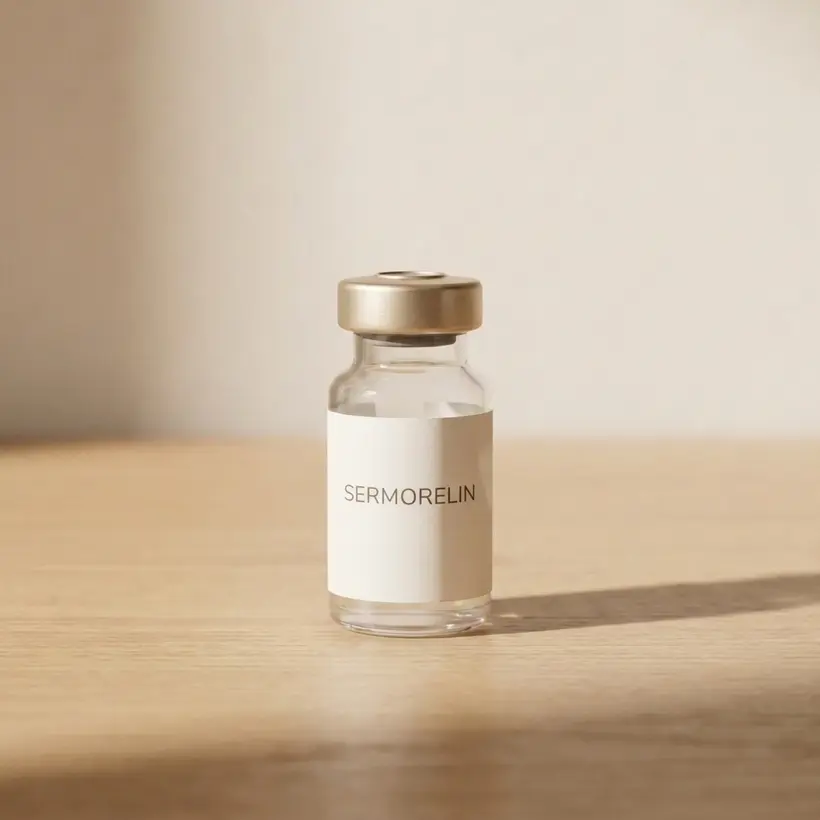
From the FormBlends catalog
Sermorelin
Bioidentical GHRH analog for natural growth hormone pulsatility · From $175/mo · compounded by a licensed 503A pharmacy, dispensed only after provider review.
View Sermorelin →HGH injections are expensive. Pharmaceutical-grade HGH can cost $800 to $3,000 or more per month, depending on the brand and dose. Insurance coverage for HGH is limited to specific FDA-approved indications, which typically don't include anti-aging or performance improvement.
GH peptides are substantially less expensive. A month of CJC-1295/Ipamorelin therapy through a licensed provider and compounding pharmacy typically costs a fraction of HGH therapy. FormBlends offers transparent pricing with no hidden fees. for current rates.
Prescription requirements. Both HGH and GH peptides require a prescription from a licensed provider. HGH is a Schedule III controlled substance in the United States, which means it carries additional legal and regulatory requirements. GH peptides are prescription medications but aren't classified as controlled substances.
Pharmacy sourcing. HGH is manufactured by major pharmaceutical companies and dispensed through traditional pharmacies. GH peptides prescribed through FormBlends are prepared by licensed US-based 503A compounding pharmacies, ensuring quality and purity.
Monitoring costs. Both approaches require lab monitoring. You'll need baseline and follow-up blood work for IGF-1, metabolic panels, and potentially other markers. These costs are similar regardless of which path you choose.
Results Comparison: What to Expect
Both GH peptides and HGH can improve body composition, sleep, recovery, skin quality, and energy. The timeline and intensity of results may differ.
Speed of results. HGH typically produces faster, more noticeable results because it delivers a precise, consistent dose of growth hormone. GH peptides work more gradually because they rely on your pituitary's response, which takes time to build.
Magnitude of results. At equivalent GH elevation, results should be similar. But HGH allows for higher GH levels more easily, which can produce more dramatic changes. Peptides provide a more moderate, sustainable elevation that may be better suited for long-term health improvement.
Sustainability. One potential advantage of peptides is that your pituitary remains functional throughout therapy. When you stop HGH, your body may need time to resume normal GH production. When you stop peptides, your pituitary is already active and can maintain some level of improved output.
Who is best suited for each approach?
GH peptides may be better for people who want a natural, moderate approach to GH improvement, prefer lower cost, and are focused on overall wellness rather than maximum muscle growth.
HGH may be more appropriate for people with diagnosed growth hormone deficiency, those who need precise dose control, or patients who haven't responded adequately to peptide therapy.
Your can help you evaluate which approach makes sense based on your labs, goals, and budget. You can also use the to track your protocol and monitor your progress.
Frequently Asked Questions
Can I switch from HGH to GH peptides?
Yes. Many patients transition from HGH to GH peptides for cost savings or because they prefer a more natural approach. Your provider will create a transition plan that may involve tapering HGH while introducing peptides gradually.
Are GH peptides legal?
Yes. GH peptides are legal when prescribed by a licensed provider and dispensed by a licensed pharmacy. They aren't classified as controlled substances. But they do require a prescription and shouldn't be purchased from unregulated sources.
Which produces better results for muscle building?
HGH generally produces more dramatic muscle-building results because it allows for higher, more consistent GH levels. But GH peptides combined with proper training and nutrition can also support meaningful muscle growth with potentially fewer side effects.
Do GH peptides shut down my natural GH production?
No. GH peptides stimulate your pituitary to produce more GH rather than replacing it. Your body's natural feedback mechanisms remain intact. This is one of the key advantages of peptides over exogenous HGH.
Can I use GH peptides and HGH together?
This combination isn't typically recommended. Using both could lead to excessive GH levels and increased side effects. If your current approach isn't producing desired results, discuss alternatives with your provider rather than combining therapies.
Start your path Today
Every transformation starts with a single step. Talk to a licensed FormBlends provider about whether this approach is right for you) consultations are free and confidential.
Medical References
- Lincoff AM, Brown-Frandsen K, Colhoun HM, et al. Semaglutide and Cardiovascular Outcomes in Obesity without Diabetes. N Engl J Med. 2023;389(24):2221-2232. [PubMed | ClinicalTrials.gov | DOI]
Sources &. References
- Ionescu M, Frohman LA. Pulsatile secretion of growth hormone (GH) persists during continuous stimulation by CJC-1295, a long-acting GH-releasing hormone analog. J Clin Endocrinol Metab. 2006;91(12):4792-4797. Doi:10.1210/jc.2006-1702
Nothing in this article should be construed as medical advice. The information provided is educational only. Always consult with your healthcare provider before beginning, modifying, or discontinuing any medication or treatment. FormBlends connects patients with licensed providers for individualized care.
Last updated: 2026-03-24
Ready when you are
Sermorelin
Bioidentical GHRH analog for natural growth hormone pulsatility · From $175/mo · compounded by a licensed 503A pharmacy, dispensed only after provider review.
View Sermorelin →