All GLP-1 medications from licensed 503A compounding pharmacies Browse Products

MOTS-c Reconstitution: Vial Amount, Concentration and Sources

Understand MOTS-c vial amount and solution concentration, and distinguish preparation specifications from exercise-study findings.

By FormBlends Editorial Research||
In This Article

This article is part of our Peptide Therapy collection. See also: GLP-1 Guides | Provider Comparisons

MOTS-c reconstitution questions involve product-specific preparation information and concentration arithmetic. Those are separate from the research on the peptide's physiological role. This guide distinguishes the information needed for each.

The quantities behind a vial label

QuantityUnitMeaning
Total amountmgAmount of material stated for the vial
Final solution volumemLTotal volume of the prepared liquid
Concentrationmg/mLAmount per milliliter

Concentration = total amount divided by final solution volume. The units mg divided by mL produce mg/mL. This calculation describes established inputs; it does not choose the preparation specification.

What a preparation specification contains

The exact formulation, intended solvent, final volume, container and storage conditions identify the preparation. The total milligram amount alone does not establish those details. Final volume and added solvent volume are separate fields.

Which research answers which question?

Reynolds and colleagues studied endogenous MOTS-c during human exercise and administered the peptide in mouse experiments. That work does not provide a preparation specification for a retail vial. Likewise, semaglutide trials study another compound and cannot substantiate a MOTS-c mixing instruction.
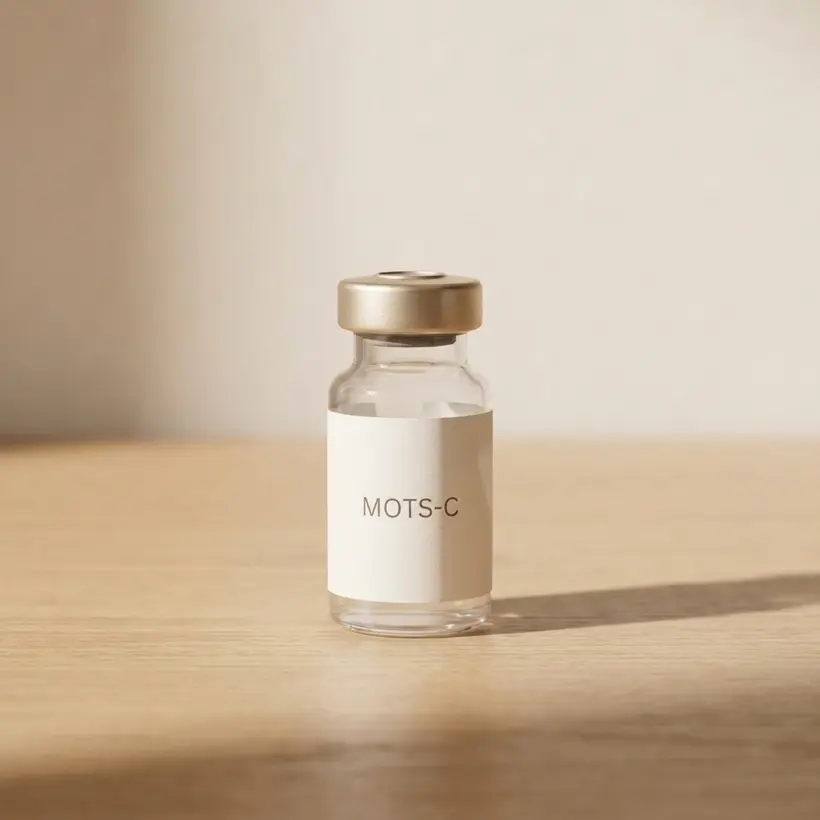
MOTS-c

From the FormBlends catalog

MOTS-c

Mitochondrial-derived exercise mimetic that regulates metabolic homeostasis · From $249/mo · compounded by a licensed 503A pharmacy, dispensed only after provider review.

View MOTS-c →

The CB4211 registry entry identifies an analog as the intervention. The exact study product matters when comparing a protocol with a vial label.

Read a mixing claim as several claims

  • A concentration equation concerns amount and final volume.
  • A solvent claim concerns compatibility with a particular formulation.
  • A storage-period claim concerns stability and the container conditions tested.
  • A clinical schedule concerns the administered intervention and its outcomes.

One reference does not automatically establish all four. Useful documentation attaches each claim to the matching experiment or preparation record.

FAQ

Does a 10 mg vial identify one mixing volume?

No. Total amount is only one quantity. The formulation and final-volume specification remain separate inputs.

Does clear liquid establish stability?

Appearance and analytical stability are different observations. A stability claim needs a defined formulation, method, container and observation period.

Where can I compare the human evidence?

The MOTS-c research and side-effect guide distinguishes endogenous measurements from administered study products.

MOTS-c

Ready when you are

MOTS-c

Mitochondrial-derived exercise mimetic that regulates metabolic homeostasis · From $249/mo · compounded by a licensed 503A pharmacy, dispensed only after provider review.

View MOTS-c →
Browse the full catalog →
MOTS-c Reconstitution: Vial Amount, Concentration and Sources custom 2026 header image for Peptide Therapy
Custom header image for MOTS-c Reconstitution: Vial Amount, Concentration and Sources, Peptide Therapy, and better treatment decision-making.

Peptide decision path

Move from research interest to supervised review

Related treatment context

MOTS-c Reconstitution: Vial Amount, Concentration and Sources should be evaluated through research status, legal access, source quality, safety context, and clinician oversight rather than a shortcut purchase decision.

Evidence check

Useful peptide pages should separate human data, animal research, mechanistic evidence, and marketing claims.

Safety check

Peptides can vary by legal status, compounding pathway, purity testing, patient history, and interaction risk.

Next step

Compare available peptide options and their evidence before choosing a plan. Each available prescription requires provider review.

FormBlends Editorial Context

  • Confirm whether the page is discussing an FDA-approved use, a compounded option, or research-only context.
  • Ask a licensed clinician how the evidence applies to your health history, medications, labs, and side-effect risk.
  • Check the latest label, trial update, pharmacy policy, or state rule when the article touches medication access.

Original tools and data

Use FormBlends tools and data

Compare provider prices, explore local access and check calculations using FormBlends tools and data.

Download the Peptide Quick Reference Card

A printable 2-page reference covering popular peptides, dosing ranges, stacking protocols, and storage.

Free download. We'll also send helpful GLP-1 guides to your inbox. Unsubscribe anytime.

Medical Disclaimer: This content is for informational purposes only and does not constitute medical advice. Always consult a qualified healthcare provider before starting, stopping, or changing any medication or treatment. FormBlends articles are source-checked against medical and regulatory references, but they are not a substitute for a personal medical consultation.

Written by FormBlends Editorial Research

Prepared by FormBlends Editorial Research.

Ready to get started?

Provider-reviewed GLP-1 and peptide therapy, delivered to your door.

Start Your Consultation

Ready to Start Your Weight Loss Journey?

Get a free medical consultation with a licensed provider. Compounded semaglutide first month $99, then $190 per month, shipping included.

Next Best Reads

FormBlends for iPhone

Reconstitution math, dose schedules and logs in one place

The free FormBlends iPhone app keeps peptide schedules, concentrations, reminders, inventory and progress notes together.

Free Tools

Calculators to support your weight loss journey.