Compounded medications are not FDA-approved Browse Products

How to Store GHK-Cu Properly? Storage Guide

Store GHK-Cu in a cool, dark place. Reconstituted vials must be refrigerated at 36-46°F. Learn proper storage, shelf life, and how to tell if your GHK-Cu has gone bad.

By FormBlends Editorial Research|Editorial research; no named clinician review documented||
In This Article

This article is part of our Peptide Therapy collection. See also: GLP-1 Guides | Provider Comparisons

Key Takeaway

Store GHK-Cu in a cool, dark place. Reconstituted vials must be refrigerated at 36-46°F. Learn proper storage, shelf life, and how to tell if your GHK-Cu has gone bad.

Store unreconstituted (powdered) GHK-Cu in a cool, dark place, ideally refrigerated between 36 and 46 degrees Fahrenheit. Once reconstituted with bacteriostatic water, the vial must be kept refrigerated and used within a specific timeframe. Proper storage protects the peptide's potency and your safety.

Why does GHK-Cu storage affect potency and safety?

GHK-Cu is a delicate peptide. Exposure to heat, light, or moisture can break down its molecular structure, reducing its effectiveness or making it unsafe to use. When you invest in peptide therapy, proper storage ensures you get the full benefit of every dose.

At FormBlends, we ship all peptides with clear storage instructions. Our team is also available to answer questions about handling and storage at any point during your treatment.

How should unreconstituted (lyophilized) GHK-Cu be stored?

Before mixing with bacteriostatic water, GHK-Cu comes as a freeze-dried powder. In this form, it's more stable but still requires proper care:
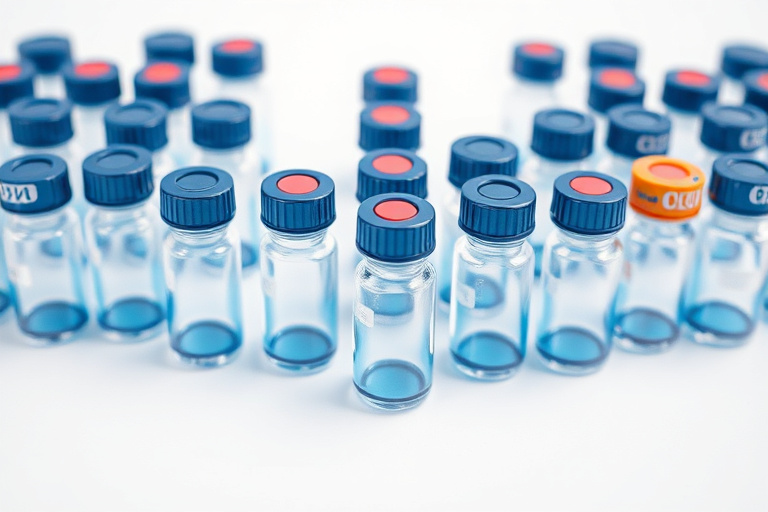
How to Store GHK-Cu Properly? Storage Guide: rows of clear glass vials with blue caps and red stoppers
  • Keep vials in the refrigerator (36 to 46 degrees Fahrenheit) for best results
  • Room temperature storage is acceptable for short periods, but refrigeration extends shelf life
  • Protect vials from direct sunlight and fluorescent lighting
  • Store in the original packaging or a light-blocking container
  • Keep away from moisture. don't store in the bathroom

Unreconstituted GHK-Cu can remain stable for several months when refrigerated. For longer storage (beyond three months), freezing at minus 4 degrees Fahrenheit or below is recommended.

How should reconstituted GHK-Cu be stored?

Once you add bacteriostatic water to the powder, the rules change. Reconstituted GHK-Cu is more fragile and must be handled carefully:
GHK (Glycyl-L-Histidyl-L-Lysine)

From the FormBlends catalog

GHK (Glycyl-L-Histidyl-L-Lysine)

Master wound-healing tripeptide that resets gene expression to a younger state · From $29/mo · prescription review required; compounded medications are not FDA-approved.

Learn about GHK (Glycyl-L-Histidyl-L-Lysine) →
  • Refrigerate immediately after reconstitution
  • Never freeze reconstituted peptide solutions
  • Use within 28 to 30 days of mixing
  • Always use a clean alcohol swab on the vial stopper before drawing a dose
  • Don't shake the vial. gently swirl to mix
FormStorage TempShelf LifeLight Exposure
Lyophilized (powder)36-46°F (fridge)Several monthsAvoid
Lyophilized (powder)Below -4°F (freezer)Up to 12+ monthsAvoid
Reconstituted36-46°F (fridge)28-30 daysAvoid

How can you tell if GHK-Cu has gone bad?

If you notice any of the following, don't use the peptide. Discard it and contact your provider for a replacement:

  • Cloudiness or visible particles in the reconstituted solution
  • Unusual color changes (GHK-Cu solution should be clear to very slightly blue-tinted)
  • A strange or off-putting odor
  • The vial seal appears broken or tampered with
  • The solution has been left at room temperature for more than a few hours

Using degraded peptides won't give you the results you're looking for and could pose health risks. When in doubt, throw it out.

How do you travel with GHK-Cu?

If you need to travel with GHK-Cu, keep these guidelines in mind:

  • Use an insulated cooler bag with ice packs for reconstituted vials
  • Lyophilized vials can tolerate brief periods at room temperature but should be refrigerated as soon as possible
  • Never leave peptides in a hot car, even for a short time
  • Carry a copy of your prescription or provider documentation when flying

Does GHK-Cu need to be refrigerated or can it sit at room temperature?

Unreconstituted GHK-Cu can tolerate room temperature for short periods, but refrigeration is always preferred. Reconstituted GHK-Cu must be refrigerated at all times. Leaving it at room temperature for extended periods will cause degradation.

Can you freeze reconstituted GHK-Cu?

No. Freezing a reconstituted peptide solution can damage the peptide's structure. Only lyophilized (powdered) GHK-Cu should be frozen for long-term storage.

How long does reconstituted GHK-Cu last in the fridge?

When stored properly at 36 to 46 degrees Fahrenheit, reconstituted GHK-Cu typically lasts 28 to 30 days. Mark the date of reconstitution calculator on the vial so you can track its use window.

Does light damage GHK-Cu?

Yes. Prolonged exposure to UV light or direct sunlight can degrade GHK-Cu. Store vials in their original packaging or in a dark container inside the refrigerator.

Is GHK-Cu still safe if it got warm during shipping?

Brief temperature fluctuations during shipping are generally acceptable for lyophilized peptides. But if the package was exposed to extreme heat for an extended period, contact your provider. At FormBlends, we use temperature-controlled shipping to minimize this risk.

GHK (Glycyl-L-Histidyl-L-Lysine)

Ready when you are

GHK (Glycyl-L-Histidyl-L-Lysine)

Master wound-healing tripeptide that resets gene expression to a younger state · From $29/mo · prescription review required; compounded medications are not FDA-approved.

Learn about GHK (Glycyl-L-Histidyl-L-Lysine) →
Browse the full catalog →

Questions about peptide vial storage and handling

When storing and using reconstituted peptide vials, questions often arise regarding open vial shelf life, drawing doses safely, and available clinical evidence.

How long can a multiple-dose vial be used once punctured?

FDA guidelines recommend discarding a multiple-dose vial within 28 days of first use. This applies even when medication remains in the vial and even if a compounder suggests a longer timeframe. FDA also advises using a fresh sterile needle and syringe for every draw.

What clinical research has been published on GHK-Cu?

ClinicalTrials.gov records 4 studies for GHK-Cu, with 0 posted results, 0 phase 3 trials, and 1 currently recruiting. On PubMed, 254 papers are listed, including 95 categorized as human studies and 3 randomized controlled trials, with 74 published since 2023.

How can patients avoid errors when drawing peptide doses from a vial?

In reported adverse events, unfamiliarity with multiple-dose vials and mix-ups between milligrams, milliliters, and units caused individuals to take five to 20 times their intended dose.

How to Store GHK-Cu Properly? Storage Guide
FormBlends guide cover for How to Store GHK-Cu Properly? Storage Guide.

Peptide decision path

Move from research interest to supervised review

Related treatment context

How to Store GHK-Cu Properly? Storage Guide should be evaluated through research status, legal access, source quality, safety context, and clinician oversight rather than a shortcut purchase decision.

Evidence check

Useful peptide pages should separate human data, animal research, mechanistic evidence, and marketing claims.

Safety check

Peptides can vary by legal status, compounding pathway, purity testing, patient history, and interaction risk.

Next step

Compare available peptide options and their evidence before choosing a plan. Each available prescription requires provider review.

FormBlends Editorial Context

  • Confirm whether the page is discussing an FDA-approved use, a compounded option, or research-only context.
  • Ask a licensed clinician how the evidence applies to your health history, medications, labs, and side-effect risk.
  • Check the latest label, trial update, pharmacy policy, or state rule when the article touches medication access.

Original tools and data

Use FormBlends tools and data

Compare provider prices, explore local access and check calculations using FormBlends tools and data.

Download the Peptide Quick Reference Card

A printable 2-page reference covering popular peptides, dosing ranges, stacking protocols, and storage.

Free download. We'll also send helpful GLP-1 guides to your inbox. Unsubscribe anytime.

Medical Disclaimer: This content is for informational purposes only and does not constitute medical advice. Always consult a qualified healthcare provider before starting, stopping, or changing any medication or treatment. FormBlends articles are source-checked against medical and regulatory references, but they are not a substitute for a personal medical consultation.

Written by FormBlends Editorial Research

Prepared by FormBlends Editorial Research.

Ready to get started?

Provider-reviewed GLP-1 and peptide therapy, delivered to your door.

Start Your Consultation

Ready to Start Your Weight Loss Journey?

Get a free medical consultation with a licensed provider. Compounded semaglutide first month $99, then $190 per month, shipping included.

Next Best Reads

Peptide Therapy

How To Store Tesamorelin Properly?

Learn how to store tesamorelin properly, including temperature requirements for lyophilized and reconstituted forms, shelf life, and common storage mistakes.

Peptide Therapy

GHK-Cu Storage Instructions: Complete Guide

Proper GHK-Cu storage is essential for maintaining potency. Learn temperatures, shelf life, light protection, and travel storage for both lyophilized and reconstituted forms.

Peptide Therapy

How To Store Epithalon Properly?

Learn how to store Epithalon properly in both lyophilized and reconstituted forms, including temperature requirements, shelf life, and common mistakes to avoid.

Peptide Therapy

How To Store CJC-1295 Properly?

How should you store CJC-1295? Learn proper storage temperatures for reconstituted and unreconstituted CJC-1295, shelf life, travel tips, and signs of degradation.

Peptide Therapy

How To Store Sermorelin Properly?

Learn how to store sermorelin properly before and after reconstitution, including temperature requirements, shelf life, and common mistakes that degrade potency.

Peptide Therapy

How To Store Ipamorelin Properly

Learn how to store ipamorelin properly before and after reconstitution to maintain potency, including refrigeration guidelines and shelf life details.

Peptide Therapy

How To Store TB-500 Properly?

Learn how to store TB-500 properly to maintain potency. Our guide covers refrigeration, reconstitution storage, freezing, and shelf life for TB-500 peptide therapy.

Peptide Therapy

How To Store PT-141 Properly?

Learn how to store PT-141 properly to maintain potency. Covers refrigeration, reconstitution storage, shelf life, and travel tips for keeping PT-141 stable.

Peptide Therapy

Ghk-cu Before and After What to Expect

Ghk-cu Before and After What to Expect. Evidence-based peptide information from FormBlends, a physician-supervised telehealth clinic.

FormBlends for iPhone

Reconstitution math, dose schedules and logs in one place

The free FormBlends iPhone app keeps peptide schedules, concentrations, reminders, inventory and progress notes together.

Free Tools

Calculators to support your weight loss journey.