Key Takeaway
How do you know if your MOTS-c is real and pure? We explain third-party testing, how to read a COA analysis, red flags, and how to verify peptide authenticity before use.
Verifying MOTS-c quality before you inject it isn't optional. The peptide market includes both legitimate pharmaceutical-grade products and substandard or counterfeit compounds that could contain impurities, incorrect dosing, or entirely different substances. Knowing how to read a Certificate of Analysis (COA), identify red flags, and choose trustworthy sources protects both your health and your investment .
What Makes MOTS-c Authentic
Authentic MOTS-c is a 16-amino-acid peptide with the sequence MRWQEMGYIFYPRKLR and a molecular weight of approximately 2,174 Daltons . Any legitimate product should match these specifications precisely. The peptide should arrive as a lyophilized (freeze-dried) white to off-white powder in a sealed, labeled vial.
Reading a Certificate of Analysis (COA)
A COA is a document from an analytical laboratory that verifies the identity, purity, and safety of a compound. Every reputable MOTS-c supplier should provide one. Here is what to look for:
View data table
| Category | Clinical Interest Score | Detail |
|---|---|---|
| BPC-157 | 88 | Tissue repair and gut healing |
| TB-500 | 82 | Injury recovery |
| Sermorelin | 78 | Growth hormone support |
| Ipamorelin | 75 | Anti-aging and recovery |
| GHK-Cu | 70 | Skin and tissue repair |
Purity (HPLC)
High-Performance Liquid Chromatography (HPLC) measures peptide purity as a percentage. Look for:
- Minimum acceptable: 95% purity
- Pharmaceutical grade: 98% or higher
- Red flag: Any result below 95%, or no HPLC data provided
Mass Spectrometry (MS)
Mass spectrometry confirms the molecular weight matches the expected value for MOTS-c (approximately 2,174 Da). This verifies that the compound is actually MOTS-c and not a different peptide or degraded fragment. The observed mass should be within 1 to 2 Da of the theoretical mass.
Amino Acid Analysis
This test verifies the amino acid composition matches the MOTS-c sequence. Not all COAs include this, but it provides an additional layer of identity confirmation.
Endotoxin Testing (LAL Test)
Endotoxins are bacterial toxins that can cause fever, inflammation, and serious illness if injected. The Limulus Amebocyte Lysate (LAL) test checks for endotoxin contamination. Results should show less than 0.25 EU/mL (Endotoxin Units per milliliter) for injectable products .
Sterility Testing
For products intended for injection, sterility testing confirms the absence of microbial contamination. This may appear as "no growth" on the COA after standard incubation periods.
Red Flags to Watch For
- No COA available: Any supplier who can't or won't provide a COA should be avoided entirely
- COA from the manufacturer only: Self-tested results are less reliable than third-party testing. Look for COAs from independent labs like Janssen, Eurofins, or similar accredited facilities
- Unusually low prices: If MOTS-c is significantly cheaper than competitors, the product may be underdosed, impure, or counterfeit Contact provider for current pricing
- Vague labeling: Legitimate products clearly state the peptide name, quantity (in mg), lot number, and expiration date. Vague or missing labels are a warning sign
- Powder appearance issues: Properly lyophilized MOTS-c should be a dry, white to off-white powder or cake. If it appears wet, yellow, or clumped, it may be degraded
- No batch/lot number: Without a lot number, you can't trace the product back to specific manufacturing and testing records
Sourcing MOTS-c Safely
Compounding Pharmacies (Best Option)
503A and 503B compounding pharmacies are regulated by state pharmacy boards and the FDA, respectively. Products from these pharmacies undergo purity and sterility testing, and they require a physician's prescription. This is the safest and most reliable way to obtain MOTS-c.
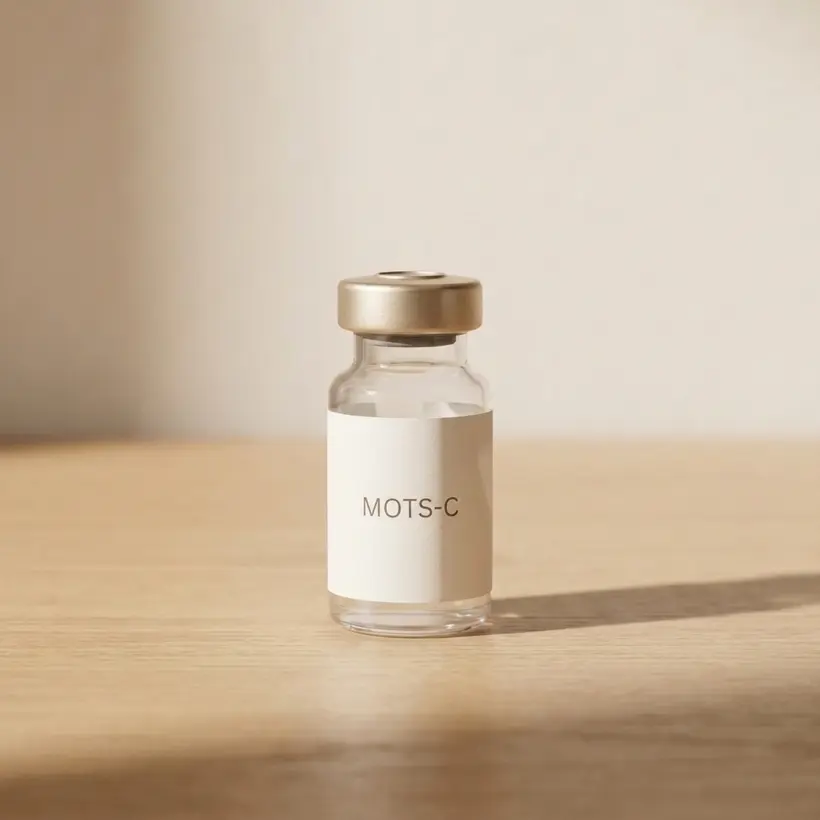
From the FormBlends catalog
MOTS-c
Mitochondrial-derived exercise mimetic that regulates metabolic homeostasis · From $249/mo · compounded by a licensed 503A pharmacy, dispensed only after provider review.
View MOTS-c →Research Chemical Suppliers
Many online suppliers sell MOTS-c as a "research chemical" not intended for human use. Quality varies dramatically across this market. If you go this route, demand third-party COAs, verify the testing lab exists, and cross-reference lot numbers with the supplier's records.
International Sources
Importing peptides from overseas carries additional risks including customs seizure, lack of regulatory oversight, and difficulty verifying manufacturing conditions. Quality control standards vary significantly by country.
Frequently Asked Questions
How do I verify MOTS-c quality?
Request a Certificate of Analysis showing HPLC purity above 98%, mass spectrometry confirmation of molecular weight (approximately 2,174 Da), and endotoxin testing results below 0.25 EU/mL. Verify the COA is from a third-party lab, not just the manufacturer. Only use MOTS-c from sources that provide complete lab verification.
What purity should MOTS-c be?
Pharmaceutical-grade MOTS-c should be 98% pure or higher by HPLC testing. A minimum of 95% purity is acceptable, but anything below that indicates significant impurities that could include synthesis byproducts, degradation fragments, or contaminants.
Can I test my MOTS-c independently?
Yes. Services like Janoshik Analytical and similar peptide testing labs accept consumer submissions. You send a sample, and they run HPLC and mass spectrometry testing. This costs $50 to $150 but gives you independent verification of what is actually in your vial.
How should legitimate MOTS-c look?
Lyophilized MOTS-c should be a dry, white to off-white powder or compact cake at the bottom of a sealed vial. When reconstituted with bacteriostatic water, it should dissolve completely into a clear, colorless solution within 5 minutes.
Is pharmacy-sourced MOTS-c always better?
Compounding pharmacies operate under regulatory oversight, use pharmaceutical-grade ingredients, and follow strict manufacturing protocols. Their products are consistently higher quality and safer than those from unregulated sources. For injectable compounds, pharmacy sourcing is strongly recommended.
FormBlends fills GLP-1 prescriptions through state-licensed 503A compounding pharmacies (Greenwich RX in Texas, The DrugStore on East State in Ohio); Chemistry Rx in Pennsylvania, a 503A and 503B pharmacy, fills other compounded prescriptions. Start your consultation to access verified, physician-supervised MOTS-c therapy.
Ready when you are
MOTS-c
Mitochondrial-derived exercise mimetic that regulates metabolic homeostasis · From $249/mo · compounded by a licensed 503A pharmacy, dispensed only after provider review.
View MOTS-c →