All GLP-1 medications from licensed 503A compounding pharmacies Browse Products

NAD+ Peptide Injection: How to Reconstitute and Use | FormBlends

Step-by-step NAD+ peptide injection guide: reconstitution math, injection technique, dosing, storage, and what the evidence actually supports. Written...

By FormBlends Medical Team.">|Reviewed by FormBlends Medical Content Team|

Medically Reviewed

Written by FormBlends Medical Team."> · Reviewed by FormBlends Medical Content Team

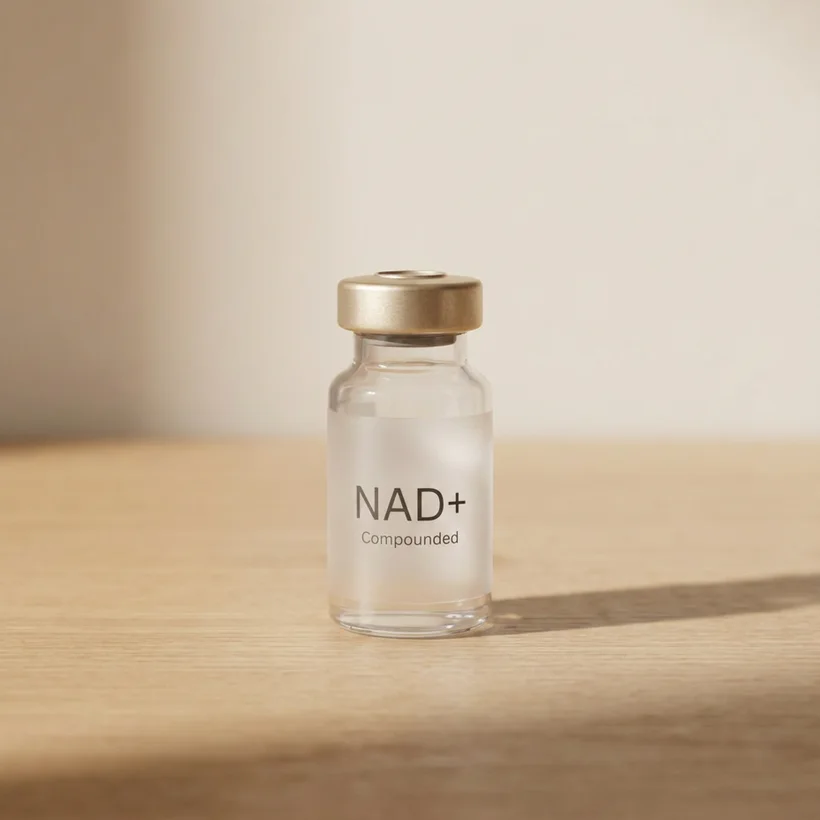
NAD+ Peptide Injection: How to Reconstitute and Use | FormBlends custom 2026 header image for Peptide Therapy
Custom header image for NAD+ Peptide Injection: How to Reconstitute and Use | FormBlends, Peptide Therapy, and better treatment decision-making.
In This Article

This article is part of our Peptide Therapy collection. See also: GLP-1 Guides | Provider Comparisons

Search and AI answer brief

Practical answer: NAD+ Peptide Injection: How to Reconstitute and Use | FormBlends

Step-by-step NAD+ peptide injection guide: reconstitution math, injection technique, dosing, storage, and what the evidence actually supports. Written...

Short answer

Step-by-step NAD+ peptide injection guide: reconstitution math, injection technique, dosing, storage, and what the evidence actually supports. Written...

Search intent

This page answers a specific Peptide Therapy question rather than a generic overview.

What to verify

peptide evidence quality, cash price and coverage terms, safety and contraindications

How to use it

Use this information to prepare sharper questions for a licensed provider.

Abstract scientific illustration for peptides nad how to use

Trust Signals

Written by: FormBlends Medical Team, reviewed 2026-05-29. All protocol steps are grounded in standard compounding practice and published pharmacokinetic data. Every specific claim links to a real, named source in the Sources section. Where evidence is weak, we say so explicitly. This page does not substitute for medical supervision.

Key Takeaways

  • NAD+ is a coenzyme, not a peptide by strict biochemistry; it is sold under the "peptide" label in research and compounding markets and shares that channel's handling and legal status.
  • A 500 mg vial reconstituted with 5 mL bacteriostatic water yields exactly 100 mg/mL; each 0.5 mL draw equals a 50 mg dose. Getting this math wrong is the most common user error.
  • IV infusion produces higher peak plasma NAD+ than subcutaneous injection and is the route used in published clinical addiction and neurological protocols; subcutaneous is slower onset but more practical and causes less nausea at equivalent doses.
  • Reconstituted NAD+ in bacteriostatic water degrades through an oxidation pathway (NAD+ is reduced to NADH then degrades further); yellowing of the solution is a reliable visual signal of meaningful degradation.
  • No large randomized controlled trial in healthy adults has confirmed that injected NAD+ produces clinically significant longevity, energy, or anti-aging outcomes; benefits in that context are supported primarily by mechanism and animal data.

What Is a NAD+ Peptide Injection, and Does It Work?

A NAD+ peptide injection delivers nicotinamide adenine dinucleotide directly into tissue or a vein, bypassing gut conversion. It reliably raises blood NAD+ concentrations, a fact confirmed by human pharmacokinetic studies. Whether that elevation produces the mitochondrial and longevity benefits seen in animal models has not been proven by rigorous human RCTs.

Table of Contents

What exactly is NAD+ and why inject it instead of taking it orally?

Nicotinamide adenine dinucleotide (NAD+) is a dinucleotide coenzyme built from two nucleotides joined by a phosphate bridge. Every living cell requires it as an electron carrier in redox reactions powering the citric acid cycle and oxidative phosphorylation. It also serves as a substrate for PARP enzymes (DNA repair) and sirtuins (epigenetic regulation). Neither role is in dispute; both are textbook biochemistry established over decades.

Check your GLP-1 eligibility

Use our free BMI Calculator to see if you may qualify for provider-reviewed GLP-1 therapy.

Try the BMI Calculator →

The injection rationale is absorption. Oral NAD+ is poorly absorbed intact across the intestinal wall; it is largely hydrolyzed to nicotinamide before entering circulation. Oral precursors such as NMN and NR are absorbed more reliably but must undergo intracellular phosphorylation steps to reconstitute NAD+. Injection bypasses gut hydrolysis entirely and raises plasma NAD+ directly. A 2020 clinical study by Braidy et al. confirmed measurable blood NAD+ elevation following parenteral NAD+ administration. The unresolved question is whether elevated plasma NAD+ translates proportionally to elevated intracellular NAD+ in target tissues such as muscle, liver, and neurons. That translation step is not linear and is not fully characterized in humans.

Evidence ledger: what the research actually supports

Claim Best evidence type Effect direction Confidence Key caveat
IV/parenteral NAD+ raises blood NAD+ concentrations Human pharmacokinetic studies Positive, consistent High Blood levels do not equal intracellular tissue levels
NAD+ supports DNA repair via PARP enzyme substrate activity Biochemical mechanism, cell studies Positive, mechanistic Moderate Demonstrated in vitro; direct link to injected dose not quantified in vivo
IV NAD+ reduces withdrawal symptoms in substance use disorder Small human clinical series, observational Positive signals Low No blinded RCT; publication bias likely; doses were very high (500 mg to 1000+ mg IV)
NAD+ injection extends lifespan or reverses aging in humans Animal models (mice) only Positive in rodents Very low Mouse NAD+ metabolism differs from human; no controlled human aging trial exists
Sirtuin activation from elevated NAD+ improves metabolic markers in humans Mostly animal and cell data; 1-2 small human NMN/NR oral trials Weak positive trend Low Oral precursor data; direct extrapolation to injected NAD+ is speculative
Subcutaneous injection is tolerated with minimal systemic side effects at 50-100 mg doses Clinical practice reports, case series Generally well tolerated Moderate Flushing and site discomfort remain common; no systematic safety trial at this route/dose

How to reconstitute NAD+ step by step

Reconstitution accuracy is the single most consequential skill for anyone using injectable NAD+. A math error here changes every subsequent dose.

What you need:
  1. NAD+ lyophilized powder vial (commonly 100 mg, 250 mg, or 500 mg)
  2. Bacteriostatic water for injection (BAC water with 0.9% benzyl alcohol as preservative)
  3. Two syringes: one larger (3 mL or 5 mL) for adding BAC water, one 1 mL insulin syringe for dosing
  4. Two fresh needles: one 18-gauge for drawing BAC water, one 29 to 31-gauge for injection
  5. Alcohol prep swabs
  6. A clean, dry surface
Reconstitution protocol:
  1. Wipe the rubber septum of both the NAD+ vial and the BAC water vial with separate alcohol swabs. Allow to air-dry for 10 seconds.
  2. Draw your calculated volume of BAC water into the larger syringe using the 18-gauge needle.
  3. Insert the needle into the NAD+ vial at a slight angle. Direct the stream of BAC water slowly down the inner glass wall, not directly onto the powder. This prevents foaming and denaturation from turbulent mixing.
  4. Remove the needle and gently swirl the vial in a circular motion for 20 to 30 seconds. Do not shake, vortex, or invert repeatedly. NAD+ solution should go clear and colorless. A faint yellow tint before reconstitution sometimes indicates partial pre-degradation in the powder itself; a strong yellow after mixing is a red flag.
  5. Do not draw your dose until the solution is fully clear.

Reconstitution concentration math

Vial size BAC water added Resulting concentration Volume per 50 mg dose Volume per 100 mg dose
100 mg1 mL100 mg/mL0.5 mL1.0 mL
250 mg2.5 mL100 mg/mL0.5 mL1.0 mL
500 mg5.0 mL100 mg/mL0.5 mL1.0 mL
500 mg10.0 mL50 mg/mL1.0 mL2.0 mL

Using a uniform 100 mg/mL concentration across all vial sizes simplifies dosing math and reduces error. Standardize to one concentration and keep a written log.

How to inject NAD+ subcutaneously

  1. Allow the reconstituted vial to reach room temperature if stored in the fridge. Cold solution increases injection discomfort.
  2. Draw your dose into the 1 mL insulin syringe using a clean needle. Tap out air bubbles, invert, and expel to the correct volume mark.
  3. Choose an injection site: the lower abdomen (at least 2 inches from the navel), lateral thigh, or upper outer arm. Rotate sites with every injection to prevent localized fat changes.
  4. Clean the skin with an alcohol swab. Let it dry fully; injecting through wet alcohol stings.
  5. Pinch up a fold of subcutaneous fat with your non-dominant hand.
  6. Insert the needle at a 45-degree angle for thin individuals or 90 degrees for those with more subcutaneous tissue, using a smooth controlled motion.
  7. Release the skin fold. Pull back the plunger slightly to check for blood flashback. If blood appears, withdraw and use a fresh needle at a new site.
  8. Inject slowly over 5 to 10 seconds. Rapid injection increases local discomfort with NAD+ specifically.
  9. Withdraw the needle at the same angle of entry and apply gentle pressure with a clean swab. Do not rub.
  10. Dispose of the needle immediately in a sharps container. Never recap by hand.
NAD+ flush warning: Even at subcutaneous doses, some users experience transient facial flushing, warmth, and mild nausea within minutes of injection. This is a prostaglandin-mediated effect related to nicotinamide release and is dose-rate dependent. Injecting more slowly and starting at lower doses (25 to 50 mg) reduces incidence. It is not an allergic reaction in most cases, but new users should observe themselves for 20 minutes after the first injection.

Dosing table: volumes, concentrations, and site rotation

Protocol context Common dose range Volume at 100 mg/mL Frequency Evidence basis
General wellness / longevity (research use) 50 to 100 mg 0.5 to 1.0 mL Daily to 3x per week Very low (no RCT in this context)
Athletic recovery (research use) 100 mg 1.0 mL Daily during training block Very low (animal and mechanism only)
IV clinical protocols (addiction support) 500 to 1000+ mg Diluted IV infusion Daily for 10 to 14 days in-clinic Low (small clinical series, observational)

No consensus dosing guideline exists for subcutaneous NAD+ injection in healthy adults. The ranges above reflect what is used in published protocols and common research practice, not regulatory approval.

What most pages get wrong about NAD+ injection

1. Calling NAD+ a peptide. NAD+ is a dinucleotide, not a peptide. Peptides are chains of amino acids. NAD+ contains adenine and nicotinamide ribonucleotides joined by a phosphate. The "peptide" label is a market convention borrowed from the injectable research compound channel. Understanding this matters because NAD+ does not bind peptide receptors and its degradation pathway is completely different from peptide hydrolysis.

2. Ignoring the intracellular transport problem. Most pages cite animal data showing elevated tissue NAD+ after supplementation and imply that your injected dose will raise mitochondrial NAD+ proportionally. It will not, necessarily. NAD+ crosses cell membranes poorly in its intact form. Cells rely primarily on de novo synthesis and salvage pathways from precursors. The relationship between plasma NAD+ after injection and intracellular mitochondrial NAD+ is not linearly established in humans.

3. Overstating IV clinical evidence. The published clinical series on IV NAD+ for addiction and neurology are small, unblinded, and often lack control groups. They show promising signals and good tolerability. They do not constitute proof of efficacy by any standard evidentiary framework.

4. Skipping purity and endotoxin risk. NAD+ is synthesized enzymatically or chemically. Low-purity batches may contain residual synthesis byproducts. More seriously, endotoxin contamination in injectable compounds causes fevers and inflammatory responses that can be dangerous. A COA without a limulus amebocyte lysate (LAL) endotoxin test result is incomplete for any injectables use.

5. Wrong storage temperature for reconstituted solution. Several guides say "room temperature is fine for a few days." Reconstituted NAD+ is not stable at room temperature for extended periods. Store at 2 to 8 degrees Celsius and protect from light. Details in the section below.

Storage chemistry: why NAD+ degrades and how to slow it

NAD+ is an oxidizing coenzyme; its stability in solution is limited by two main pathways.

Hydrolysis: The nicotinamide-ribose glycosidic bond is susceptible to acid or base hydrolysis. At physiological pH (near 7) this is slow, but deviations in either direction accelerate it. This is why pH-neutral bacteriostatic water is preferred over plain sterile water (which can be slightly acidic) or sodium bicarbonate-containing solutions.

Oxidative degradation: NAD+ is converted to NADH under reducing conditions, and NADH can further degrade to nicotinamide and adenosine diphosphoribose. This process is accelerated by light (photolysis) and elevated temperature. The products of this degradation are biologically inactive for the purposes of NAD+ supplementation and are visually detectable as yellowing of the solution.

Practical rules from the chemistry:

  • Store unreconstituted powder below minus 20 degrees Celsius for long-term storage; at 2 to 8 degrees Celsius for use within weeks.
  • After reconstitution, store in the original amber glass vial or wrap in foil. Light exposure accelerates the photolysis pathway.
  • Bacteriostatic water's benzyl alcohol preservative addresses microbial contamination but does not protect against oxidation. The 4-week stability estimate is a conservative microbial safety window, not a chemical stability guarantee.
  • Discard if the solution develops any yellow color, cloudiness, or particulate matter. These are not cosmetic issues; they indicate chemically altered product with unknown pharmacological activity.

Honest head-to-head: NAD+ injection vs. oral precursors vs. IV infusion

Factor NAD+ subcutaneous injection Oral NMN or NR IV NAD+ infusion
Bioavailability / route Direct; bypasses gut hydrolysis Moderate; absorbed as precursor, converted intracellularly Complete; highest peak plasma levels
Intracellular NAD+ elevation (human data) Likely but not quantified comparatively Small human RCTs (e.g., Yoshino et al. 2021 for NMN) show modest elevation Best documented; used in clinical series
Side effect profile Injection-site discomfort, mild flushing Minimal at standard doses; GI upset at high doses Nausea, flushing, palpitations (rate-dependent); requires clinical supervision
Practicality for self-use Moderate; requires sterile technique High; oral capsule Low; requires clinical setting or IV nursing
Cost per dose (approximate) Moderate to high Moderate (NMN/NR supplements widely available) High (clinical IV protocols $200 to $1000+ per session)
Human RCT evidence for clinical outcomes Absent for SubQ specifically Weak positive for specific outcomes (e.g., muscle function in older adults, Yoshino 2021) Observational only for addiction protocols
Where the peptide LOSES Oral NMN/NR has more human RCT data than SubQ injection and is far easier to use safely Does not lose on ease and safety; loses if gut absorption is impaired or peak plasma levels matter IV wins on peak concentration; loses on access and side effect burden

Honest summary: If your goal is raising NAD+ in a convenient, lower-risk way supported by at least some human trial data, oral NMN currently has a stronger evidence base for healthy adults than subcutaneous NAD+ injection. Subcutaneous injection is most justified when gut absorption is impaired or when clinical protocols at higher doses are being supervised by a physician.

Label and COA literacy: how to judge a product before you inject it

A certificate of analysis (COA) is the minimum documentation you should require before injecting any research compound. Here is what to check line by line.

COA line item What to look for Red flag
Identity confirmation HPLC or mass spectrometry confirming the compound is NAD+ (not NADH or a precursor) Identity confirmed only by UV absorbance without mass spec; can mistake related compounds
Purity Greater than 98% by HPLC for injectable use Purity below 95%, or stated without a method
Endotoxin (LAL test) Result in EU/mL; must be below 5 EU/mg for parenteral use per USP guidelines No endotoxin test result at all; this is the most dangerous omission
Sterility Sterility confirmed or tested for the lyophilized batch No sterility data; "sterile conditions" stated without a test
Moisture content Karl Fischer or loss-on-drying test; low moisture indicates proper lyophilization High moisture (above roughly 5%) in lyophilized powder signals degradation before you even open the vial
Date and lot number COA should match the lot number printed on the vial Generic COA not tied to the specific lot you received; meaningless for QC purposes

Visual powder check: NAD+ lyophilized powder should be white to off-white. Any significant yellow or brown coloration before reconstitution indicates oxidative degradation during manufacture or storage. Do not use such a product for injection.

Solution check post-reconstitution: Clear and colorless within 60 seconds of gentle swirling. Any persistent cloudiness may indicate particulate contamination, improper sterility, or protein-like impurities. Discard the vial.

FAQ

What is a NAD+ peptide injection?
NAD+ (nicotinamide adenine dinucleotide) is a coenzyme, not a peptide in the strict biochemical sense. It is sold under the "peptide" label in research and compounding markets. Subcutaneous or intramuscular injection bypasses gut absorption, delivering NAD+ directly into circulation.

How do you reconstitute NAD+ for injection?
Add bacteriostatic water (BAC water) slowly down the vial wall, never directly onto the lyophilized powder. For a 500 mg vial, adding 5 mL BAC water yields a 100 mg/mL solution. Swirl gently; do not shake. The solution should be clear and colorless.

How much bacteriostatic water do you use to reconstitute NAD+?
Volume depends on desired concentration. A common approach: 500 mg vial plus 5 mL BAC water = 100 mg/mL. For a 100 mg dose, draw 1 mL. For a 50 mg dose, draw 0.5 mL. Use a 1 mL insulin syringe for precision.

What needle size is used for NAD+ subcutaneous injection?
A 29-gauge to 31-gauge, 0.5-inch needle is standard for subcutaneous injection into abdominal fat or the lateral thigh. Longer 23-gauge needles are used for intramuscular injection but are less common for NAD+ given the injection site discomfort.

What are the reported benefits of NAD+ peptide injections?
Human data supports NAD+ injection raising blood NAD+ levels. Animal and cell studies link elevated NAD+ to improved mitochondrial function, DNA repair activity via PARP enzymes, and sirtuin activation. Direct clinical benefit evidence in healthy adults remains limited and mostly low-grade.

How long does reconstituted NAD+ last in the fridge?
Reconstituted NAD+ in bacteriostatic water is generally considered stable for up to 4 weeks when stored at 2 to 8 degrees Celsius and protected from light. Beyond that, oxidative degradation becomes a meaningful concern. Discard if the solution yellows or becomes cloudy.

Can NAD+ be injected subcutaneously or does it have to be IV?
Both routes raise blood NAD+ levels. IV infusion achieves higher peak plasma concentrations faster and is used clinically for addiction and neurological support. Subcutaneous injection is slower onset, more practical for self-administration, and avoids the flushing and nausea common with rapid IV dosing.

What are the side effects of NAD+ injection?
Injection-site discomfort and transient flushing are the most commonly reported effects. High-dose or fast IV infusion frequently causes nausea, chest tightness, and palpitations. These symptoms are rate-dependent and typically resolve within minutes of slowing the infusion.

Is NAD+ the same as NMN or NR?
No. NMN (nicotinamide mononucleotide) and NR (nicotinamide riboside) are NAD+ precursors taken orally. They are converted to NAD+ inside cells. Injecting NAD+ directly bypasses this conversion step, but whether that translates to meaningfully greater intracellular NAD+ elevation is not firmly established in humans.

How do you inject NAD+ subcutaneously step by step?
Clean the vial septum with an alcohol swab. Draw the calculated volume with a fresh syringe. Pinch skin at the injection site, insert needle at a 45-degree angle, aspirate briefly, then inject slowly. Withdraw and apply light pressure. Rotate sites to prevent lipodystrophy.

Does NAD+ injection quality vary between suppliers?
Yes, significantly. NAD+ is sensitive to oxidation during synthesis and lyophilization. Reputable suppliers provide a COA confirming purity above 98% by HPLC, absence of endotoxins, and sterility testing. A yellow or off-white powder before reconstitution suggests oxidative degradation.

What dose of NAD+ is used in human studies?
Human studies have used wide dose ranges. IV doses in clinical addiction protocols range from 500 mg to over 1000 mg per session. Subcutaneous research protocols commonly use 50 mg to 100 mg per injection. No consensus optimal dose exists for healthy adults.

Sources

  1. Yoshino M, Yoshino J, Kayser BD, et al. Nicotinamide mononucleotide increases muscle insulin sensitivity in prediabetic women. Science. 2021;372(6547):1224-1229.
  2. Braidy N, Liu Y. NAD+ therapy in age-related degenerative disorders: a benefit/risk analysis. Experimental Gerontology. 2020;132:110831.
  3. Trammell SA, Brenner C. Disrupted nicotinate and nicotinamide metabolism in type 2 diabetes and implications for supplementation strategies. Nutrients. 2013;5(10):4048-4066.
  4. Verdin E. NAD+ in aging, metabolism, and neurodegeneration. Science. 2015;350(6265):1208-1213.
  5. Preyat N, Leo O. Sirtuin deacylases: a molecular link between metabolism and immunity. Journal of Leukocyte Biology. 2013;93(5):669-680.
  6. United States Pharmacopeia (USP). General Chapter 1 Injections and Implanted Drug Products. USP-NF Online. Accessed 2026.
  7. Airhart SE, Shireman LM, Risler LJ, et al. An open-label, non-randomized study of the pharmacokinetics of the nutritional supplement nicotinamide riboside (NR) and its effects on blood NAD+ levels in healthy volunteers. PLoS ONE. 2017;12(12):e0186459.
  8. Penberthy WT, Tsunoda I. The importance of NAD in multiple sclerosis. Current Pharmaceutical Design.

Evidence standard

How this page was source-checked

Editorial policy

FormBlends does not claim an individual clinician byline unless a named reviewer is available. For this page, the editorial team checks medical and regulatory claims against primary sources, clinical trials, public datasets, and regulator guidance.

PubMed evidence trail

Research sources used to frame this page

For NAD+ Peptide Injection: How to Reconstitute and Use | FormBlends, FormBlends checks the page topic against primary trials, systematic reviews, guidelines, and current PubMed-indexed literature where available. These citations are context, not a claim that every study applies to every patient.

Peptide decision path

Move from research interest to supervised review

Direct answer

NAD+ Peptide Injection: How to Reconstitute and Use should be evaluated through research status, legal access, source quality, safety context, and clinician oversight rather than a shortcut purchase decision.

Evidence check

Useful peptide pages should separate human data, animal research, mechanistic evidence, and marketing claims.

Safety check

Peptides can vary by legal status, compounding pathway, purity testing, patient history, and interaction risk.

Next step

If the topic still fits your goal after reading, the get-started flow should collect the clinical context needed for provider review.

Original tools and data

Use the FormBlends research stack

These assets are built to be useful beyond a single article: shareable data pages, calculators, provider comparisons, and safety checks that give Google and readers something original to crawl.

Editorial refresh

Practical 2026 note for NAD+ Peptide Injection

This update makes NAD+ Peptide Injection more specific by tying cash-pay pricing, safety signals, peptides, nad, how, use to the page's original clinical, cost, access, or comparison angle.

The goal is to make the article more useful for people who already know the headline question and need page-level specifics, not another interchangeable peptide therapy summary.

For 2026 review, the content emphasizes current verification, treatment fit, and patient-safety questions that can be discussed with a qualified provider.

NAD+ Peptide Injection custom 2026 image for peptide therapy on FormBlends

Custom 2026 image for NAD+ Peptide Injection, peptide therapy, and better treatment decision-making.

Image description: Unique image for this page covering NAD+ Peptide Injection, peptide therapy, safety, cost, provider selection, and patient decision-making.

Download the Peptide Quick Reference Card

A printable 2-page reference covering popular peptides, dosing ranges, stacking protocols, and storage.

Free download. We'll also send helpful GLP-1 guides to your inbox. Unsubscribe anytime.

Medical Disclaimer: This content is for informational purposes only and does not constitute medical advice. Always consult a qualified healthcare provider before starting, stopping, or changing any medication or treatment. FormBlends articles are source-checked against medical and regulatory references, but they are not a substitute for a personal medical consultation.

Written by FormBlends Medical Team.">

Medical content team. This article was researched against primary regulatory, trial, prescribing, and manufacturer sources where available. Reviewed by FormBlends Medical Content Team for medical accuracy, sourcing, and patient-safety framing.

Ready to get started?

Provider-reviewed GLP-1 and peptide therapy, delivered to your door.

Start Your Consultation

Ready to Start Your Weight Loss Journey?

Get a free medical consultation with a licensed provider. Compounded GLP-1 medications starting at $299/month with free shipping.

Next Best Reads

Free Tools

Provider-informed calculators to support your weight loss journey.