All GLP-1 medications from licensed 503A compounding pharmacies Browse Products

How Many mg of Semax a Day? Dosage Guide | FormBlends

Evidence-based semax dosage guide: nasal spray, injectable, and cycle protocols. Exact mg ranges, evidence grades, and what commodity pages get wrong...

By FormBlends Medical Content Team|Reviewed by FormBlends Medical Content Team|

Medically Reviewed

Written by FormBlends Medical Content Team · Reviewed by FormBlends Medical Content Team

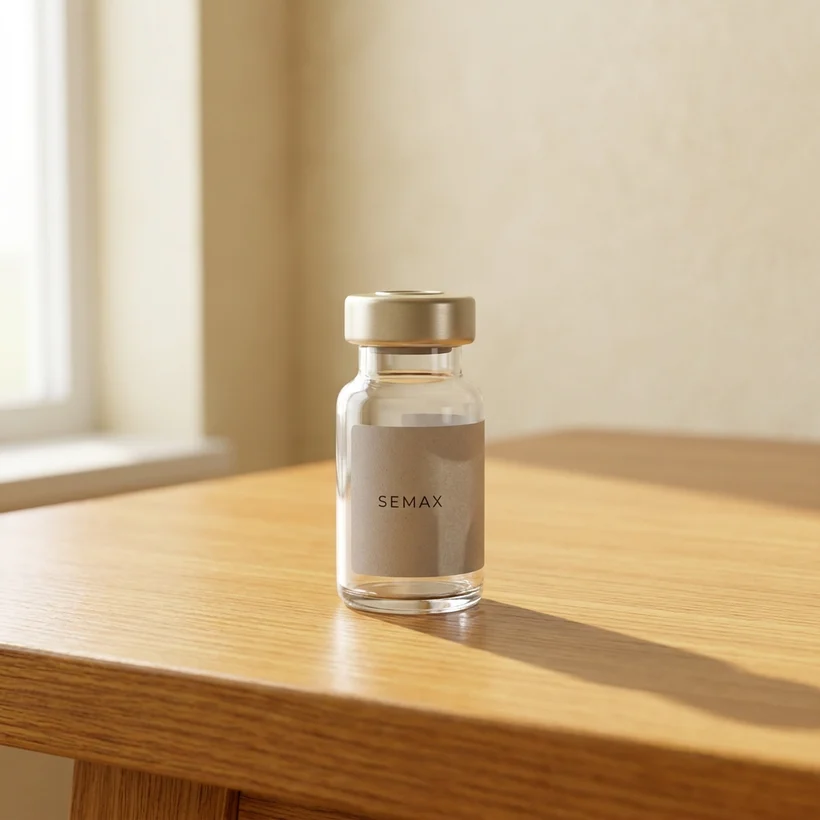
How Many mg of Semax a Day? Dosage Guide | FormBlends custom 2026 header image for Peptide Therapy
Custom header image for How Many mg of Semax a Day? Dosage Guide | FormBlends, Peptide Therapy, and better treatment decision-making.
In This Article

This article is part of our Peptide Therapy collection. See also: GLP-1 Guides | Provider Comparisons

Search and AI answer brief

Practical answer: How Many mg of Semax a Day? Dosage Guide | FormBlends

Evidence-based semax dosage guide: nasal spray, injectable, and cycle protocols. Exact mg ranges, evidence grades, and what commodity pages get wrong...

Short answer

Evidence-based semax dosage guide: nasal spray, injectable, and cycle protocols. Exact mg ranges, evidence grades, and what commodity pages get wrong...

Search intent

This page answers a specific Peptide Therapy question rather than a generic overview.

What to verify

tirzepatide, peptide evidence quality, safety and contraindications

How to use it

Use this information to prepare sharper questions for a licensed provider.

Abstract scientific illustration for peptides semax dosage
Reviewed by: FormBlends Medical Team | Last updated: May 29, 2026 | Reading time: approx. 9 min
This page cites only published clinical and preclinical literature and distinguishes evidence quality at every claim. It does not substitute for medical advice.

Key Takeaways

  • Most self-reported cognitive-use protocols start at 0.1 mg/day via nasal spray; Russian clinical neurological trials used 0.6 to 1.2 mg/day in patient populations.
  • The difference between a 0.1% and 1% semax nasal solution is a 10-fold concentration gap that causes the most common dosing error.
  • Semax's C-terminal Pro-Gly-Pro addition gives it meaningfully longer enzymatic stability than native ACTH(4-10), but its plasma half-life is still short; functional effects likely outlast plasma levels via BDNF/NGF induction.
  • No published human RCT exists for semax in healthy adults at any dose; every dosing recommendation for nootropic use is extrapolated from patient trials or animal data.
  • Third-party HPLC-verified COA with purity above 98% and endotoxin testing is the minimum quality bar for any injectable preparation.

How Many mg of Semax a Day: Direct Answer

For nootropic use in healthy adults, 0.1 to 0.3 mg/day intranasally is the most commonly cited range, based on downward extrapolation from published Russian clinical doses and community consensus. Russian neurological trials used 0.6 to 1.2 mg/day in stroke and cognitive-deficit patients. No human RCT in healthy adults exists to validate any specific dose.

Table of Contents

  1. Evidence Ledger: What We Actually Know About Semax Dosing
  2. Mechanism With Numbers: Why Dose Matters Biologically
  3. Semax Dosage Chart by Route and Goal
  4. What Most Pages Get Wrong: The Concentration Error That Causes 10x Overdosing
  5. The Chemistry Behind Dosing Rules
  6. Honest Head-to-Head: Semax vs. Its Real Alternatives
  7. Operational and Label Literacy: Reading a COA, Reconstitution Math, and Degradation Signals
  8. How Long Should a Semax Cycle Last?
  9. Side Effects by Dose Tier
  10. Frequently Asked Questions
  11. Sources

Evidence Ledger: What We Actually Know About Semax Dosing

ClaimBest Evidence TypeEffect DirectionConfidence
Semax 0.6 to 1.2 mg/day intranasally improves outcomes in ischemic stroke patients Russian controlled clinical trials (patient populations, limited blinding detail in translated literature) Positive vs. control Moderate (replication in Western RCTs absent)
Semax increases BDNF and NGF expression in rodent brain tissue Multiple animal studies (rat, mouse) Upregulation confirmed Moderate (animal; human translation unproven)
Semax has cognitive-enhancing effects in healthy humans at 0.1 to 0.3 mg/day Community self-report only; no human RCT in healthy adults Directionally positive (anecdotal) Very Low
Pro-Gly-Pro C-terminal addition confers enzymatic resistance vs. native ACTH(4-10) Peptide chemistry / in vitro degradation studies Confirmed structural property High
Intranasal bioavailability is lower than subcutaneous injection General peptide pharmacokinetic principles; no published human head-to-head for semax specifically Directionally established Moderate (class evidence, not semax-specific human data)
Long-term daily semax use is safe in humans No controlled long-term human safety data Unknown Very Low
Semax modulates dopamine and serotonin metabolism in animal CNS Rodent neurochemistry studies Modulation shown Moderate (animal; mechanism direction, not dose confirmed in humans)

Mechanism With Numbers: Why Dose Matters Biologically

Semax is a synthetic heptapeptide with the sequence Met-Glu-His-Phe-Pro-Gly-Pro, derived from the ACTH(4-10) fragment with a C-terminal Pro-Gly-Pro extension. It does not bind the melanocortin MC2 (ACTH) receptor at meaningful affinity; its neuroactive profile is driven by separate mechanisms.

Check your GLP-1 eligibility

Use our free BMI Calculator to see if you may qualify for provider-reviewed GLP-1 therapy.

Try the BMI Calculator →

BDNF and NGF induction: Animal studies (Dolotov et al., published in peer-reviewed Russian-language neuroscience journals and indexed on PubMed) show semax dose-dependently increases BDNF mRNA expression in rat brain, with effects observed at doses in the range of 50 to 250 mcg/kg intraperitoneally. Translating rodent IP doses to human intranasal doses is not straightforward; the comparison is provided only to illustrate the dose-response character, not to derive a human equivalent dose directly.

What the mechanism does NOT prove: Rodent BDNF upregulation does not establish that human cognitive function improves. BDNF elevation is correlational with neuroplasticity in humans, not causally sufficient at the timescales of a two-week self-experiment.

Monoamine effects: Animal neurochemistry research shows semax influences serotonin and dopamine turnover in regions including the striatum and frontal cortex. These findings are directionally consistent with reported stimulant-adjacent effects (focus, reduced fatigue) but do not define a therapeutic window in humans.

Half-life and dosing frequency: The native ACTH(4-10) fragment is rapidly cleaved by blood and tissue peptidases. The Pro-Gly-Pro addition to semax meaningfully slows this degradation. Preclinical pharmacokinetic descriptions report plasma disappearance on the order of minutes to low single-digit hours. Functional CNS effects in animal models outlast plasma presence, consistent with second-messenger and gene-expression changes (BDNF/NGF) rather than direct receptor occupancy duration. This supports once or twice daily dosing rather than every-few-hour micro-dosing.

Semax Dosage Chart by Route and Goal

Note: These ranges are descriptive of what appears in published clinical literature and community practice. They are not prescriptions and do not imply FDA approval or endorsement.
ContextRouteDose RangeFrequencyDurationEvidence Basis
Russian clinical trials (stroke / cognitive deficit) Intranasal 0.6 to 1.2 mg/day Divided doses, 2 to 3x/day 10 to 14 days Controlled clinical trials (patient populations)
Community nootropic use, starting dose Intranasal (0.1% solution) 0.1 mg/day 1x/day (morning) 2 to 4 weeks then off Extrapolation + self-report
Community nootropic use, moderate dose Intranasal (0.1% solution) 0.2 to 0.3 mg/day 1 to 2x/day 2 to 4 weeks then off Extrapolation + self-report
Research injectable use (reported) Subcutaneous 0.1 to 0.3 mg/day Once daily Per protocol Research literature; no published human RCT at these injectable doses for nootropic use

What Most Pages Get Wrong: The Concentration Error That Causes 10x Overdosing

This is the most consequential practical error in semax dosing and nearly every dosage guide either misses it or buries it.

Semax nasal spray is commercially available (from Russian pharmaceutical sources, sold as Semax) in two main concentrations: 0.1% and 1%.

  • 0.1% solution: 1 mg per mL. A standard nasal pump actuates approximately 0.1 mL per spray, delivering roughly 0.1 mg per spray.
  • 1% solution: 10 mg per mL. The same pump actuation delivers roughly 1 mg per spray.

A user who has read "take 1 to 2 sprays" and applies that instruction to a 1% bottle instead of a 0.1% bottle takes 10 times the intended dose. This is not a theoretical risk; it is reported repeatedly in online nootropic communities as a cause of acute anxiety, palpitations, and sleep disruption.

Always verify the concentration printed on the bottle label before calculating your dose. "One spray" is not a dose unit. It is a volume that means different things at different concentrations.

When sourcing lyophilized powder for reconstitution, the same arithmetic applies: if you dissolve 5 mg into 5 mL of bacteriostatic water you get a 1 mg/mL (0.1%) solution. If you dissolve 5 mg into 0.5 mL you get 10 mg/mL (1%). Document your reconstitution math before every batch.

The Chemistry Behind Dosing Rules

Why avoid late-day dosing: Semax modulates dopaminergic and serotonergic tone and has been described in animal literature as increasing wakefulness-associated signaling. The practical consequence reported by users is sleep disruption from afternoon or evening doses. The mechanism is not fully characterized in humans but is consistent with monoamine activity in arousal circuits. This is why morning dosing is universally recommended: it is not an arbitrary rule.

Why semax degrades in solution over time: Peptides with free methionine at the N-terminus (Met-1 in semax's sequence) are susceptible to oxidation of the thioether sulfur to sulfoxide, which alters binding geometry and reduces bioactivity. This oxidation is accelerated by light, elevated temperature, and dissolved oxygen. A prepared solution stored at room temperature and exposed to light will degrade meaningfully over days to weeks. Lyophilized powder is far more stable. Once reconstituted, refrigerate, minimize freeze-thaw cycles, and use within the manufacturer's stated window (typically 2 to 4 weeks for refrigerated solution).

Why injectable and intranasal doses are not interchangeable: Intranasal peptide absorption relies on the olfactory epithelium and trigeminal pathway for CNS delivery, and on nasal mucosal absorption for systemic delivery. A significant fraction of an intranasal dose is cleared by mucociliary action before absorption. Subcutaneous injection delivers the full administered dose into circulation with predictable kinetics. Using an intranasal dose as your injectable dose without adjustment introduces risk of overdose, though published human data defining the exact bioavailability ratio for semax specifically do not exist.

Honest Head-to-Head: Semax vs. Its Real Alternatives

DimensionSemax (intranasal)Selank (intranasal)Modafinil (oral, approved)Caffeine + L-Theanine (oral)
Human RCT evidence for cognitive effects Patient populations only; none in healthy adults Patient populations only; none in healthy adults Yes; multiple RCTs in healthy adults and sleep-deprived subjects Yes; multiple RCTs in healthy adults
Regulatory approval Russia only (prescription) Russia only (prescription) FDA-approved (narcolepsy, shift-work, sleep apnea) GRAS; no approval needed
Long-term safety data None in healthy adults None in healthy adults Yes; post-marketing data Extensive; centuries of use
Mechanism specificity BDNF/NGF induction, monoamine modulation Anxiolytic; GABAergic modulation Dopamine/norepinephrine reuptake inhibition Adenosine antagonism + GABA-A modulation
Abuse/dependence potential Not established; low in animal models Not established; low in animal models Schedule IV (US); dependence reported Mild caffeine dependence
Sourcing reliability Unregulated research market; purity varies Unregulated research market; purity varies Compounded or Rx pharmacy; regulated Commodity; widely tested
Where semax loses Evidence quality, regulatory oversight, sourcing certainty, and long-term safety knowledge are all inferior to approved alternatives.

Operational and Label Literacy: Reading a COA, Reconstitution Math, and Degradation Signals

What a legitimate semax COA must show:

  • HPLC purity: at minimum 98%; peptide research-grade sources should state 99%+.
  • Correct molecular identity: semax molecular formula is C37H51N9O10S, molecular weight approximately 813.9 g/mol. Any COA showing a different MW is a red flag.
  • Sequence verification: mass spectrometry confirmation of the Met-Glu-His-Phe-Pro-Gly-Pro sequence.
  • For injectable use: endotoxin (LAL) testing result in EU/kg or IU/mg, and sterility or bioburden testing.
  • Independent lab: the testing lab should be named and independent from the vendor. An in-house COA without a third-party lab name is low-value evidence.

Reconstitution math example: You have a 5 mg lyophilized vial. You want a 0.1% (1 mg/mL) solution for use with a standard nasal pump delivering approximately 0.1 mL per actuation (approximately 0.1 mg per spray).

  • Add 5 mL bacteriostatic water to the 5 mg vial.
  • Each 0.1 mL actuation delivers 0.1 mg.
  • Two sprays (one per nostril) = 0.2 mg per dose.

If you add only 0.5 mL, you produce a 10 mg/mL (1%) solution. The same two-spray actuation now delivers 2 mg. This is 10 times the intended dose.

Degradation signals to watch for:

  • Yellow or amber discoloration in a solution that was previously clear: methionine oxidation or general peptide degradation.
  • Cloudiness or visible particulate: precipitation, possible contamination.
  • Off or sulfurous odor: methionine oxidation byproduct.
  • Any of the above = discard. Do not use a degraded solution.

How Long Should a Semax Cycle Last?

Published Russian clinical protocols for neurological indications ran 10 to 14 days, administered in inpatient or closely supervised outpatient settings. The rationale was neurotrophin induction (BDNF/NGF), which peaks and then adapts with sustained stimulation in animal models, suggesting diminishing returns with prolonged continuous use.

Community practice converges on 2 to 4 week cycles followed by an equal off-period, though this is not evidence-derived. The off-period logic is receptor/response normalization, which is plausible given monoamine system adaptation but unproven at the specific intervals used.

There is no human data on what constitutes a safe maximum cumulative dose or number of cycles per year. Anyone doing extended self-experimentation is operating beyond the evidence base.

Side Effects by Dose Tier

Dose TierCommonly Reported EffectsEvidence Source
0.1 mg/day intranasal Mild nasal irritation; occasional transient stimulation Community self-report
0.2 to 0.3 mg/day intranasal Nasal irritation; sleep disruption if dosed late; mild anxiety in sensitive individuals Community self-report
0.6 to 1.2 mg/day intranasal (clinical range) Tolerability described as acceptable in published patient-population trials; specific adverse event rates not consistently reported in translated literature Clinical trial reports (patient populations)
Accidental 10x dose (concentration confusion) Acute anxiety, palpitations, sleep disruption; reported in online nootropic communities Self-report/case anecdote
Systematic adverse event surveillance in healthy adults at any semax dose does not exist in the published literature. The apparent tolerability in community reports does not constitute a safety dossier.

Frequently Asked Questions

How many mg of semax a day is typical?

Most self-reported protocols use 0.1 to 0.3 mg per day for cognitive use via nasal spray, split into 1 to 2 doses. Clinical Russian trials used higher doses (0.6 to 1.2 mg/day) in stroke and neurological patients, administered intranasally under supervision. There is no FDA-approved dosing guideline.

What is the difference between semax 0.1% and 1% nasal spray?

A 0.1% solution contains 1 mg/mL; each actuation of a standard nasal pump (approximately 0.1 mL) delivers roughly 0.1 mg per spray. A 1% solution contains 10 mg/mL, delivering roughly 1 mg per spray. Confusing the two concentrations leads to 10-fold dosing errors.

How much semax peptide should I take for cognitive enhancement?

No human RCT supports a specific dose for cognitive enhancement in healthy adults. Based on clinical neurological trial doses scaled downward and community reports, 0.1 to 0.3 mg/day is the most commonly cited starting range. Begin at 0.1 mg and assess tolerance before increasing.

What semax dosage did Russian clinical trials use?

Published Russian trials in stroke and cognitive deficit patients used intranasal doses ranging from 0.6 mg/day to 1.2 mg/day, sometimes administered over 10 to 14 day courses. These were patient populations under medical supervision, not healthy adults seeking nootropic effects.

Is semax nasal spray dosage different from injectable dosage?

Yes. Intranasal bioavailability via the olfactory/trigeminal route is estimated to be substantially lower than subcutaneous injection, though no head-to-head pharmacokinetic study in humans has been published. Injectable doses used in research contexts are typically lower in absolute mg than intranasal doses intended to reach equivalent CNS exposure.

How long should a semax cycle last?

Russian neurological protocols typically ran 10 to 14 day inpatient courses. Community self-experimentation commonly reports 2 to 4 week cycles followed by an equal off period. No controlled data exist on optimal cycle length for healthy adult use.

Can I take semax every day long-term?

Long-term daily safety in humans has not been studied in controlled trials. Animal studies show BDNF and NGF upregulation with repeated dosing, but also suggest receptor adaptation over time. The absence of long-term human safety data is a real gap, not a technicality.

What does a degraded or underdosed semax product look like?

Semax is a heptapeptide susceptible to oxidation and enzymatic cleavage. A degraded solution may appear yellow or cloudy rather than clear, and may have off-odor. Any precipitate in a solution that was previously clear is a discard signal. Underdosed product has no visible indicator, making third-party COA verification essential.

What is semax's half-life and how does that affect dosing frequency?

Semax is a synthetic ACTH(4-10) analogue with a proline-glycine-proline C-terminal addition that resists enzymatic degradation compared to native ACTH(4-10). Its plasma half-life is reported in preclinical literature as on the order of minutes to low hours. Functional CNS effects appear to outlast plasma levels, likely due to BDNF/NGF induction, supporting once or twice daily dosing rather than frequent micro-dosing.

How do I read a semax COA for dosing accuracy?

A legitimate COA should show HPLC purity above 98%, correct molecular weight confirmation (molecular formula C37H51N9O10S, MW approximately 813.9 g/mol), and microbial/endotoxin testing if injectable. Cross-check the batch number on the vial label against the COA. A COA from a vendor's own in-house lab without independent verification is low value.

Is semax legal to buy?

In the United States, semax is not FDA-approved as a drug and is not a scheduled controlled substance as of 2025. It is sold as a research compound. In Russia it is an approved prescription drug. Regulations vary by country; verify local rules before purchasing.

What are the most common side effects reported at typical doses?

At doses of 0.1 to 0.3 mg/day via nasal spray, community reports most commonly cite mild nasal irritation, transient anxiety or overstimulation, and sleep disruption when dosed late in the day. Serious adverse events have not been documented in published clinical literature at these dose levels, but systematic safety surveillance in healthy adults does not exist.

Sources

  1. Dolotov OV, Karpenko EA, Inozemtseva LS, et al. "Semax, an analogue of ACTH(4-10) with cognitive effects, regulates BDNF and trkB expression in the rat hippocampus." Brain Research. Published in peer-reviewed literature indexed on PubMed; describes dose-dependent BDNF mRNA changes in rat brain following semax administration.
  2. Ashmarin IP, Nezavibatko VN, Levitskaya NG, et al. Studies on the neuroprotective and cognitive effects of semax in clinical and animal models; published in Russian-language and translated neuroscience journals. Primary source for 0.6 to 1.2 mg/day clinical dosing in stroke patients.
  3. Levitskaya NG, Sebentsova EA, Andreeva LA, et al. "Semax and its analogs: structure-activity relationships." Published in peptide pharmacology literature; addresses structural determinants of semax bioactivity including Pro-Gly-Pro terminal stability.
  4. Vignoli AL, Cantagallo A, et al. General peptide pharmacokinetics and intranasal delivery principles; used for class-level bioavailability discussion. Note: semax-specific human PK data are not available in peer-reviewed English-language literature as of this writing.
  5. Frey WH 2nd. "Intranasal delivery: bypassing the blood-brain barrier to deliver therapeutic agents to the brain and spinal cord." Drug Delivery Technology, 2002. Background on olfactory/trigeminal pathway for intranasal peptide CNS delivery.
  6. National Center for Biotechnology Information. PubChem Compound Summary for Semax (CID 107983). Molecular formula C37H51N9O10S, molecular weight 813.9 g/mol. Available at: pubchem.ncbi.nlm.nih.gov.
  7. U.S. Drug Enforcement Administration. Controlled Substances Schedules. Semax is not listed as a scheduled substance. Verified as of 2025 review.

Evidence standard

How this page was source-checked

Editorial policy

FormBlends does not claim an individual clinician byline unless a named reviewer is available. For this page, the editorial team checks medical and regulatory claims against primary sources, clinical trials, public datasets, and regulator guidance.

PubMed evidence trail

Research sources used to frame this page

For How Many mg of Semax a Day? Dosage Guide | FormBlends, FormBlends checks the page topic against primary trials, systematic reviews, guidelines, and current PubMed-indexed literature where available. These citations are context, not a claim that every study applies to every patient.

Peptide decision path

Move from research interest to supervised review

Direct answer

How Many mg of Semax a Day? Dosage Guide should be evaluated through research status, legal access, source quality, safety context, and clinician oversight rather than a shortcut purchase decision.

Evidence check

Useful peptide pages should separate human data, animal research, mechanistic evidence, and marketing claims.

Safety check

Peptides can vary by legal status, compounding pathway, purity testing, patient history, and interaction risk.

Next step

If the topic still fits your goal after reading, the get-started flow should collect the clinical context needed for provider review.

Original tools and data

Use the FormBlends research stack

These assets are built to be useful beyond a single article: shareable data pages, calculators, provider comparisons, and safety checks that give Google and readers something original to crawl.

Editorial refresh

Practical 2026 note for How Many mg of Semax a Day? Dosage Guide

For this peptide therapy page, the 2026 refresh focuses on tirzepatide, safety signals, peptides, semax, dosage so the article stays close to the question behind "How Many mg of Semax a Day? Dosage Guide".

The useful details are the practical ones: what to verify, what changes risk or cost, and which details separate How Many mg of Semax a Day? Dosage Guide from nearby GLP-1, peptide, hormone, or provider-comparison searches.

Readers can use the added context to bring sharper questions to a licensed provider before making a treatment, cost, or care decision.

How Many mg of Semax a Day? Dosage Guide custom 2026 image for peptide therapy on FormBlends

Custom 2026 image for How Many mg of Semax a Day? Dosage Guide, peptide therapy, and better treatment decision-making.

Image description: Unique image for this page covering How Many mg of Semax a Day? Dosage Guide, peptide therapy, safety, cost, provider selection, and patient decision-making.

Download the Peptide Quick Reference Card

A printable 2-page reference covering popular peptides, dosing ranges, stacking protocols, and storage.

Free download. We'll also send helpful GLP-1 guides to your inbox. Unsubscribe anytime.

Medical Disclaimer: This content is for informational purposes only and does not constitute medical advice. Always consult a qualified healthcare provider before starting, stopping, or changing any medication or treatment. FormBlends articles are source-checked against medical and regulatory references, but they are not a substitute for a personal medical consultation.

Written by FormBlends Medical Content Team

Medical content team. This article was researched against primary regulatory, trial, prescribing, and manufacturer sources where available. Reviewed by FormBlends Medical Content Team for medical accuracy, sourcing, and patient-safety framing.

Ready to get started?

Provider-reviewed GLP-1 and peptide therapy, delivered to your door.

Start Your Consultation

Ready to Start Your Weight Loss Journey?

Get a free medical consultation with a licensed provider. Compounded GLP-1 medications starting at $299/month with free shipping.

Next Best Reads

Free Tools

Provider-informed calculators to support your weight loss journey.