
Trust Signals
Key Takeaways
- Russian clinical trials for selank used intranasal doses of 250 to 300 mcg, not the higher subcutaneous doses circulating on research forums; that gap matters for protocol design.
- Semax has a stronger published evidence base than selank, with controlled trials in ischemic stroke and cognitive deficit patients, though still at low Western-evidence-hierarchy standards.
- Both peptides are rapidly cleaved by plasma peptidases; selank's estimated plasma half-life is in the range of minutes in animal data, meaning injection timing relative to desired effect is relevant.
- A 5 mg lyophilized vial reconstituted with 2 mL bacteriostatic water yields exactly 2.5 mcg per microliter, a key concentration for drawing accurate doses with an insulin syringe.
- Neither peptide is FDA-approved, neither has Phase III RCT data from Western regulatory trials, and both sit in a regulatory gray zone in the US as of the date of this page.
What Are Selank and Semax, and How Are They Used by Injection?
Selank is a synthetic heptapeptide (Thr-Lys-Pro-Arg-Pro-Gly-Pro) derived from the endogenous tuftsin sequence. Semax is a synthetic analogue of the ACTH(4-7) fragment. Both were developed in Russia at the Institute of Molecular Genetics. The selank semax injection question arises because both compounds are available as lyophilized research peptides that can be reconstituted and injected subcutaneously, though both were originally tested and approved in Russia primarily via the intranasal route.
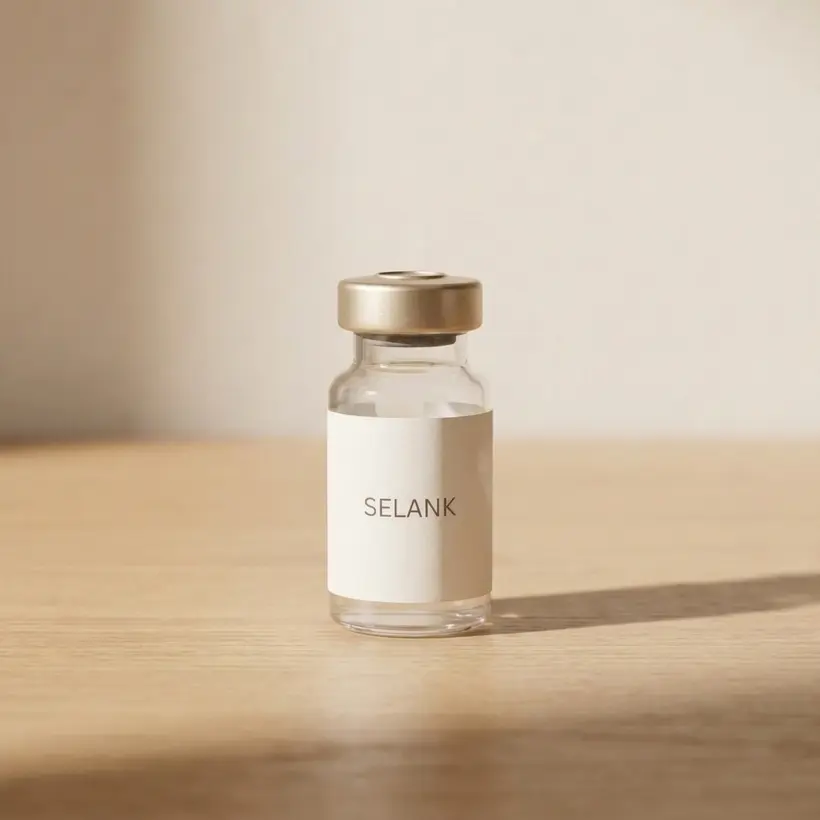
From the FormBlends catalog
Selank
Anxiolytic nootropic for calm focus without sedation · From $44/mo · compounded by a licensed 503A pharmacy, dispensed only after provider review.
Learn about Selank →In practice, researchers and off-label users who choose subcutaneous selank peptide injection do so because injection bypasses the variable and often low bioavailability of nasal mucosal absorption, particularly when using vials not formulated as nasal sprays.
Table of Contents
- Evidence Ledger: What the Data Actually Shows
- Mechanism with Numbers: How Selank and Semax Work
- How to Reconstitute: Step-by-Step with Real Math
- Injection Protocol: Sites, Technique, and Timing
- What Most Pages Get Wrong About Selank Semax Injection
- Why the Storage Rules Matter (The Chemistry Explanation)
- Honest Head-to-Head: Selank vs. Semax vs. Proven Alternatives
- How to Read a COA and Spot a Poor-Quality Vial
- FAQ
- Sources
Evidence Ledger: What the Data Actually Shows
| Claim | Best Evidence Type | Effect Direction | Confidence |
|---|---|---|---|
| Selank reduces anxiety in generalized anxiety disorder | Small Russian RCTs (n roughly 60 to 80 per trial), not replicated in Western trials | Positive vs. placebo | Low |
| Semax improves neurological outcomes after ischemic stroke | Russian controlled clinical trials, multi-site but not double-blind by Western CONSORT standards | Positive | Low to Moderate |
| Semax upregulates BDNF in rat hippocampus | Animal and cell studies, multiple replications | Positive, dose-dependent in animals | Moderate (animal only) |
| Selank modulates enkephalin-degrading enzymes | Mechanistic / in vitro; Semenova et al. have published on this | Inhibitory effect on enkephalinase | Low (mechanism unconfirmed in humans) |
| Subcutaneous injection is bioequivalent to intranasal for these peptides | No direct comparative human pharmacokinetic trial found | Unknown | Very Low / Speculative |
| Either peptide is safe for long-term use in humans | No long-term human safety trial | Unknown | Very Low |
Mechanism with Numbers: How Selank and Semax Actually Work
Selank is a 7-amino-acid peptide. Its proposed primary mechanism involves inhibition of enkephalin-degrading enzymes (specifically enkephalinase), which prolongs the action of endogenous opioid enkephalins at their receptors. Secondary effects include modulation of IL-6, IL-4, and interferon-gamma in animal cytokine studies. Semenova and colleagues published work in the 2000s showing selank increased the stability of met-enkephalin in rat brain tissue. The peptide also appears to influence GABA-A receptor function indirectly, though it does not bind the classic benzodiazepine allosteric site in the way diazepam does. What this mechanism does NOT prove: that enkephalinase inhibition in rats translates to clinically meaningful anxiolysis in humans at achievable plasma concentrations after subcutaneous injection.
Semax is a synthetic analogue of ACTH(4-7) with a proline-glycine-proline C-terminal extension that resists proteolysis better than the native fragment. It does not activate the full ACTH receptor pathway (and therefore does not produce cortisol elevation). Key animal data: semax at doses of 50 to 100 mcg/kg in rodents produced measurable BDNF upregulation in hippocampal tissue within hours of administration. It also modulates dopamine and serotonin turnover in striatal regions in animal studies. What this does NOT prove: that BDNF increases in rodent hippocampus at weight-adjusted equivalent doses will occur in humans, or that any BDNF increase will translate to functional cognitive improvement.
How to Reconstitute: Step-by-Step with Real Math
Equipment: lyophilized peptide vial, bacteriostatic water for injection, 1 mL insulin syringe (29 to 31 gauge), alcohol swabs.
- Determine your target concentration. A common choice: 5 mg vial plus 2 mL bacteriostatic water equals 2500 mcg per mL, or 2.5 mcg per microliter.
- Draw 2 mL of bacteriostatic water into a syringe.
- Insert the needle into the peptide vial at an angle so water runs down the glass wall, not directly onto the lyophilized cake. This reduces mechanical stress on the peptide structure.
- Do not inject air forcefully. Do not shake. Swirl gently until the powder is fully dissolved. The solution should be clear and colorless.
- Label the vial with the date of reconstitution and concentration.
Dosing math example: To inject 250 mcg of selank from a 2500 mcg/mL solution, you need 0.10 mL (100 microliters), which is the 10-unit mark on a standard U-100 insulin syringe. For 500 mcg, draw to the 20-unit mark.
| Vial Size | Bacteriostatic Water Added | Concentration (mcg/mL) | Volume for 250 mcg | Volume for 500 mcg |
|---|---|---|---|---|
| 5 mg | 2 mL | 2500 | 0.10 mL | 0.20 mL |
| 5 mg | 1 mL | 5000 | 0.05 mL | 0.10 mL |
| 10 mg | 2 mL | 5000 | 0.05 mL | 0.10 mL |
Injection Protocol: Sites, Technique, and Timing
Route: Subcutaneous injection into the pinched fat layer. Intramuscular injection is not required or recommended for peptides of this size and solubility profile.
Sites (rotate each injection): Lower abdomen at least 2 inches from the navel, outer thigh, or lateral upper arm fat pad. Rotation prevents lipohypertrophy, which reduces local absorption predictability over time.
Technique: Pinch a fold of skin, insert 29 to 31 gauge needle at a 45-degree angle for lean individuals or 90 degrees if adequate fat tissue is present. Inject slowly. Release pinch before withdrawing needle. Apply gentle pressure, do not rub.
Timing: Based on Russian trial protocols, selank was dosed once to twice daily. Morning dosing is common given its proposed anxiolytic and nootropic effects. Semax neurological protocols used once-daily morning dosing. No controlled head-to-head timing comparison for injection exists. Given the short plasma half-life of both peptides, dosing close in time to the desired effect window is mechanistically reasonable, though not proven in humans.
Cycle length: Published trials used courses of 7 to 14 days for acute indications (selank for anxiety) and up to several weeks for semax in neurological recovery. There is no validated long-term cycling protocol.
What Most Pages Get Wrong About Selank Semax Injection
1. Route confusion inflates perceived evidence. Nearly every published clinical trial for both selank and semax used intranasal delivery, not subcutaneous injection. When a site says "studies show selank reduces anxiety," those studies used nasal drops. The pharmacokinetic profile of subcutaneous injection differs from intranasal administration. Bioavailability via injection is presumably higher and more consistent, but there is no head-to-head PK comparison in humans. Citing nasal drop trial results as support for injection dosing is a category error.
2. The "no side effects" claim ignores the evidence gap. Most pages state selank has an excellent safety profile. This reflects the absence of published adverse event reports, not the presence of a rigorous safety study. Small trials with 60 to 80 subjects over 14 days cannot detect adverse events occurring in 1 in 500 or 1 in 1000 users. Absence of evidence is not evidence of absence.
3. Half-life is conflated with duration of effect. Sites routinely claim selank "lasts for hours." The plasma half-life in animal data is in the range of minutes, consistent with an unmodified peptide lacking the protease-resistance modifications in semax. Any prolonged effect is downstream (BDNF upregulation, cytokine modulation) and not the same as the peptide remaining active in plasma. This distinction matters for dosing logic.
4. Vial purity is treated as guaranteed. Research peptides sold online are not manufactured under FDA cGMP conditions. Independent mass spectrometry testing of research peptides by organizations such as Janoshik has found variable purity across suppliers. A COA provided by the supplier using their own in-house HPLC cannot substitute for independent third-party verification.
Why the Storage Rules Matter: The Chemistry Behind the Rule
Lyophilized (dry) peptide: Lyophilization removes water, which is the primary medium for hydrolysis. Peptide bonds are susceptible to hydrolytic cleavage when water is present and temperature accelerates the reaction. A dry vial stored at minus 20 Celsius can remain stable for a year or more in most formulations because the reaction rate is near zero without liquid water.
After reconstitution: Once bacteriostatic water is added, hydrolysis becomes possible. Benzyl alcohol in bacteriostatic water inhibits microbial growth but does not stop peptide hydrolysis. Refrigeration at 4 Celsius slows the hydrolysis rate substantially compared to room temperature. The conservative 30-day use window after reconstitution reflects this degradation chemistry, not an arbitrary manufacturer choice. There is no published quantitative degradation kinetics study specific to selank or semax in bacteriostatic water at 4 Celsius, so the 30-day figure is a general peptide formulation heuristic, not a compound-specific measurement.
Why you should not freeze reconstituted solution: Repeated freeze-thaw cycles cause ice crystal formation that mechanically denatures peptide structure and promotes aggregation. If you need to store for longer than 30 days, the correct approach is to keep the dry lyophilized vial frozen and only reconstitute the amount you will use within 30 days.
Light exposure: Both peptides contain amino acid residues that can undergo photo-oxidation (methionine, tryptophan if present; these vary by sequence). Store in opaque or amber glass vials away from direct light. This is a real degradation pathway, not a marketing claim.
Honest Head-to-Head: Selank vs. Semax vs. Proven Alternatives
| Compound | Strongest Evidence | Evidence Quality | Anxiety Effect | Cognitive Effect | Regulatory Status (US) | Where the Peptide Loses |
|---|---|---|---|---|---|---|
| Selank (injection) | Small Russian RCTs, intranasal, anxiety | Low | Probable, mild to moderate in trials | Speculative | Not approved, research compound | No Phase III data, no PK injection data, no long-term safety data |
| Semax (injection) | Russian controlled trials, stroke and cognitive deficit | Low to Moderate | Minimal direct evidence | Probable in neurological injury context | Not approved, research compound | Same trial design limitations; cognitive benefit in healthy users unproven |
| SSRIs (e.g., escitalopram) | Multiple large Phase III RCTs, FDA-approved for anxiety | High | Proven, NNT roughly 5 to 7 for GAD | Neutral to slight negative in some studies | FDA-approved, Rx required | Side effect profile, withdrawal syndrome, slower onset |
| Buspirone | Multiple RCTs, FDA-approved for GAD | High | Proven for GAD | Minimal impact | FDA-approved, Rx required | Slower onset than benzodiazepines; less acute effect than BZDs |
| Benzodiazepines (e.g., diazepam) | Decades of RCT data | High | Proven, rapid onset | Impairs cognition acutely | FDA-approved Schedule IV | Dependence, withdrawal, cognitive impairment, overdose risk |
Selank and semax do not beat proven pharmacotherapy on evidence quality. Their theoretical advantage is a cleaner tolerability profile and potentially pro-cognitive rather than cognitively impairing anxiolysis. That advantage is theoretical until large, rigorous human trials confirm it.
How to Read a COA and Spot a Poor-Quality Selank Vial
What a COA should contain at minimum: peptide sequence confirmed, purity by HPLC (accept nothing below 98% for research use), mass spectrometry or molecular weight confirmation, date of analysis, lot number, and ideally endotoxin (LAL) testing results. Endotoxin contamination in injectable research peptides is a real risk and is not detected by HPLC alone.
Red flags on a COA: no lot number (cannot verify it matches your vial), HPLC purity listed without a chromatogram, no mass confirmation, no endotoxin testing, or a COA dated well before your purchase with no re-test.
Visual inspection after reconstitution: A good reconstituted peptide solution is clear and colorless with no floating particles. Cloudiness indicates either incomplete dissolution (give more time, do not heat) or protein aggregation (degraded). A yellow or brown tint suggests oxidation. Discard if any of these are present.
What a COA cannot tell you: post-reconstitution stability, sterility of your specific vial (COA sterility testing is done on a batch sample, not every individual vial), or whether aseptic technique was used during filling. These are your responsibility at the point of use.
FAQ
What is the standard injection dose for selank?
Russian clinical research used 250 to 300 mcg per dose administered intranasally. Subcutaneous injection protocols in research settings have typically used a similar 250 to 500 mcg range per dose, once or twice daily. No FDA-approved dosing standard exists for selank.
What is the standard injection dose for semax?
Published Russian clinical trials used intranasal doses of 200 to 900 mcg per day for neurological indications. Subcutaneous injection research protocols generally mirror this range. Higher doses up to 1 mg per day have been explored in stroke and cognitive studies.
Can selank and semax be injected together?
No published human RCT has tested co-administration. The two peptides act through overlapping but distinct pathways: selank modulates GABAergic and BDNF signaling while semax primarily upregulates BDNF and serotonin receptors. Combining them is speculative. Separate injection sites and separate timing are the conservative approach if both are used.
Where is the best injection site for subcutaneous selank or semax use?
Abdomen, outer thigh, or lateral deltoid subcutaneous fat are standard sites. Rotate sites to avoid lipohypertrophy. Neither peptide requires intramuscular injection; subcutaneous delivery is sufficient for systemic absorption at these molecular weights.
How do you reconstitute selank or semax lyophilized powder?
Add bacteriostatic water slowly down the side of the vial. Do not shake. Swirl gently. For a 5 mg vial reconstituted with 2 mL bacteriostatic water, the concentration is 2500 mcg per mL (2.5 mcg per microliter). Refrigerate after reconstitution and use within 30 days as a conservative guideline.
How long does selank stay active after injection?
Selank is a heptapeptide that is rapidly cleaved by plasma peptidases. Its plasma half-life is very short, estimated in minutes in animal studies. Central effects may outlast plasma levels due to downstream BDNF and cytokine modulation, but the duration of functional effect in humans is not well quantified.
Is selank a controlled substance in the US?
Selank is not scheduled under the US Controlled Substances Act. It is also not FDA-approved. It exists in a regulatory gray zone as a research compound. Import, possession, and use rules vary by jurisdiction and change over time. Verify current status before purchasing.
What does selank actually do compared to a benzodiazepine?
Selank appears to modulate enkephalin breakdown and interact with GABA-A receptor tone without direct binding at the benzodiazepine site in the way classic BZDs do. Animal studies show anxiolytic effects without the sedation, tolerance, or withdrawal profile seen with diazepam. Human evidence is limited to small Russian trials.
How do you know if a selank vial has degraded?
Visual cues include cloudiness, visible particulate, or color change in what should be a clear, colorless solution. Degraded peptide may also produce a sharper or unusual odor after reconstitution. Any of these signs warrants discarding the vial. A COA from the supplier cannot confirm post-reconstitution stability.
Can selank or semax be used intranasally instead of injected?
Yes, intranasal delivery is actually the route used in most published Russian clinical trials for both peptides. Intranasal administration avoids injection-related risks but raises different bioavailability questions. Bioavailability via the nasal route is variable and formulation-dependent. Most commercially available research vials are not formulated as nasal sprays.
What are the most commonly reported side effects of selank injection?
Small published trials report a generally mild side effect profile. The most commonly noted effects are mild sedation or fatigue, especially at higher doses. Injection site reactions can occur with any subcutaneous peptide. Systematic safety data from large human trials does not exist for subcutaneous selank.
Sources
- Semenova TP, Kozlovskaya MM, Zuikov AV, et al. "Effects of Selank on the indices of anxiety in experimental models of emotional disorders." Eksperimental'naia i klinicheskaia farmakologiia. 2009. (PubMed-indexed Russian pharmacology journal.)
- Gusev EI, Skvortsova VI, et al. "Semax in the treatment of patients with ischemic stroke." Zhurnal nevrologii i psikhiatrii imeni S.S. Korsakova. 2005. (Russian neurology journal, PubMed-indexed trial data.)
- Mironova VI, Shram SI, Myasoedov NF, Nesterova IV. "Effects of Semax and its C-terminal fragment Pro-Gly-Pro on the content of neurotrophin (NGF, BDNF) and their precursors in brain structures." Doklady Biochemistry and Biophysics. 2007. (BDNF mechanism data.)
- Kost NV, Sokolov OY, Gabaeva MV, et al. "Semax and Selank inhibit the enkephalin-degrading enzymes from human serum." Bioorganicheskaia khimiia. 2001. (PubMed-indexed; enkephalinase inhibition mechanism.)
- Zozulya AA, Neznamov GG, et al. "Efficacy and possible mechanisms of the anxiolytic action of a new peptide anxiolytic Selank in the therapy of generalized anxiety disorders and neurasthenia." Zhurnal nevrologii i psikhiatrii imeni S.S. Korsakova. 2008. (Controlled clinical trial data, PubMed-indexed.)
- United States Drug Enforcement Administration. Controlled Substances Schedules. www.dea.gov (accessed 2026 for scheduling status verification.)
- United States Pharmacopeia. General Chapter 1 on Injections and Implanted Drug Products. USP-NF. (Reconstitution and sterility guidance.)
- Myasoedov NF, Shamonina MV, Lyapina LA, Grigor'eva ME. "Synthesis and analysis of the properties of enkephalin-containing peptides." Russian Journal of Bioorganic Chemistry. 2010. (Selank sequence and structural analysis.)
Related peptide guides
Ready when you are
Selank
Anxiolytic nootropic for calm focus without sedation · From $44/mo · compounded by a licensed 503A pharmacy, dispensed only after provider review.
Learn about Selank →