
Trust Signals
Every timing claim on this page is graded against its actual evidence type. We distinguish between what the FDA label says, what the clinical trials tested, and what is inferred from mechanism only. Where the evidence is weak, we say so plainly. This page does not sell a protocol; it evaluates one.
Key Takeaways
- The FDA-approved Egrifta label specifies once-daily subcutaneous injection at bedtime, on an empty stomach, at 2 mg per day. That is the only timing with direct regulatory and RCT support.
- Bedtime timing works because the body's largest natural GH pulse occurs shortly after sleep onset during the first slow-wave sleep cycle, and tesamorelin (a GHRH analogue) amplifies that existing pulse rather than creating an independent one.
- Food within roughly two hours of injection blunts the GH response by raising insulin, which suppresses GHRH signaling at the hypothalamic-pituitary axis. This is a mechanism, not a trial-proven threshold in tesamorelin-specific data.
- IGF-1 has a half-life of roughly 15 hours and integrates GH exposure over time, so a single poorly-timed dose does not meaningfully alter your longer-term IGF-1 trajectory. Consistency matters more than perfection.
- Reconstituted tesamorelin must be used within 24 hours under refrigeration (2 to 8 degrees Celsius) and must not be frozen. Freezing denatures the 44-amino-acid structure.
Direct Answer: When Should You Take Tesamorelin?
Take tesamorelin once daily by subcutaneous injection at bedtime, on an empty stomach (no food for at least two hours beforehand). This is what the FDA-approved label specifies, and it aligns with the body's largest natural growth hormone pulse, which occurs shortly after sleep onset. Morning dosing is pharmacologically functional but is not the evidence-optimized window.
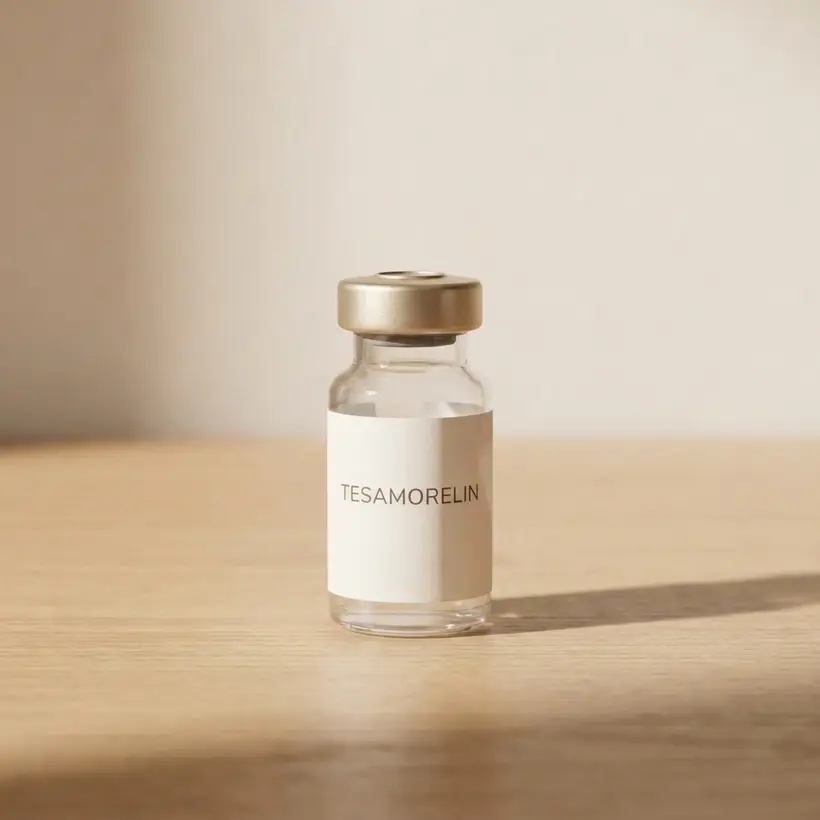
From the FormBlends catalog
Tesamorelin
GHRH analog studied for visceral-fat reduction; the molecule was approved as Egrifta · From $249/mo · compounded by a licensed 503A pharmacy, dispensed only after provider review.
View Tesamorelin →Table of Contents
- Evidence Ledger: What the Data Actually Supports
- Why Bedtime and Fasted: The Mechanism With Numbers
- Morning vs. Night: Is Bedtime Really Necessary?
- The Fasting Rule Explained Chemically
- What Most Pages Get Wrong About Tesamorelin Timing
- Honest Head-to-Head: Tesamorelin vs. Alternatives
- Operational Guide: Label Literacy and Protocol Checklist
- What Happens If You Miss a Dose?
- FAQ
- Sources
- Footer Disclaimers
Evidence Ledger: What the Data Actually Supports
The table below grades each major timing claim using the best evidence available. GRADE confidence ratings follow standard conventions (High, Moderate, Low, Very Low).
| Claim | Best Evidence Type | Effect Direction | Confidence |
|---|---|---|---|
| Once-daily dosing at 2 mg reduces visceral adipose tissue in HIV lipodystrophy | Human RCT (Falutz et al., 2007 and 2010, NEJM / Lancet; n=412 combined pivotal trials) | Positive, statistically significant VAT reduction | High |
| Bedtime injection specified in FDA label (Egrifta SV prescribing information) | Regulatory label (FDA approved 2010, updated 2019) | Specified as standard of care for approved indication | High (for label compliance) |
| Bedtime timing aligns with dominant nocturnal GH pulse | Mechanistic/circadian physiology (Van Cauter et al., established endocrinology) | Additive with natural pulse | Moderate (mechanism strong; tesamorelin-specific timing RCT not done) |
| Fasted state preserves GH pulse amplitude vs. fed state | Human mechanistic studies on GHRH analogues and insulin-GH axis (general endocrinology literature) | Fasting improves GH response amplitude | Moderate |
| Morning dosing is inferior to bedtime for tesamorelin effect | Inference from circadian GH physiology; no head-to-head tesamorelin RCT | Likely less optimal, magnitude unknown | Low |
| Cycling (5 days on, 2 off or similar) preserves benefit while reducing side effects | Anecdote and theoretical; no RCT data for tesamorelin cycling | Unknown | Very Low |
| Tesamorelin improves body composition in healthy, non-HIV adults | Small investigator-initiated human studies and inference from approved RCTs | Probably positive but effect size and durability uncertain | Low |
Why Bedtime and Fasted: The Mechanism With Numbers
Tesamorelin is a 44-amino-acid synthetic analogue of endogenous growth hormone-releasing hormone (GHRH), with a trans-3-hexenoic acid moiety added at the N-terminus to resist dipeptidyl peptidase IV (DPP-IV) cleavage. Endogenous GHRH has a plasma half-life of only a few minutes; tesamorelin's structural modification extends functional activity, though its plasma half-life remains short (on the order of tens of minutes). It binds the GHRH receptor (GHRHR) on anterior pituitary somatotroph cells to stimulate GH synthesis and pulsatile release.
Here is why the timing choices are not arbitrary:
The nocturnal GH pulse. Human GH secretion is pulsatile and strongly circadian. The single largest GH pulse in a 24-hour period occurs approximately 60 to 90 minutes after sleep onset, coinciding with the first episode of slow-wave (deep) sleep. This has been established in classical sleep-endocrinology work by Van Cauter and colleagues. The pituitary is primed for maximal GHRH responsiveness during this window. Injecting a GHRH analogue before sleep onset means the exogenous signal arrives when the pituitary is already in a state of maximal sensitivity, amplifying a pulse that would occur anyway rather than generating a smaller, isolated daytime pulse against a less receptive background.
The insulin-GH axis suppression. Insulin and GH are physiologically antagonistic. When insulin rises after a meal, somatostatin tone at the hypothalamus increases and direct pituitary sensitivity to GHRH decreases. This is why all GHRH-class peptides (including sermorelin and CJC-1295) produce a blunted GH response in the postprandial state. The two-hour fasting recommendation is a practical clinical threshold, not a hard pharmacokinetic constant unique to tesamorelin. It reflects the time typically needed for insulin to return toward baseline after a mixed meal in a metabolically healthy person.
What the mechanism does NOT prove. Knowing that bedtime fasted dosing is mechanistically optimal does not tell you by how much it beats, say, morning fasted dosing. No RCT has randomized tesamorelin patients to different injection times and compared VAT reduction or GH AUC. The magnitude of the timing benefit is inferred, not measured in tesamorelin-specific data.
Morning vs. Night: Is Bedtime Really Necessary?
Some off-label protocols use morning dosing, and the pivotal Falutz trials did not universally specify a rigid clock time in their methodology sections. Morning dosing is pharmacologically functional for two reasons. First, tesamorelin still binds GHRHR and generates a GH pulse regardless of time of day. Second, for the visceral fat reduction endpoint, what matters most is daily net GH exposure and the downstream IGF-1 signal, both of which accumulate over weeks rather than fluctuating meaningfully with a single injection timing difference.
That said, bedtime dosing has two advantages that morning dosing does not: alignment with the dominant natural GH pulse, and the practical reality that most people are more reliably fasted at bedtime than at any other time of day. If morning is the only workable option due to schedule, injection site access, or refrigerator proximity, it remains an effective approach. The clinical trials demonstrating significant VAT reduction used once-daily dosing without evidence that morning adopters failed to respond. The honest answer is that the timing delta between morning and bedtime is probably real but modest, and no trial has quantified it.
The Fasting Rule Explained Chemically
Why does food blunt the GH response, and why does this matter specifically for a GHRH analogue?
After a carbohydrate-containing meal, portal and systemic insulin rises. Insulin promotes hypothalamic somatostatin release. Somatostatin is the primary inhibitory regulator of pituitary GH secretion. It does not prevent GH release entirely, but it raises the threshold for GHRH-stimulated release and reduces the peak amplitude of the GH pulse. Additionally, postprandial free fatty acid levels remain elevated for a variable period, and high circulating free fatty acids have an independent inhibitory effect on GH secretion, a feedback mechanism that protects against futile metabolic cycling (high GH, which mobilizes fat, should not fire when fat is already being absorbed from a meal).
Protein-only meals raise insulin less dramatically and do not produce the same degree of GH suppression, but the conservative and operationally simple rule is to treat any significant caloric intake as requiring a two-hour buffer. Water, black coffee without additives, and plain tea are generally compatible with the fasting intent, though the prescribing information does not parse these distinctions at the level of detail that, for example, pharmacokinetic fasting studies for oral drugs do.
The rule of thumb, then, is not arbitrary brand caution. It reflects a genuine and well-characterized neuroendocrine interaction that would blunt the clinical benefit of the injection regardless of what peptide you are using in the GHRH class.
What Most Pages Get Wrong About Tesamorelin Timing
Most competitor content on tesamorelin timing makes at least one of the following errors. Knowing these protects you from misinformation.
Error 1: Presenting the two-hour fast as a tesamorelin-specific pharmacokinetic rule. The two-hour window is a practical inference from general GHRH-axis physiology. Tesamorelin is not orally absorbed, so the concept of a drug-food pharmacokinetic interaction (like taking a statin with grapefruit) does not apply in the usual sense. The relevant interaction is physiological, not pharmacokinetic at the absorption level. The peptide reaches its pituitary receptor via systemic circulation regardless of what you ate. The food effect is on the pituitary's responsiveness to the signal, not on the peptide's own bioavailability.
Error 2: Citing exact GH pulse amplitude percentages for tesamorelin timing with no trial source. Several pages claim figures like "30 percent higher GH response with bedtime vs. morning dosing" without citing any tesamorelin-specific study. No such comparative trial exists in the peer-reviewed literature as of this writing. These numbers are fabricated or borrowed from sermorelin studies and applied without acknowledgment.
Error 3: Advising morning dosing "to avoid sleep disruption." There is no clinical evidence that bedtime tesamorelin injection disrupts sleep architecture in the approved dose range. The GH pulse it generates is the same pulse the body would attempt to generate naturally. Transient injection site reactions are the most common adverse event in the pivotal trials (reported in a minority of patients), not sleep disturbance.
Error 4: Recommending cycling protocols as established practice. Five-on, two-off or similar cycling schedules are borrowed from other peptide conventions. There is no peer-reviewed evidence evaluating cycle vs. continuous tesamorelin for any clinical endpoint. The pivotal trials ran continuous daily administration for 26 to 52 weeks.
Honest Head-to-Head: Tesamorelin vs. Alternatives for Timed GH Stimulation
| Compound | Mechanism | Approved Use | Timing Evidence Quality | Where Tesamorelin Wins | Where Tesamorelin Loses |
|---|---|---|---|---|---|
| Tesamorelin (Egrifta) | GHRH receptor agonist | HIV lipodystrophy (FDA) | High (for once-daily bedtime, fasted; from pivotal RCTs) | Only GHRH analogue with an FDA-approved indication and robust RCT data on a meaningful clinical endpoint (VAT) | Expensive, requires cold chain, not approved for non-HIV body composition |
| Sermorelin | GHRH receptor agonist (first 29 amino acids) | Formerly approved for pediatric GH deficiency (withdrawn from market) | Low (no contemporary RCT timing data; older peds literature) | Longer track record in compounded form; lower cost | No current FDA approval, shorter half-life than tesamorelin, less clinical evidence |
| CJC-1295 (with DAC) | GHRH analogue with extended half-life (days) | No approved use | Very Low (no human RCT for timing or clinical outcomes) | Convenient less-frequent dosing in theory | No RCT data; blunting of pulsatility with long half-life raises IGF-1 dysregulation concern |
| Recombinant GH (somatropin) | Direct GH receptor agonist | Multiple FDA-approved indications | High (extensive RCT data; bedtime preferred for physiological reasons) | Direct, dose-predictable GH exposure; validated across multiple populations | Higher side-effect burden, higher cost, greater misuse/regulatory scrutiny |
| Ipamorelin / MK-677 | Ghrelin mimetic (GHSR agonist), different receptor | No approved use | Low to Very Low | Oral route for MK-677; complementary receptor pathway | No clinical RCT on body composition; MK-677 causes water retention and insulin resistance in some users |
Operational Guide: Label Literacy and Protocol Checklist
If you are working with a prescribing clinician on tesamorelin, here is how to evaluate the protocol and product you receive.
Reading the label or COA. Approved Egrifta SV comes as a 1 mg/mL or 2 mg/vial lyophilized powder. A certificate of analysis (COA) from a compounding pharmacy should include: identity test (HPLC), purity (greater than 95 percent by HPLC is the minimum meaningful standard), endotoxin testing (LAL test, less than 2 EU/mg is a common benchmark), and sterility confirmation. If the COA lacks an identity test, the product's amino acid sequence has not been confirmed.
Reconstitution math. For a 2 mg vial reconstituted with 1 mL bacteriostatic water: concentration is 2 mg/mL. The approved dose is 2 mg, so you draw a full 1 mL. If your vial is labeled at a different concentration, divide the desired dose (in mg) by the concentration (mg/mL) to get your draw volume in mL, then convert to units on a standard U-100 insulin syringe (1 mL equals 100 units on those markings). For 2 mg from a 2 mg/mL solution: draw to the 100-unit line.
Signs of degraded product. A properly reconstituted tesamorelin solution is clear and colorless. Discard if you see: particulate matter, cloudiness, color change (yellow or brown), or if the lyophilized cake appeared wet or collapsed before reconstitution (indicating a cold chain breach). Peptide aggregation from heat or freeze-thaw cycles can produce invisible loss of potency with no visible change, which is why cold chain documentation from the supplier matters.
Protocol checklist.
- Stop eating at least two hours before planned injection time.
- Reconstitute with bacteriostatic water (not sterile water, unless you will use the entire vial immediately) by rolling gently, not shaking.
- Inject subcutaneously, rotating sites (abdomen preferred; avoid within 2 inches of navel).
- Inject 30 to 60 minutes before anticipated sleep onset.
- Refrigerate reconstituted solution; use within 24 hours.
- Never freeze reconstituted solution.
- Monitor IGF-1 at baseline and during therapy (every 3 to 6 months is the clinical convention); your prescriber adjusts based on results.
What Happens If You Miss a Dose?
Missing a single bedtime injection does not meaningfully change your IGF-1 trajectory or visceral fat reduction timeline. The pivotal trials ran 26 to 52 weeks; a one-day gap is noise in that context. The Egrifta prescribing information advises taking the missed dose as soon as you remember on the same day. If you do not remember until the next day, skip the missed dose and resume normal timing. Doubling up the next injection is not recommended; a higher-than-prescribed single dose raises the risk of transient edema, arthralgia, or carpal tunnel symptoms, which are the most commonly reported adverse effects in the RCT data.
FAQ
When should I take tesamorelin, morning or night?
The FDA-approved dosing protocol for Egrifta (tesamorelin 2 mg) specifies once-daily subcutaneous injection at bedtime, on an empty stomach. Bedtime aligns with the body's largest endogenous GH pulse, which normally occurs shortly after sleep onset. Morning dosing is used in some off-label protocols but lacks the same mechanistic and clinical backing.
Why does tesamorelin need to be taken on an empty stomach?
Elevated insulin and free fatty acids from a recent meal suppress hypothalamic GHRH signaling and blunt pituitary GH release. Tesamorelin mimics GHRH, so injecting it while insulin is elevated reduces the magnitude of the GH pulse it can generate. Fasting for roughly two hours before injection preserves the response amplitude.
What time of night should I inject tesamorelin?
The Egrifta prescribing information says "at bedtime" without specifying an exact clock time. The mechanistic rationale points to injecting 30 to 60 minutes before anticipated sleep onset, so the GH pulse the peptide generates coincides with the first slow-wave sleep cycle, which is when natural GH secretion peaks.
Can I take tesamorelin in the morning instead?
Morning dosing is used in some off-label and research protocols, and the pivotal HIV-lipodystrophy RCTs conducted once-daily dosing without mandating a time of day in some arms. Morning dosing works pharmacologically but sacrifices the additive effect of aligning with the nocturnal GH surge. If morning is the only practical option, it is still effective, but it is not the evidence-optimized window.
How long before bed should I stop eating before a tesamorelin injection?
The prescribing information states the injection should be given on an empty stomach. A practical interpretation used in clinical practice is no food for at least two hours before injection. Liquids without calories (water, plain tea) are generally considered acceptable, though the prescribing information does not specify.
Should tesamorelin be taken every day or cycled?
The FDA-approved regimen is continuous daily dosing at 2 mg. The pivotal trials ran 26 to 52 weeks of continuous daily administration. Cycling is a feature of some off-label wellness protocols, but there is no RCT evidence comparing cycled versus continuous tesamorelin for any endpoint.
Does tesamorelin timing matter for IGF-1 levels?
IGF-1 is a hepatic protein with a half-life of roughly 15 hours, so it accumulates and reflects average daily GH exposure over time rather than the timing of a single injection. Monitoring IGF-1 at a consistent time of day is more important for reproducibility of measurements than for optimizing the physiological effect.
Can I inject tesamorelin at the same time as other peptides?
No clinical trial data guides co-administration timing. Because tesamorelin works at the GHRH receptor and some co-administered peptides (like ghrelin mimetics) work at separate receptors, stacking is mechanistically plausible but not evidence-validated. Mixing in the same syringe risks stability issues; separate injections at separate sites is the cautious approach.
What happens if I miss a dose of tesamorelin?
The Egrifta prescribing information advises taking the missed dose as soon as possible on the same day, then resuming the regular schedule. Do not double-dose the next day. A single missed dose has no meaningful effect on the longer-term IGF-1 trajectory given the peptide's daily accumulation pattern.
How should tesamorelin be stored before injection?
Unreconstituted Egrifta lyophilized powder should be refrigerated at 2 to 8 degrees Celsius and protected from light. After reconstitution, the solution should be used immediately or within 24 hours if refrigerated. Reconstituted tesamorelin should not be frozen, as ice crystal formation can denature the 44-amino-acid peptide structure.
Is tesamorelin timing different for HIV lipodystrophy versus off-label use?
The approved indication is HIV-associated lipodystrophy at 2 mg subcutaneously at bedtime. Off-label protocols vary widely in dose and timing. The bedtime, fasted rationale applies equally regardless of indication because the underlying pharmacology does not change based on the clinical context.
Sources
- Egrifta SV (tesamorelin) Prescribing Information. Theratechnologies Inc. FDA-approved label, revised 2019. Available via FDA.gov Drugs@FDA database.
- Falutz J, Allas S, Blot K, et al. Metabolic effects of a growth hormone-releasing factor in patients with HIV. N Engl J Med. 2007;357(23):2359-2370.
- Falutz J, Mamputu JC, Potvin D, et al. Effects of tesamorelin (TH9507), a growth hormone-releasing factor analogue, in HIV-infected patients with abdominal fat accumulation: a randomized placebo-controlled trial with a safety extension. J Acquir Immune Defic Syndr. 2010;53(3):311-322.
- Van Cauter E, Plat L, Copinschi G. Interrelations between sleep and the somatotropic axis. Sleep. 1998;21(6):553-566. (Foundational circadian GH physiology reference.)
- Molina PE. Endocrine Physiology, 5th ed. McGraw-Hill Education, 2018. (GH pulsatility, somatostatin, insulin-GH axis interactions.)
- FDA. Center for Drug Evaluation and Research. Application number 022505. Medical review of Egrifta (tesamorelin for injection). 2010. Available via FDA.gov.
- Bowers CY. New insights into GH secretion: from normal physiology to therapeutic manipulation. Growth Horm IGF Res. 1998;8 Suppl B:38-41. (GHRH receptor agonism context.)
- United States Pharmacopeia (USP) General Chapter 1 (Injections and Implanted Drug Products). USP-NF. (Standards for sterility and endotoxin limits for injectable compounded preparations.)
Footer Disclaimers
Platform. FormBlends is an educational science writing platform. Nothing on this page constitutes medical advice, a diagnosis, or a treatment recommendation. Consult a licensed prescriber before using any peptide or hormone product.
Research Compound or Compounded Medication. Tesamorelin (Egrifta) is an FDA-approved prescription drug for HIV-associated lipodystrophy. Compounded tesamorelin exists in the marketplace and is subject to varying regulatory status depending on jurisdiction and compound classification. Off-label use should be supervised by a qualified physician.
Results. Clinical results described on this page are from published trials in specific populations (primarily HIV-positive adults with lipodystrophy). Results in other populations may differ and have not been established in large RCTs. Individual results vary.
Trademark. Egrifta and Egrifta SV are registered trademarks of Theratechnologies Inc. FormBlends has no affiliation with Theratechnologies Inc. or any tesamorelin manufacturer.
Related peptide guides
Ready when you are
Tesamorelin
GHRH analog studied for visceral-fat reduction; the molecule was approved as Egrifta · From $249/mo · compounded by a licensed 503A pharmacy, dispensed only after provider review.
View Tesamorelin →