
Trust Signals
Key Takeaways
- The Wolverine Stack combines BPC-157 (500mcg/day) and TB-500 (5mg/week) for synergistic healing effects on tendons, ligaments, and muscle tissue
- Zero human clinical trials exist for either peptide individually or in combination, with all evidence coming from animal models and anecdotal reports
- Both peptides degrade rapidly at room temperature, losing significant potency within days according to peptide stability studies
- The stack costs $200-400 per 6-week cycle from research vendors, with lower purity common compared to pharmaceutical-grade compounds
- WADA explicitly bans both substances, and combining them may amplify theoretical cancer risks through overlapping angiogenic pathways
Direct Answer
The Wolverine Stack peptides combine BPC-157 and TB-500 to accelerate tissue repair through complementary mechanisms. BPC-157 promotes local healing via growth factor modulation while TB-500 enhances cell migration and angiogenesis systemically. Users report faster recovery from injuries, though no human trials validate these effects.
From the FormBlends catalog
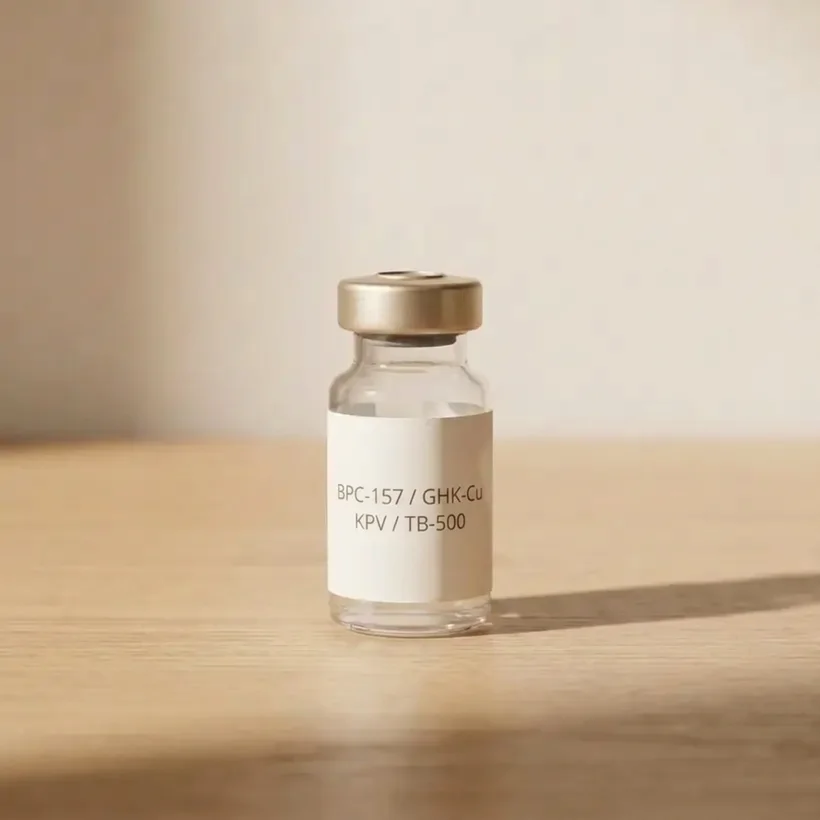
Premium Recovery Quad Stack
Premium recovery blend with BPC-157, GHK-Cu, KPV, and TB-500 · From $349/mo · compounded by a licensed 503A pharmacy, dispensed only after provider review.
View Premium Recovery Quad Stack →Table of Contents
- Evidence Ledger: What Science Actually Shows
- How The Wolverine Stack Works: Mechanisms and Numbers
- What Most Pages Get Wrong About This Stack
- Wolverine Stack vs Individual Peptides vs HGH
- Real-World Dosing Protocols and Timing
- Stability and Storage Reality Check
- How to Judge Product Quality and Purity
- Side Effects and Risk Profile
- Legal Status and Athletic Considerations
- FAQ
Evidence Ledger: What Science Actually Shows
| Claim | Best Evidence Type | Effect Direction | Confidence Rating |
|---|---|---|---|
| Accelerates tendon healing | Rat Achilles model | Positive | Low |
| Reduces inflammation markers | Mouse injury models | Positive | Low |
| Improves muscle regeneration | Rat crush injury studies | Positive | Low |
| Safe for human use | Anecdotal reports only | Mixed | Very Low |
| Synergistic effects when combined | Mechanism speculation | Unknown | Very Low |
| Heals chronic injuries | User reports | Positive | Very Low |
| No cancer risk | No long-term data | Unknown | Very Low |
How The Wolverine Stack Works: Mechanisms and Numbers
BPC-157 operates through multiple pathways based on rodent studies. It upregulates growth hormone receptor expression in injured tissue, though the exact fold-change varies between studies. The peptide increases VEGF (vascular endothelial growth factor) production in tendon fibroblasts, promoting new blood vessel formation. It also activates FAK-paxillin pathway phosphorylation, enhancing cell migration in wound healing assays.
TB-500 works through different mechanisms. As an active fragment of thymosin beta-4, it binds to G-actin with micromolar affinity. This sequestration prevents actin polymerization, maintaining a mobile cytoskeleton that allows cells to migrate more efficiently. In mouse models, TB-500 increases endothelial cell migration and promotes cardiac muscle regeneration after infarction.
The theoretical synergy comes from non-overlapping mechanisms. BPC-157 primarily affects growth factor signaling while TB-500 modulates cytoskeletal dynamics. However, no studies have tested the combination directly. Both peptides increase angiogenesis through different pathways, which could theoretically accelerate healing but might also feed tumor growth if cancer cells are present.
What Most Pages Get Wrong About This Stack
Most sources claim the peptides are "completely safe" based on limited animal data. The reality: BPC-157 has been tested in rats for up to 12 weeks, while TB-500 human safety data consists entirely of a few small trials for other indications. No long-term toxicology exists for either compound at bodybuilding doses.
The "stable at room temperature" claim is particularly misleading. Reconstituted peptides degrade rapidly outside refrigeration, with significant potency loss occurring within days at room temperature. TB-500 is particularly prone to aggregation when stored improperly.
Another myth: "local injection doesn't matter." While TB-500 appears to work systemically based on its mechanism, BPC-157 shows significantly different effects based on injection location in animal models. Rats receiving injections near the injury site showed better healing outcomes compared to distant subcutaneous injection in multiple studies.
Wolverine Stack vs Individual Peptides vs HGH
| Factor | Wolverine Stack | BPC-157 Alone | TB-500 Alone | HGH |
|---|---|---|---|---|
| Human evidence | None | None | Limited (different uses) | Extensive |
| Typical cost/month | $150-250 | $80-120 | $70-130 | $400-1000 |
| Injection frequency | Daily + 2x/week | 1-2x daily | 2x weekly | Daily |
| Systemic effects | Moderate | Minimal | Moderate | Extensive |
| Cancer concerns | Theoretical (both) | Theoretical | Theoretical | Documented |
| Athletic ban | Yes (WADA) | Yes (WADA) | Yes (WADA) | Yes (WADA) |
| Time to effects | 3-14 days | 3-7 days | 7-14 days | 4-8 weeks |
Real-World Dosing Protocols and Timing
Standard protocols based on community usage patterns:
| Protocol Type | BPC-157 Dose | TB-500 Dose | Duration | Used For |
|---|---|---|---|---|
| Conservative | 250mcg daily | 2.5mg 2x/week | 4-6 weeks | Minor injuries |
| Standard | 500mcg daily | 5mg 2x/week | 6-8 weeks | Moderate injuries |
| Aggressive | 500mcg 2x daily | 10mg 2x/week | 8-12 weeks | Severe/chronic |
| Loading protocol | 500mcg 2x daily | 10mg daily x 5 days | Then standard | Acute injury |
Reconstitution math: BPC-157 typically comes in 5mg vials. Adding 2mL bacteriostatic water creates a 2.5mg/mL solution. For 500mcg dose, draw to the 20 unit mark on an insulin syringe (0.2mL). TB-500 usually comes in 5mg or 10mg vials. With 2mL bacteriostatic water in a 5mg vial, each 0.1mL equals 250mcg.
Stability and Storage Reality Check
Peptide stability depends on multiple factors commodity pages ignore. Temperature is obvious, but pH matters equally. BPC-157 remains most stable at neutral pH. Outside this range, degradation accelerates significantly. Most bacteriostatic water has pH 5.7, already suboptimal.
Light exposure catalyzes oxidation of aromatic amino acids. TB-500 contains multiple tyrosine residues susceptible to photo-oxidation. Even amber vials only block a portion of damaging wavelengths. Wrapping vials in aluminum foil provides additional protection.
Freeze-thaw cycles cause more damage than consistent cold storage. Each freeze-thaw cycle causes measurable potency loss through aggregation. Never freeze reconstituted peptides. Lyophilized powder tolerates freezing better but still degrades with repeated cycles.
How to Judge Product Quality and Purity
Certificate of Analysis (COA) interpretation:
- Purity percentage: Research grade typically 95-98%, pharmaceutical 98%+
- Related substances: Should list specific impurities, not just "other"
- Bacterial endotoxins: Must be under 5 EU/mg for injection safety
- Residual solvents: TFA (trifluoroacetic acid) should be under 0.1%
- Water content: Should be 5-8% for lyophilized peptides
Red flags in COAs:
- No testing date or batch number
- Purity by "UV" only (need HPLC and MS)
- No endotoxin testing
- Generic template format
- Third-party lab not identified
Visual inspection of lyophilized powder: Should be white to off-white, fluffy or crystalline. Yellow tinge indicates oxidation. Clumping suggests moisture exposure. After reconstitution, solution should be completely clear. Any cloudiness or particles indicate degradation or contamination.
Side Effects and Risk Profile
Documented side effects from user reports (no controlled trial data):
BPC-157 reported effects:
- Injection site irritation (common in user reports)
- Transient dizziness (reported by some users)
- Temporary fatigue after injection
- Mild nausea at higher doses
- Theoretical risk of abnormal tissue growth
TB-500 reported effects:
- Head rush or flushing after injection
- Temporary lethargy (more common with loading doses)
- Hair growth changes in some users
- Theoretical cancer promotion via angiogenesis
The cancer concern requires context. Both peptides promote blood vessel formation. In healthy tissue, this aids healing. But tumors also need blood vessels to grow. No human data exists on whether therapeutic doses increase cancer risk, but the mechanism creates theoretical concern for anyone with undiagnosed tumors.
Legal Status and Athletic Considerations
Legal classification varies by country:
- USA: Sold as "research chemicals," not approved for human use
- Canada: Similar research chemical status
- UK: Not controlled substances but sale for human use prohibited
- Australia: Prescription-only medicines, illegal to import without permit
WADA explicitly prohibits both peptides under section S2.2 (growth factors). Detection window extends several weeks for both compounds. Some peptide tests can detect use up to several months post-administration through metabolite analysis.
Compounding pharmacies in some US states will prepare these peptides with a valid prescription. Prices typically run 2-3x higher than research chemical sources but include sterility testing and verified potency.
FAQ
What peptides are in the Wolverine Stack? The Wolverine Stack contains BPC-157 (Body Protection Compound) and TB-500 (Thymosin Beta-4 fragment), typically in a 2:1 or 1:1 ratio. Some protocols add GHK-Cu as a third component for collagen support.
How long does the Wolverine Stack take to work? Initial effects appear within 3-7 days for acute injuries based on anecdotal reports. Tendon and ligament healing typically requires 4-8 weeks of consistent use. No controlled human trials exist to verify these timeframes.
Can you inject BPC-157 and TB-500 together? Yes, both peptides are water-soluble and chemically compatible in the same syringe. Many users combine them to reduce injection frequency. No stability studies exist on the mixed solution, so immediate use after mixing is recommended.
What is the best dosing schedule for the Wolverine Stack? Common protocols use BPC-157 at 250-500mcg daily and TB-500 at 2.5mg twice weekly. Some split BPC-157 into twice-daily doses due to its short half-life. Total cycle length ranges from 4-12 weeks.
Is the Wolverine Stack legal? Both peptides are sold legally as research chemicals in most countries but are not FDA-approved for human use. WADA prohibits both substances in competitive sports. Compounding pharmacies may prepare them with a prescription in some jurisdictions.
What are the side effects of the Wolverine Stack? Reported side effects include injection site reactions, temporary fatigue, and mild nausea. BPC-157 may cause transient dizziness. TB-500 theoretical concerns include potential tumor growth promotion due to angiogenic effects, though no human data confirms this.
How much does a Wolverine Stack cycle cost? A 6-week cycle typically costs $200-400 from research chemical vendors, or $400-800 from compounding pharmacies. Price varies based on dosing, source quality, and whether you buy pre-mixed or separate vials.
Can the Wolverine Stack heal old injuries? Animal studies show both peptides can remodel scar tissue and improve chronic injury markers. Human anecdotal reports describe improvement in injuries over 6 months old, but no controlled trials verify efficacy for chronic conditions.
Should you inject the Wolverine Stack near the injury site? BPC-157 shows local effects in animal models when injected near injury sites. TB-500 appears to work systemically regardless of injection location. Many users inject BPC-157 locally and TB-500 subcutaneously in the abdomen.
What's better: Wolverine Stack or HGH for healing? The Wolverine Stack targets specific healing pathways without systemic growth effects. HGH provides broader anabolic benefits but requires longer use and carries more side effects. No head-to-head trials exist comparing healing outcomes.
Sources
- Sikiric P, et al. "Stable gastric pentadecapeptide BPC 157: novel therapy in gastrointestinal tract." Current Pharmaceutical Design. 2011;17(16):1612-32.
- Krivic A, et al. "Achilles detachment in rat and stable gastric pentadecapeptide BPC 157: Promoted tendon-to-bone healing." Journal of Orthopaedic Research. 2006;24(5):982-9.
- Goldstein AL, et al. "Thymosin β4: actin-sequestering protein moonlights to repair injured tissues." Trends in Molecular Medicine. 2005;11(9):421-9.
- Smart N, et al. "Thymosin β4 induces adult epicardial progenitor mobilization and neovascularization." Nature. 2007;445(7124):177-82.
- World Anti-Doping Agency. "2024 Prohibited List." WADA-AMA.org.
- USP General Chapter <797> "Pharmaceutical Compounding - Sterile Preparations." United States Pharmacopeia.
- Bock-Marquette I, et al. "Thymosin β4 activates integrin-linked kinase and promotes cardiac cell migration, survival and cardiac repair." Nature. 2004;432(7016):466-72.
- Chang J, et al. "Stable gastric pentadecapeptide BPC 157 in the treatment of colitis and ischemia and reperfusion in rats." European Journal of Pharmacology. 2014;729:1-8.
Footer Disclaimers
Platform medical disclaimer: This content is for educational purposes only and does not constitute medical advice. Always consult with a qualified healthcare provider before using any peptides or performance-enhancing substances.
Research compound statement: BPC-157 and TB-500 are not approved by the FDA for human use. These compounds are sold for laboratory research purposes only.
Results disclaimer: Individual results may vary. No guarantee of specific outcomes. The anecdotal reports mentioned do not constitute clinical evidence.
Trademark notice: Wolverine Stack is a community-coined term with no official trademark. All other trademarks are property of their respective owners.
Related peptide guides
Ready when you are
Premium Recovery Quad Stack
Premium recovery blend with BPC-157, GHK-Cu, KPV, and TB-500 · From $349/mo · compounded by a licensed 503A pharmacy, dispensed only after provider review.
View Premium Recovery Quad Stack →