Key Takeaway
Getting your TB-500 dosing protocol right makes the difference between mediocre results and meaningful healing. Too little and you won't reach therapeutic levels. Too much offers no additional benefit and wastes product.
Getting your TB-500 dosing protocol right makes the difference between mediocre results and meaningful healing. Too little and you won't reach therapeutic levels. Too much offers no additional benefit and wastes product. This guide walks you through the standard approach from loading phase through maintenance.
Key Takeaways: - The Loading Phase Explained - Transitioning to Maintenance - Practical Injection Guide - Common Dosing Questions and Adjustments
Your provider will customize these guidelines to your specific situation. What follows is the framework most commonly used in clinical practice.
The Loading Phase Explained
The loading phase builds TB-500 levels in your body to therapeutic concentrations. Think of it like filling a pool. You need to reach a certain water level before the pool is usable.
Standard loading protocol: - Dose: 2.0-2.5mg per injection - Frequency: twice per week (example: Monday and Thursday) - Duration: 4-6 weeks - Total weekly dose: 4.0-5.0mg
Why loading matters: TB-500 has a relatively short half-life of approximately 3-4 hours in circulation. But its biological effects last much longer because it triggers cellular processes that continue for days. The loading phase ensures consistent stimulation of these healing pathways.
Without a proper loading phase, TB-500 levels fluctuate too much to drive meaningful tissue repair. The twice-weekly dosing during loading maintains more stable peptide activity.
What to expect during loading: - Week 1-2: You may notice reduced inflammation and mild improvements in comfort - Week 2-3: More noticeable healing activity begins - Week 3-4: Most users report meaningful improvement in their primary condition - Week 4-6: Peak therapeutic benefit from the loading phase
"Compounding pharmacies serve a critical role in healthcare, but patients need to understand the difference between a properly regulated 503B facility and an unregulated operation. Ask about PCAB accreditation and third-party testing.") Dr. Scott Brunner, PharmD, Alliance for Pharmacy Compounding
Some providers prescribe a higher loading dose of 5mg twice weekly for severe or acute injuries. This is less common and should only be done under direct medical supervision.
Learn about to prepare your peptide correctly.
Transitioning to Maintenance
After the loading phase, you transition to maintenance dosing. The goal is to sustain therapeutic levels while using less product.
Free Download: Protocol Planner Track your TB-500 loading and maintenance phases with pre-built timelines, dose logging, and progress notes. Get yours free (we'll email it to you instantly. [Download Your Free Protocol Planner]
Standard maintenance protocol: - Dose: 2.0-2.5mg per injection - Frequency: once per week or every other week - Duration: 4-8 additional weeks (or as directed by provider) - Total weekly dose: 2.0-2.5mg (or 1.0-1.25mg if every other week)
When to transition: Move to maintenance when you have completed your loading phase and are seeing consistent improvement. Your provider will assess your progress and determine the right timing.
Signs the loading phase is working: - Reduced pain or discomfort at injury sites - Improved range of motion - Better exercise tolerance - Reduced swelling or inflammation - Improved recovery between workouts
Signs you may need to extend loading: - Minimal improvement after 4 weeks - Chronic or severe injury that needs more initial support - Multiple injury sites being treated simultaneously
Track your symptoms and progress in the to give your provider objective data for these decisions.
Practical Injection Guide
TB-500 is administered as a subcutaneous injection. Here is how to do it correctly.
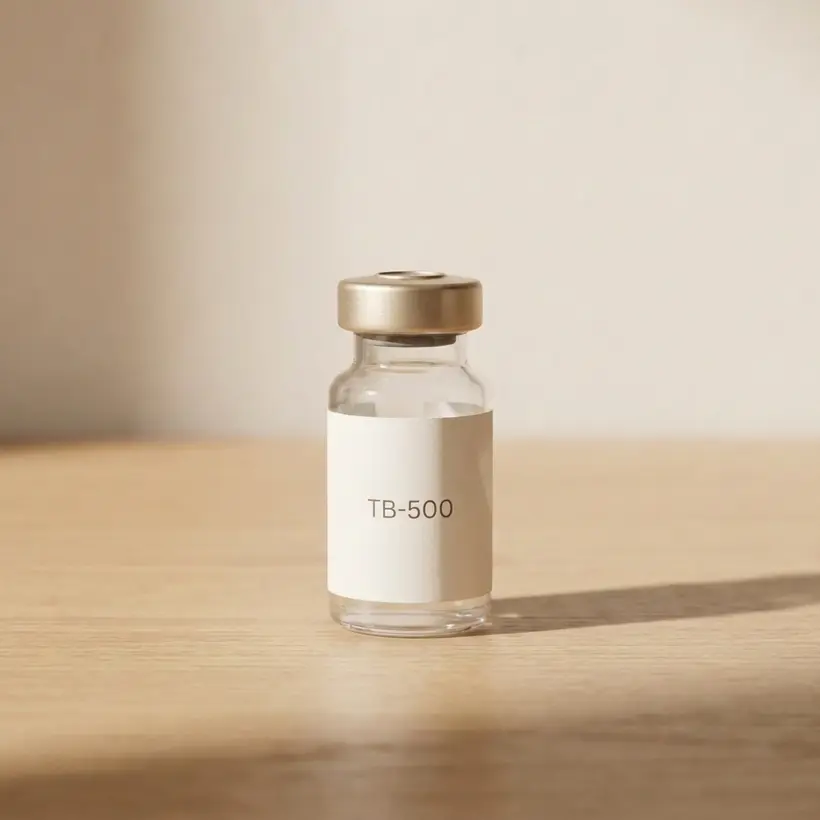
From the FormBlends catalog
TB-500 (Thymosin Beta-4)
Universal repair peptide for tissue regeneration · From $49/mo · compounded by a licensed 503A pharmacy, dispensed only after provider review.
Learn about TB-500 (Thymosin Beta-4) →Preparation: 1. Wash your hands thoroughly 2. Gather supplies: alcohol swabs, insulin syringe, reconstituted TB-500 vial 3. Clean the vial stopper with an alcohol swab 4. Draw the correct dose into the syringe 5. Remove air bubbles by tapping the syringe and pushing the plunger slightly
Injection technique: 1. Choose an injection site on your abdomen (avoid the area directly around the navel) 2. Clean the injection site with an alcohol swab and let it dry 3. Pinch a fold of skin between your thumb and forefinger 4. Insert the needle at a 45-degree angle 5. Inject slowly and steadily 6. Release the skin fold, withdraw the needle 7. Apply light pressure with a clean cotton ball if needed
Injection site rotation: Rotate between at least 4-6 injection sites. This prevents tissue irritation and ensures consistent absorption. A simple pattern: upper left abdomen, upper right abdomen, lower left abdomen, lower right abdomen.
Timing: - Inject at the same time each day for consistency - Morning injections on an empty stomach may improve absorption slightly - Some users prefer evening injections for the potential sleep quality benefits - Consistency matters more than specific timing
Your can provide personalized injection guidance during your initial consultation.
Common Dosing Questions and Adjustments
Can I take more than the recommended dose? Higher doses don't appear to provide proportionally better results. Research suggests a therapeutic ceiling where additional TB-500 offers diminishing returns. Stick to recommended protocols.
What if I miss a dose? Take the missed dose as soon as you remember. If it's close to your next scheduled dose, skip the missed one and continue your regular schedule. Don't double up. One missed dose during loading minimally impacts your progress.
How long should I cycle TB-500? Most protocols run 8-16 weeks total (loading plus maintenance). After completing a cycle, many providers recommend a 4-8 week break before starting a new cycle if continued use is warranted.
Can I combine TB-500 with BPC-157? Yes. Many providers prescribe TB-500 and BPC-157 together in what is commonly called the . These peptides work through different mechanisms and may complement each other.
Storage after reconstitution calculator: - Keep reconstituted TB-500 refrigerated at 36-46 degrees Fahrenheit - Use within 3-4 weeks of reconstitution - Never freeze reconstituted peptide - If the solution becomes cloudy or discolored, discard it
Read our for more on how this peptide works.
Frequently Asked Questions
How do I know if my TB-500 dose is working?
Track specific metrics: pain levels (1-10 scale), range of motion, exercise tolerance, and recovery time. If these improve during the loading phase, your dose is effective. If no improvement after 4-6 weeks at standard loading doses, discuss dose adjustment with your provider.
Is it better to inject TB-500 near the injury site?
TB-500 works systemically, meaning it circulates throughout your body regardless of injection location. Subcutaneous abdominal injections are the standard approach. Unlike BPC-157, which some providers recommend injecting near injury sites, TB-500 doesn't require local injection.
Can I take TB-500 long-term?
Long-term continuous use isn't recommended without cycling. Most protocols include on and off periods. Your provider will design a schedule that balances therapeutic benefit with appropriate rest periods.
What happens when I stop taking TB-500?
Healing progress achieved during TB-500 treatment generally persists after stopping. The tissue repair and regeneration that occurred doesn't reverse. But if the underlying cause of injury (like repetitive strain) continues, symptoms may gradually return.
Start your weight loss Today
Every transformation starts with a single step. Talk to a licensed FormBlends provider about whether this approach is right for you) consultations are free and confidential.
Sources &. References
- Bock-Marquette I, Saxena A, White MD, et al. Thymosin beta4 activates integrin-linked kinase and promotes cardiac cell migration, survival and cardiac repair. Nature. 2004;432(7016):466-472. Doi:10.1038/nature03000
- Malinda KM, Sidhu GS, Mani H, et al. Thymosin beta4 accelerates wound healing. J Invest Dermatol. 1999;113(3):364-368. Doi:10.1046/j.1523-1747.1999.00708.x
The information in this article is intended for educational use only and shouldn't be considered medical advice. Consult a qualified healthcare provider before making any changes to your medication or supplement regimen. FormBlends helps with connections with licensed providers for personalized medical guidance.
Last updated: 2026-03-24
Ready when you are
TB-500 (Thymosin Beta-4)
Universal repair peptide for tissue regeneration · From $49/mo · compounded by a licensed 503A pharmacy, dispensed only after provider review.
Learn about TB-500 (Thymosin Beta-4) →