Key Takeaway
One of the most common questions about TB-500 is how often to inject. Your TB-500 injection schedule directly affects how well the peptide works. Too infrequent and you never reach therapeutic levels. Too frequent and you waste product without additional benefit.
One of the most common questions about TB-500 is how often to inject. Your TB-500 injection schedule directly affects how well the peptide works. Too infrequent and you never reach therapeutic levels. Too frequent and you waste product without additional benefit.
Key Takeaways: - Loading Phase Frequency - Maintenance Phase Frequency - Timing Your Injections - Adjusting Frequency Based on Response
This guide breaks down the standard injection frequencies for each phase of treatment, plus how to customize based on your specific situation.
Loading Phase Frequency
During the loading phase, you inject TB-500 more frequently to build systemic levels quickly. This is the foundation of your protocol.
Standard loading frequency: twice per week - Space injections 3-4 days apart - Example schedule: Monday and Thursday, or Tuesday and Friday - Duration: 4-6 weeks - Dose per injection: 2.0-2.5mg
Why twice per week? TB-500 has a circulating half-life of approximately 3-4 hours. But its biological activity lasts much longer because it triggers cellular processes that continue for days. Twice-weekly dosing maintains consistent peptide activity without excessive accumulation.
Three times per week loading (less common): Some providers prescribe three injections per week for severe injuries or post-surgical recovery. This accelerated loading shortens the time to therapeutic levels but uses more product. Only follow this schedule if specifically prescribed.
Once per week loading (not recommended): Weekly loading is generally insufficient to build therapeutic levels within a reasonable timeframe. If cost is a concern, discuss options with your provider rather than reducing loading frequency on your own.
"The key to successful GLP-1 therapy is setting realistic expectations and supporting patients through the titration phase. The side effects are manageable for most people, but they need to know what to expect.") Dr. Caroline Apovian, MD, Harvard Medical School
Pick two consistent days and stick to them throughout the loading phase. Consistency matters more than which specific days you choose.
Learn about for the complete dosing picture.
Maintenance Phase Frequency
After completing the loading phase, you reduce injection frequency while maintaining therapeutic benefit.
View data table
| Category | Clinical Interest Score | Detail |
|---|---|---|
| BPC-157 | 88 | Tissue repair and gut healing |
| TB-500 | 82 | Injury recovery |
| Sermorelin | 78 | Growth hormone support |
| Ipamorelin | 75 | Anti-aging and recovery |
| GHK-Cu | 70 | Skin and tissue repair |
Free Download: Protocol Planner Pre-built injection schedule templates for loading and maintenance phases. Track every injection with dose, site, and time. Get yours free, we'll email it to you instantly. [Download Your Free Protocol Planner]
Standard maintenance: once per week - Same dose per injection (2.0-2.5mg) - Pick one consistent day each week - Duration: 4-8 weeks or as directed by your provider
Extended maintenance: every other week - Some providers step down to biweekly injections after 4 weeks of weekly maintenance - Appropriate when primary healing goals have been met - Maintains low-level support for ongoing tissue remodeling
As-needed maintenance: - After completing a full protocol, some providers allow intermittent use - One injection when you notice a flare-up or new minor injury - Not a substitute for a proper loading phase for new injuries
Transitioning between phases: The shift from loading to maintenance isn't abrupt. Your provider may recommend a gradual step-down: - Weeks 1-4: twice per week (loading) - Weeks 5-6: twice per week or transition to once per week - Weeks 7-10: once per week (maintenance) - Weeks 11-12: every other week or discontinue
Track your injection schedule in the to maintain consistency and share data with your provider.
Timing Your Injections
Beyond frequency, the timing of each injection can improve your results.
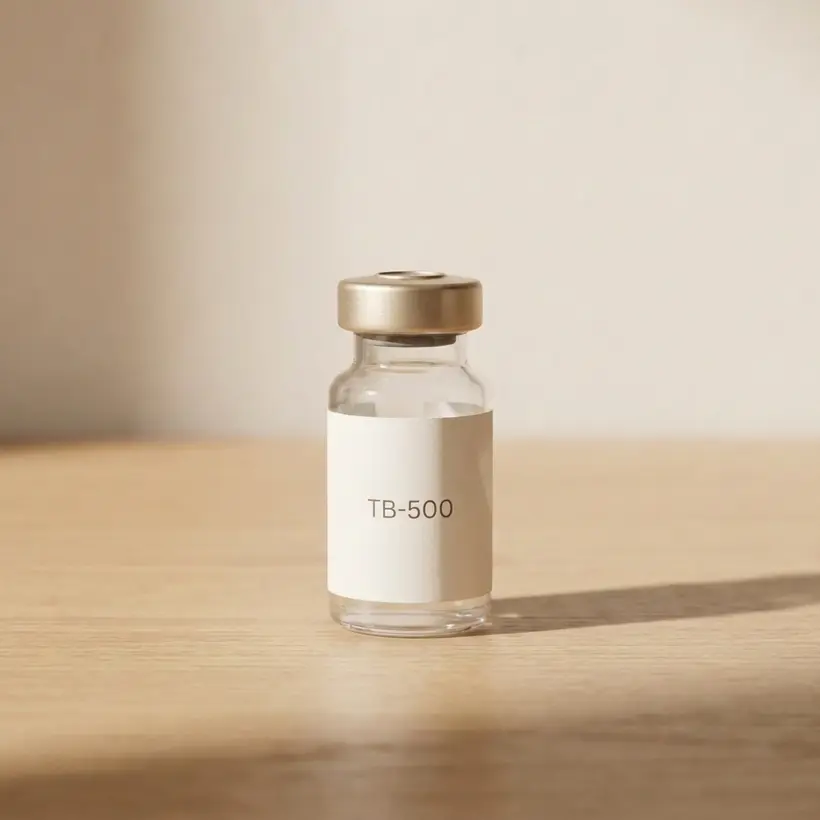
From the FormBlends catalog
TB-500 (Thymosin Beta-4)
Universal repair peptide for tissue regeneration · From $49/mo · compounded by a licensed 503A pharmacy, dispensed only after provider review.
Learn about TB-500 (Thymosin Beta-4) →Time of day: - Morning injections on an empty stomach may improve absorption slightly - Evening injections may support sleep quality through GH-related pathways - Consistency matters more than specific timing. Pick a time that fits your routine.
Relative to exercise: - Some providers recommend injecting on non-training days to allow the peptide to work during recovery periods - Others suggest post-workout injection to support repair during the recovery window - There's no strong evidence favoring one approach. Follow your provider's guidance.
Relative to meals: - Injecting 30-60 minutes before eating may improve absorption - Not a critical factor. inject whenever is most convenient for compliance
Relative to other peptides: - If using the Wolverine Stack (TB-500 + BPC-157), you can inject both on the same day - Some users inject them at different times of day (TB-500 morning, BPC-157 evening) - They can be injected at the same time in different sites without interaction concerns
Your can provide personalized timing recommendations based on your protocol.
Adjusting Frequency Based on Response
Your injection schedule is a starting point, not a rigid rule. Here is how to know if adjustments are needed.
Signs you may need more frequent injections: - Minimal improvement after 3-4 weeks of standard loading - Symptoms that improve mid-week but return before your next injection - Severe or acute injury requiring more aggressive support
Signs you may be able to reduce frequency: - Healing goals have been met - Symptoms have resolved and you're in maintenance - No change noticed when transitioning from twice weekly to once weekly
When to extend your protocol: - Chronic injuries that have been present for months or years - Multiple injury sites being treated simultaneously - Slow healing response (which may also indicate nutritional or other health factors)
When to stop: - Primary healing goals achieved and maintained for 2+ weeks after reducing frequency - Provider recommends a break before starting a new cycle - Any adverse effects (though these are rare with TB-500)
Never adjust your protocol without discussing it with your provider. They can evaluate whether changes are appropriate based on your clinical response.
Use the to ensure accurate dosing at every frequency.
Frequently Asked Questions
Can I inject TB-500 every day for faster results?
Daily injection isn't standard protocol and not recommended. TB-500's biological activity extends well beyond its circulating half-life. Twice-weekly dosing during loading provides consistent therapeutic levels. Daily dosing wastes product without proportional benefit.
What happens if I miss an injection?
One missed injection minimally impacts your overall protocol. Take it as soon as you remember, then resume your regular schedule. Don't double up on your next injection. If you miss multiple injections, contact your provider about whether to extend your loading phase.
Can I inject TB-500 and BPC-157 at the same time?
Yes. There are no known interactions between these peptides. You can inject them in the same session at different abdominal sites. Some users prefer to space them by a few hours, but this is a preference, not a requirement.
How do I remember my injection schedule?
Set phone reminders for each injection day and time. Log every injection in the FormBlends app immediately after administration. Consistent scheduling (same days, same time) makes it easier to build a habit.
Your Personalized Plan Is Waiting
No two patients are the same, and your protocol shouldn't be either. FormBlends providers create customized treatment plans based on your health profile, goals, and preferences.
Sources &. References
- Bock-Marquette I, Saxena A, White MD, et al. Thymosin beta4 activates integrin-linked kinase and promotes cardiac cell migration, survival and cardiac repair. Nature. 2004;432(7016):466-472. Doi:10.1038/nature03000
- Malinda KM, Sidhu GS, Mani H, et al. Thymosin beta4 accelerates wound healing. J Invest Dermatol. 1999;113(3):364-368. Doi:10.1046/j.1523-1747.1999.00708.x
This content is provided for informational and educational purposes only. It isn't a substitute for professional medical advice, diagnosis, or treatment. Always seek the advice of a licensed healthcare provider with any questions about a medical condition or treatment plan.
Last updated: 2026-03-24
Ready when you are
TB-500 (Thymosin Beta-4)
Universal repair peptide for tissue regeneration · From $49/mo · compounded by a licensed 503A pharmacy, dispensed only after provider review.
Learn about TB-500 (Thymosin Beta-4) →