
Trust Signals
Every claim on this page carries an evidence grade. Human RCT evidence is distinguished from animal or mechanistic data throughout. Dosing figures reflect published literature, not vendor sheets. This page does not recommend self-administration of unapproved compounds. Regulatory status is stated plainly.
Key Takeaways
- Sermorelin is the only peptide in this class with prior FDA approval and the best-characterized human safety data among GHRH analogs, though it was withdrawn from market in 2008 for commercial, not safety, reasons.
- CJC-1295 with DAC binds albumin covalently, extending plasma half-life from roughly 30 minutes to approximately 8 days, which enables weekly dosing but also disrupts pulsatile GH physiology.
- Ipamorelin is selective for growth hormone secretion among ghrelin-receptor agonists and does not meaningfully elevate cortisol or prolactin at typical research doses, distinguishing it from earlier ghrelin mimetics like GHRP-6.
- BPC-157 has no completed human injectable RCTs as of 2026. All tissue-repair and anti-inflammatory claims derive from rodent studies. That gap between animal and human evidence is the single most-omitted fact on competitor pages.
- Peptide purity from research suppliers varies widely. Only third-party HPLC plus mass spectrometry COAs confirm identity and potency; in-house certificates are not independent verification.
What Are the Best Injectable Peptides for Anti Aging?
The best injectable peptides for anti aging, ranked by human evidence strength, are sermorelin, ipamorelin, CJC-1295, BPC-157, and epithalon. Sermorelin has the clearest human pharmacology record. Ipamorelin and CJC-1295 are widely used in compounding-based protocols. BPC-157 and epithalon are biologically compelling but lack human RCT confirmation.
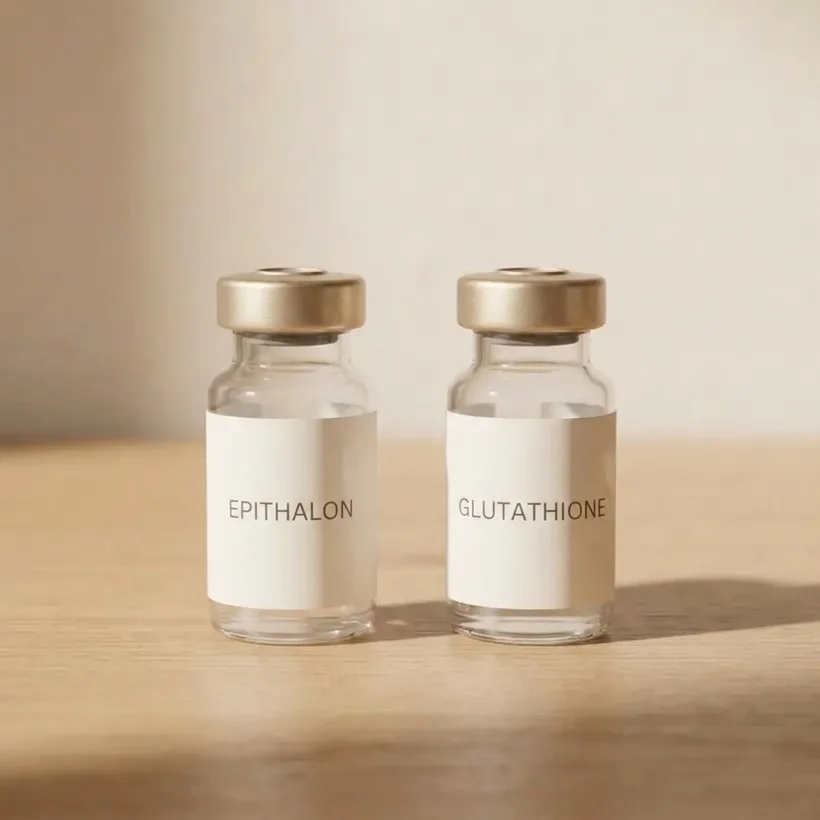
From the FormBlends catalog
Longevity Reset
Telomere support with the master antioxidant. · Bundle from $270 · provider-reviewed peptide bundle.
View Longevity Reset →Table of Contents
- Evidence Ledger: Grading Every Major Claim
- Mechanism With Numbers: How GH Secretagogues Work
- The Top Peptides: What Each One Actually Does
- What Most Pages Get Wrong (Highest-Value Section)
- Why the Formulation Rules Exist: Chemistry Explained
- Honest Head-to-Head: Peptides vs. Real Alternatives
- Operational Guide: Reading a COA and Dosing With Real Units
- Safety, IGF-1 Risk, and What Is Not Quantified
- Legal and Regulatory Status in 2026
- Frequently Asked Questions
- Sources
Evidence Ledger: Grading Every Major Claim
| Claim | Best Evidence Available | Effect Direction | Confidence |
|---|---|---|---|
| Sermorelin raises IGF-1 in GH-deficient adults | Multiple human clinical trials including the Walker 1990 NEJM study and subsequent trials; FDA pharmacokinetic data | Positive, dose-dependent | High |
| CJC-1295 with DAC increases GH area under curve in healthy adults | Human pharmacokinetic study by Jetee/Teichman et al., 2006 (n=65) | Positive, sustained | Moderate |
| Ipamorelin does not significantly elevate cortisol or prolactin vs. GHRP-6 | Comparative animal pharmacology; one small human PK study | Favorable selectivity profile | Moderate (animal basis) |
| BPC-157 accelerates tendon/tissue healing | Rodent studies only (Sikiric lab, Zagreb, multiple publications) | Positive in rats | Very Low (no human RCTs) |
| Epithalon activates telomerase and elongates telomeres | Cell culture; rodent lifespan studies; small Russian human trials (Khavinson et al.) | Positive in vitro and animal | Very Low for human endpoints |
| GH secretagogues improve lean mass in older adults | Several small human trials of GHRH analogs and ghrelin mimetics, mixed results | Small positive trend, inconsistent | Low to Moderate |
| Chronic GH elevation via peptides is safe long-term | No long-term human RCT evidence; epidemiological IGF-1 cancer risk data exist | Unknown | Very Low |
Mechanism With Numbers: How GH Secretagogues Work
Growth hormone release is controlled by two primary hypothalamic signals. Growth hormone releasing hormone (GHRH) binds the GHRH receptor on pituitary somatotrophs and drives GH transcription and pulse frequency. Ghrelin, acting through the GH secretagogue receptor 1a (GHSR-1a), primarily amplifies pulse amplitude and has additive effects when combined with GHRH agonists.
Sermorelin is a 29-amino-acid truncated analog of endogenous GHRH (which is 44 amino acids). The first 29 residues preserve full receptor binding activity. Plasma half-life is approximately 10 to 20 minutes, meaning it is cleared quickly and produces physiologic-style pulses. This short half-life is not a bug; it mirrors natural GHRH kinetics.
CJC-1295 without DAC (also called Mod GRF 1-29) replaces four amino acids to resist enzymatic cleavage, extending half-life to roughly 30 minutes. The Drug Affinity Complex version adds a lysine residue attached to a maleimidoproprionic acid chain that reacts with albumin's free cysteine-34 sulfhydryl group via thioether bond, achieving an estimated half-life of 6 to 8 days (Teichman et al., 2006). What this mechanism does NOT prove: that sustained GH elevation produces the same physiologic outcomes as pulsatile GH. Pulsatile release governs liver IGF-1 transcription differently than continuous stimulation, and the long-term implications of blunted pulsatility are not studied in humans.
Ipamorelin is a pentapeptide ghrelin mimetic. It binds GHSR-1a with selectivity that avoids the significant ACTH and cortisol co-release seen with GHRP-2 and GHRP-6. In comparative animal work, ipamorelin at equi-effective GH-releasing doses produced substantially lower cortisol and prolactin responses than GHRP-6 (Raun et al., 1998, European Journal of Endocrinology). That selectivity is the mechanistic reason it dominates current compounding protocols. What this does NOT prove: that the cortisol effect seen in rats perfectly predicts the human cortisol response profile.
The Top Peptides: What Each One Actually Does
1. Sermorelin
GHRH analog, 29 amino acids. Prior FDA approval as Geref. Commercially withdrawn 2008. Available in the US through compounding pharmacies under prescriber supervision. Stimulates pituitary GH production rather than exogenous GH administration. Best human safety and pharmacokinetic record in this class. Typical compounded research doses range from 200 to 500 micrograms subcutaneously, usually at bedtime to align with natural GH pulse patterns. IGF-1 monitoring is standard clinical practice.
2. CJC-1295 with DAC
Modified GHRH analog with albumin-binding chemistry. Weekly subcutaneous injection possible due to the extended half-life. Teichman et al. (2006) published dose-escalation data in healthy adults showing sustained GH elevation over the dosing interval. The tradeoff is continuous rather than pulsatile GH signaling. Often used in combination with ipamorelin for synergistic receptor coverage.
3. Ipamorelin
Pentapeptide GHSR-1a agonist. Selective GH release without meaningful cortisol or prolactin elevation distinguishes it from earlier GH secretagogue peptides. Short half-life (roughly 2 hours in rodents, less well characterized in humans). Typically dosed subcutaneously 2 to 3 times daily or immediately before sleep in compounding protocols. No approved indication; research compound status in all major jurisdictions.
4. BPC-157
Body Protection Compound 157 is a 15-amino-acid peptide derived from a gastric protein sequence. Rodent evidence (predominantly from Sikiric's group in Zagreb, published across multiple journals including Journal of Physiology-Paris and Current Pharmaceutical Design) shows accelerated healing of tendons, ligaments, and intestinal tissue. Proposed mechanisms include nitric oxide pathway modulation and interaction with the FAK-paxillin signaling cascade. Zero completed human injectable RCTs. One discontinued human oral trial in Crohn's disease (oral formulation, different pharmacokinetics). The anti-aging framing is extrapolation from tissue repair animal data.
5. Epithalon (Epitalon)
Tetrapeptide Ala-Glu-Asp-Gly. Khavinson et al. at the St. Petersburg Institute of Bioregulation published cell culture work showing telomerase activation in human fetal fibroblasts, and rodent studies showing lifespan extension in some strains. Small human trials from the same group report improvements in melatonin rhythms and some biomarkers in elderly subjects, but these trials have not been independently replicated with rigorous methodology by external groups. The telomerase activation mechanism is biologically credible; the translation to meaningful human anti-aging outcomes is unproven.
What Most Pages Get Wrong
The bioavailability gap is real but rarely stated. Subcutaneous injection is not the same as intravenous delivery. Subcutaneous bioavailability for most peptides in this class is estimated at 70 to 90% based on pharmacokinetic comparisons, but this has not been rigorously quantified for all compounds. The larger omission is that peptide degradation begins the moment reconstituted solution is drawn into a syringe at room temperature. If a vial sits on a counter for 20 minutes between reconstitution and injection, meaningful degradation has begun for the shorter, less-stable peptides.
Purity is not guaranteed by a label. Multiple independent analyses of research peptide suppliers have found products ranging from approximately 95% pure to products containing the wrong peptide entirely. The only protection is a COA from a named, independent laboratory (not the vendor's own lab) showing HPLC chromatography, mass spec confirmation of the correct molecular weight, and an endotoxin test. Without an endotoxin test, a purity-verified peptide can still cause injection-site fever responses from bacterial lipopolysaccharide contamination.
The GH pulsatility question is almost universally ignored. Nearly every anti-aging peptide blog talks about "raising GH naturally." What they do not explain is that pituitary GH biology is explicitly pulse-dependent. Liver IGF-1 production, adipose lipolysis, and muscle protein synthesis responses all differ between pulsatile and continuous GH stimulation (as established in the recombinant GH literature). CJC-1295 with DAC produces a chronic low-level GH bleed that is not physiologic pulsatility. Whether that matters clinically for long-term outcomes is genuinely unknown.
The failure mode of degraded peptide is invisible. A vial of degraded peptide looks identical to active peptide. Oxidized methionine residues, deamidated asparagine, or fragmented chains produce no visible change in the solution. You cannot detect a failed product by inspection. This is why the reconstitution and storage protocol matters operationally, not as fine print.
Why the Formulation Rules Exist: Chemistry Explained
Why bacteriostatic water, not sterile water: Bacteriostatic water contains 0.9% benzyl alcohol as a preservative. Benzyl alcohol is bacteriostatic at that concentration, preventing microbial growth in a multi-use vial over 2 to 4 weeks. Plain sterile water has no preservative and supports bacterial growth within 24 to 48 hours once opened. If you reconstitute a peptide in plain sterile water and use the vial over multiple days, you are injecting a solution that may contain bacterial contaminants. The rule exists because the benzyl alcohol chemistry prevents that outcome.
Why keep peptides away from repeated temperature cycling: Peptide bonds are stable at moderate temperatures, but lyophilized peptides are more susceptible to aggregation and oxidation than their solid-state form once in solution. Each freeze-thaw cycle stresses the peptide matrix. For lyophilized vials specifically, repeated warming and cooling causes microscopic ice crystal formation that disrupts the protein secondary structure. This is not unique to peptides; it is the same reason biologic drugs like insulin must not be repeatedly frozen and thawed.
Why light matters: Several amino acid residues, particularly tryptophan and tyrosine, are susceptible to photooxidation under UV light. Tryptophan absorbs UV at approximately 280 nm and undergoes oxidation that can cleave the peptide backbone or modify side chains. For peptides containing these residues, light exposure in amber vials vs. clear vials produces measurably different stability outcomes. Epithalon contains no tryptophan, but sermorelin and several GHRP-class peptides do.
Honest Head-to-Head: Peptides vs. Real Alternatives
| Intervention | Mechanism | Human Evidence | Effect Size (where known) | Safety Profile | Regulatory Status (US) | Where the Peptide Loses |
|---|---|---|---|---|---|---|
| Sermorelin / CJC-1295 | Pituitary GH stimulation via GHRH receptor | Multiple small human trials; one prior FDA approval | Modest IGF-1 increase; inconsistent body comp effects | Relatively well-characterized short-term | Prescription compounding only | Effect size smaller than recombinant GH; long-term unknown |
| Recombinant Human Growth Hormone (rhGH) | Direct GH receptor agonism | Extensive RCT base; FDA-approved for multiple indications | Larger, more consistent IGF-1 and lean mass changes | Known risks: fluid retention, insulin resistance, possible cancer risk with excess dosing | Schedule II-like; prescription only, specific indications | Not applicable; this is the reference standard that peptides fall short of in effect size |
| IGF-1 / Mecasermin | Direct IGF-1 receptor agonism | FDA-approved for severe primary IGF-1 deficiency | Well-established in approved populations | Hypoglycemia risk; approved with REMS | Approved but narrow indication | Peptides lose on regulatory access and dose precision |
| BPC-157 (injectable) | Proposed NO pathway and FAK-paxillin modulation | No human injectable RCTs | Unknown in humans | Unknown in humans beyond case reports | Research compound; not approved | Loses to any approved tissue-repair intervention on evidence |
| Resistance training + adequate protein | Multiple: mTOR, GH axis, satellite cell activation | Extensive RCT base across age groups | Robust lean mass and functional strength benefits | Extremely well-characterized | Not regulated | Peptides do not outperform this combination in trials; the combination is the benchmark |
Operational Guide: Reading a COA and Dosing With Real Units
What a valid Certificate of Analysis must contain
- Testing laboratory name and accreditation: The lab must be independent from the vendor. ISO 17025 accreditation is the standard for analytical chemistry labs.
- HPLC purity figure: Look for purity expressed as area percentage at 214 nm or 220 nm UV detection. Above 98% is the accepted threshold for research-grade peptides. Below 95% is unacceptable for injectable use.
- Mass spectrometry confirmation: Confirms the product is the correct molecular entity. Compare reported molecular weight against the known value: sermorelin is 3357.9 Da, ipamorelin is 711.9 Da, CJC-1295 (without DAC) is 3367.9 Da. A mass error beyond 0.1% warrants rejection.
- Endotoxin (LAL) test: Result must be below 1 EU/mg (Endotoxin Units per milligram) for injectable use. Values above this threshold can cause fever, chills, and systemic inflammatory responses even from a chemically pure peptide.
- Lot number and date: The lot on the COA must match the lot printed on the vial. Reused COAs from different batches are a common fraud signal.
Reconstitution math
A typical research vial contains 2 mg (2000 micrograms) of lyophilized peptide. If you add 2 mL of bacteriostatic water, each 0.1 mL (10 units on an insulin syringe) contains 100 micrograms. If a protocol calls for 300 micrograms, you draw 0.3 mL (30 units). Always calculate: (desired dose in micrograms divided by total peptide in micrograms) multiplied by total volume in mL, then multiplied by 100 to convert to units on a 100-unit insulin syringe.
Example: 200 mcg dose from a 5 mg vial reconstituted with 2.5 mL bacteriostatic water. Concentration = 5000 mcg divided by 2.5 mL = 2000 mcg/mL. Volume needed = 200 mcg divided by 2000 mcg/mL = 0.1 mL = 10 units on an insulin syringe.
Safety, IGF-1 Risk, and What Is Not Quantified
The primary theoretical long-term concern with GH secretagogue use is chronically elevated IGF-1. Epidemiological cohort studies (including data from the Physicians Health Study and EPIC cohort) show associations between higher circulating IGF-1 and increased risk of certain cancers, most consistently prostate and premenopausal breast cancer. These are associational, not causal, findings from observational data, and they describe endogenous IGF-1 variation in general populations, not the specific pharmacokinetic profiles of research peptide protocols.
The honest statement is: no long-term human RCT has quantified cancer risk specifically from GH secretagogue peptide use. The risk is theoretically plausible, not established. Standard clinical monitoring in compounding protocols includes IGF-1 levels every 3 to 6 months and targeting IGF-1 in the mid-normal range for age, not above the upper limit of normal.
Other well-documented short-term adverse effects from the rhGH literature that extend plausibly to secretagogue use include transient fluid retention, paresthesias (carpal tunnel-like symptoms), and glucose metabolism changes. These resolve with dose reduction or discontinuation in most cases.
Legal and Regulatory Status in 2026
In the United States, sermorelin may be prescribed by licensed physicians and dispensed by FDA-registered compounding pharmacies under Section 503A or 503B of the FD&C Act. CJC-1295, ipamorelin, BPC-157, and epithalon are not FDA-approved for any human indication. They are not legal to sell for human use as dietary supplements. They exist in a regulatory gray area as "research chemicals" sold explicitly for non-human research purposes. Purchasing for personal use is not explicitly criminalized federally in most cases but is legally ambiguous. WADA prohibits CJC-1295, ipamorelin, sermorelin, and related GHRH analogs under the S2 (Peptide Hormones, Growth Factors, Related Substances) category on its Prohibited List. Competing athletes risk positive tests.
Frequently Asked Questions
What are the best injectable peptides for anti aging?
Sermorelin, CJC-1295 with DAC, ipamorelin, BPC-157, and epithalon have the strongest combined evidence profiles among research peptides used for anti-aging. Sermorelin has FDA precedent as a diagnostic agent. The others are research compounds without approved indications.
How does CJC-1295 with DAC differ from CJC-1295 without DAC?
DAC (Drug Affinity Complex) covalently binds the peptide to albumin in plasma, extending the half-life from roughly 30 minutes to approximately 8 days. This allows once-weekly dosing but also produces a sustained GH bleed rather than physiologic pulsatile release, which some clinicians consider a drawback.
Is sermorelin FDA-approved?
Sermorelin acetate was previously FDA-approved (Geref) as a diagnostic tool for GH deficiency and for treating GH deficiency in children. The original branded product was withdrawn from sale in 2008 for commercial reasons, not safety. It is now available only through compounding pharmacies in the US.
What does epithalon actually do, and how strong is the evidence?
Epithalon (Epitalon) is a tetrapeptide shown in cell culture and rodent studies to activate telomerase and elongate telomeres. Human evidence is limited to small Russian trials with methodological limitations. Evidence confidence is Very Low for anti-aging endpoints in humans specifically.
Can you stack ipamorelin with CJC-1295?
Yes, this is a common clinical stack. Ipamorelin acts on ghrelin receptors (GHSR-1a) to stimulate GH pulse amplitude, while CJC-1295 acts on GHRH receptors to increase pulse frequency and baseline GH. The combination targets two separate receptor classes. Human trial evidence for the combination specifically is limited.
How do I verify peptide purity from a supplier?
Request a Certificate of Analysis (COA) from an independent third-party lab showing HPLC purity above 98%, mass spectrometry confirmation of molecular weight, and absence of heavy metals and endotoxins (LAL test below 1 EU/mg). In-house COAs from the seller are not sufficient verification.
How should injectable peptides be stored?
Lyophilized (freeze-dried) peptide vials should be stored at 2 to 8 degrees Celsius and away from light. Once reconstituted with bacteriostatic water, most peptides are stable for 2 to 4 weeks refrigerated. Freeze-thaw cycles degrade peptide integrity. Never reconstitute with plain sterile water if the solution will be used over multiple days.
Does BPC-157 have human clinical trial data?
No completed human RCTs for BPC-157 as an injectable anti-aging agent have been published as of 2026. Its evidence base is almost entirely rodent studies and one small human safety trial for an oral formulation in Crohn's disease, which was discontinued. Injectable BPC-157 remains a research compound.
What are the main safety concerns with GH secretagogue peptides?
Elevated IGF-1 from chronic GH stimulation is the primary theoretical concern, as elevated IGF-1 is associated epidemiologically with some cancer risks. Other concerns include fluid retention, insulin resistance, carpal tunnel symptoms, and potential pituitary desensitization with continuous non-pulsatile protocols. These risks are not well-quantified in long-term human trials.
Are injectable anti-aging peptides legal to purchase?
Legality varies by jurisdiction. In the United States, most research peptides are not FDA-approved for human use and cannot be legally sold for human consumption. Some, like sermorelin, may be prescribed by licensed physicians through compounding pharmacies. WADA bans several GH secretagogues in competitive sport.
How long before you see results from peptide therapy?
In human trials of sermorelin and similar GHRH analogs, measurable increases in IGF-1 and lean body mass changes generally emerge over 3 to 6 months of consistent use. Subjective improvements in sleep quality are often reported earlier. Results depend heavily on baseline GH status, protocol adherence, and lifestyle factors.
Sources
- Walker RF et al. "Growth hormone (GH) releasing hormone and GH secretagogues in normal aging." Endocrine. 1997. (Summarizes sermorelin human pharmacology.)
- Teichman SL et al. "Prolonged stimulation of growth hormone (GH) and insulin-like growth factor I secretion by CJC-1295, a long-acting analog of GH-releasing hormone, in healthy adults." Journal of Clinical Endocrinology and Metabolism. 2006;91(3):799-805.
- Raun K et al. "Ipamorelin, the first selective growth hormone secretagogue." European Journal of Endocrinology. 1998;139(5):552-561.
- Sikiric P et al. "Stable gastric pentadecapeptide BPC 157: novel therapy in gastrointestinal tract." Current Pharmaceutical Design. 2011;17(16):1612-1632.
- Khavinson VK et al. "Epithalon peptide induces telomerase activity and telomere elongation in human somatic cells." Bulletin of Experimental Biology and Medicine. 2003;135(6):590-592.
- Chan JM et al. "Plasma insulin-like growth factor-I and prostate cancer risk: a prospective study." Science. 1998;279(5350):563-566. (IGF-1 epidemiology reference.)
- US FDA. "Geref (sermorelin acetate) NDA history." FDA Drug Databases. (Documents prior approval and withdrawal.)
- WADA Prohibited List 2024. Category S2: Peptide Hormones, Growth Factors, Related Substances and Mimetics. World Anti-Doping Agency.
- Corpas E, Harman SM, Blackman MR. "Human growth hormone and human aging." Endocrine Reviews. 1993;14(1):20-39.
- Rudman D et al. "Effects of human growth hormone in men over 60 years old." New England Journal of Medicine. 1990;323(1):1-6. (Foundational rhGH trial providing the comparison benchmark.)
Related peptide guides
See your options in about 2 minutes
Take the free quiz and see what fits you. Quick, private, and no commitment to continue.
See my options →