Key Takeaway
Evidence-based guide to the best peptides for muscle growth and building. Covers CJC-1295, Ipamorelin, BPC-157, TB-500, Sermorelin, and GHRP-6 with dosing, mechanisms, stacking, and comparisons.
Quick Answer: The best peptides for muscle growth work primarily by stimulating your body's natural growth hormone (GH) production, which in turn increases IGF-1 levels - the key driver of muscle protein synthesis and recovery. The top options include CJC-1295/Ipamorelin (the gold standard GH-releasing combination), BPC-157 (for muscle repair and recovery), Sermorelin (FDA-recognized GH secretagogue), and TB-500 (for tissue regeneration). Unlike anabolic steroids, these peptides work with your body's natural hormonal pathways rather than overriding them[1].
How Peptides Build Muscle
Peptides promote muscle growth through several interconnected mechanisms, primarily centered on the growth hormone (GH) and insulin-like growth factor 1 (IGF-1) axis[1]:
The GH → IGF-1 Pathway
Most muscle-building peptides work by stimulating the pituitary gland to release more growth hormone. GH then travels to the liver, where it triggers the production of IGF-1. IGF-1 is the primary downstream mediator of muscle growth, driving:
- Muscle protein synthesis: Increased assembly of new muscle fibers
- Satellite cell activation: Recruitment of muscle stem cells for fiber repair and growth
- Nitrogen retention: A positive nitrogen balance is important for muscle anabolism
- Fat oxidation: GH promotes lipolysis, improving body composition alongside muscle growth
Direct Tissue Repair Peptides
A second category of peptides (BPC-157, TB-500) supports muscle growth indirectly by accelerating recovery from training-induced muscle damage. Faster recovery means more frequent, productive training sessions - a critical factor in long-term muscle building.
Why Peptides Are Different from Steroids
Peptides stimulate your body's own GH production through natural feedback loops. Anabolic steroids introduce exogenous hormones that suppress your natural production. This fundamental difference is why peptides have a dramatically better safety profile and don't cause the hormonal shutdown associated with steroid use[2].
Peptides for Muscle Growth: Quick Comparison
| Peptide | Primary Mechanism | Muscle Growth | Recovery | Fat Loss | Evidence Level |
|---|---|---|---|---|---|
| CJC-1295/Ipamorelin | GH release (GHRH + ghrelin) | ★★★★★ | ★★★★ | ★★★★★ | Strong |
| BPC-157 | Tissue repair, angiogenesis | ★★★ | ★★★★★ | ★★ | Strong (preclinical) |
| Sermorelin | GH release (GHRH analog) | ★★★★ | ★★★★ | ★★★★ | Strong (FDA-recognized) |
| TB-500 | Cell migration, tissue repair | ★★★ | ★★★★★ | ★★ | Moderate |
| GHRP-6 | GH release (ghrelin mimetic) | ★★★★ | ★★★ | ★★★ | Moderate |
| MK-677 | GH release (oral ghrelin mimetic) | ★★★★ | ★★★ | ★★★ | Moderate (human trials) |
| Tesamorelin | GH release (GHRH analog) | ★★★ | ★★★ | ★★★★★ | Strong (FDA-approved) |
1. CJC-1295 / Ipamorelin - The Gold Standard
The combination of CJC-1295 and Ipamorelin is widely considered the most effective peptide protocol for muscle growth. These two peptides work through complementary mechanisms to maximize growth hormone release[3].
From the FormBlends catalog
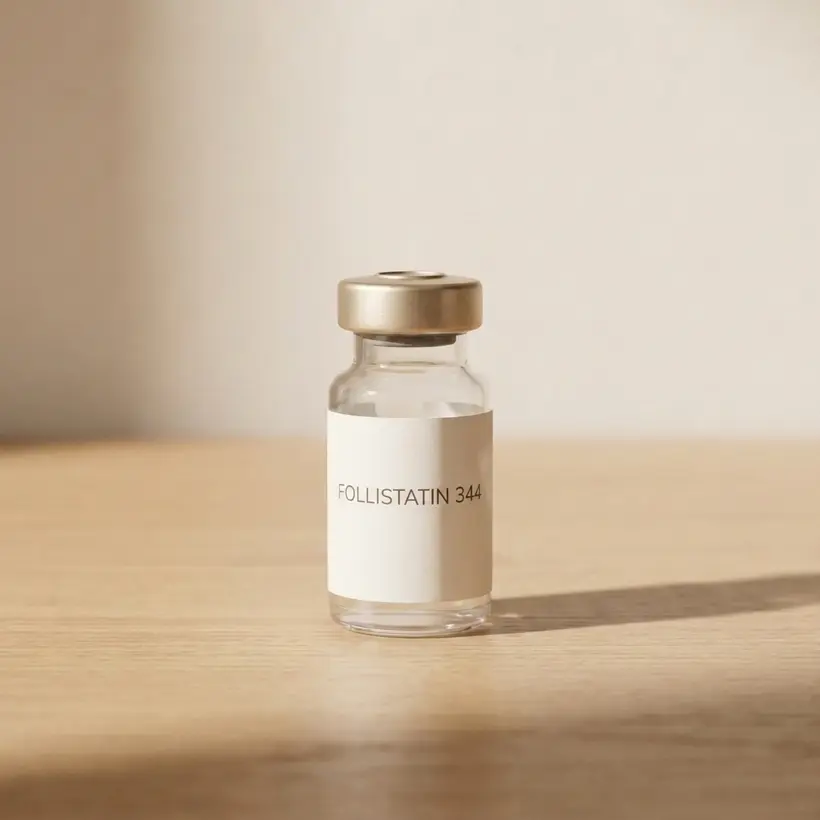
Follistatin 344
Myostatin inhibitor studied for enhanced muscle growth · From $149/mo · compounded by a licensed 503A pharmacy, dispensed only after provider review.
Learn about Follistatin 344 →
How It Works
- CJC-1295: A growth hormone-releasing hormone (GHRH) analog that amplifies GH pulses and extends their duration. The DAC (Drug Affinity Complex) version binds to albumin, extending its half-life to 6-8 days
- Ipamorelin: A selective growth hormone secretagogue that mimics ghrelin, triggering GH release from a different receptor (GHS-R). It's the most selective GHRP, meaning it stimulates GH without significantly raising cortisol or prolactin
Why They're Combined
Used together, CJC-1295 and Ipamorelin produce a combined GH release - the combined effect is greater than either peptide alone. CJC-1295 amplifies the pulse, while Ipamorelin initiates it. Studies show this combination can increase GH levels 2-10x above baseline[3].
Typical Dosing for Muscle Growth
| Peptide | Dose | Frequency | Timing |
|---|---|---|---|
| CJC-1295 (no DAC) | 100-300 mcg | 1-3x daily | Before bed and/or morning |
| Ipamorelin | 100-300 mcg | 1-3x daily | Combined with CJC-1295 |
What to Expect
- Weeks 1-4: Improved sleep quality, faster post-workout recovery
- Weeks 4-8: Noticeable improvements in body composition (leaner, fuller muscles)
- Weeks 8-16: Significant lean mass gains, reduced body fat, improved strength
Pros: Strongest evidence for muscle growth, excellent safety profile, combined when combined, doesn't suppress natural GH production
Cons: Requires subcutaneous injection, optimal results take 2-3 months, must be stored refrigerated
2. BPC-157 - The Recovery Accelerator
BPC-157 (Body Protection Compound-157) is a 15-amino-acid peptide derived from human gastric juice. While not a direct muscle-building peptide, BPC-157 supports muscle growth by dramatically accelerating recovery from training-induced damage and injuries[4].
How It Supports Muscle Growth
- Accelerates muscle fiber repair: Upregulates growth factors (VEGF, FGF) at injury sites
- Promotes angiogenesis: Creates new blood vessels in damaged muscle tissue, improving nutrient delivery
- Reduces inflammation: Modulates the inflammatory response to training, preventing excessive DOMS
- Tendon and ligament healing: Protects connective tissue that supports heavy training
- Gut health: A healthy gut improves nutrient absorption - critical for muscle building
Typical Dosing
- Dose: 250-500 mcg, once or twice daily
- Route: Subcutaneous injection near the target muscle group, or oral for systemic/gut benefits
- Duration: 4-8 week cycles
For complete dosing details, see our BPC-157 dosage guide.
Pros: Exceptional safety profile, supports training longevity, protects joints and tendons, works systemically
Cons: Not a direct anabolic agent. best used alongside GH-releasing peptides for muscle growth goals
3. Sermorelin - The FDA-Recognized Option
Sermorelin is a 29-amino-acid peptide analog of GHRH (growth hormone-releasing hormone). It was the first GHRH analog to receive FDA recognition for the treatment of growth hormone deficiency in children, giving it the strongest regulatory backing of any muscle-building peptide[5].
How It Works
Sermorelin binds to GHRH receptors on the pituitary gland, stimulating the natural pulsatile release of growth hormone. Because it works through your body's own feedback mechanisms, it preserves the natural GH release pattern (predominantly during sleep) rather than creating unnatural, constant GH elevation.
Typical Dosing
- Dose: 200-500 mcg daily
- Route: Subcutaneous injection
- Timing: Before bed (to augment the natural nocturnal GH surge)
- Duration: 3-6 month protocols are common
Pros: FDA-recognized safety profile, natural GH pulsatility preserved, good for patients new to peptide therapy
Cons: Less potent GH release than CJC-1295/Ipamorelin combination, may take longer to see results
4. TB-500 (Thymosin Beta-4) - The Tissue Regenerator
TB-500 is a synthetic version of Thymosin Beta-4, a naturally occurring peptide involved in tissue repair and regeneration. Like BPC-157, TB-500 supports muscle growth primarily through recovery enhancement[6].
How It Supports Muscle Growth
- Actin regulation: TB-500 is the primary regulator of actin, the protein that forms the structural framework of muscle cells
- Cell migration: Promotes the movement of repair cells to damaged muscle tissue
- Reduces fibrosis: Minimizes scar tissue formation in damaged muscle, preserving muscle function
- Anti-inflammatory: Reduces training-induced inflammation
- Blood vessel formation: Supports new blood vessel growth for better muscle perfusion
Typical Dosing
- Loading phase: 2-5 mg twice per week for 4-6 weeks
- Maintenance phase: 2-5 mg once per week
- Route: Subcutaneous injection
Pros: Excellent for recovering from injuries, reduces scar tissue, works together effectively with BPC-157
Cons: Not a direct muscle builder, higher cost per dose than most peptides
5. GHRP-6 - The Appetite-Boosting GH Releaser
GHRP-6 (Growth Hormone Releasing Peptide-6) is a hexapeptide that stimulates GH release by activating ghrelin receptors. It's one of the original GH secretagogues studied for muscle growth[7].
How It Works
GHRP-6 mimics ghrelin, the "hunger hormone," binding to GHS-R receptors on the pituitary to stimulate GH release. A notable secondary effect is significant appetite stimulation - which can be a benefit or drawback depending on your goals.
Typical Dosing
- Dose: 100-300 mcg, 2-3 times daily
- Route: Subcutaneous injection
- Timing: On an empty stomach (GH release is blunted by improved blood sugar)
Pros: Strong GH release, appetite stimulation helps hardgainers in caloric surplus
Cons: Less selective than Ipamorelin (may increase cortisol and prolactin), strong hunger may be unwanted for some, can increase blood sugar
6. MK-677 (Ibutamoren) - The Oral Option
MK-677 is technically not a peptide - it's a non-peptide ghrelin receptor agonist. But it's commonly discussed alongside peptides because it stimulates GH release through the same receptor. Its primary advantage is oral bioavailability[8].
How It Works
MK-677 binds to GHS-R receptors like GHRP-6 but can be taken orally as a capsule. It raises GH and IGF-1 levels for up to 24 hours after a single dose, and has been studied in human trials showing sustained IGF-1 elevation over 12 months.
Typical Dosing
- Dose: 10-25 mg daily (oral)
- Timing: Before bed or in the morning
- Duration: 8-16 week cycles
Pros: No injections needed, oral dosing, well-studied in human trials, sustained 24-hour GH elevation
Cons: Can increase appetite significantly, may improve blood sugar and insulin, potential water retention, raises cortisol slightly
7. Tesamorelin - The FDA-Approved GHRH Analog
Tesamorelin is the only FDA-approved GHRH analog currently on the market (approved under the brand name Egrifta for HIV-associated lipodystrophy). It stimulates GH release and is particularly effective at reducing visceral fat[9].
Typical Dosing
- Dose: 2 mg daily (subcutaneous)
- Duration: 6+ months in approved protocols
Pros: FDA-approved, strong evidence base, excellent for body recomposition (fat loss + lean mass preservation)
Cons: Expensive, primarily studied for fat reduction rather than muscle building, prescription-only
Best Peptide Stacks for Muscle Growth
Many practitioners combine complementary peptides to address multiple aspects of muscle growth simultaneously - GH stimulation, recovery, and tissue repair.
Stack 1: Maximum Muscle Growth
| Peptide | Dose | Frequency | Role |
|---|---|---|---|
| CJC-1295 (no DAC) | 100-300 mcg | Before bed + morning | GH amplification |
| Ipamorelin | 100-300 mcg | Before bed + morning | GH release trigger |
| BPC-157 | 250-500 mcg | Once daily (near training site) | Recovery support |
Stack 2: Recovery-Focused (for Athletes with Injuries)
| Peptide | Dose | Frequency | Role |
|---|---|---|---|
| BPC-157 | 250-500 mcg | Twice daily | Tissue repair |
| TB-500 | 2-5 mg | Twice weekly | Cell migration and regeneration |
| Sermorelin | 200-300 mcg | Before bed | GH support for healing |
Stack 3: Body Recomposition (Muscle Gain + Fat Loss)
| Peptide | Dose | Frequency | Role |
|---|---|---|---|
| CJC-1295/Ipamorelin | 100-300 mcg each | Before bed | GH release for lipolysis + anabolism |
| Tesamorelin | 2 mg | Once daily | Visceral fat reduction |
Important: All stacking protocols should be designed and supervised by a physician. Don't combine peptides without medical guidance.
Peptides for Muscle Building vs Anabolic Steroids
About the differences between peptides and anabolic steroids is critical for making informed decisions about muscle growth support.
| Factor | Peptides (GH Secretagogues) | Anabolic Steroids |
|---|---|---|
| Mechanism | Stimulate your body's own GH production | Introduce exogenous hormones |
| Natural hormone production | Preserved - works with feedback loops | Suppressed - causes HPTA shutdown |
| Muscle growth speed | Gradual (weeks to months) | Rapid (days to weeks) |
| Muscle quality | Lean, sustainable gains | Fast gains, partly water/glycogen |
| Side effect profile | Minimal (injection site reactions, hunger) | Significant (liver, cardiovascular, hormonal) |
| Post-cycle therapy needed | No | Yes (PCT important) |
| Gains retention | High (natural hormone levels maintained) | Variable (often lost without PCT) |
| Legal status | Available via prescription | Schedule III controlled substance |
| Long-term safety | Favorable (based on available data) | Significant cardiovascular and endocrine risks |
Who Should Consider Peptides for Muscle Growth?
Ideal Candidates
- Adults over 30 experiencing age-related decline in GH production and recovery capacity
- Athletes and fitness enthusiasts who want to improve recovery and lean mass without hormonal shutdown
- Individuals with injuries limiting their training who need accelerated recovery
- Patients with documented GH deficiency or declining IGF-1 levels
- People seeking body recomposition (muscle gain + fat loss) with a favorable safety profile
Not the Right Fit
- Anyone under 25 (natural GH levels are still high)
- Patients with active cancer (GH and IGF-1 can promote tumor growth)
- Pregnant or breastfeeding women
- People expecting steroid-like overnight results - peptides work gradually
Frequently Asked Questions
What is the best peptide for muscle growth?
The CJC-1295/Ipamorelin combination is widely considered the most effective peptide protocol for muscle growth. It stimulates the strongest, most sustained GH release through dual complementary mechanisms while maintaining an excellent safety profile.
Do peptides for muscle building actually work?
Yes. GH-releasing peptides like CJC-1295/Ipamorelin increase growth hormone and IGF-1 levels, which are direct drivers of muscle protein synthesis. Results are more gradual than anabolic steroids but are sustainable and come without hormonal suppression. Clinical studies on Sermorelin and MK-677 have demonstrated measurable increases in lean body mass and IGF-1 levels.
Are peptides safer than steroids for building muscle?
Significantly safer. Peptides stimulate your body's own hormone production rather than introducing exogenous hormones. They don't suppress the hypothalamic-pituitary axis, don't require post-cycle therapy, and have a minimal side effect profile compared to anabolic steroids.
How long does it take for peptides to build muscle?
Most users notice improved recovery and sleep within 1-2 weeks. Visible changes in body composition (leaner, fuller muscles) typically appear by weeks 4-8. Significant lean mass gains usually require 8-16 weeks of consistent use combined with proper training and nutrition.
Can I combine multiple peptides for muscle growth?
Yes - stacking is common and often recommended. The most popular combination is CJC-1295 + Ipamorelin (for GH release) plus BPC-157 (for recovery). Your physician can design a stack protocol tailored to your specific goals.
Do I need a prescription for muscle-building peptides?
Yes. Legitimate peptide therapy requires a prescription from a licensed physician. At FormBlends, our providers evaluate your health profile and prescribe peptides from licensed compounding pharmacies.
Can peptides help with muscle growth after 40?
Absolutely - this is one of the most common use cases. GH production declines roughly 14% per decade after age 30. By age 40-50, many adults have significantly lower GH and IGF-1 levels, making recovery slower and muscle building harder. GH-releasing peptides can restore more youthful GH levels, improving both muscle growth and recovery capacity.
References
- Hermansen K, Bengtsen M, Kjaer M, Vestergaard P, Jorgensen JOL. Impact of GH administration on athletic performance in healthy young adults: a systematic review and meta-analysis. Growth Hormone &. IGF Research. 2017;32:45-54.
- Birzniece V. Growth hormone and body composition. Pituitary. 2017;20(1):180-186.
- Teichman SL, Neale A, Lawrence B, et al. Prolonged stimulation of growth hormone (GH) and insulin-like growth factor I secretion by CJC-1295, a long-acting analog of GH-releasing hormone. Journal of Clinical Endocrinology &. Metabolism. 2006;91(3):799-805.
- Gwyer D, Wragg NM, Wilson SL. Gastric pentadecapeptide body protection compound BPC 157 and its role in accelerating musculoskeletal soft tissue healing. Cell and Tissue Research. 2019;377(2):153-159.
- Walker RF. Sermorelin: a better approach to management of adult-onset growth hormone insufficiency? Clinical Interventions in Aging. 2006;1(4):307-308.
- Goldstein AL, Hannappel E, Kleinman HK. Thymosin beta4: actin-sequestering protein moonlights to repair injured tissues. Trends in Molecular Medicine. 2005;11(9):421-429.
- Bowers CY. Growth hormone-releasing peptide (GHRP). Cellular and Molecular Life Sciences. 1998;54(12):1316-1329.
- Nass R, Pezzoli SS, Oliveri MC, et al. Effects of an oral ghrelin mimetic on body composition and clinical outcomes in healthy older adults. Annals of Internal Medicine. 2008;149(9):601-611.
- Falutz J, Allas S, Blot K, et al. Metabolic effects of a growth hormone-releasing factor in patients with HIV. New England Journal of Medicine. 2007;357(23):2359-2370.
Medical References
- Goldstein AL, Hannappel E, Sosne G, Kleinman HK. Thymosin beta4: a multi-functional regenerative peptide. Basic properties and clinical applications. Expert Opin Biol Ther. 2012;12(1):37-51. [PubMed | DOI]
Get Personalized Peptide Guidance from FormBlends
The best peptide for your muscle growth goals depends on your body, your health profile, and your training history. At FormBlends, our physicians help you find the right approach based on your individual biology.
Disclaimer: This article is for informational purposes only and doesn't constitute medical advice. Peptides discussed here aren't FDA-approved for muscle building. Always consult with a licensed healthcare provider before beginning any peptide therapy. Individual results vary and depend on training, nutrition, and medical supervision. FormBlends doesn't claim that any peptide cures, treats, or prevents any disease.
Ready when you are
Follistatin 344
Myostatin inhibitor studied for enhanced muscle growth · From $149/mo · compounded by a licensed 503A pharmacy, dispensed only after provider review.
Learn about Follistatin 344 →