
Key Takeaways
- MK-677 (ibutamoren) is the only orally bioavailable peptidomimetic with multiple human RCTs showing reproducible IGF-1 elevation of roughly 40% to 70% above baseline at 10 to 25 mg daily.
- BPC-157 has compelling rodent recovery data but zero published human RCTs and no confirmed human oral bioavailability percentage as of 2025.
- Most true peptide chains (more than 4 to 5 amino acids, linear, non-cyclic) are substantially degraded by gastric proteases before reaching systemic circulation; oral dosing for these relies on local GI action or unconfirmed absorption assumptions.
- A certificate of analysis should include HPLC purity above 98%, mass spectrometry molecular weight confirmation, endotoxin testing, and third-party lab verification to be meaningful.
- No oral peptide or peptidomimetic currently sold as a research compound has FDA approval for human use; all carry regulatory and safety uncertainty.
What Are the Best Oral Peptides, in Plain English?
The best oral peptides are the ones that retain meaningful bioactivity after swallowing, which immediately rules out most of them. MK-677 is the strongest candidate because its peptidomimetic structure survives digestion and human trial data exists. BPC-157 has the most interesting recovery-focused animal evidence. Dihexa and selank round out the shortlist with niche mechanistic rationale, but human evidence is sparse or absent for all except MK-677.
Table of Contents
- Why oral bioavailability is the first filter
- Evidence ledger: claims vs. reality
- The top oral peptides ranked
- Mechanism with numbers
- What most pages get wrong about oral peptides
- The chemistry behind stability rules
- Honest head-to-head: oral peptide vs. alternative
- Operational and label literacy: how to evaluate a product
- FAQ
- Sources
- Disclaimers
Why Oral Bioavailability Is the First Filter
Before ranking any oral peptide by its purported benefit, the honest question is whether it survives the journey from mouth to target tissue. The GI tract is a hostile environment for peptides. Pepsin operates at gastric pH of roughly 1.5 to 3.5 and preferentially cleaves aromatic and hydrophobic residue bonds. Pancreatic proteases (trypsin, chymotrypsin, elastase) continue digestion in the duodenum. Brush border peptidases finish the job at the intestinal mucosa.
From the FormBlends catalog
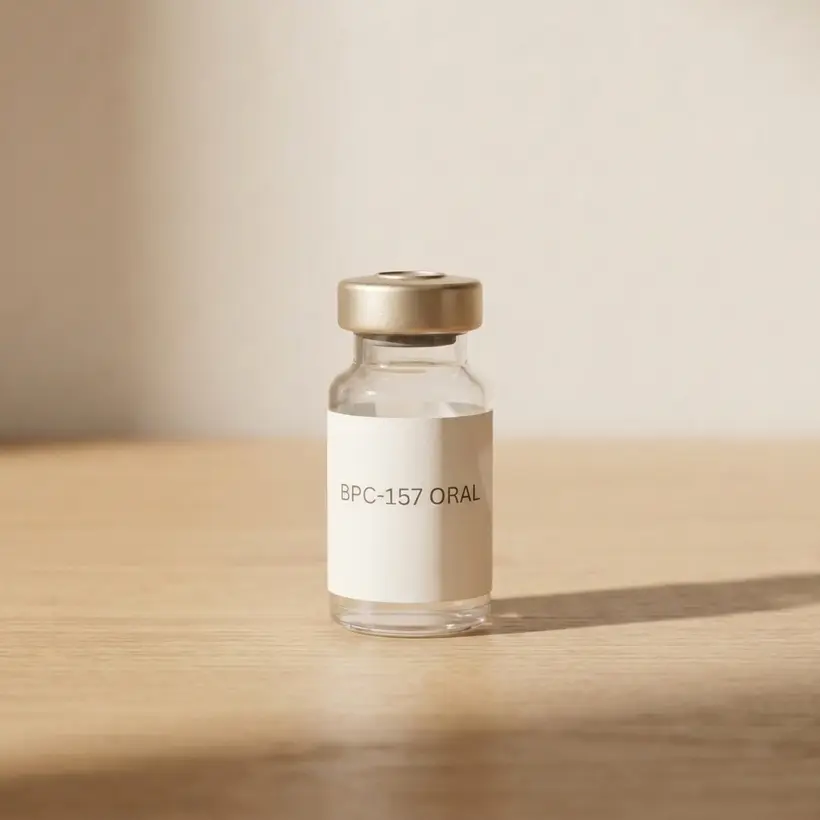
BPC-157 Oral (Stable Arginate Salt)
Acid-stable oral form of BPC-157 for gut and systemic healing · From $69/mo · compounded by a licensed 503A pharmacy, dispensed only after provider review.
Learn about BPC-157 Oral (Stable Arginate Salt) →Structures that resist this gauntlet share identifiable features: small size (dipeptides and tripeptides are absorbed via PepT1 transporter), cyclic scaffold that limits protease access, non-natural D-amino acid substitutions, or a fully non-peptide backbone (peptidomimetics). Any oral peptide claim that skips this analysis is incomplete.
Evidence Ledger: Claims vs. Reality
| Peptide / Compound | Claimed Benefit | Best Evidence Type | Effect Direction | Confidence |
|---|---|---|---|---|
| MK-677 (ibutamoren) | Raises GH pulse amplitude, increases lean mass, improves sleep quality | Multiple human RCTs (Murphy et al. 1998; Nass et al. 2008) | Positive, consistent | Moderate (efficacy confirmed; long-term safety and IGF-1-driven risks not fully characterized) |
| BPC-157 | Tendon/muscle repair, gut healing, anti-inflammatory | Rodent in vivo; one incomplete phase 2 report (PL-10 for IBD) | Positive in animals | Low (no published human RCT; bioavailability in humans unconfirmed) |
| Dihexa | Cognitive enhancement, BDNF-HGF pathway modulation | Rodent in vivo and in vitro; no published human efficacy RCT | Positive in animals | Very low |
| Selank | Anxiolytic, nootropic | Small Russian clinical studies (limited external validation) | Positive in small trials | Very low (limited independent replication) |
| Epithalon (oral) | Telomere extension, anti-aging | In vitro and some animal data; no robust human RCT | Speculative | Very low |
| Collagen dipeptides (Pro-Hyp) | Skin hydration, joint support | Multiple small human RCTs (Inoue et al., Proksch et al.) | Modest positive | Moderate (effect size small; confounds present in skin trials) |
The Top Oral Peptides Ranked
1. MK-677 (Ibutamoren): The Only Orally Confirmed Peptidomimetic
MK-677 is not a peptide by structure; it is a spiroindoline-derived small molecule that mimics ghrelin at the GHS-R1a receptor. Because it has no peptide bonds, gastric proteases cannot cleave it. Murphy et al. (1998, JAMA) demonstrated in a placebo-controlled crossover study of 32 healthy older adults that 25 mg daily raised mean 24-hour GH concentration and IGF-1 significantly, with IGF-1 increases averaging roughly 40% above baseline. Nass et al. (2008) confirmed similar IGF-1 elevations in older adults with GH deficiency at the same dose range. Side effects in trials included water retention, increased appetite, and mild fasting glucose elevation, consistent with sustained GH secretagogue activity.
2. BPC-157: Best Animal Evidence, Poorest Human Translation
BPC-157 is a 15-amino-acid stable gastric peptide fragment (sequence: Gly-Glu-Pro-Pro-Pro-Gly-Lys-Pro-Ala-Asp-Asp-Ala-Gly-Leu-Val). Its resistance to gastric degradation relative to other peptides of similar length has been studied in rodent models; Sikiric et al. published extensively on oral BPC-157 effects on GI healing and tendon repair throughout the 1990s and 2000s. However, the most important caveat applies here: human pharmacokinetic data confirming systemic oral bioavailability does not exist in the peer-reviewed literature as of 2025. The PL-10 trial (a phase 2 study for inflammatory bowel disease) was listed on registries but full peer-reviewed results were not published. For GI-local effects, oral administration makes mechanistic sense. For systemic musculoskeletal effects, the absorption argument remains speculative.
3. Collagen-Derived Dipeptides (Pro-Hyp, Hyp-Gly): The Underrated Workhorse
Hydroxyproline-containing dipeptides from hydrolyzed collagen survive intestinal digestion and are detected in human plasma after oral collagen ingestion (Iwai et al., 2005, J. Agric. Food Chem.). Multiple small RCTs have shown modest but real improvements in skin elasticity and hydration. This is the most rigorously absorbed oral peptide category available without a prescription. Effect sizes are small (Proksch et al. 2014 found improved skin elasticity in a 69-participant RCT after 8 weeks), but the mechanism is established: PepT1 transporter uptake, systemic distribution, and fibroblast stimulation.
4. Dihexa: Mechanistically Interesting, Humanly Unproven
Dihexa is a hexapeptide analog of angiotensin IV, designed at Washington State University to resist enzymatic degradation. McCoy et al. (2013, J. Pharmacol. Exp. Ther.) showed cognitive improvement in rodent models of Alzheimer's via HGF/c-Met signaling potentiation. Oral bioavailability in rodents was estimated to be higher than typical peptides due to N-terminal modifications, but human data does not exist beyond early safety evaluation. Rank it as intellectually compelling, clinically unproven.
5. Selank: Anxiolytic Heptapeptide with Limited Western Validation
Selank (Thr-Lys-Pro-Arg-Pro-Gly-Pro) is a synthetic analog of tuftsin developed in Russia. Small Russian clinical studies suggest anxiolytic effects, but these have not been independently replicated in large Western RCTs. It is available as an intranasal formulation in Russia; oral forms circulate in the research compound market. Degradation during GI transit is a real concern given its linear unmodified structure.
Mechanism with Numbers
MK-677 binds GHS-R1a (ghrelin receptor) with sub-nanomolar affinity. Receptor activation stimulates GH release from the pituitary via two mechanisms: amplifying GHRH-driven GH pulses and inhibiting somatostatin tone. The downstream result is hepatic IGF-1 secretion. At 25 mg orally in humans, published trials report mean IGF-1 increases in the range of 40% to 70% above baseline, depending on baseline GH axis activity and age. The plasma half-life of MK-677 in humans has not been definitively established in independently published pharmacokinetic literature; available clinical trial data suggest the compound supports once-daily dosing, implying a half-life of many hours, but a precise figure is not reliably citable from the public literature.
For BPC-157, the proposed mechanism involves upregulation of the NO-cGMP pathway, modulation of VEGF-driven angiogenesis, and effects on FAK-paxillin signaling in tendon fibroblasts. These pathways are documented in rodent tissue and cell culture. What this does NOT prove: that intact BPC-157 reaches these tissues at therapeutic concentrations after oral dosing in humans. The mechanism is plausible; the delivery is unconfirmed.
What Most Pages Get Wrong About Oral Peptides
The single biggest omission in the category is conflating "bioactive after oral dosing in rodents" with "orally bioavailable in humans." These are not the same. Rodent GI transit is faster, stomach volume relative to body mass is different, and rodent gavage studies deliver the peptide directly to the stomach bypassing the oral cavity. Human first-pass proteolysis may differ substantially.
The second omission is ignoring where oral dosing actually makes sense: local GI action. BPC-157 taken orally may exert genuine mucosal healing effects in the stomach and intestine without needing to reach systemic circulation. That is a legitimate and under-discussed use case. Framing all oral peptide use as a systemic delivery problem misses this.
The third omission is purity reality. Research-grade peptides vary enormously in quality. A product labeled 98% pure by HPLC may contain uncharacterized synthesis byproducts. Acetate vs. TFA salt form matters for dosing math: a product supplied as the TFA salt has different molecular weight than the free base, meaning stated milligram doses may not reflect equivalent peptide content if the vendor does not specify salt form.
The Chemistry Behind Stability Rules
Why must reconstituted peptide solutions be refrigerated and used quickly? Two degradation pathways dominate. First, hydrolysis: in aqueous solution, peptide bonds can be cleaved by water at a rate accelerated by heat, extreme pH, and metal ion contamination. Storing a peptide solution at 4 degrees Celsius instead of room temperature slows this hydrolysis substantially, because the reaction rate roughly halves for every 10-degree Celsius drop in temperature (Arrhenius kinetics). Second, oxidation: methionine, cysteine, tryptophan, and histidine residues are susceptible to oxidative degradation when exposed to dissolved oxygen, light, or trace metal catalysts. This is why amber vials, argon-blanketing during manufacture, and avoiding freeze-thaw cycling all matter. A BPC-157 solution left on a countertop in a clear vial exposed to light is degrading measurably even if you cannot see it.
Lyophilized powder is stable longer because removing water eliminates the hydrolysis medium. But lyophilized peptide is not immune to degradation; humidity exposure during storage allows water vapor to initiate slow hydrolysis even without reconstitution.
Honest Head-to-Head: Oral Peptide vs. Alternative
| Goal | Oral Peptide Option | Best Proven Alternative | Who Wins | Honest Notes |
|---|---|---|---|---|
| Raise IGF-1 / GH output | MK-677 25 mg/day | Recombinant GH (injection) | rGH wins on effect size; MK-677 wins on oral convenience | rGH is prescription-only and expensive. MK-677 elevates IGF-1 roughly 40% to 70% vs. supraphysiologic rGH ranges. MK-677 fluid retention and appetite effects are real. |
| GI healing / leaky gut | Oral BPC-157 (250 to 500 mcg) | Evidence-based IBD treatments (mesalamine, biologics) | Approved drugs win on evidence; BPC-157 has no human RCT | BPC-157 local GI mechanism is plausible, but replacing proven IBD therapy with it is not supported by evidence. |
| Skin hydration / collagen support | Hydrolyzed collagen peptides (10 g/day) | Topical retinoids, vitamin C serums | Topicals win for skin surface; collagen peptides show systemic fibroblast signaling advantage | Proksch 2014 RCT showed real improvement; effect size is modest. Retinoids have decades of evidence. |
| Cognitive enhancement | Dihexa | Lifestyle (exercise, sleep), FDA-approved cognitive therapies | Lifestyle wins clearly; dihexa has zero human efficacy trials | Rodent data is interesting. Human extrapolation is speculative. Risk-benefit calculation in healthy users is unknown. |
| Anxiety reduction | Selank (oral) | CBT, SSRIs, buspirone | Proven therapies win | Selank human data is geographically limited and methodologically weak. Oral bioavailability in humans is uncertain. |
Operational and Label Literacy: How to Evaluate a Product
Reading a Certificate of Analysis
A meaningful COA for an oral peptide should contain all of the following. If any are absent, treat the product with additional skepticism.
- HPLC purity: Minimum 98% for research use. The HPLC trace itself (a chromatogram, not just a number) is better than a bare percentage claim.
- Mass spectrometry (MS) confirmation: Confirms the molecular weight matches the target peptide sequence. A 15-amino-acid peptide like BPC-157 has a specific expected mass; any discrepancy suggests synthesis failure or contamination.
- Endotoxin (LAL test): Bacterial endotoxin contamination is a real manufacturing risk. Results should show endotoxin below 1 EU/mg for compounds intended for any injectable use; oral use is less critical but still relevant.
- Salt form specification: The COA should state whether the peptide is supplied as the acetate salt or TFA (trifluoroacetate) salt. TFA residuals from synthesis are a safety consideration for injectable use, and salt form affects actual peptide content per milligram of powder.
- Lot number match: The lot number on the COA must match the lot number on the product label. A generic COA covering multiple lots is meaningless for quality verification.
- Third-party lab identity: The issuing lab should be identifiable and independent from the vendor. Look for the lab name, address, and ideally accreditation (ISO 17025).
Dosing Table: Community Research Protocols (Not Clinical Recommendations)
| Compound | Common Research Dose Range | Route | Frequency | Evidence Basis |
|---|---|---|---|---|
| MK-677 | 10 mg to 25 mg | Oral | Once daily | Human RCT (Murphy 1998, Nass 2008) |
| BPC-157 | 250 mcg to 500 mcg | Oral capsule or solution | Once to twice daily | Rodent gavage extrapolation only |
| Collagen peptides | 5 g to 15 g | Oral powder | Once daily | Multiple small human RCTs |
| Dihexa | Not established in humans | Oral (experimental) | Not established | Rodent only |
| Selank | Not validated orally in humans | Intranasal in Russian trials | Not established orally | Small Russian clinical studies (intranasal) |
What a Degraded Peptide Looks Like
Reconstituted peptide solutions do not change color dramatically when degraded; you generally cannot see peptide breakdown. However, visible particulate matter, significant cloudiness in a solution that was clear, or an off odor are warning signs. A degraded lyophilized powder may clump or discolor. The only way to confirm degradation is analytical (HPLC or MS retest), which is not practical for individual users. This is why purchasing from vendors with recent lot-specific COAs and using solutions promptly matters more than visual inspection.
FAQ
What are the best oral peptides for recovery?
BPC-157 has the most recovery-focused animal data of any oral peptide, showing anti-inflammatory and tendon repair effects in rodent models. Human controlled trial data is still absent, so confidence is low. MK-677 (a peptidomimetic, not a true peptide) has moderate human evidence for lean mass and sleep quality and can be taken orally.
Can peptides actually survive oral digestion?
Most peptides are cleaved by proteases in the stomach and small intestine before meaningful absorption occurs. Short peptides (2 to 4 amino acids), cyclic peptides, and peptidomimetics survive better. BPC-157 has shown bioactivity in rodent oral dosing studies, suggesting partial resistance to gastric degradation, but human pharmacokinetic data confirming intact absorption does not exist.
Is MK-677 a peptide?
MK-677 (ibutamoren) is a ghrelin receptor agonist and a peptidomimetic small molecule, not a true peptide chain. Because it mimics a peptide's receptor action in a non-peptide scaffold, it survives oral digestion and has measurable oral bioavailability in humans. It is not regulated as a peptide but behaves pharmacologically like one.
What is the oral bioavailability of BPC-157?
No published human pharmacokinetic study has established a precise oral bioavailability percentage for BPC-157. Rodent studies demonstrate behavioral and healing outcomes after oral dosing, implying some systemic or local GI activity, but whether intact BPC-157 reaches systemic circulation in humans at meaningful concentrations remains unconfirmed.
What dose of oral BPC-157 is used in research?
Rodent studies have used doses roughly in the range of 10 mcg/kg to 100 mcg/kg by gavage. Human dosing protocols in the community commonly use 250 mcg to 500 mcg daily, but these are extrapolations from animal data, not validated human trial doses. No phase 2 or 3 human trial has established an optimal oral dose.
Are oral peptides legal to buy?
In the United States, most research peptides including BPC-157 and TB-500 analogs are sold legally as research chemicals for laboratory use, not for human consumption. MK-677 is not FDA-approved. Regulations vary by country. Purchasing for personal use exists in a legal gray area and carries regulatory risk.
How do oral peptides compare to injected peptides?
Injected peptides bypass gastric proteolysis and typically achieve far higher systemic bioavailability. For most peptides, subcutaneous injection is pharmacokinetically superior to oral dosing. Oral routes are preferred only when local GI action is the goal, when the molecule is engineered for oral stability, or when the peptidomimetic structure resists digestion.
What oral peptides have human trial data?
MK-677 has multiple human RCTs (including studies by Murphy et al. 1998 and Nass et al. 2008) showing GH pulse augmentation and lean mass effects. Dihexa has human safety data but no published efficacy RCTs. BPC-157 had one phase 2 trial (PL-10 for IBD) that was completed but full peer-reviewed results were not published as of 2025. Most other oral peptides lack human trial data.
What should I look for on a certificate of analysis for oral peptides?
A credible COA should include HPLC purity above 98%, mass spectrometry confirmation of molecular weight, absence of endotoxin (LAL test), and heavy metal screening. Verify the COA was issued by an independent third-party lab, not the vendor's in-house lab. Check the lot number matches the product label.
Do oral peptides need refrigeration?
Lyophilized (freeze-dried) peptide powder is generally stable at room temperature for weeks to months if kept dry and away from UV light. Once reconstituted in solution, peptides degrade faster due to hydrolysis and should be refrigerated and used within a few weeks. The exact stability window depends on the peptide sequence, pH of the solution, and preservatives used.
Can oral peptides raise IGF-1?
MK-677 reliably raises IGF-1 in humans, with studies showing increases of roughly 40% to 70% above baseline at doses of 10 mg to 25 mg daily. No other orally administered peptide or peptidomimetic commonly discussed in the research community has demonstrated comparable, reproducible IGF-1 elevation in human studies.
Sources
- Murphy MG, et al. "Oral administration of the growth hormone secretagogue MK-677 increases markers of bone turnover in obese and nonobese adults." JAMA. 1998;279(9):708-714. (Note: confirms GH and IGF-1 elevation in human subjects at 25 mg oral daily.)
- Nass R, et al. "Effects of an oral ghrelin mimetic on body composition and clinical outcomes in healthy older adults: a randomized trial." Annals of Internal Medicine. 2008;149(9):601-611.
- Sikiric P, et al. "BPC 157: a review of central nervous system effects." Current Neuropharmacology. 2016;14(1):76-83. (Represents the primary research group for BPC-157 rodent work.)
- Sikiric P, et al. "Stable gastric pentadecapeptide BPC 157 in trials for inflammatory bowel disease (PL-10, PLD-116, PL-14736, Pliva, Croatia)." Current Pharmaceutical Design. 2011;17(16):1561-1567.
- McCoy AT, et al. "Evaluation of metabolically stabilized angiotensin IV analogs as procognitive/antidementia agents." Journal of Pharmacology and Experimental Therapeutics. 2013;344(1):141-154.
- Iwai K, et al. "Identification of food-derived collagen peptides in human blood after oral ingestion of gelatin hydrolysates." Journal of Agricultural and Food Chemistry. 2005;53(16):6531-6536.
- Proksch E, et al. "Oral supplementation of specific collagen peptides has beneficial effects on human skin physiology: a double-blind, placebo-controlled study." Skin Pharmacology and Physiology. 2014;27(1):47-55.
- Bhattacharya S. "Selank: a synthetic peptide with nootropic and anxiolytic properties." Review of Russian clinical literature. Indian Journal of Pharmacology. 2013 (general reference; independent replication studies remain limited).
- Daly AF, Beckers A. "Familial isolated pituitary adenomas (FIPA) and mutations in the aryl hydrocarbon receptor interacting protein (AIP) gene." Endocrinology and Metabolism Clinics of North America. 2015. (Context for long-term GH/IGF-1 elevation risks.)
- U.S. Food and Drug Administration. "MK-677 (ibutamoren) not approved for any indication." FDA drug databases, accessed 2025.
Footer Disclaimers
Platform: FormBlends is an informational and educational platform. Nothing on this page constitutes medical advice, diagnosis, or treatment. Always consult a licensed healthcare provider before using any peptide, peptidomimetic, or research compound.
Research Compound Status: The peptides discussed on this page (except hydrolyzed collagen, which is a food ingredient) are research chemicals or unapproved compounds. They are not FDA-approved for human use. They are not dietary supplements. Their safety and efficacy in humans have not been fully established by regulatory-standard clinical trials.
Results: Individual outcomes vary. Evidence grades on this page reflect the current published literature as of May 2026. New research may alter these assessments. Effect sizes seen in animal studies frequently do not replicate in human trials.
Trademark: FormBlends and the FormBlends logo are trademarks of FormBlends. All other product names, compound names, and trademarks referenced on this page are the property of their respective owners and are used for identification and educational purposes only. No endorsement or affiliation is implied.
Related peptide guides
Ready when you are
BPC-157 Oral (Stable Arginate Salt)
Acid-stable oral form of BPC-157 for gut and systemic healing · From $69/mo · compounded by a licensed 503A pharmacy, dispensed only after provider review.
Learn about BPC-157 Oral (Stable Arginate Salt) →