
Key Takeaways
- Tesamorelin is the only GHRH-analogue peptide with FDA approval, backed by two Phase 3 RCTs enrolling roughly 800 participants combined.
- GHRH analogues and GHS-R agonists work through distinct receptors and produce additive to synergistic GH release when combined, a principle demonstrated in human pituitary physiology studies.
- Sermorelin has a half-life of roughly 10 to 20 minutes; CJC-1295 with DAC extends this to approximately 6 to 8 days via albumin binding, a pharmacokinetic difference with real physiologic consequences.
- Ipamorelin is the most selective GHS-R1a agonist in this class, producing minimal cortisol and prolactin elevation compared to hexarelin and GHRP-6 at equivalent doses in head-to-head studies.
- Most non-tesamorelin peptides are classified as research chemicals in the US, faced increased FDA and compounding pharmacy restrictions from 2024 to 2025, and are WADA-prohibited in competitive sport.
What are the best peptides for growth hormone, in plain terms?
Table of Contents
- How GH peptides work: the two receptor pathways
- The ranked list: 6 best peptides for growth hormone
- Evidence ledger: every major claim graded
- Mechanism with real numbers
- What most pages get wrong about GH peptides
- Chemistry behind the storage and stability rules
- Honest head-to-head: GH peptides vs. recombinant HGH vs. MK-677
- Label and COA literacy: how to evaluate a product
- Dosing and protocol reference table
- Regulatory and WADA status (2025 to 2026)
- FAQ
How do growth hormone peptides actually work?
GH release from pituitary somatotrophs is governed by two opposing signals: GHRH (stimulatory) and somatostatin (inhibitory). Ghrelin, produced mainly in the stomach, adds a third stimulatory input via GHS-R1a receptors. All GH-stimulating peptides exploit one or both stimulatory arms.
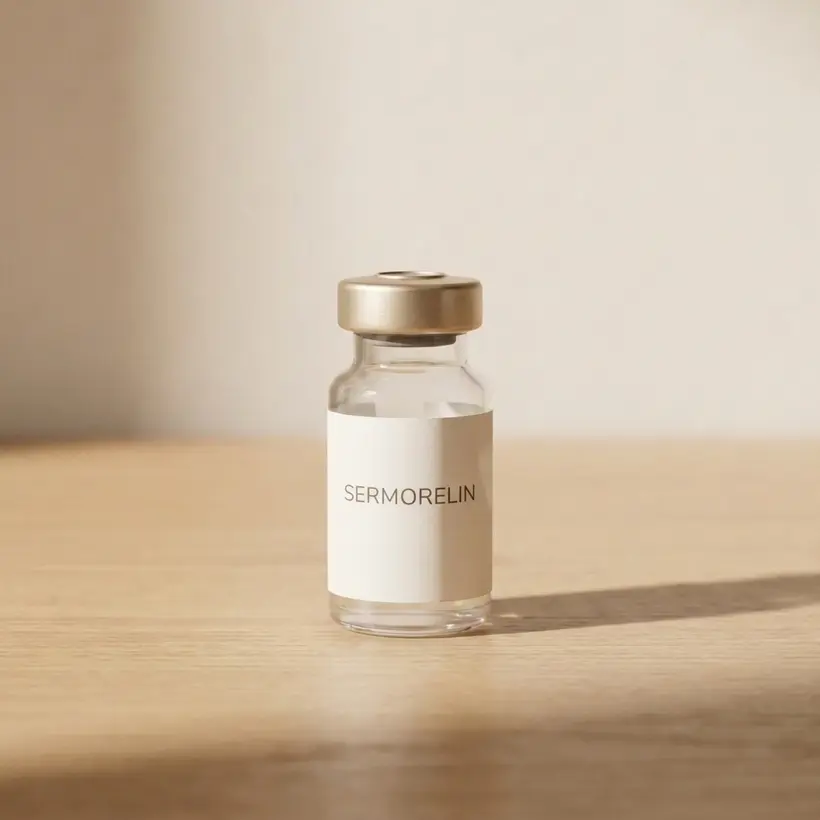
From the FormBlends catalog
Sermorelin
Bioidentical GHRH analog for natural growth hormone pulsatility · From $175/mo · compounded by a licensed 503A pharmacy, dispensed only after provider review.
View Sermorelin →Pathway 1, GHRH-R agonism. Sermorelin, CJC-1295, and tesamorelin are structural analogues of the 44-amino-acid GHRH peptide. They bind the pituitary GHRH receptor (a Gs-coupled GPCR), activate adenylyl cyclase, raise intracellular cAMP, and trigger GH exocytosis. They increase GH pulse amplitude without meaningfully altering pulse frequency.
Pathway 2, GHS-R1a agonism. Ipamorelin, GHRP-2, GHRP-6, and hexarelin are ghrelin mimetics. They bind GHS-R1a (a Gq-coupled GPCR), activate phospholipase C, raise intracellular calcium, and potentiate GH release. They also partially suppress somatostatin tone, increasing pulse frequency. This is the same receptor MK-677 (ibutamoren) targets orally.
Synergy. Because the two pathways converge at different points in the somatotroph signaling cascade, combining a GHRH analogue with a GHS-R agonist produces GH pulses larger than either alone. This is the mechanistic basis for combination protocols such as CJC-1295 plus ipamorelin.
The ranked list: 6 best peptides for growth hormone
1. Tesamorelin
A synthetic analogue of GHRH(1-44) with a trans-3-hexenoic acid modification at the N-terminus that increases stability. FDA-approved as Egrifta (2010) for HIV-associated lipodystrophy. In the pivotal trials (Falutz et al., 2007 and 2010), patients receiving 2 mg/day subcutaneously showed statistically significant reductions in visceral adipose tissue versus placebo over 26 weeks. It is the benchmark for clinical credibility in this class.
2. Sermorelin
The first 29 amino acids of native GHRH, which retain full receptor binding activity. Half-life roughly 10 to 20 minutes. Was FDA-approved as Geref for pediatric GH deficiency diagnosis; that formulation was voluntarily withdrawn from the US market by the manufacturer in 2008 for commercial reasons, not safety. Has accumulated the longest clinical use history among non-tesamorelin GHRH analogues. Preserves physiologic GH pulsatility well.
3. Ipamorelin
A pentapeptide (Aib-His-D-2-Nal-D-Phe-Lys-NH2) and the most receptor-selective GHS-R1a agonist in routine use. Unlike GHRP-2 and hexarelin, ipamorelin does not meaningfully elevate cortisol or prolactin at standard doses in human studies (Raun et al., 1998, in animal models; human selectivity data from Pfizer's early clinical work). This selectivity is its primary clinical advantage.
4. CJC-1295 (with and without DAC)
CJC-1295 without DAC (also called modified GRF 1-29) is a 29-amino-acid GHRH analogue with four amino-acid substitutions that improve stability; half-life is roughly 30 minutes. CJC-1295 with DAC adds a lysine-maleimide linker that covalently binds serum albumin, extending half-life to approximately 6 to 8 days (Jetté et al., 2005). The extended version blunts pulsatility; whether that matters clinically is debated.
5. GHRP-2
A hexapeptide GHS-R1a agonist with potent GH-releasing activity. More efficacious than ipamorelin on a molar basis for GH output, but less selective: it elevates cortisol and prolactin at higher doses. Has human trial data including a published study by Mericq et al. in children with GH deficiency.
6. Hexarelin
The most potent GHS-R1a agonist in this list. Also binds CD36 and the cardiac GHS-R, which may confer cardioprotective effects in preclinical models. However, it produces the most pronounced cortisol, ACTH, and prolactin elevations of the group, and chronic use leads to notable GH desensitization. Used mainly for diagnostic GH stimulation testing in clinical research.
Evidence ledger: every major claim graded
| Claim | Peptide | Best Evidence Type | Effect Direction | Confidence |
|---|---|---|---|---|
| Reduces visceral fat in HIV lipodystrophy | Tesamorelin | Phase 3 RCT (Falutz et al., 2007, 2010; n approx. 800 combined) | Positive vs. placebo | HIGH |
| Stimulates GH release in healthy adults | Sermorelin | Multiple small human trials, including Walker et al., 1984 | Positive | MODERATE |
| Raises IGF-1 in adults over 60 | Sermorelin | Small RCT (Vittone et al., 1997, n=20) | Modest positive | LOW |
| Selective GH release without cortisol spike | Ipamorelin | Animal RCT (Raun et al., 1998) + early human pharmacology | Positive vs. GHRP-6 | MODERATE |
| Extended half-life via albumin binding | CJC-1295 with DAC | Human PK study (Jetté et al., 2005) | Confirmed | HIGH |
| Synergistic GH release from combination | GHRH + GHS-R agonist | Human mechanistic studies (Jaffe et al., 1993 and others) | Positive, synergistic | MODERATE |
| Improves body composition in healthy aging adults | Various secretagogues | Small RCTs and observational data; inconsistent outcomes | Mixed | LOW |
| Cardioprotective effects | Hexarelin | Animal models, no human RCTs | Positive in animals | VERY LOW |
| Improves sleep quality | Various GH secretagogues | Mechanism plausible (GH and SWS correlation); no RCT for peptides | Speculative | VERY LOW |
| Raises oral bioavailability of GH stimulation | MK-677 (not a peptide) | Human Phase 2 trials (Chapman et al., 1996) | Positive, but side-effect trade-offs | MODERATE |
Mechanism with real numbers
Receptor binding. GHRH-R is expressed almost exclusively on pituitary somatotrophs and a small number of hypothalamic neurons. GHS-R1a has broader expression including hypothalamus, hippocampus, heart, and stomach. This distribution explains why GHS-R1a agonists have more systemic off-target effects (appetite, cortisol, prolactin) compared to GHRH analogues.
Pulse dynamics. In healthy young adults, spontaneous GH pulses reach peak concentrations of roughly 5 to 20 ng/mL and occur approximately 6 to 12 times per 24 hours, predominantly during slow-wave sleep. A single subcutaneous dose of sermorelin in GH-deficient adults produces a GH peak typically within 20 to 30 minutes of injection. The response attenuates if dosing is continuous rather than pulsatile because GHRH-R downregulates with constant stimulation, a fact Geref's prescribing history confirmed.
CJC-1295 with DAC pharmacokinetics. Jetté et al. (2005) demonstrated that CJC-1295 with DAC produced sustained elevation of GH above baseline for at least 6 days after a single injection in healthy adults, with mean IGF-1 increases of 28 to 91 percent across dose levels. This is pharmacokinetically verified. Whether sustained GH elevation reproduces the clinical benefit of pulsatile release is not established by these same data.
What these numbers do NOT prove. Elevated GH or IGF-1 on a lab value does not confirm improved muscle mass, fat loss, or recovery in a healthy population. The leap from "raises IGF-1" to "improves body composition" requires its own RCT evidence, which most peptides outside tesamorelin's indication lack.
What most pages get wrong about GH peptides
1. Conflating GHRH analogues with GHRPs as interchangeable. They are not. GHRH analogues and GHRPs target different receptors, produce different GH release kinetics, and have different side-effect profiles. A page that says "take CJC-1295 for growth hormone" without distinguishing it from ipamorelin is missing half the mechanism.
2. Overstating sermorelin's current legal status. Most pages present sermorelin as straightforwardly available via compounding pharmacies. The FDA placed sermorelin on its Category 2 list under the 503A compounding framework in 2024 to 2025, meaning it cannot be compounded by most US pharmacies without meeting strict criteria. This is a material regulatory fact almost universally absent from competitor pages.
3. Ignoring the pulsatility problem with CJC-1295 DAC. The 6 to 8 day half-life is presented as a pure advantage. It is not. Native GH secretion is highly pulsatile, and pulsatility appears important for avoiding receptor desensitization and maintaining normal IGF-1 axis feedback. Some endocrinologists prefer the shorter-acting CJC-1295 without DAC for this reason. Commodity pages do not cover this tradeoff.
4. Presenting purity as guaranteed. Third-party testing of research-grade peptide products has repeatedly found underdosing, wrong peptide content, and contamination. A 2019 analysis of research peptides by Peptide Sciences and others found significant batch-to-batch variability. This is not a minor caveat; it is a central safety and efficacy question for anyone using non-pharmaceutical-grade product.
5. Omitting WADA prohibition. Nearly every compound in this category is prohibited under WADA S2 (Peptide Hormones, Growth Factors, Related Substances and Mimetics). Athletes subject to anti-doping rules face bans, not a gray area.
Chemistry behind the storage and stability rules
Why lyophilized powder is stable but reconstituted solution is not. In the dry state, peptide bond hydrolysis and oxidation require water as a reactant or medium. Removing water to below roughly 1 percent moisture (lyophilization) reduces both reaction rates to near zero. Once you add bacteriostatic water, hydrolysis of labile bonds resumes. For peptides with methionine (not in ipamorelin, but in some GHRH analogues), oxidation of the sulfur to sulfoxide is an additional degradation route driven by dissolved oxygen.
Why temperature matters exponentially, not linearly. Peptide hydrolysis follows Arrhenius kinetics: every 10 degrees Celsius increase roughly doubles the reaction rate. Storing reconstituted peptide at room temperature (around 22 to 25 degrees Celsius) instead of refrigerator temperature (4 degrees Celsius) does not slightly reduce shelf life; it reduces it by a factor of roughly 4 to 8 depending on the specific peptide. This is why "a few hours on the counter" is materially different from "stored cold."
Why light matters for some peptides. Tryptophan residues (present in several GHRPs) are photolabile and undergo UV-driven oxidation to N-formylkynurenine and related products. This is why amber vials and opaque packaging are not cosmetic choices.
Why bacteriostatic water, not sterile water. Reconstituted peptides do not contain preservatives against microbial growth. Bacteriostatic water contains 0.9 percent benzyl alcohol, which inhibits bacterial growth and extends safe use of a multi-dose vial to approximately 28 days at refrigerator temperature per USP guidance. Plain sterile water has no such preservative activity; a multi-dose vial reconstituted with sterile water should be treated as single-use or used within 24 hours.
Honest head-to-head: GH peptides vs. recombinant HGH vs. MK-677
| Attribute | GH Secretagogue Peptides | Recombinant HGH (Somatropin) | MK-677 (Ibutamoren) |
|---|---|---|---|
| Mechanism | Stimulates pituitary to release endogenous GH | Directly replaces GH | Oral GHS-R1a agonist, not a peptide |
| Best evidence | Phase 3 RCT (tesamorelin only); others smaller | Decades of RCTs for GH deficiency | Phase 2 RCTs (Chapman et al., 1996; Nass et al., 2008) |
| FDA approval | Tesamorelin only (lipodystrophy indication) | Yes, multiple indications | No (IND discontinued) |
| Pituitary feedback preserved? | Yes, endogenous axis intact | No, exogenous GH suppresses pituitary output | Yes (same mechanism as peptides) |
| Risk of supraphysiologic IGF-1 | Lower; limited by pituitary reserve | Higher; dose-dependent and not feedback-limited | Moderate; chronic elevation documented |
| Route of administration | Subcutaneous injection | Subcutaneous injection | Oral capsule |
| Where peptides LOSE | Less potent for documented GH deficiency; less studied long-term | Peptides cannot match for GH deficiency treatment | Peptides require injections; MK-677 is oral |
| Key side-effect concern | Injection site, water retention, glucose | Edema, carpal tunnel, glucose, acromegaly risk at excess doses | Appetite increase, insulin resistance, water retention |
Label and COA literacy: how to evaluate a product
If you are evaluating a peptide product, the following criteria separate credible from inadequate sourcing.
- HPLC purity percentage. A legitimate COA (certificate of analysis) will show purity by HPLC. For research-grade peptides, greater than 98 percent purity is standard from reputable suppliers. Any product without an HPLC trace or purity figure should be treated as unverified.
- Mass spectrometry confirmation. HPLC alone confirms purity but not identity. MS or MS/MS confirmation of molecular weight verifies that the correct peptide is present. For CJC-1295 with DAC specifically, the molecular weight is approximately 3367 Da; CJC-1295 without DAC is approximately 3367 Da for the 29-mer but without the maleimide-DAC linker. These are distinguishable by mass spec. A supplier who cannot confirm by MS may be selling the wrong compound.
- Endotoxin testing. Lipopolysaccharide contamination from gram-negative bacteria during synthesis causes fever and inflammatory reactions on injection. USP limits for injectable drugs are below 5 EU/kg/hour. Research peptides often do not report endotoxin levels; absence of this data is a red flag for injectable use.
- Vial labeling: reconstitution volume. Many vials are labeled by total peptide mass (e.g., 2 mg per vial) without specifying reconstitution volume. To achieve a standard 100 mcg dose of ipamorelin, you must add the right volume of bacteriostatic water and calculate concentration per injection. A standard approach: add 2 mL to a 2 mg vial to produce 1 mg/mL, then inject 0.1 mL (100 mcg) per dose. Confirm the math before drawing up.
Dosing and protocol reference table (research context only)
| Peptide | Class | Reported Study Dose | Frequency in Trials | Route | Half-life (approx.) |
|---|---|---|---|---|---|
| Tesamorelin | GHRH analogue | 2 mg/day (FDA-approved dose) | Once daily | Subcutaneous | 25 to 38 minutes |
| Sermorelin | GHRH analogue | 0.2 to 0.3 mg/day in adult studies | Once daily (often before sleep) | Subcutaneous | 10 to 20 minutes |
| CJC-1295 without DAC | GHRH analogue | Not formally standardized; 100 to 300 mcg in practice | 1 to 2 times daily | Subcutaneous | 30 minutes |
| CJC-1295 with DAC | GHRH analogue | 1 to 2 mg per injection (Jetté et al., 2005) | Once weekly | Subcutaneous | 6 to 8 days |
| Ipamorelin | GHS-R1a agonist | 200 mcg per injection in human pharmacology studies | 1 to 3 times daily | Subcutaneous | 2 hours |
| GHRP-2 | GHS-R1a agonist | 1 to 2 mcg/kg in human studies | 2 to 3 times daily | Subcutaneous | Less than 1 hour |
| Hexarelin | GHS-R1a agonist | 2 mcg/kg in diagnostic studies | Single or twice daily | Subcutaneous or IV | Less than 1 hour |
Regulatory and WADA status (2025 to 2026)
United States. Tesamorelin is Schedule-free, FDA-approved, and available by prescription. Sermorelin has a complex status: it was previously compoundable but the FDA's 2024 guidance under the 503A framework placed several peptides including sermorelin on a list requiring additional safety data before compounding is permitted. Ipamorelin, CJC-1295, GHRP-2, and hexarelin are not approved as drugs and are sold legally only as research chemicals, meaning not for human use. The FDA issued warning letters to peptide suppliers in 2022 to 2023, and enforcement increased through 2025.
WADA. All GH-releasing peptides and secretagogues are prohibited in-competition and out-of-competition under the WADA Prohibited List, Section S2.3 (Growth Hormone Secretagogues). This includes sermorelin, tesamorelin, ipamorelin, CJC-1295, GHRP-2, GHRP-6, hexarelin, and MK-677. There is no therapeutic use exemption pathway for most of these in the context of sport.
Other jurisdictions. In Australia, most of these peptides are Schedule 4 (prescription only) or Schedule 9 (prohibited). In the UK, they are unlicensed medicines. In Canada, they are unscheduled but regulated as drugs if sold for human use. Legal status changes; verify with local regulatory authorities before obtaining any of these compounds.
FAQ
What are the best peptides for growth hormone stimulation?
The best-evidenced peptides for stimulating endogenous growth hormone are sermorelin (a GHRH analogue), ipamorelin (a selective GHS-R agonist), CJC-1295 (a long-acting GHRH analogue), tesamorelin (FDA-approved GHRH analogue), and hexarelin. Combining a GHRH analogue with a GHS-R agonist like ipamorelin produces synergistic GH pulses. Evidence quality varies widely: tesamorelin has the strongest human RCT data; others rely primarily on smaller or older trials.
How do growth hormone peptides work?
They work through two receptor pathways. GHRH analogues (sermorelin, CJC-1295, tesamorelin) bind pituitary GHRH-R and increase GH pulse amplitude. Ghrelin mimetics or GH secretagogues (ipamorelin, hexarelin, MK-677) bind the GHS-R1a receptor, increasing pulse frequency and partially blocking somatostatin. Using both classes together amplifies GH release more than either alone.
What is the difference between sermorelin and CJC-1295?
Sermorelin is a 29-amino-acid fragment of native GHRH with a short half-life of roughly 10 to 20 minutes. CJC-1295 with DAC is a modified GHRH analogue engineered to bind serum albumin, extending its half-life to approximately 6 to 8 days. Sermorelin preserves pulsatile GH release
Related peptide guides
Ready when you are
Sermorelin
Bioidentical GHRH analog for natural growth hormone pulsatility · From $175/mo · compounded by a licensed 503A pharmacy, dispensed only after provider review.
View Sermorelin →