Key Takeaway
By age 40, your growth hormone production is likely half of what it was in your 20s. By 60, it may be a fraction of that.
By age 40, your growth hormone production is likely half of what it was in your 20s. By 60, it may be a fraction of that. This natural decline) sometimes called somatopause (contributes to many of the changes people associate with aging: increased body fat, decreased muscle mass, thinner skin, slower recovery, and poorer sleep.
Key Takeaways: - The Science Behind Age-Related GH Decline - Benefits That Matter Most After 40 - Choosing the Right Peptide After 40 - Understand what your provider should monitor
GH peptides after 40 may help address this decline by encouraging your pituitary gland to produce more growth hormone naturally.
The Science Behind Age-Related GH Decline
Growth hormone production peaks during adolescence and early adulthood. After age 30, GH secretion declines at approximately 14% per decade. This isn't a disease) it's a normal part of aging. But the consequences are real and measurable.
Several factors drive this decline. Your pituitary gland becomes less responsive to GHRH signals over time. Somatostatin (the hormone that inhibits GH release) becomes more active with age. Deep sleep duration decreases, reducing the primary window for GH secretion. And lifestyle factors like increased body fat, reduced exercise, and poor sleep habits accelerate the decline.
The downstream effects show up as reduced IGF-1 levels. Available evidence indicates that adults over 40 with lower IGF-1 levels tend to have more visceral fat, less lean mass, reduced bone density, and lower reported quality of life compared to age-matched peers with higher levels.
"GLP-1 receptor agonists represent the most significant advance in obesity pharmacotherapy in decades. For the first time, we have medications that produce weight loss approaching what was previously only achievable through bariatric surgery.", Dr. Robert Kushner, MD, Northwestern University, speaking at ObesityWeek 2023
This is where GH peptides come in. Peptides like and work by stimulating the pituitary gland to release more GH. Even aging pituitary glands can respond to this stimulation (they just need a stronger signal. GH peptides provide that signal.
GH peptides work with your body's natural feedback mechanisms. They don't override the safety checks that prevent GH from getting too high. This is a meaningful advantage over synthetic HGH, especially for long-term use in older adults.
Benefits That Matter Most After 40
While younger users might focus on performance and physique, adults over 40 often find the biggest value in different areas.
View data table
| Category | Clinical Interest Score | Detail |
|---|---|---|
| BPC-157 | 88 | Tissue repair and gut healing |
| TB-500 | 82 | Injury recovery |
| Sermorelin | 78 | Growth hormone support |
| Ipamorelin | 75 | Anti-aging and recovery |
| GHK-Cu | 70 | Skin and tissue repair |

Sleep restoration. This is often the number one benefit reported by patients over 40. Deep sleep declines significantly with age, and GH peptides may help restore it. Better sleep improves everything else) energy, mood, cognitive function, recovery, and even appetite regulation. Learn more about.
Body composition. The midlife shift toward more belly fat and less muscle is partly driven by declining GH. Peptide therapy may help reverse this trajectory (not dramatically, but meaningfully. Clinical data indicate that GH stimulation can support fat metabolism and lean tissue preservation, especially when combined with exercise and proper.
Joint and connective tissue support. Aches and pains increase with age, often due to declining collagen production. GH drives collagen synthesis. Many patients over 40 report improved joint comfort and reduced stiffness after 6 to 12 weeks on a peptide protocol.
Skin quality. Thinning skin, wrinkles, and reduced elasticity are partly a GH story. Collagen decline accelerates after 40. GH peptide therapy may help slow this process. Patients commonly report improved skin thickness and elasticity.
Cognitive function. Research has explored GHRH's effects on cognition in older adults with promising results. Improved executive function and memory have been reported in clinical studies using GHRH analogs.
Bone density. GH stimulates osteoblast activity (bone building). For adults over 40 concerned about osteoporosis risk, this is an added potential benefit of GH peptide therapy.
Free Download: Peptide Protocol Planner (12-Week) Starting a peptide protocol after 40? Our 12-week planner includes age-specific tracking metrics, dosing schedules, and lab work timelines. Get yours free) we'll email it to you instantly.
[Download CTA Button]
Choosing the Right Peptide After 40
Not all GH peptides are equally suited for adults over 40. Here's how to think about the options.
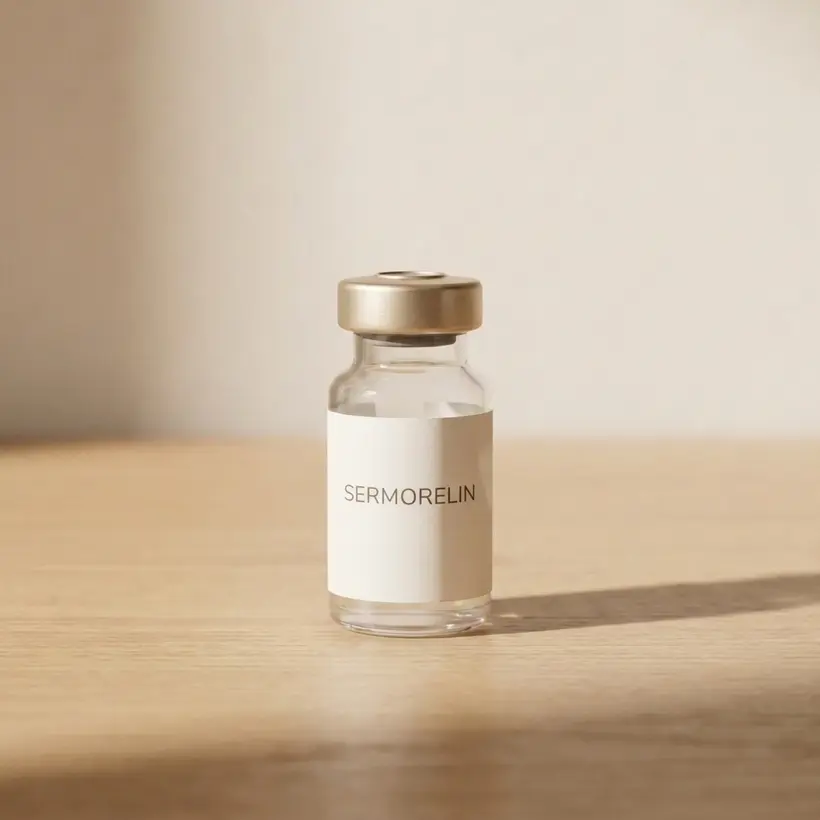
From the FormBlends catalog
Sermorelin
Bioidentical GHRH analog for natural growth hormone pulsatility · From $175/mo · compounded by a licensed 503A pharmacy, dispensed only after provider review.
View Sermorelin →is often the first recommendation for patients over 40. Its clean side effect profile (no cortisol elevation, no significant hunger, no prolactin changes) makes it ideal for an age group that may already be managing other health concerns. Less hormonal disruption means fewer complications.
is the most popular combination. The combined GH response provides meaningful results while maintaining a favorable safety profile. Many providers consider this the gold standard for age-related GH improvement.
has the strongest clinical data for reducing visceral fat. If abdominal fat is your primary concern, discuss Tesamorelin with your provider. Its FDA-studied background provides additional confidence for risk-conscious patients.
MK-677 should be approached with caution in patients over 40. The insulin resistance and blood sugar effects are more concerning in an age group with higher baseline metabolic risk. If your provider recommends it, close glucose monitoring is important.
GHRP-6 is generally less preferred for older adults due to its cortisol and prolactin elevation. These hormonal side effects can complicate an already changing hormonal market.
Your provider should consider your complete health picture (including thyroid function, testosterone/estrogen levels, metabolic markers, and any existing medications) before recommending a specific peptide.
What Your Provider Should Monitor
Safety-conscious GH peptide therapy for adults over 40 requires regular monitoring.
Before starting: full blood work including IGF-1, fasting glucose, fasting insulin, HbA1c, complete metabolic panel, thyroid panel, lipid panel, and age-appropriate cancer screening. This establishes your baseline and identifies any contraindications.
During treatment (every 4-8 weeks): IGF-1 levels to confirm the peptide is working and levels are in the optimal range. Fasting glucose and insulin to monitor metabolic effects. Any additional markers your provider is tracking.
Signs that your protocol needs adjustment: Hand or wrist tingling (carpal tunnel symptoms), persistent water retention, rising fasting glucose, joint pain, or fatigue. These may indicate that your dose is too high. Learn more about.
Use the to log daily symptoms, doses, and any changes you notice. This data is invaluable at follow-up appointments.
Duration considerations. Adults over 40 may benefit from longer-term peptide therapy with cycling (8-12 weeks on, 4 weeks off). The age-related GH decline is ongoing, so periodic peptide courses may be part of a long-term health strategy. Your can design a sustainable approach.
Frequently Asked Questions
Am I too old for GH peptides?
There's no strict upper age limit for GH peptide therapy. Adults in their 50s, 60s, and even 70s can respond to GH peptide stimulation. Your pituitary gland still functions (it just needs more stimulus. Your provider will evaluate your individual health to determine if you're a candidate.
Will GH peptides interfere with my other medications?
GH peptides can interact with certain medications, particularly those affecting blood sugar (like metformin or insulin) and thyroid medications. Always provide your provider with a complete list of your current medications and supplements.
How long before I notice results at my age?
The timeline is similar to younger adults, though some benefits may develop more gradually. Sleep improvements often come first (1-2 weeks). Energy and recovery improvements typically follow (3-4 weeks). Body composition changes may take 8-12 weeks. Skin and connective tissue improvements continue developing over months.
Can I combine GH peptides with testosterone therapy?
Many men over 40 use both GH peptides and testosterone replacement therapy (TRT). These address different aspects of age-related hormonal decline. Your provider can coordinate both therapies safely. Combined protocols should be monitored carefully with regular blood work.
Are GH peptides a form of anti-aging therapy?
GH peptides address one aspect of aging) the decline in growth hormone production. They're not a full anti-aging solution but may be one component of a broader health improvement strategy that includes nutrition, exercise, sleep, stress management, and appropriate medical care.
What's Your Next Move?
You have the information. Now let a licensed provider help you put it into action. FormBlends makes it simple, answer a few questions and get a personalized recommendation.
Sources &. References
- Ionescu M, Frohman LA. Pulsatile secretion of growth hormone (GH) persists during continuous stimulation by CJC-1295, a long-acting GH-releasing hormone analog. J Clin Endocrinol Metab. 2006;91(12):4792-4797. Doi:10.1210/jc.2006-1702
This content is provided for informational and educational purposes only. It isn't a substitute for professional medical advice, diagnosis, or treatment. Always seek the advice of a licensed healthcare provider with any questions about a medical condition or treatment plan.
Last updated: 2026-03-24
Ready when you are
Sermorelin
Bioidentical GHRH analog for natural growth hormone pulsatility · From $175/mo · compounded by a licensed 503A pharmacy, dispensed only after provider review.
View Sermorelin →