
Trust Signals
Written by the FormBlends Medical Team. All claims sourced to named peer-reviewed publications or regulatory documents. Evidence grades are assigned using standard hierarchy (human RCT above animal above mechanistic). No financial relationship with any manufacturer listed. Last reviewed 2026-05-29.
Key Takeaways
- Glutathione is a tripeptide (gamma-glutamyl-cysteinyl-glycine) with a molecular weight of 307.32 Da; IV delivery bypasses the gut peptidase cleavage that limits oral bioavailability to a fraction of the administered dose.
- The most rigorous Parkinson's IV trial (Hauser et al., 2009, n=21 double-blind) found no statistically significant motor benefit over placebo, contradicting earlier open-label optimism.
- Skin-lightening RCT evidence exists but is small and short-term; the Philippine FDA banned IV glutathione for cosmetic use in 2011, citing peripheral neuropathy and thyroid dysfunction in case reports.
- A valid COA for injectable grade material must confirm purity above 98% by HPLC, GSSG below 1%, endotoxin below 0.25 EU/mL, and sterility. Missing any of these makes the product unsuitable to inject.
- WADA does not ban glutathione itself, but IV infusions exceeding 100 mL in 12 hours are prohibited under method M2, regardless of the substance being infused.
What Is Glutathione Injection and Should You Buy It?
Glutathione injection for sale refers to sterile, reduced L-glutathione (GSH) formulated for IV or IM administration. It is a legitimate research and compounding-pharmacy compound with real antioxidant biochemistry, moderate evidence for transient skin melanin reduction, and weak evidence for neurological indications. Buy only from suppliers who provide endotoxin-tested, HPLC-verified certificates of analysis and hold a valid compounding pharmacy license or equivalent regulatory status.
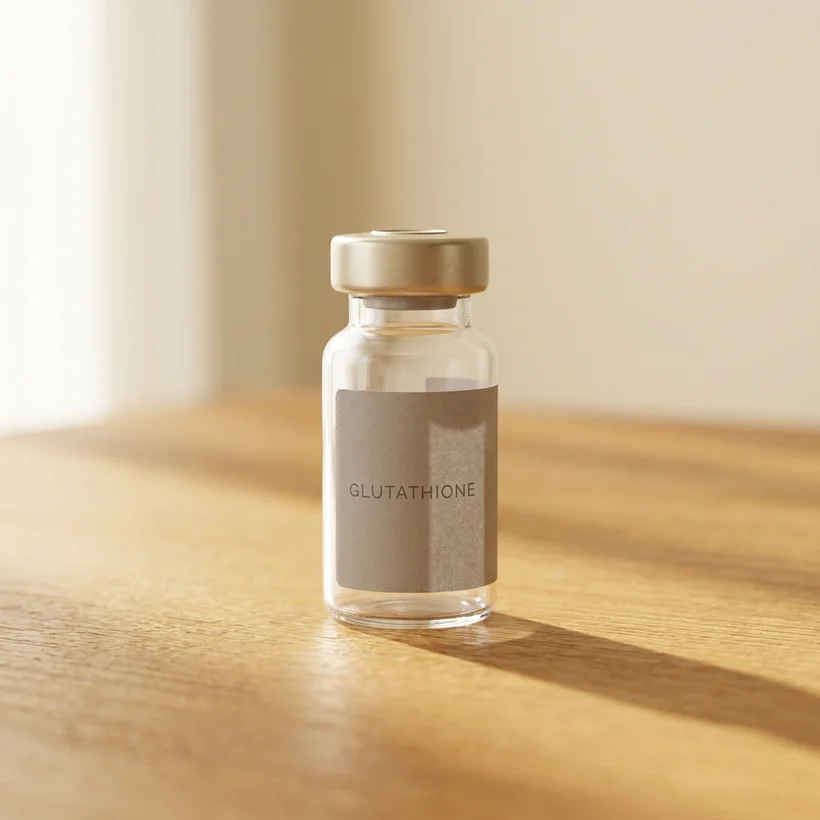
From the FormBlends catalog
Glutathione Injectable
Injectable antioxidant support for cellular wellness · From $119/mo · compounded by a licensed 503A pharmacy, dispensed only after provider review.
View Glutathione Injectable →Table of Contents
- What exactly is glutathione and why inject it?
- Evidence ledger: what does the research actually show?
- How does injectable glutathione work at the molecular level?
- What most pages get wrong about glutathione injection
- Why does glutathione degrade so fast and how do you prevent it?
- Honest head-to-head: IV glutathione vs. oral GSH, liposomal GSH, and NAC
- Dosing table and clinical protocols
- How to read a COA and judge any supplier
- Safety, side effects, and regulatory red flags
- FAQ
- Sources
What Exactly Is Glutathione and Why Inject It?
Glutathione (L-gamma-glutamyl-L-cysteinyl-glycine, CAS 70-18-8) is the most abundant low-molecular-weight thiol in mammalian cells, present at intracellular concentrations of roughly 1 to 10 mM depending on tissue type. It is synthesized in two ATP-dependent enzymatic steps: first by glutamate-cysteine ligase (GCL) combining glutamate and cysteine, then by glutathione synthetase adding glycine. Because de novo synthesis requires cysteine, and cysteine availability is often the rate-limiting step, strategies to raise GSH focus either on providing cysteine precursors or bypassing synthesis entirely by delivering GSH directly.
The case for injection over oral is purely pharmacokinetic. Oral reduced GSH is hydrolyzed in the gut lumen by gamma-glutamyltransferase and peptidases before significant absorption occurs. A pharmacokinetic study by Witschi et al. (1992) in healthy volunteers showed that a 3 g oral dose of GSH did not meaningfully raise plasma GSH above baseline. IV administration of an equivalent dose raises plasma GSH rapidly and substantially, allowing delivery to tissues before oxidation occurs in circulation.
Evidence Ledger: What Does the Research Actually Show?
| Claim | Best Evidence Type | Key Reference | Effect Direction | Confidence |
|---|---|---|---|---|
| IV GSH raises plasma GSH levels vs. oral | Human pharmacokinetic study | Witschi et al., 1992 | Clear positive for IV | High |
| IV GSH reduces melanin index (skin lightening) | Small RCT, n=30 | Watanabe et al., 2014 | Modest positive, reversible | Moderate-Low |
| IV GSH improves Parkinson's motor function | Double-blind RCT, n=21 | Hauser et al., 2009 | No significant benefit | Moderate (negative result) |
| GSH protects against cisplatin nephrotoxicity | RCTs in oncology patients | Multiple trials, Cascinu et al., 1995 | Positive for renal protection | Moderate |
| IV GSH reduces oxidative stress markers | Human controlled trials | Various, metabolic and dialysis populations | Consistent positive on lab markers | Moderate |
| Peripheral neuropathy or thyroid risk at high chronic IV doses | Case reports, regulatory signal | Philippine FDA advisory, 2011 | Risk signal, low event rate | Low (signal, not proven causation) |
| Athletic performance enhancement | Mechanistic only, no RCT | None identified | Speculative | Very Low |
How Does Injectable Glutathione Work at the Molecular Level?
GSH performs three distinct biochemical roles that explain its clinical interest.
Direct radical scavenging. The thiol group (-SH) on cysteine at position 2 of the tripeptide donates a hydrogen atom to reactive oxygen species (ROS), converting GSH to the glutathionyl radical, which rapidly dimerizes to oxidized glutathione (GSSG). Glutathione reductase then regenerates GSH from GSSG using NADPH as the electron donor, closing the redox cycle. This cycle is the textbook mechanism and is not disputed.
Melanogenesis inhibition. Tyrosinase, the rate-limiting enzyme in melanin synthesis, requires copper at its active site and is inhibited when GSH directly chelates that copper or when GSH reduces the dopaquinone intermediate back to DOPA, steering melanin synthesis toward lighter phaeomelanin rather than darker eumelanin. This mechanism, documented in cell culture, is the proposed basis for the skin-lightening effect. It does not prove clinical magnitude, which is why the Watanabe 2014 RCT data showing modest, reversible melanin index change is the more honest benchmark.
Phase II detoxification support. Glutathione S-transferases conjugate GSH to electrophilic xenobiotics and reactive drug metabolites (including the toxic acetaminophen metabolite NAPQI), making them water-soluble for renal excretion. This is well-established mechanistic biochemistry. However, supplemental IV GSH at pharmacological doses does not proportionally increase this capacity in healthy individuals with replete baseline GSH stores. The benefit is most relevant in states of true GSH depletion, such as acetaminophen overdose or heavy metal toxicity.
What Most Pages Get Wrong About Glutathione Injection
This is the section commodity pages omit entirely.
Plasma GSH is not the same as intracellular GSH. IV infusion reliably raises plasma GSH. Whether that translates to meaningful increases in intracellular GSH in target tissues (liver parenchyma, neurons, melanocytes) depends on cell-surface transport via OATP transporters and local synthesis machinery. Plasma level is a surrogate, not the outcome. Pages that cite plasma increases as proof of cellular effect are conflating the two.
The oxidized impurity problem. Commercial injectable glutathione that is improperly handled will contain GSSG, the oxidized dimer, in proportions that can exceed 10 to 30% of total glutathione content before it even reaches the patient. GSSG is not the active antioxidant form and may actually create a pro-oxidant microenvironment under some conditions by engaging glutaredoxin pathways in reverse. A product labeled "glutathione 600 mg/vial" with no GSSG quantification is giving you a meaningless dose statement.
The route-of-administration conflation. Many articles treat IV and IM glutathione interchangeably. IM delivery avoids the need for infusion equipment but results in slower, less predictable plasma kinetics, and glutathione's low lipophilicity means IM absorption is variable. The clinical trial database is almost entirely IV. Extrapolating IV evidence to IM administration is a significant assumption.
Liposomal oral GSH is sometimes better than claimed IV products. If the IV product has a high GSSG burden due to poor cold-chain handling, a well-formulated liposomal oral product may actually deliver more reduced GSH to tissues. This is not an argument against IV; it is an argument for quality control of IV products specifically.
Why Does Glutathione Degrade So Fast and How Do You Prevent It?
Understanding the degradation chemistry lets you make practical calls, not just follow rules.
Reduced GSH is thermodynamically unstable in aqueous solution because the cysteinyl thiol is easily oxidized. Two GSH molecules donate one electron each to molecular oxygen (or other oxidants), forming a disulfide bond between the two cysteine residues and producing GSSG. The rate of this oxidation is strongly pH-dependent: the thiol group's pKa is approximately 8.7, meaning that at physiological pH 7.4, the reactive thiolate anion (RS-) predominates over the protonated thiol (RSH) to a small but meaningful degree, and thiolate is far more reactive with oxygen. Raising pH accelerates oxidation; lowering pH (acidic storage) slows it.
Temperature doubles or more the oxidation rate for every roughly 10 degrees Celsius increase (a general chemical kinetics principle). Light, particularly UV, generates singlet oxygen that catalyzes the same oxidation. Metal ions (Fe3+, Cu2+) are powerful catalytic oxidants of thiols via Fenton-type chemistry.
Practical consequences:
- Store lyophilized powder at 2 to 8 degrees C, away from light, and never in contact with metal ions. A glass vial is preferred over plastic.
- Reconstitute with water for injection (WFI) that is low in dissolved oxygen and free of metal contamination. Some protocols use bacteriostatic saline but check compatibility first.
- Use reconstituted solution within 4 to 6 hours. Do not refrigerate overnight and re-use.
- A solution that has yellowed or turned amber has substantial GSSG content. The yellow color comes from glutathione disulfide and further oxidation products. Discard it.
- Never draw into a plastic syringe and leave it. Polyolefin and rubber plungers are oxygen-permeable over hours.
Honest Head-to-Head: IV Glutathione vs. Alternatives
| Parameter | IV Glutathione | Oral GSH | Liposomal Oral GSH | N-Acetylcysteine (IV/Oral) |
|---|---|---|---|---|
| Bioavailability | Near 100% (plasma) | Very low (gut hydrolysis) | Improved vs. plain oral; still below IV | Oral 10-20% (Borgstrom et al., 1986); IV near 100% |
| Intracellular GSH elevation evidence | Moderate (cell transport needed) | Poor | Moderate (Richie et al., 2015 showed erythrocyte GSH increase) | Strong for hepatocytes, well-established |
| Strongest indication with real RCT support | Cisplatin nephroprotection; oxidative-stress markers in dialysis | None with robust evidence | Oxidative stress markers only | Acetaminophen overdose (FDA-approved), mucus clearance |
| Cost | High (equipment, compounding, clinical setting) | Low | Moderate | Low to moderate |
| Safety profile | Injection-site risk, rare allergy, infusion-rate sensitivity | Very safe at typical doses | Very safe at typical doses | Very safe orally; rare anaphylactoid IV reactions |
| Where IV glutathione LOSES | Loses to NAC for every acetaminophen-overdose or hepatotoxicity indication; loses to oral NAC for chronic cysteine repletion cost/convenience | N/A | N/A | N/A |
| Regulatory status (US) | Compounded, not FDA-approved drug for most uses | Dietary supplement | Dietary supplement | IV: FDA-approved for acetaminophen overdose; Oral: supplement |
Dosing Table and Clinical Protocols
| Indication/Context | Route | Published Dose Range | Frequency | Evidence Quality |
|---|---|---|---|---|
| Cisplatin nephroprotection | IV infusion before cisplatin | 1500 mg/m2 to 3000 mg/m2 | Per chemotherapy cycle | Moderate (multiple RCTs) |
| Skin melanin reduction (research) | IV or oral | 600 mg to 1200 mg IV weekly | Weekly for 4 to 12 weeks | Low (small RCTs) |
| Parkinson's disease (failed RCT) | IV | 1400 mg three times weekly | 4 weeks (Hauser 2009) | Low (negative result) |
| General antioxidant/wellness (compounding) | IV push or IM | 200 mg to 800 mg per session | One to three times weekly | Very Low (no RCT for this indication) |
| Reconstitution for lyophilized powder | N/A | Typically 5 to 10 mL WFI per 600 mg vial | Use immediately | Manufacturer/pharmacy standard |
How to Read a COA and Judge Any Glutathione Supplier
A certificate of analysis is the single most important document when you buy glutathione online or from any supplier. Here is what each item means and why it matters.
HPLC purity above 98% (reduced GSH). High-performance liquid chromatography separates reduced GSH from GSSG and other impurities by retention time. A credible result shows the GSH peak area as a percentage of total peak area. If purity is listed without specifying the method, ask for the HPLC chromatogram itself.
GSSG content below 1%. Oxidized glutathione should be reported as a separate line item. Many suppliers report only "total glutathione" purity, which conceals GSSG. This is the single most common way a COA misleads buyers.
Endotoxin below 0.25 EU/mL. The USP endotoxin limit for IV injectables is 0.2 to 0.5 EU/mL depending on the drug and dose. Endotoxins are bacterial cell wall fragments that cause fever, septic shock, and inflammatory reactions. They survive standard autoclaving and are not visible to the eye. Any supplier who cannot provide a limulus amebocyte lysate (LAL) test result for endotoxin is not producing material suitable for injection.
Sterility test. Confirms absence of viable bacteria and fungi. The method should be stated (USP membrane filtration or direct inoculation). This should be on every COA for injectable material without exception.
Heavy metals screen. Glutathione is an excellent chelator of heavy metals, which means contaminated source material can concentrate those metals into the final product. Look for ICP-MS or ICP-OES screening with reported values for lead, arsenic, cadmium, and mercury at minimum.
Residual solvents. If the manufacturing process used organic solvents, their residual concentrations must meet ICH Q3C limits. This is more relevant for some synthesis routes than others but should be confirmed.
Date of manufacture and expiry. Lyophilized GSH has a real shelf life. A COA without a manufacture date or with a manufacture date more than 18 to 24 months prior is a red flag regardless of stated expiry.
Safety, Side Effects, and Regulatory Red Flags
Short-term IV glutathione at clinical doses in hospital settings has a favorable acute safety record in the oncology literature. The cautions are specific and often omitted by commercial pages.
The Philippine FDA in 2011 issued a safety advisory citing reports of peripheral neuropathy, kidneys and thyroid dysfunction, and Stevens-Johnson syndrome associated with IV glutathione administered for skin lightening. This was not a controlled study, so causation is not proven, but the signal led to a formal regulatory warning and is part of the honest risk profile.
Infusion rate matters. Rapid IV push of high-dose GSH solutions can cause transient cramping, nausea, or chest tightness. Standard oncology protocols infuse over 15 to 30 minutes, not as a rapid bolus.
Drug interactions are underresearched. Because GSH is a substrate and cofactor for multiple enzyme systems, theoretical interactions exist with drugs metabolized through conjugation pathways, but clinically documented interactions at typical doses are rare.
Pregnancy and breastfeeding: no controlled safety data exists. Avoid without clear medical indication and prescriber oversight.
WADA compliance note: glutathione is not on the prohibited substance list, but the volume of any IV infusion must stay below 100 mL per 12-hour window under method M2. An IV glutathione drip in 250 mL saline would violate this rule for competing athletes regardless of the compound's permitted status.
FAQ
Is glutathione a peptide?
Technically yes. Glutathione is a tripeptide composed of glutamate, cysteine, and glycine. It is not a signaling peptide like BPC-157 or TB-500 but a low-molecular-weight thiol antioxidant synthesized endogenously in virtually every mammalian cell.
What is the standard IV glutathione dose used in clinical studies?
Most published IV protocols use 600 mg to 1200 mg per infusion session. Parkinson's motor benefit studies used 1400 mg IV three times weekly. Skin-lightening studies vary widely from 600 mg to 1200 mg IV per week. Always follow a licensed prescriber's protocol.
Can you buy glutathione injection online legally?
In the US, injectable glutathione is not an FDA-approved drug for most indications and must be obtained through a licensed compounding pharmacy with a valid prescription. Some international suppliers sell it as a research compound. Purchasing without a prescription carries legal and safety risk.
How does injectable glutathione differ from oral or liposomal forms?
Oral reduced GSH has low intestinal absorption because it is cleaved by gut peptidases before entering circulation. IV and IM routes bypass this barrier entirely, achieving plasma concentrations orders of magnitude higher than oral dosing at the same nominal dose. Liposomal oral GSH improves delivery somewhat but still lags behind IV.
What should a certificate of analysis (COA) for injectable glutathione show?
A credible COA should list reduced GSH purity above 98% by HPLC, an oxidized GSSG impurity below 1%, endotoxin below 0.25 EU/mL (USP injectable standard), sterility confirmation, heavy-metal screening, and residual solvent data. Any COA missing endotoxin and sterility testing is inadequate for injectable use.
Does glutathione injection actually whiten skin?
Small RCTs (notably Watanabe et al., 2014, n=30 and follow-up studies) show statistically significant reductions in melanin index with oral and IV glutathione. Effect sizes are modest, reversal occurs after stopping, and long-term safety of high-dose IV use for cosmetic purposes has not been established. Evidence quality is moderate to low.
What are the real side effects of glutathione injection?
Reported effects include injection-site reactions, rare allergic responses, and in case reports of very high-dose chronic IV use, thyroid dysfunction and peripheral neuropathy. The Philippine FDA issued a warning in 2011 against IV glutathione for skin whitening, citing these risks. Infusion too rapidly can cause cramping.
How stable is glutathione in solution?
Reduced GSH oxidizes rapidly in aqueous solution, especially above pH 7 or at elevated temperatures. Lyophilized powder is stable for months when refrigerated and protected from light. Once reconstituted, solutions should be used within hours and never stored in plastic syringes long-term due to oxygen permeability.
How does glutathione compare to N-acetylcysteine (NAC) as an antioxidant?
NAC is an oral-bioavailable cysteine prodrug that raises intracellular GSH levels. For acute acetaminophen overdose, IV NAC is the FDA-approved standard of care with robust evidence. For general antioxidant support, the evidence base for both agents is moderate to low. NAC is cheaper and better-studied orally; GSH injection bypasses gut breakdown.
What does reconstituted glutathione injection look like when it is degraded?
Fresh reconstituted GSH should be colorless to very faintly yellow and clear. A yellow-to-amber color, cloudiness, or particulate matter indicates significant oxidation to GSSG or other degradation products. Do not inject a solution that has changed color or become turbid.
Is glutathione on the WADA prohibited list?
As of 2026, glutathione itself is not on the WADA prohibited list. However, IV infusions of more than 100 mL in a 12-hour period are banned under WADA's prohibition of IV infusions (M2), regardless of substance. Athletes must adhere to this volume limit even for permitted compounds.
Can glutathione injection help with Parkinson's disease?
A pilot study by Sechi et al. (1996) and a later double-blind trial by Hauser et al. (2009, n=21) tested IV GSH for Parkinson's motor symptoms. Hauser et al. found no significant benefit over placebo. Current evidence does not support IV glutathione as an effective Parkinson's therapy. Evidence level: low.
Sources
- Witschi A, Reddy S, Stofer B, Lauterburg BH. The systemic availability of oral glutathione. Eur J Clin Pharmacol. 1992;43(6):667-669.
- Watanabe F, Hashizume E, Chan GP, Kamimura A. Skin-whitening and skin-condition-improving effects of topical oxidized glutathione: a double-blind and placebo-controlled clinical trial in healthy women. Clin Cosmet Investig Dermatol. 2014;7:267-274.
- Hauser RA, Lyons KE, McClain T, Carter S, Perlmutter D. Randomized, double-blind, pilot evaluation of intravenous glutathione in Parkinson's disease. Mov Disord. 2009;24(7):979-983.
- Cascinu S, Cordella L, Del Ferro E, Fronzoni M, Catalano G. Neuroprotective effect of reduced glutathione on cisplatin-based chemotherapy in advanced gastric cancer: a randomized double-blind placebo-controlled trial. J Clin Oncol. 1995;13(1):26-32.
- Sechi G, Deledda MG, Bua G, et al. Reduced intravenous glutathione in the treatment of early Parkinson's disease. Prog Neuropsychopharmacol Biol Psychiatry. 1996;20(7):1159-1170.
- Richie JP Jr, Nichenametla S, Neidig W, et al. Randomized controlled trial of oral glutathione supplementation on body stores of glutathione. Eur J Nutr. 2015;54(2):251-263.
- Philippine Food and Drug Administration. Advisory No. 2011-006: IV glutathione for skin lightening. FDA Philippines. 2011.
- World Anti-Doping Agency. Prohibited List 2026. WADA. 2026. Section M2: Chemical and Physical Manipulation.
- Borgstrom L, Kagedal B, Paulsen O. Pharmacokinetics of N-acetylcysteine in man. Eur J Clin Pharmacol. 1986;31(2):217-222.
- Meister A, Anderson ME. Glutathione. Annu Rev Biochem. 1983;52:711-760. (Foundational mechanistic review.)
- United States Pharmacopeia. USP General Chapter 85: Bacterial Endotoxins Test. USP-NF. Current edition.
- ICH Harmonised Guideline Q3C: Impurities: Guideline for Residual Solvents. International Council for Harmonisation. 2016.
Footer Disclaimers
Platform: FormBlends is an educational and commercial platform. Content on this page is for informational purposes only and does not constitute medical advice, diagnosis, or treatment. Always consult a qualified healthcare professional before using any injectable compound.
Research Compound / Compounded Medication: Injectable glutathione is not an FDA-approved drug for most indications described on this page. Where available through licensed compounding pharmacies, it requires a valid prescription from a licensed prescriber. FormBlends does not sell prescription medications. Products described as research compounds are intended for qualified researchers and are not for human use unless dispensed under appropriate medical supervision.
Results: Individual results vary. Claims on this page reflect published research outcomes and are not guarantees of personal results. Effect sizes in cited studies are often modest and context-dependent.
Trademark: All product names, trademarks, and brand names referenced are the property of their respective owners. FormBlends has no affiliation with or endorsement from those trademark holders.
Related peptide guides
Ready when you are
Glutathione Injectable
Injectable antioxidant support for cellular wellness · From $119/mo · compounded by a licensed 503A pharmacy, dispensed only after provider review.
View Glutathione Injectable →