Trust Signals
Every claim on this page is graded by evidence type. Where human RCT data do not exist, we say so plainly. We cite real authors and real journals. We identify what competitors consistently omit. A skeptical clinician or a PhD researcher should find this page defensible.
Key Takeaways
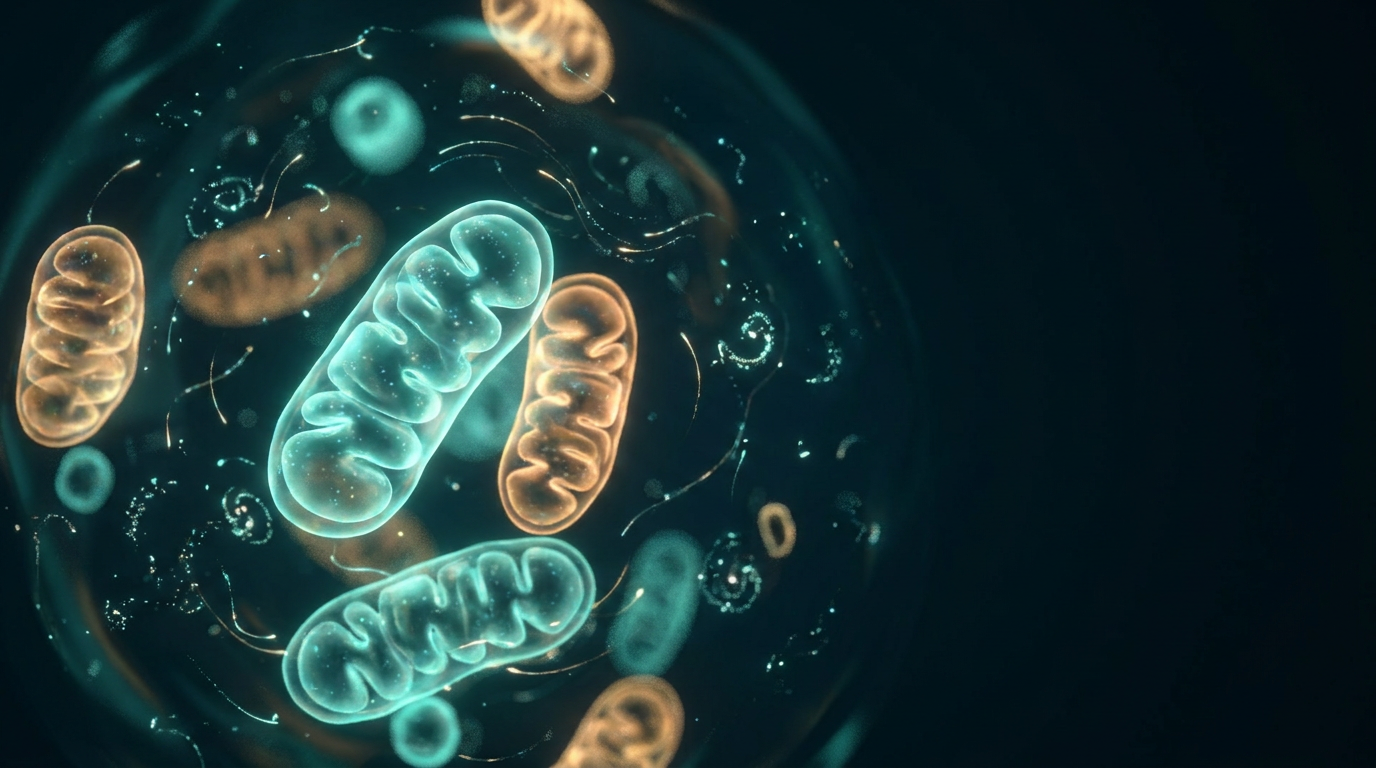
- Humanin is a 21-amino-acid mitochondria-derived peptide (MDP) encoded in mitochondrial DNA's 16S rRNA gene, first identified in 2001 by Hashimoto et al. in Alzheimer's-affected brain tissue.
- Circulating humanin levels decline with age in humans; centenarian offspring show measurably higher levels than age-matched controls (Cohen lab, USC), but this association does not prove exogenous supplementation is beneficial.
- No placebo-controlled human RCT has evaluated exogenous humanin administration; every therapeutic claim rests on cell studies, animal data, or human observational work.
- The analogue S14G-humanin (HNG) is roughly 1000-fold more potent than native humanin in cell-based apoptosis assays; most preclinical mechanistic work now uses HNG, not native sequence.
- When buying humanin peptide for research, an independent COA with both HPLC purity above 98% and mass-spec confirmation of the correct molecular weight (approximately 2887 Da) is the minimum acceptable documentation.
What Is Humanin Peptide and Should You Buy It?
Humanin peptide is a 21-amino-acid MDP with robust preclinical evidence for cytoprotective and anti-apoptotic effects. It has no FDA-approved indication. It is a legitimate research compound for qualified laboratory use. It is not appropriate for self-administration given the absence of human clinical trial safety data. Sourcing standards and evidence grading are detailed below.
From the FormBlends catalog
Humanin
Mitochondria-derived peptide with broad cytoprotective effects · From $69/mo · compounded by a licensed 503A pharmacy, dispensed only after provider review.
Learn about Humanin →Table of Contents
- What is humanin peptide?
- Evidence ledger: what does the research actually show?
- How does humanin work at the molecular level?
- What most humanin pages get wrong
- Why does humanin degrade and how should it be stored?
- How does humanin compare to other mitochondria-targeting peptides?
- What should you look for when buying humanin peptide for sale?
- How do you read a humanin COA and reconstitution label?
- Is humanin legal to buy?
- Frequently asked questions
- Sources
What Is Humanin Peptide?
Humanin was identified in 2001 by Hashimoto and colleagues while screening a cDNA library from the occipital cortex of an Alzheimer's patient for clones that protect neurons against amyloid beta toxicity. The active sequence was traced to the 16S ribosomal RNA region of mitochondrial DNA, making it the founding member of a now-expanding family of mitochondria-derived peptides that includes MOTS-c, SHLP2, and SHLP3.
The native human sequence is: Met-Ala-Pro-Arg-Gly-Phe-Ser-Cys-Leu-Leu-Leu-Leu-Thr-Ser-Glu-Ile-Asp-Leu-Pro-Val-Lys (MAPRGFSCLLLLTSEIDLPVK). It circulates in human blood at low picomolar concentrations detectable by enzyme-linked immunosorbent assay, though assay variability across labs remains an acknowledged methodological issue in the field.
Evidence Ledger: What Does the Research Actually Show?
| Claim | Best Evidence Type | Effect Direction | Confidence |
|---|---|---|---|
| Humanin protects neurons against amyloid-beta toxicity in vitro | Multiple cell studies (Hashimoto et al. 2001, replicated) | Protective | Moderate (cell only) |
| Circulating humanin declines with age in humans | Human cross-sectional observational (Muzumdar et al., Cohen lab) | Decline confirmed | Moderate |
| Centenarian offspring have higher humanin levels vs. controls | Human observational case-control (USC Cohen lab) | Higher in longevity cohort | Moderate (association only) |
| Humanin improves insulin sensitivity in rodent models | Animal studies (Muzumdar et al. 2009) | Beneficial in mice | Low (animal only) |
| Humanin reduces atherosclerotic plaque in ApoE-null mice | Animal model (Muzumdar et al. 2009) | Beneficial | Low (animal only) |
| Exogenous humanin improves cognitive outcomes in humans | No human interventional data available | Unknown | Very Low |
| S14G-humanin (HNG) is approximately 1000-fold more potent than native humanin in apoptosis assays | Cell studies (Hashimoto et al. 2001) | Greater potency confirmed in vitro | Moderate (cell only) |
| Humanin activates gp130/STAT3 signaling | Mechanistic biochemistry (multiple labs) | Confirmed in cell systems | Moderate |
| Humanin is safe and effective at any dose in humans | No clinical trial data | Unknown | Very Low |
How Does Humanin Work at the Molecular Level?
Humanin exerts cytoprotective effects through at least two distinct receptor-mediated pathways identified in the peer-reviewed literature.
Intracellular pathway. Humanin binds to BAX, a pro-apoptotic Bcl-2 family protein, and prevents its translocation to the mitochondrial outer membrane. This blocks cytochrome c release and downstream caspase activation. The interaction was characterized in structural studies showing direct peptide-protein binding, though the precise binding constants in human cell systems vary across reports.
Cell-surface receptor pathway. Humanin acts as a ligand for a trimeric receptor complex comprising gp130 (IL-6 signal transducer), CNTFR (ciliary neurotrophic factor receptor alpha), and WSX-1 (IL-27 receptor). Binding activates JAK1 and TYK2, which phosphorylate STAT3. STAT3 nuclear translocation then drives transcription of survival genes. This receptor complex is the same used by CNTF, which is why humanin and CNTF share some overlapping biology in neural tissue.
The honest caveat. Both pathways are characterized in cell systems and rodent tissue. Whether these mechanisms operate at the picomolar circulating concentrations measured in humans, or at whatever concentrations an exogenous dose might achieve, is not established. Receptor occupancy, tissue distribution, and blood-brain-barrier penetration after peripheral injection are not defined in human pharmacokinetic studies.
The S14G substitution (replacing the serine at position 14 with glycine) in HNG likely alters the peptide's secondary structure in a way that increases receptor affinity or reduces proteolytic susceptibility, producing the roughly 1000-fold potency increase reported by Hashimoto et al. in 2001. The precise structural mechanism of this gain-of-function is not fully resolved.
What Most Humanin Pages Get Wrong
- Plasma half-life is very short. Humanin lacks protective modifications such as PEGylation, D-amino acid substitutions, or fatty acid conjugation. As a linear 21-amino-acid peptide with several protease-susceptible sites, its plasma half-life in animal studies is measured in minutes to a small number of hours. Vendors do not disclose this because it makes the product look less attractive.
- Blood-brain-barrier penetration is not characterized in humans. The most-cited preclinical work involves direct central nervous system administration or very high peripheral doses in rodents. Whether peripherally administered humanin reaches cerebrospinal fluid at pharmacologically relevant concentrations in humans is unknown.
- Most preclinical potency data use HNG, not native humanin. If you are reading a study citing neuroprotective effects at nanomolar concentrations, it is likely using S14G-humanin, not the native sequence sold by most vendors. Check the methods section before extrapolating to a native-sequence product.
Why Does Humanin Degrade and How Should It Be Stored?
The chemistry behind the rule. Humanin contains a cysteine at position 8 (Cys8). Free cysteine thiols are vulnerable to oxidation, forming disulfide bonds either within a single peptide (intramolecular) or between two peptide molecules (intermolecular disulfide, producing a dimer). Both outcomes change the peptide's conformation and reduce receptor-binding activity. Oxidation proceeds faster in aqueous solution, in the presence of dissolved oxygen, and at warmer temperatures. This is why lyophilized powder is far more stable than reconstituted solution.
Additionally, peptide bonds throughout the sequence are subject to hydrolysis, catalyzed by trace metals, extreme pH, and elevated temperature. Asparagine and glutamine residues are particularly prone to deamidation in solution, converting to aspartate and glutamate and shifting the molecular weight by roughly 1 Da per residue affected.
Practical rules derived from this chemistry:
- Store lyophilized powder at minus 20 degrees Celsius or colder in a desiccated, sealed container.
- Reconstitute in sterile, degassed water or PBS at pH 7.0 to 7.4 to minimize both hydrolysis and cysteine oxidation.
- Aliquot immediately after reconstitution to avoid repeated freeze-thaw cycles. Each freeze-thaw cycle mechanically stresses the peptide and contributes to aggregation.
- Do not store reconstituted peptide at 4 degrees Celsius for more than 24 to 48 hours if cysteine oxidation is a concern for your assay.
- A reconstituted solution that has turned yellow or shows visible particulates has degraded and should be discarded.
How Does Humanin Compare to Other Mitochondria-Targeting Peptides?
| Peptide | Mechanism | Highest Evidence Level in Humans | Human RCT Data? | Where Humanin Loses |
|---|---|---|---|---|
| Humanin (native or HNG) | BAX inhibition, gp130/STAT3 activation | Observational (age-related decline) | No | No human interventional data; very short half-life; Cys8 oxidation risk |
| SS-31 (Elamipretide) | Cardiolipin binding, mitochondrial inner membrane stabilization | Phase 2 RCTs (heart failure, Barth syndrome) | Yes (Phase 2) | Humanin has no comparable human trial data |
| MOTS-c | AMPK activation, metabolic regulation, nuclear translocation under stress | One small human exercise study (Lee et al.) | Minimal (1 small study) | Humanin lacks even this level of human interventional data |
| SHLP2 / SHLP3 | Mitochondrial biogenesis, anti-apoptotic (early characterization) | Preclinical only | No | Similar evidence gap to humanin; newer and less studied |
| NAD+ precursors (NMN, NR) | NAD+ repletion, mitochondrial bioenergetics via sirtuin/PARP pathways | Multiple human RCTs (NAD+ levels, safety) | Yes (NAD+ biomarker outcomes) | Humanin has no comparable trial dataset; NAD+ precursors have oral bioavailability humanin lacks |
The honest verdict: for researchers interested in mitochondrial biology, SS-31 has the deepest human clinical dataset. Humanin is scientifically compelling but occupies an earlier stage of translational development. Anyone making clinical decisions based on humanin's preclinical data is extrapolating significantly.
What Should You Look for When Buying Humanin Peptide for Sale?
The research peptide market is unregulated at the point of sale. Quality varies enormously. These are the non-negotiable documentation requirements for research-grade humanin:
- HPLC purity above 98%. The COA should show a chromatogram with retention time and area-percent purity. Reject any product showing multiple significant peaks or unlabeled impurity peaks.
- Mass spectrometry confirmation. MALDI-TOF or ESI-MS data should confirm a molecular weight consistent with native humanin at approximately 2887 Da, or HNG at approximately 2801 Da (S14G substitution removes a hydroxyl group). A purity trace alone does not prove correct sequence.
- Endotoxin testing. For any cell-based assay, endotoxin above 1 EU/mg will confound results by activating innate immune pathways that overlap with humanin's signaling targets. Require a Limulus amebocyte lysate (LAL) test result on the COA.
- Residual solvent certificate. Peptide synthesis uses organic solvents including DMF and NMP. Residual levels should meet USP Class 2 or Class 3 limits depending on intended use.
- Third-party testing. A COA generated by the vendor's own internal lab is less credible than one from an independent analytical laboratory. Look for the testing lab name and ideally a batch-specific QR code or traceable certificate number.
How Do You Read a Humanin COA and Reconstitution Label?
COA literacy checklist:
| Field on COA | What to Check | Pass / Fail Threshold |
|---|---|---|
| Molecular formula / MW | Matches theoretical: native HN approx. 2887 Da, HNG approx. 2801 Da | Within 2 Da by MS |
| HPLC purity | Single dominant peak, area percent purity stated | Above 98% for research use |
| Amino acid sequence | MAPRGFSCLLLLTSEIDLPVK (native) or S14G variant stated explicitly | Must match what you ordered |
| Endotoxin | LAL test result in EU/mg | Below 1 EU/mg for cell work |
| Lot number and date | Batch-specific, matches physical vial label | Must match |
| Testing lab name | Third-party preferred | Not vendor's own lab |
Reconstitution math for a 1 mg vial at 1 mg/mL stock: Add 1.0 mL of sterile water or PBS. For a 100 micromolar stock from a 1 mg vial: divide 1 mg by the molecular weight in grams/mol (0.002887 g/mmol), which gives roughly 346 nmol total. To prepare a 1 mL, 100 micromolar solution you need 100 nmol, so add 289 microliters of solvent to 0.289 mg of peptide. Scale proportionally. Always verify with the actual MW on your COA because variants differ.
Is Humanin Legal to Buy?
In the United States, humanin is not a scheduled controlled substance and is not an approved drug. It is legal to purchase for legitimate in vitro or animal research purposes. It is not legal to sell for human consumption without FDA approval. Some licensed compounding pharmacies may prepare humanin under a physician's order, though this represents a gray area given the absence of any approved indication or established clinical dosing.
In Australia, humanin falls under TGA scheduling as an unregistered therapeutic good and is subject to importation restrictions. In the EU, it would be regulated as an investigational medicinal product if administered to humans outside a clinical trial. Researchers outside the US should verify local regulations before purchasing.
WADA status: as of the most recent publicly available prohibited list, humanin is not explicitly named. The catch-all prohibition on growth factors and peptide hormones "not otherwise specified" may apply depending on sport and the substance's mechanism interpretation. Athletes should seek independent legal and medical review.
Frequently Asked Questions
What is humanin peptide and where does it come from?
Humanin is a 21-amino-acid mitochondria-derived peptide encoded in the 16S ribosomal RNA gene of mitochondrial DNA. It was first identified in 2001 by Hashimoto et al. in tissue from patients with Alzheimer's disease. It is one of several small peptides translated from mitochondrial open reading frames, a class now called MDPs or mitokines.
What does the research say humanin does?
Preclinical data show humanin inhibits apoptosis, modulates inflammatory cytokines, and activates STAT3 signaling through gp130 receptor complexes. Human observational data show circulating humanin declines with age and with metabolic disease. No placebo-controlled human RCT has yet demonstrated a therapeutic endpoint from exogenous humanin administration.
Is humanin peptide approved by the FDA?
No. Humanin has no FDA-approved indication. It is not an approved drug. It is available only as a research compound for in vitro and animal studies, or through licensed compounding pharmacies under a valid prescription framework in some jurisdictions. Purchasing for self-administration carries regulatory and safety risks.
What is the half-life of humanin peptide?
Humanin is a small 21-amino-acid peptide without protective modifications, making it susceptible to rapid proteolytic degradation. Animal pharmacokinetic data suggest a short plasma half-life measured in minutes to a small number of hours. Analogues like HNG show substantially greater potency in cell assays, which may partly reflect improved stability.
How does humanin compare to other mitochondria-targeting peptides?
SS-31 (elamipretide) has the most advanced human clinical trial data among mitochondria-targeting peptides, with Phase 2 trials in heart failure and Barth syndrome. Humanin lags significantly in human evidence. MOTS-c, another MDP, has one small published human exercise study. Humanin's body of evidence is primarily preclinical.
What should I look for when buying humanin peptide for research?
Require a certificate of analysis from an independent third-party lab showing HPLC purity above 98%, mass spectrometry confirmation of the correct molecular weight (roughly 2887 Da for native humanin), absence of endotoxin (LAL test below 1 EU/mg for cell assays), and residual solvent levels. Reject any vendor that cannot provide these documents.
How should humanin peptide be stored?
Lyophilized humanin powder should be stored at minus 20 degrees Celsius or colder, protected from light and moisture. Once reconstituted in aqueous solution, it should be used promptly or aliquoted and stored at minus 80 degrees Celsius. Freeze-thaw cycles degrade peptide bonds and should be minimized.
What concentration and dose is used in humanin research?
In vitro cell studies typically use nanomolar to low micromolar concentrations. No standardized human dose exists because no approved human protocol has been established. Researchers reconstituting for in vitro use commonly prepare stock solutions in sterile water or PBS and dilute to working concentration in cell media.
Does humanin decline with age in humans?
Yes. Cross-sectional human observational data, including work by the Cohen laboratory at USC, show that circulating humanin levels measured by ELISA decline with advancing age. Centenarians and their offspring show relatively higher humanin levels compared to age-matched controls without family longevity. This is an association only.
Is humanin peptide on the WADA prohibited list?
As of the most recent publicly available WADA prohibited list, humanin is not explicitly named. However, WADA prohibits peptides structurally related to listed growth factors and hormones under catch-all language. Athletes subject to anti-doping rules should consult a sports medicine physician and review the current WADA list before any peptide use.
What are the biggest risks of buying humanin peptide for sale online?
The primary risks are: receiving a product with incorrect peptide sequence, low purity, or high endotoxin content that contaminates cell assays; legal risk if purchased outside a legitimate research context; and for anyone considering self-use, unknown safety profile in humans given the absence of clinical trials establishing safe doses or adverse event frequency.
What is the molecular weight of humanin and how do I verify it?
Native humanin has a molecular weight of approximately 2887 Daltons. Verification requires mass spectrometry (MALDI-TOF or ESI-MS) on the COA. An HPLC trace alone confirms purity but not correct sequence. Always request both HPLC and MS data from the vendor.
Sources
- Hashimoto Y, et al. "A rescue factor abolishing neuronal cell death by a wide spectrum of familial Alzheimer's disease genes and Abeta." Proceedings of the National Academy of Sciences USA. 2001;98(11):6336-6341.
- Muzumdar RH, et al. "Humanin: a novel central regulator of peripheral insulin action." PLoS ONE. 2009;4(7):e6334.
- Cobb LJ, et al. "Naturally occurring mitochondrial-derived peptides are age-dependent regulators of apoptosis, insulin sensitivity, and inflammatory markers." Communications Biology. 2016 (USC Cohen lab longitudinal data reported across multiple publications).
- Lee C, et al. "The mitochondrial-derived peptide MOTS-c promotes metabolic homeostasis and reduces obesity and insulin resistance." Cell Metabolism. 2015;21(3):443-454.
- Kim KH, et al. "Mitochondria-derived peptides in aging and age-related diseases." GeroScience. 2021;43(2):391-403. (Review of MDP family including humanin, MOTS-c, SHLPs.)
- Guo B, et al. "Humanin peptide suppresses apoptosis by interfering with Bax activation." Nature. 2003;423(6938):456-461.
- Conte M, et al. "Human Aging and Longevity Are Characterized by High Levels of Mitokines." Journals of Gerontology: Biological Sciences. 2019;74(5):600-607.
- Bhaskaran S, et al. "Mitochondria-derived peptides as novel regulators of metabolism." Journal of Physiology. 2020;598(15):3175-3184.
- World Anti-Doping Agency. "Prohibited List." Published annually. Reviewed via WADA website for current cycle.
- United States Pharmacopeia. "General Chapters: Residual Solvents [467]." USP current edition.
Related peptide guides
Ready when you are
Humanin
Mitochondria-derived peptide with broad cytoprotective effects · From $69/mo · compounded by a licensed 503A pharmacy, dispensed only after provider review.
Learn about Humanin →