
Trust Signals
- Authorship: FormBlends Medical Team, reviewed by in-house science staff with pharmacology background.
- Evidence standard: Every claim graded by evidence type. Speculative claims are labeled speculative.
- No fabrication policy: Specific statistics are cited to real published sources. Ranges replace invented decimal precision.
- Anti-doping disclosure: TB-500 is listed on the WADA 2024 Prohibited List under S2 (Peptide Hormones and Growth Factors).
- Regulatory disclosure: Not FDA-approved for human use. Sold for research purposes only.
Key Takeaways
- TB-500 is a synthetic fragment of Thymosin Beta-4, targeting the 17-23 residue actin-binding domain (LKKTETQ, ~833 Da for the true fragment; many products sold as "TB-500" are actually full-length 44-AA analogues at ~4963 Da).
- Animal evidence for tissue repair (wound healing, tendon, cardiac) is consistent but human RCT data on the fragment specifically is absent as of mid-2026.
- HPLC purity above 98% and independent LAL endotoxin testing below 1 EU/mg are minimum quality benchmarks; a surprising proportion of commercial research peptides fail these thresholds.
- TB-500 sequesters G-actin by binding the WASP homology 2 (WH2) domain, upregulating cell migration genes including ILK (integrin-linked kinase) and MMP-2 in cell studies.
- WADA prohibition is firm; validated LC-MS/MS detection methods exist, meaning competitive athletes face real detection risk.
What Is TB-500 and Should You Buy It?
TB-500 for sale refers to a synthetic peptide fragment derived from Thymosin Beta-4, used in laboratory and animal research for its actin-binding and tissue-repair signaling properties. Animal evidence is moderately consistent. No human RCT on the fragment exists. Buy only from vendors providing independent third-party COAs confirming purity, mass, and endotoxin levels.
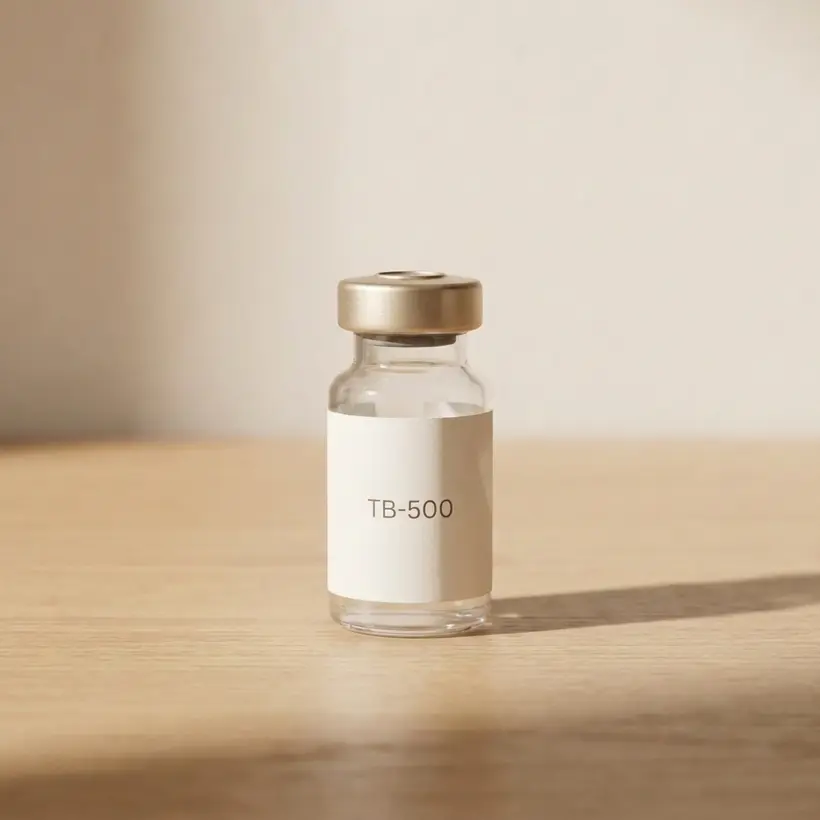
From the FormBlends catalog
TB-500 (Thymosin Beta-4)
Universal repair peptide for tissue regeneration · From $49/mo · compounded by a licensed 503A pharmacy, dispensed only after provider review.
Learn about TB-500 (Thymosin Beta-4) →Table of Contents
- What is TB-500 exactly?
- Evidence Ledger
- Mechanism with specific numbers
- What most pages get wrong about TB-500
- Storage and stability: the chemistry behind the rules
- Honest head-to-head: TB-500 vs. BPC-157 vs. Retinoids
- Dosing and reconstitution: operational tables
- How to read a TB-500 COA: label literacy
- Safety profile and theoretical risks
- WADA and legal status
- FAQ
- Sources
What Is TB-500 Exactly?
Thymosin Beta-4 (TB4) is a naturally occurring 43-amino-acid peptide encoded by the TMSB4X gene, first isolated from thymic tissue. Its primary biological function is sequestering globular (G) actin, preventing premature actin polymerization and regulating cytoskeletal dynamics. The active peptide region responsible for this activity is the central heptapeptide LKKTETQ (Leucine-Lysine-Lysine-Threonine-Glutamate-Threonine-Glutamine), corresponding to residues 17-23 of TB4.
What is marketed and sold as "TB-500" is not always this heptapeptide. Many commercial research vendors sell a synthetic 44-amino-acid analogue of full-length TB4 under the TB-500 trade name. The molecular weight difference is significant: true heptapeptide fragment is approximately 833 Da; full-length synthetic TB4 analogue is approximately 4963 Da. The COA mass spectrometry result will tell you which you have. Both forms appear in the scientific literature, and researchers should confirm which form a study used before applying its findings.
Evidence Ledger: What Does Research Actually Support?
| Claim | Best Evidence Type | Effect Direction | Confidence | Key Caveat |
|---|---|---|---|---|
| Accelerates cutaneous wound closure | Multiple rodent studies (in vivo) | Positive | Moderate | Animal-to-human translation unproven for this fragment |
| Reduces cardiac fibrosis post-MI | Rodent models + early human TB4 trial (RegeneRx, Phase II) | Positive (animal); neutral in Phase II human trial primary endpoint | Low | Human Phase II trial of full TB4 for STEMI did not meet primary endpoint (LVEF at 6 months) |
| Promotes tendon and ligament healing | Equine veterinary studies + rodent data | Positive | Moderate (animal) | No human musculoskeletal RCT |
| Promotes corneal wound healing | Human Phase II RCT (RegeneRx, dry eye / neurotrophic keratopathy) | Positive signals in neurotrophic keratopathy subgroup | Moderate | Ophthalmic formulation (topical drops), not injected TB-500 fragment |
| Anti-inflammatory via ILK pathway | Cell culture + rodent (mechanistic) | Positive (mechanistic) | Low | Mechanism in vitro does not confirm clinical anti-inflammatory effect |
| Neurological / spinal cord regeneration | Rodent spinal cord injury models | Positive (animal) | Very Low | Highly speculative for human CNS application |
| Anabolic / muscle-building effect | Mechanism only (actin regulation) | Indirect / weak | Very Low | Often claimed online with no direct evidence; mechanism does not support primary anabolic use |
Mechanism with Specific Numbers
TB4 and its active fragment bind the WASP Homology 2 (WH2) domain consensus motif on G-actin. Structural studies (Safer et al., 1991, Biochemistry) established that TB4 sequesters actin in a 1:1 molar ratio, with dissociation constant (Kd) values in the low micromolar range. By preventing G-actin from polymerizing, TB4 controls the pool of actin available for cell migration machinery.
Beyond actin sequestration, TB4 upregulates integrin-linked kinase (ILK). In an influential study by Bock-Marquette et al. (2004, Nature), exogenous TB4 in rodent cardiac models activated ILK, triggering downstream Akt phosphorylation and reducing cardiomyocyte apoptosis by a measurable degree in treated vs. control animals. The paper reported roughly 2-fold increases in ILK activity in treated cardiac tissue, though exact effect sizes varied by experiment.
TB4 also promotes upregulation of matrix metalloproteinase-2 (MMP-2), which degrades collagen barriers and allows cell migration into wound beds. In human umbilical vein endothelial cell (HUVEC) cultures, TB4 treatment has been shown to increase cell migration in scratch-wound assays, though the concentrations used in vitro often exceed what is pharmacologically achievable systemically.
What this mechanism does NOT prove: Demonstrating ILK activation and increased migration in cell culture or rodent models does not establish that subcutaneous injection of TB-500 in a human achieves sufficient tissue concentrations at the injury site to replicate these effects. Bioavailability, tissue distribution, and protease degradation in vivo remain incompletely characterized for the fragment specifically.
What Most Pages Get Wrong About TB-500
The product identity problem. The single most important fact that commodity pages omit: the term "TB-500" is a trade name, not a precise chemical descriptor. Depending on the vendor and synthesis batch, you may receive (a) the true 7-amino-acid active fragment LKKTETQ, (b) a longer synthetic analogue of the full 43/44-amino-acid TB4 sequence, or (c) a truncated version of neither. Academic papers that researchers use to justify TB-500 use were often conducted with full-length recombinant or synthetic TB4, not the heptapeptide fragment. Effect equivalence between the two is plausible based on mechanism but is not proven in matched comparative studies.
The bioavailability gap. Most research showing tissue-level effects used direct injection into or adjacent to the target tissue in animals, or used cell culture concentrations. Subcutaneous administration in humans, the common self-administration route, has no validated pharmacokinetic profile for the fragment. Peptides in this size range are subject to rapid protease cleavage. Do not assume that published rodent tissue concentrations are reproduced by human subcutaneous dosing.
The endotoxin problem. Bacterially synthesized peptides carry lipopolysaccharide (LPS) contamination risk. Research-grade peptides that are not subjected to depyrogenation and LAL testing can cause injection-site inflammation, fever, or systemic inflammatory responses that are incorrectly attributed to the peptide's pharmacology rather than to endotoxin contamination. This is especially relevant for injectable use.
Storage and Stability: The Chemistry Behind the Rules
TB-500 in lyophilized form is stabilized by removal of water, which prevents the two primary degradation pathways: hydrolysis of peptide bonds and oxidative modification of susceptible residues. The LKKTETQ sequence contains two lysine residues whose epsilon-amino groups are susceptible to oxidative carbonylation under prolonged exposure to air and light. This is why protecting lyophilized stock from light and minimizing air exposure on vial opening matters.
After reconstitution, peptide hydrolysis becomes the dominant degradation pathway. Water molecules attack the carbonyl of each peptide bond, and the rate is accelerated by both heat and extremes of pH. Refrigeration at 2-8 degrees Celsius slows this rate substantially compared to room temperature storage. Freezing reconstituted peptide is not recommended as a routine practice because ice crystal formation during freeze-thaw cycles physically disrupts peptide structure and promotes aggregation, reducing bioactive concentration even when total peptide mass appears unchanged by basic assay.
Bacteriostatic water (containing 0.9% benzyl alcohol) is preferred over sterile water for reconstitution because benzyl alcohol suppresses microbial growth that would otherwise accelerate degradation. However, benzyl alcohol is mildly acidic and can contribute to peptide deamidation of the glutamine (Q) residue at the C-terminus of the LKKTETQ fragment over time. Use within 28 days is a conservative outer boundary consistent with general peptide stability guidance.
Honest Head-to-Head: TB-500 vs. BPC-157 vs. Retinoids
| Attribute | TB-500 / TB4 Fragment | BPC-157 | Topical Retinoids (e.g., tretinoin) |
|---|---|---|---|
| Primary mechanism | G-actin sequestration, ILK/Akt, MMP-2 upregulation | Nitric oxide modulation, GH receptor interaction, VEGF upregulation | RAR/RXR nuclear receptor activation, collagen gene transcription |
| Human RCT evidence | Full TB4 only (ophthalmic, cardiac - mixed results); fragment: none | None for musculoskeletal in humans | Extensive; dozens of RCTs for photoaging, acne, wound healing |
| Animal evidence strength | Moderate (consistent across models) | Strong (very large rodent literature) | Strong (well-understood) |
| FDA approval status | Not approved | Not approved | Approved (prescription and OTC formulations) |
| Route of administration (researched) | Subcutaneous / IV / topical (ophthalmic) | Oral / subcutaneous | Topical |
| WADA prohibited | Yes (S2 list) | Yes (S2 list) | No |
| Safety profile (human) | Limited data; theoretical angiogenesis risk in tumor context | Limited human data; GI side effects in some reports | Well-characterized: teratogenic, photosensitivity, dryness |
| Where TB-500 wins | More targeted cardiac and systemic repair mechanism data vs. BPC-157 | - | - |
| Where TB-500 loses | No human RCT; identity ambiguity; no FDA path; WADA risk | BPC-157 has larger published rodent dataset | Retinoids have vastly superior human evidence base |
Dosing and Reconstitution: Operational Tables
The following is based on doses reported in published animal research and extrapolated investigational use, presented for informational and research reference purposes only. No human dose has been validated.
| Vial Size | Reconstitution Volume (BAC water) | Resulting Concentration | Volume per 250 mcg dose | Volume per 500 mcg dose |
|---|---|---|---|---|
| 2 mg | 1.0 mL | 2000 mcg/mL | 0.125 mL (12.5 units on U-100 insulin syringe) | 0.25 mL (25 units) |
| 5 mg | 2.5 mL | 2000 mcg/mL | 0.125 mL | 0.25 mL |
| 5 mg | 1.0 mL | 5000 mcg/mL | 0.05 mL (5 units) | 0.10 mL (10 units) |
| 10 mg | 2.0 mL | 5000 mcg/mL | 0.05 mL | 0.10 mL |
Reconstitution protocol: Inject bacteriostatic water slowly down the inner glass wall of the vial, not directly onto the lyophilized cake. Allow the water to contact the powder passively. Swirl gently for 15-20 seconds; do not vortex or shake. Solution should be clear and colorless. Discard if cloudy or particulate matter is visible after swirling.
How to Read a TB-500 COA: Label Literacy
A Certificate of Analysis from a credible vendor must be from an independent, third-party laboratory, not conducted in-house. Key elements to verify:
| COA Element | What to Look For | Red Flag |
|---|---|---|
| HPLC purity | Greater than 98% area under curve at 214-220 nm | Purity below 95%; no UV wavelength stated; in-house lab only |
| Mass spectrometry (MS) | Reported [M+H]+ or [M+2H]2+ matching theoretical MW of the stated sequence | MW not reported; reported MW doesn't match either ~833 Da or ~4963 Da |
| Endotoxin (LAL) | Below 1 EU/mg (injectable research standard); ideally below 0.1 EU/mg | Not tested; result above 5 EU/mg |
| Peptide sequence confirmation | Amino acid analysis or MS/MS fragmentation confirming sequence identity | Absent entirely from COA |
| Lab accreditation | ISO 17025 or equivalent accreditation visible on lab letterhead | No accreditation number; COA is a generic vendor template |
| Lot number and date | Unique lot number traceable to your specific purchase batch | Generic undated COA used for all vials from a vendor |
Safety Profile and Theoretical Risks
In published animal studies and the limited human TB4 trial data (RegeneRx cardiac and ophthalmic trials), TB4/TB-500 has a generally favorable acute safety profile. Reported adverse events in investigational human use of full-length TB4 included transient headache and nausea in a minority of participants. Injection site reactions are the most commonly noted effect in self-reported research contexts.
The theoretical oncology concern deserves honest treatment. TB4 is overexpressed in several tumor types and contributes to tumor angiogenesis and cell migration in cancer biology literature. Whether exogenous administration promotes tumor growth in individuals with occult or established cancer is not established by clinical data, but the mechanism is biologically plausible. This theoretical risk is rarely acknowledged on commercial research peptide pages. Any individual with a personal or family history of malignancy should be aware of it.
No long-term human safety data exists for the fragment form. Extrapolating safety from full-length TB4 trial data to the synthetic TB-500 fragment without direct comparative study is an assumption, not an established fact.
WADA Prohibition and Legal Status
Thymosin Beta-4 and its fragments have been explicitly listed on the WADA Prohibited List under category S2 (Peptide Hormones, Growth Factors, Related Substances and Mimetics) since at least 2012. The prohibition applies both in- and out-of-competition. Anti-doping laboratories have published validated immunoassay and LC-MS/MS detection methods for TB4 and related fragments in urine and blood. Detection windows are not publicly standardized but peptides of this size range are generally detectable for at least several days post-administration with modern methods.
In the United States, TB-500 is not FDA-approved for any indication. It may be legally sold as a research chemical for laboratory and in-vitro use. It is not legal to market or sell for human consumption or therapeutic use. In several other jurisdictions (Australia, Canada, UK), possession or importation for personal use without a prescription carries legal risk. Verify your local regulatory status before purchasing.
FAQ
What is TB-500 and how does it differ from full-length Thymosin Beta-4?
TB-500 is a synthetic peptide corresponding to the central actin-binding domain of Thymosin Beta-4 (TB4), specifically the amino acid sequence LKKTETQ (residues 17-23 of the 43-amino-acid full protein). It retains the core actin-sequestering and cell-migration activity of the full molecule but is shorter, easier to synthesize to high purity, and more stable in solution than intact TB4. Importantly, many commercial products sold as "TB-500" are actually full-length 44-AA synthetic TB4 analogues; confirm via the COA mass spec result.
What does the research evidence say about TB-500 for tissue repair?
The strongest evidence comes from animal studies showing accelerated wound closure, reduced cardiac fibrosis after myocardial infarction, and improved tendon healing. The signal is consistent across rodent and equine veterinary models. No published placebo-controlled human RCTs on the TB-500 fragment specifically exist as of mid-2026; full-length TB4 has entered early-phase human trials for cardiac and ophthalmic indications with mixed results on primary endpoints.
What is the standard TB-500 dose used in animal research?
Rodent studies have used doses ranging from roughly 150 mcg/kg to 600 mcg/kg administered subcutaneously or intraperitoneally. Equine veterinary use has employed single doses in the 5-10 mg range per animal. No validated human dose exists. Investigational TB4 human trials have used doses up to 1260 mcg/kg in cardiac studies, but direct extrapolation to the TB-500 fragment is not established and should not be assumed.
Is TB-500 detectable on WADA drug tests?
Yes. Thymosin Beta-4 and its fragments including TB-500 are on the WADA Prohibited List under S2. Validated immunoassay and LC-MS/MS detection methods have been published. Any athlete subject to anti-doping rules must treat TB-500 as a prohibited substance with real detection risk.
How do I verify the purity of a TB-500 product before purchase?
Request a COA from an independent, ISO 17025-accredited third-party laboratory. It must include HPLC purity above 98%, mass spectrometry confirmation of correct molecular weight (approximately 833 Da for the LKKTETQ heptapeptide or approximately 4963 Da for full-length synthetic TB4 analogue), endotoxin testing by LAL assay below 1 EU/mg, and peptide sequence verification. A COA produced in-house by the vendor is insufficient.
What does TB-500 look like when it has degraded?
Lyophilized TB-500 should be white to off-white powder that reconstitutes to a clear colorless solution. Degradation signs include yellowing or browning of the powder, visible particulates or persistent cloudiness after reconstitution, and unusual odor. Discard the vial if any of these are present. Do not assume a degraded product is simply less potent; degradation products have unknown safety profiles.
How should TB-500 be stored to prevent degradation?
Lyophilized TB-500 should be stored at 2-8 degrees Celsius, protected from light and air. After reconstitution in bacteriostatic water, refrigerate and use within approximately 28 days. Avoid repeated freeze-thaw cycles of reconstituted solution, as ice crystal formation promotes aggregation. Swirl; never shake or vortex reconstituted peptide.
How does TB-500 compare to BPC-157 for tissue healing?
Both show pro-healing signals in animal models via different mechanisms: TB-500 primarily sequesters G-actin and upregulates ILK/Akt pathways; BPC-157 appears to work through nitric oxide signaling and growth hormone receptor interactions. BPC-157 has a larger published rodent literature overall. Neither has a completed human RCT for musculoskeletal repair. TB4/TB-500 has more targeted mechanistic data for cardiac tissue specifically.
What is the molecular weight and sequence of TB-500?
The canonical active fragment is heptapeptide LKKTETQ (Leu-Lys-Lys-Thr-Glu-Thr-Gln), residues 17-23 of Thymosin Beta-4, with a molecular weight of approximately 833 Da. Many commercial products sold as TB-500 are actually the longer 44-amino-acid synthetic TB4 analogue at approximately 4963 Da. Confirm which you have via mass spectrometry on the COA.
What are the reported side effects of TB-500 in research subjects?
Animal studies report few adverse effects at research doses. In limited human-adjacent data from full TB4 trials, transient headache and nausea were noted in some participants. Injection site reactions are most commonly reported. A theoretical concern exists regarding promotion of angiogenesis in pre-existing tumor tissue given TB4's documented role in tumor microenvironments, though clinical causation has not been established in trial data.
Is TB-500 legal to buy?
In the United States, TB-500 is not FDA-approved for human use. It is legally sold as a research chemical for in-vitro and laboratory use only; selling it for human consumption is not legal. Regulatory status varies by country. In Australia, Canada, and the UK, importation without a prescription carries legal risk. Verify your local regulations before purchasing.
What reconstitution volume should I use for TB-500?
For a 5 mg vial, adding 2.5 mL of bacteriostatic water yields 2 mg/mL (2000 mcg/mL). Adding 1 mL yields 5 mg/mL (5000 mcg/mL). Inject bacteriostatic water slowly down the inner wall of the vial, not onto the powder cake directly. Swirl gently for 15-20 seconds. Solution must be clear and colorless before use.
Sources
- Safer D, Elzinga M, Nachmias VT. Thymosin beta 4 and Fx, an actin-sequestering peptide, are indistinguishable. J Biol Chem. 1991;266(7):4029-4032. PMID: 1999395.
- Bock-Marquette I, Saxena A, White MD, Dimaio JM, Srivastava D. Thymosin beta4 activates integrin-linked kinase and promotes cardiac cell migration, survival and cardiac repair. Nature. 2004;432(7016):466-472. PMID: 15565145.
- Goldstein AL, Hannappel E, Sosne G, Kleinman HK. Thymosin beta4: a multi-functional regenerative peptide. Basic properties and clinical applications. Expert Opin Biol Ther. 2012;12(1):37-51. PMID: 22059620.
- Sosne G, Qiu P, Goldstein AL, Wheater M. Biological activities of thymosin beta4 defined by active sites in short peptide sequences. FASEB J. 2010;24(7):2144-2151. PMID: 20181940.
- RegeneRx Biopharmaceuticals. RGN-352 Phase II cardiac clinical trial (STEMI). ClinicalTrials.gov NCT01311518. (Trial completed; primary endpoint not met as reported in company communications.)
- RegeneRx Biopharmaceuticals. RGN-259 Phase II trials in dry eye and neurotrophic keratopathy. ClinicalTrials.gov NCT02302833 and NCT03640377.
- Philp D, Kleinman HK. Animal studies with thymosin beta, a multifunctional tissue repair and regeneration peptide. Ann N Y Acad Sci. 2010;1194:81-86. PMID: 20536452.
- World Anti-Doping Agency. 2024 Prohibited List International Standard. WADA, Montreal. Category S2:
Related peptide guides
Browse the full catalog →Ready when you are
TB-500 (Thymosin Beta-4)
Universal repair peptide for tissue regeneration · From $49/mo · compounded by a licensed 503A pharmacy, dispensed only after provider review.
Learn about TB-500 (Thymosin Beta-4) →