
Trust Signals
Key Takeaways
- The wolverine stack is not a single manufactured product. It is a community-named combination, most often BPC-157 plus TB-500, and vendor formulations differ in peptide identity, concentration, and purity.
- BPC-157 has demonstrated consistent healing effects in rodent models at doses of roughly 10 mcg/kg, but zero published human RCTs exist for the combination as sold.
- TB-500 (Thymosin Beta-4 fragment, residues 17-23) is a WADA-prohibited substance under class S2; any athlete subject to anti-doping rules must treat this stack as banned.
- Research-grade wolverine stack bundles typically cost $80 to $200 online; endotoxin contamination, not price, is the primary safety variable to screen for.
- The FDA placed BPC-157 on its list of bulk drug substances that raise significant safety concerns for compounding, complicating access through licensed US pharmacies.
What Is the Wolverine Stack? (Direct Answer)
The wolverine stack for sale refers to a two-peptide combination of BPC-157 and TB-500, sometimes augmented with a growth hormone secretagogue. It is a community protocol, not an approved drug. Evidence for tissue repair exists in animal models for each component separately. No human RCT has tested the combination. Buy it only from vendors with third-party HPLC and endotoxin COAs.
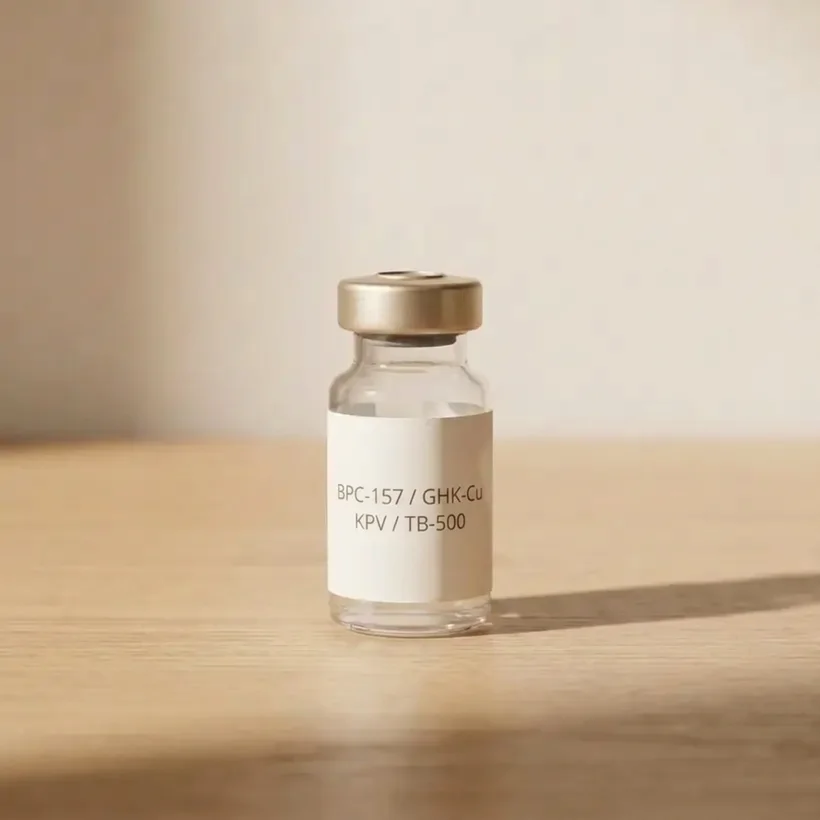
From the FormBlends catalog
Premium Recovery Quad Stack
Premium recovery blend with BPC-157, GHK-Cu, KPV, and TB-500 · From $349/mo · compounded by a licensed 503A pharmacy, dispensed only after provider review.
View Premium Recovery Quad Stack →Table of Contents
- What exactly is in the wolverine stack?
- How does the wolverine stack work? Mechanism with numbers
- Evidence ledger: what the science actually supports
- Wolverine stack peptide cost: what you should expect to pay
- Where to buy wolverine stack peptides: sourcing standards
- What most pages get wrong about the wolverine stack
- Why storage rules matter: the chemistry behind them
- Honest head-to-head: wolverine stack vs real alternatives
- Operational label literacy: reading a COA and dosing math
- Safety, legality, and WADA status
- FAQ
- Sources
What Exactly Is in the Wolverine Stack?
The wolverine stack name originates from bodybuilding and biohacking forums, referencing the X-Men character's regenerative ability. The core combination is:
- BPC-157 (Body Protection Compound 157): a 15-amino-acid synthetic peptide, sequence Gly-Glu-Pro-Pro-Pro-Gly-Lys-Pro-Ala-Asp-Asp-Ala-Gly-Leu-Val, derived from a larger protein found in human gastric juice.
- TB-500: a synthetic analog of Thymosin Beta-4 fragment encompassing residues 17 to 23 (Ac-LKKTETQ), the actin-binding domain of the full 43-amino-acid protein.
Some vendors add CJC-1295 without DAC, ipamorelin, or GHK-Cu to create extended "wolverine plus" kits. There is no standardized definition, so two products sold under the same name can differ substantially in composition and concentration.
How Does the Wolverine Stack Work? Mechanism With Numbers
BPC-157 mechanisms documented in peer-reviewed animal literature include upregulation of vascular endothelial growth factor (VEGF) signaling, interaction with the growth hormone receptor pathway (Vukojevic et al., 2018, Curr Pharm Des), and promotion of tendon fibroblast survival. In rat Achilles tendon transection models, systemic BPC-157 at roughly 10 mcg/kg improved biomechanical parameters of healing tendons compared to controls. It has also shown gastroprotective effects at oral doses in rodent ulcer models, though oral bioavailability in humans is not established by clinical data.
What this does NOT prove: rodent healing timelines and tissue architecture differ from human physiology. VEGF upregulation in wound models does not confirm the same effect magnitude in intact human connective tissue.
TB-500 (TB4 fragment) mechanisms: Thymosin Beta-4 sequesters G-actin, keeping it available for rapid polymerization during cell migration. The 17-23 fragment retains this actin-binding activity. TB4 has been studied in cardiac repair models (phase I/II human data exists for the full-length protein in MI patients, not the fragment) and promotes migration of endothelial cells and keratinocytes in culture. The fragment's shorter half-life compared to full-length TB4 is an important pharmacokinetic distinction that most forum posts ignore.
Rationale for combining them: BPC-157 is theorized to prime the vascular and fibroblastic environment while TB-500 drives cytoskeletal reorganization needed for cell migration. This is a plausible mechanistic complement, but "plausible" is not "proven." No published study has tested the two together in any species.
Evidence Ledger: What the Science Actually Supports
| Claim | Best Evidence Type | Effect Direction | Confidence |
|---|---|---|---|
| BPC-157 accelerates tendon healing in rats | Multiple rodent RCTs | Positive, consistent | Moderate (animal only) |
| BPC-157 protects gastric mucosa in rodents | Rodent models, multiple labs | Positive, robust | Moderate (animal only) |
| BPC-157 heals connective tissue in humans | No human RCT published | Unknown | Very low |
| TB-500 promotes cell migration in vitro | Cell culture studies | Positive | Low (bench only) |
| Full-length Thymosin Beta-4 in human cardiac repair | Small phase I/II human trials | Trend toward positive, underpowered | Low |
| TB-500 (fragment) heals injuries in humans | No human trial | Unknown | Very low |
| BPC-157 plus TB-500 combination is superior to either alone | No published study, any species | Unestablished | Very low |
| BPC-157 is safe at community doses in humans | Case reports, user surveys (no RCT) | Appears tolerated short-term | Very low |
Wolverine Stack Peptide Cost: What You Should Expect to Pay
Research-grade wolverine stack bundles sold by online vendors typically range from roughly $80 to $200 for a combined BPC-157 and TB-500 kit. Typical individual pricing at the time of this writing:
| Component | Common Size | Typical Research Vendor Price Range | Key Pricing Variable |
|---|---|---|---|
| BPC-157 | 5 mg vial | $30 to $60 | Purity grade, COA quality |
| TB-500 | 5 mg vial | $40 to $80 | Synthesis complexity, vendor margin |
| Combined bundle | 5 mg each | $80 to $200 | Bundle discount, brand premium |
| Compounded pharmacy (Rx required) | Variable | Often $150 and above per component | Regulatory compliance, sterility testing |
Price does not reliably predict quality in this market. A $200 bundle is not necessarily purer than a $90 bundle. The only real quality signal is an independently verified COA. Vendors who price very low and do not publish lot-specific COAs should be avoided.
Where to Buy Wolverine Stack Peptides: Sourcing Standards
When evaluating any vendor selling wolverine stack peptides, apply these criteria before purchasing:
- HPLC purity report per lot: Must show greater than or equal to 98% purity with the chromatogram, not just a number.
- Mass spectrometry confirmation: Confirms actual molecular weight matches the claimed peptide sequence. This catches substitutions and degraded product.
- Endotoxin (LAL) testing: The most clinically important test. Bacterial endotoxin contamination causes fever, chills, and systemic inflammatory response. Acceptable limit for injectable research compounds is typically below 5 EU/mg.
- Sterility testing: Required for any product intended for injection.
- Independent third-party lab: The test must be performed by a lab with no financial relationship to the vendor. Ask for the lab name and cross-check it exists.
- Lot number traceability: The lot number printed on the vial must match the COA. If a vendor only offers a generic COA with no lot number, that COA means nothing for your specific vial.
What Most Pages Get Wrong About the Wolverine Stack
This is the section most competitors skip entirely.
1. Oral bioavailability is not established for either peptide. Both BPC-157 and TB-500 are peptides. Peptides are subject to proteolytic degradation in the GI tract. BPC-157 has been given orally in rodent studies and shown effects, which some researchers attribute to local gut action rather than systemic absorption. This does not validate oral dosing for systemic connective tissue repair in humans. Vendors selling oral capsule versions of the wolverine stack are extrapolating very aggressively from this data.
2. The "fragment" distinction matters legally and pharmacologically. TB-500 is NOT Thymosin Beta-4. It is the 17-23 fragment. Human cardiac trial data for full-length TB4 does not automatically transfer to the fragment. Vendors who conflate the two are obscuring an important distinction that affects both the evidence base and the regulatory status.
3. Pre-mixed vials introduce unknown stability interactions. Some vendors sell BPC-157 and TB-500 in the same vial. There is no published stability data on this combination. Both peptides can be susceptible to aggregation and oxidation; mixing them in one solution at unknown pH creates compounded uncertainty with no validating data.
4. BPC-157 is not legally compoundable in the US. In 2023, the FDA finalized its position that BPC-157 raises significant safety concerns and cannot be used as a bulk drug substance in compounding. This is a regulatory fact that many wellness and peptide sites actively minimize or omit.
Why Storage Rules Matter: The Chemistry Behind Them
Lyophilized peptide powder is relatively stable because removing water suppresses hydrolysis and oxidation reactions. When you reconstitute a peptide, you reintroduce water and those reactions resume.
Why minus 20 degrees Celsius for dry powder: At room temperature, even trace moisture in the vial drives hydrolysis of peptide bonds, particularly at aspartate-proline and aspartate-glycine sequences. BPC-157 contains an Asp-Asp sequence (positions 10 to 11) that is a known hydrolysis-susceptible motif. Cold storage slows this reaction rate substantially.
Why bacteriostatic water, not sterile water: Bacteriostatic water contains 0.9% benzyl alcohol, which inhibits microbial growth and extends the reconstituted peptide's usable life. Sterile water has no preservative; a reconstituted vial opened multiple times becomes a contamination risk within days.
Why avoid freeze-thaw cycling after reconstitution: Repeated freezing and thawing promotes peptide aggregation through intermolecular beta-sheet formation. Aggregated peptide is not only less bioactive but can be immunogenic. If you need to preserve reconstituted peptide, divide it into single-use aliquots before freezing.
Why keep away from light: Tryptophan and tyrosine residues in peptides undergo photo-oxidation under UV exposure. Neither BPC-157 nor TB-500 is heavily rich in these residues, but amber vials and dark storage remain standard practice to eliminate this degradation pathway entirely.
Honest Head-to-Head: Wolverine Stack vs Real Alternatives
| Intervention | Human RCT Evidence | Regulatory Status (US) | Cost Comparison | Where It Wins | Where It Loses |
|---|---|---|---|---|---|
| Wolverine stack (BPC-157 plus TB-500) | None | Research compound / not FDA-approved | $80 to $200 per cycle | Community anecdote for rapid soft-tissue recovery | No human proof, regulatory risk, sourcing uncertainty |
| Platelet-Rich Plasma (PRP) injection | Multiple RCTs, mixed results for tendinopathy | FDA cleared device procedure | $500 to $2,000 per injection | Administered by a clinician, autologous (no contamination risk) | Expensive, RCT results inconsistent, not proven superior to saline |
| Eccentric loading physical therapy | Multiple RCTs for Achilles and patellar tendinopathy | Standard of care | PT copay or $50 to $150/session | Strongest overall evidence for tendon injury recovery | Slow, requires adherence, not systemic |
| NSAIDs (naproxen, ibuprofen) | Yes, extensive RCT data | FDA-approved OTC or Rx | Very low | Fast pain relief, well-characterized safety profile | May impair tendon healing with chronic use, GI/CV risk |
| BPC-157 alone (without TB-500) | None in humans | Same as wolverine stack | $30 to $60 | Lower cost, single-peptide purity easier to verify | Same evidence limitations |
The honest verdict: physical therapy has better evidence than the wolverine stack for every musculoskeletal application the stack is marketed for. The stack may offer an adjunct role in the view of some clinicians, but it cannot be called superior or even equivalent to physical rehabilitation on current evidence.
Operational Label Literacy: Reading a COA and Dosing Math
Reading a COA: When a vendor provides a certificate of analysis, check these five things in order:
- Lab name and contact. Look it up independently. If the lab does not appear to exist as a standalone business, reject the COA.
- Lot number matches your vial. If the vendor provides only a generic undated COA, it may not reflect your batch.
- HPLC purity: look for greater than or equal to 98.0% with the chromatogram graph present, not just a typed number.
- Molecular weight confirmation: expected molecular weight for BPC-157 is 1419.5 Da. For the TB-500 fragment (Ac-LKKTETQ), expected molecular weight is approximately 831.0 Da. A significant deviation flags the wrong compound or a degraded product.
- Endotoxin result with units (EU/mg or EU/mL). A result without units is meaningless.
Reconstitution math example for BPC-157:
- You have a 5 mg (5,000 mcg) lyophilized vial.
- Add 2.5 mL bacteriostatic water. Concentration is now 2,000 mcg/mL (2 mcg/uL).
- A 250 mcg dose requires drawing 0.125 mL (12.5 units on a 100-unit insulin syringe).
- A 500 mcg dose requires 0.25 mL (25 units).
Always double-check your math before drawing. A tenfold dosing error is easy to make with small volumes on insulin syringes. Write the concentration on the vial label immediately after reconstitution.
Community protocol reference (not a clinical recommendation): Forum-derived wolverine stack protocols most often describe BPC-157 at 250 to 500 mcg once or twice daily subcutaneously or intramuscularly, and TB-500 at 2 to 2.5 mg twice weekly for 4 to 6 weeks loading, then 2 to 2.5 mg weekly for maintenance. These figures are extrapolated from animal weight-based dosing and are not validated in human trials.
Safety, Legality, and WADA Status
Legal status in the US: BPC-157 and TB-500 are not scheduled controlled substances under the Controlled Substances Act. They are sold as research chemicals. However, the FDA's 2023 determination that BPC-157 may not be compounded in bulk means licensed US compounding pharmacies should not be dispensing it. Purchasing for "research purposes" occupies a grey area that does not guarantee legal protection for personal use.
WADA prohibition: Thymosin Beta-4 and its fragments are listed under the World Anti-Doping Agency Prohibited List, Section S2. TB-500 falls within this prohibition. BPC-157 is on WADA's monitoring program, meaning it is under scrutiny for future prohibition. Athletes should treat both as prohibited.
Known risks: Because no controlled human safety trials exist for either compound at the doses described in community protocols, the safety profile is incompletely characterized. Reported adverse effects in user surveys include injection-site reactions, transient fatigue, and gastrointestinal discomfort. Endotoxin contamination from under-tested batches is the most serious acute risk and has caused fever and systemic inflammatory responses in users of various injectable peptides.
FAQ
What peptides are in the wolverine stack?
The wolverine stack most commonly refers to a combination of BPC-157 and TB-500 (Thymosin Beta-4 fragment), sometimes extended with a growth hormone secretagogue such as CJC-1295 or ipamorelin. The exact composition varies by vendor, which is a key sourcing risk.
How much does the wolverine stack cost?
Research-grade wolverine stack bundles typically range from roughly $80 to $200 for a combined BPC-157 plus TB-500 kit, depending on peptide concentrations and vendor purity standards. Compounded versions from licensed pharmacies cost more.
Where can I buy wolverine stack peptides?
Wolverine stack peptides are sold by research chemical vendors and, in some jurisdictions, compounding pharmacies with a prescription. Buying from a vendor that publishes third-party HPLC and mass-spectrometry COAs for every batch is the minimum due-diligence standard.
Is the wolverine stack legal to buy?
In the United States, BPC-157 and TB-500 are not FDA-approved drugs and are not scheduled controlled substances. They occupy a regulatory grey area and are sold legally as research compounds. The FDA has placed BPC-157 on its list of bulk drug substances that may not be compounded, complicating clinical use.
What does the wolverine stack actually do?
BPC-157 shows consistent wound and tendon healing effects in rodent models, acting partly through upregulation of VEGF and GH receptor signaling. TB-500 (TB4 fragment) promotes actin polymerization and cell migration. Human RCT evidence for either compound in this combination is essentially absent.
What is the difference between BPC-157 and TB-500?
BPC-157 is a 15-amino-acid synthetic peptide derived from body protection compound in gastric juice, primarily studied for gut and connective tissue healing. TB-500 is a synthetic fragment (amino acids 17 to 23) of Thymosin Beta-4, a 43-amino-acid protein involved in actin sequestration and tissue remodeling.
How is the wolverine stack typically dosed?
Community protocols most often cite BPC-157 at 250 to 500 mcg per injection, one to two times daily, and TB-500 at 2 to 2.5 mg twice weekly during a loading phase, then weekly for maintenance. These figures come from extrapolated animal data, not human clinical trials.
What should I look for on a wolverine stack COA?
A legitimate COA should include HPLC purity above 98%, mass spectrometry confirmation of molecular weight, endotoxin testing (LAL), and sterility testing. Check that the lot number on the COA matches the vial label and that testing was performed by an independent third-party lab.
Can the wolverine stack be mixed in one vial?
BPC-157 and TB-500 are sometimes sold pre-mixed. Combining them introduces stability unknowns because the two peptides have different optimal storage conditions and degradation profiles. Separate vials with separate reconstitution is the lower-risk approach.
Is the wolverine stack banned in sport?
Yes. TB-500 (Thymosin Beta-4 and its fragments) is prohibited by WADA under S2 (Peptide Hormones, Growth Factors, Related Substances and Mimetics). BPC-157 is on WADA's monitoring program. Athletes subject to anti-doping rules should treat both as prohibited.
What are the main risks of buying wolverine stack peptides online?
The primary risks are impure or mislabeled product, bacterial endotoxin contamination (which causes fever and inflammatory reactions), incorrect concentration, and receiving a completely different compound. No regulatory body inspects research chemical vendors the way the FDA inspects drug manufacturers.
How should wolverine stack peptides be stored?
Lyophilized (freeze-dried) peptide powder is stable at minus 20 degrees Celsius for up to 24 months under proper conditions. Once reconstituted with bacteriostatic water, refrigerate at 2 to 8 degrees Celsius and use within 28 to 30 days. Avoid repeated freeze-thaw cycles after reconstitution.
Sources
- Vukojevic J, et al. "Pentadecapeptide BPC 157 and the central nervous system." Current Pharmaceutical Design, 2018. Covers BPC-157 mechanism including growth hormone receptor pathway signaling.
- Chang CH, et al. "The promoting effect of pentadecapeptide BPC 157 on tendon healing involves tendon outgrowth, cell survival, and cell migration." Journal of Applied Physiology, 2011.
- Goldstein AL, et al. "Thymosin beta4: a multi-functional regenerative peptide. Basic properties and clinical applications." Expert Opinion on Biological Therapy, 2012. Covers TB4 mechanism and early human cardiac data.
- Smart N, et al. "Thymosin beta4 and angiogenesis: modes of action and therapeutic potential." Angiogenesis, 2011. Documents cell migration and actin sequestration mechanisms of TB4 and the 17-23 fragment.
- World Anti-Doping Agency. Prohibited List 2024. Section S2: Peptide Hormones, Growth Factors, Related Substances and Mimetics. Available at wada-ama.org.
- US Food and Drug Administration. List of Bulk Drug Substances That Raise Nominal Safety Concerns Under Section 503A. Federal Register final rule, 2023. Documents BPC-157 compounding restriction.
- Duthon VB, et al. "Anatomy of the anterior cruciate ligament." Knee Surgery, Sports Traumatology, Arthroscopy, 2006. Background reference for connective tissue healing context.
- Alfredson H, Lorentzon R. "Chronic Achilles tendinosis: recommendations for treatment and prevention." Sports Medicine, 2000. Basis for eccentric loading comparison in head-to-head table.
- Mishra AK, et al. "Platelet-rich plasma in musculoskeletal problems." British Journal of Sports Medicine, 2014. Basis for PRP comparison in head-to-head table.
- USP General Chapter 1. Injections and Implanted Drug Products: Product Quality Tests. United States Pharmacopeia. Background for endotoxin and sterility testing standards cited in COA section.
Footer Disclaimers
Platform: FormBlends is an informational and commercial platform. Nothing on this page constitutes medical advice, diagnosis, or treatment. Consult a licensed healthcare provider before using any peptide or research compound.
Research Compound Status: BPC-157 and TB-500 as sold by research chemical vendors are not FDA-approved drugs. They are not intended for human use as sold by research vendors. FormBlends does not sell unapproved drugs for human use.
Results: Individual results, if any, vary. The anecdotal and animal-model evidence described on this page does not guarantee any outcome in any individual. Effect sizes observed in rodent models frequently do not replicate in humans.
Trademark: "Wolverine" is a trademark of Marvel Characters, Inc. Its use on this page is purely descriptive of a community-named peptide protocol and does not imply any affiliation with or endorsement by Marvel or Disney.
Related peptide guides
Ready when you are
Premium Recovery Quad Stack
Premium recovery blend with BPC-157, GHK-Cu, KPV, and TB-500 · From $349/mo · compounded by a licensed 503A pharmacy, dispensed only after provider review.
View Premium Recovery Quad Stack →