
Trust Signals
Every claim is labeled with its evidence type. Speculative claims are marked as such. This page does not recommend self-administration of unregulated compounds.
Key Takeaways
- IGF-1 LR3 has a plasma half-life of roughly 20 to 30 hours versus minutes for native IGF-1, because a single amino-acid substitution (glutamic acid for arginine at position 3) cuts IGF binding protein affinity by over 1000-fold according to in vitro binding studies.
- CJC-1295 with Drug Affinity Complex (DAC) extends GHRH receptor half-life to roughly 6 to 8 days in humans (Teichman et al., JCEM 2006), producing sustained GH elevation rather than a single pulse.
- The Teichman et al. 2006 trial found CJC-1295 increased mean GH levels 2-fold to 10-fold and IGF-1 levels 1.5-fold to 3-fold above baseline, but lean mass was not a primary endpoint and the sample was small.
- BPC-157 has no completed, published human RCT for muscle hypertrophy; all anabolic or repair data come from rodent models, making its muscle-gain ranking speculative.
- The FDA removed CJC-1295, ipamorelin, and several GHRP compounds from 503A compounding eligibility in 2023 to 2024; sourcing from gray-market vendors introduces unquantified purity risk.
What Are the Best Peptides for Muscle Gain?
IGF-1 LR3 carries the strongest direct anabolic mechanism and the longest half-life. CJC-1295 combined with Ipamorelin is the best-studied GH secretagogue stack in humans. BPC-157 aids recovery but lacks human hypertrophy data. All three operate well below the effect size of testosterone. Evidence quality is low to moderate across the board.
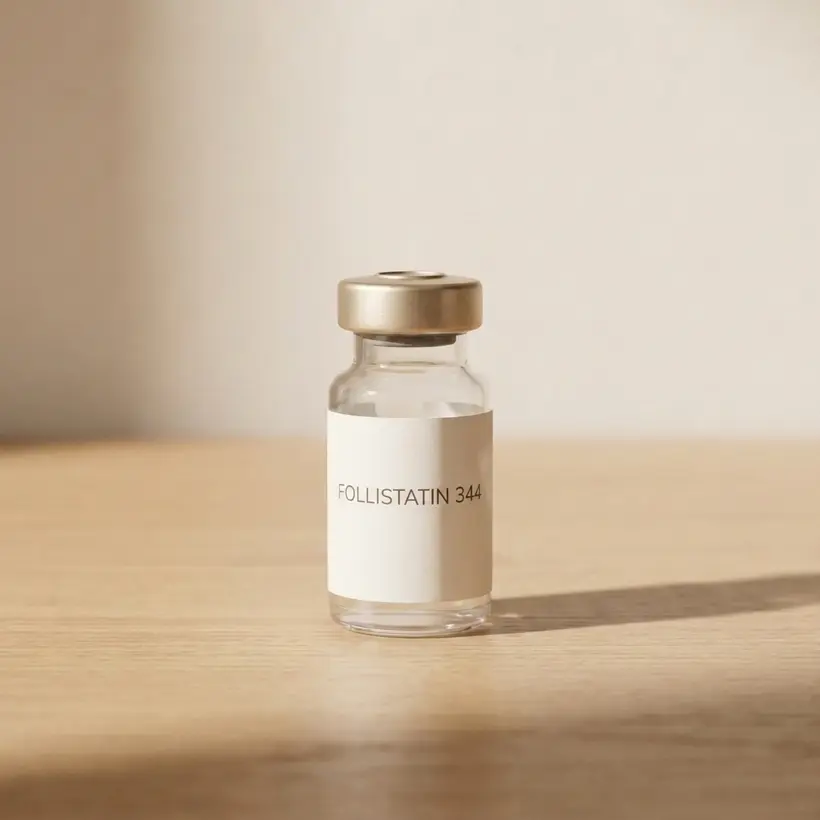
From the FormBlends catalog
Follistatin 344
Myostatin inhibitor studied for enhanced muscle growth · From $149/mo · compounded by a licensed 503A pharmacy, dispensed only after provider review.
Learn about Follistatin 344 →Table of Contents
- Evidence Ledger: Every Major Claim Graded
- How These Peptides Drive Muscle Growth: Mechanism With Numbers
- The 5 Best Peptides for Muscle Gain, Ranked
- What Most Pages Get Wrong About Peptides and Muscle
- Stability, Storage, and Formulation Gotchas
- Honest Head-to-Head: Peptides vs. Real Alternatives
- Label and COA Literacy: How to Judge What You Are Buying
- Regulatory and Legal Reality
- FAQ
- Sources
Evidence Ledger: Every Major Claim Graded
| Claim | Best Evidence Type | Effect Direction | Confidence |
|---|---|---|---|
| CJC-1295 raises GH and IGF-1 in humans | Small human RCT (Teichman et al., JCEM 2006) | Positive, dose-dependent | Moderate |
| Ipamorelin selectively raises GH without ACTH/cortisol spike | Human pharmacology study (Raun et al., 1998) | Positive vs. GHRP-6/GHRP-2 | Moderate |
| IGF-1 LR3 drives satellite cell proliferation and muscle protein synthesis | In vitro and rodent studies; no human RCT | Positive in models | Low |
| CJC-1295 + Ipamorelin combination increases lean mass in humans | Mechanism inference; no dedicated RCT | Assumed positive, unconfirmed | Very Low |
| BPC-157 accelerates muscle/tendon repair in rodents | Multiple rodent studies (Sikiric et al., several publications) | Positive in animal models | Low (human extrapolation) |
| BPC-157 builds muscle in humans | No human data | Unknown | Very Low |
| MK-677 (Ibutamoren) increases lean body mass in older adults | Human RCT (Nass et al., Annals of Internal Medicine 2008) | Modest positive over 2 years | Moderate (specific population) |
| GH-axis peptides cause insulin resistance risk | Human pharmacology and GH excess literature | Negative, dose-dependent | High (mechanism well established) |
How These Peptides Drive Muscle Growth: Mechanism With Numbers
Three separate receptor axes are relevant here, and conflating them is the root cause of most dosing confusion.
Axis 1: GH Secretagogue Receptors (GHSR-1a)
Ipamorelin and GHRP-6 are ghrelin mimetics. They bind GHSR-1a on pituitary somatotrophs, triggering a calcium-dependent GH pulse. Ipamorelin produces this pulse with less stimulation of ACTH and cortisol than GHRP-6 or GHRP-2, which is confirmed in direct human comparisons (Raun et al., European Journal of Endocrinology, 1998). The GH pulse then travels to the liver, where GH receptors drive transcription of IGF-1. Liver-derived (endocrine) IGF-1 is the main downstream anabolic signal.
Axis 2: GHRH Receptors (pituitary)
CJC-1295 is a modified GHRH analog. It binds pituitary GHRH receptors and, in the DAC formulation, covalently bonds to albumin, extending its half-life from minutes to roughly 6 to 8 days in humans (Teichman et al., JCEM 2006). Using CJC-1295 with Ipamorelin targets both input pathways to GH release simultaneously, producing synergistic GH output in pharmacology studies. What this does NOT prove: that higher IGF-1 levels from an exogenous secretagogue produce the same tissue outcomes as endogenous GH elevation from exercise.
Axis 3: IGF-1R (IGF-1 receptor, peripheral tissues)
IGF-1 LR3 bypasses the pituitary and liver entirely. It is a synthetic 83-amino-acid analog of IGF-1 with a 13-amino-acid extension at the N-terminus and an arginine-to-glutamic-acid substitution at position 3. This substitution reduces affinity for IGF binding proteins (IGFBPs), particularly IGFBP-3, by over 1000-fold in vitro, allowing more free peptide to reach muscle IGF-1R. Binding IGF-1R activates PI3K/AKT/mTOR and RAS/MAPK pathways, both of which drive satellite cell proliferation and protein synthesis. Half-life extends to roughly 20 to 30 hours. The honest caveat: rodent satellite cell data and cell culture data do not reliably predict hypertrophy magnitude in trained adult humans, and no RCT has measured lean mass gain from IGF-1 LR3.
The 5 Best Peptides for Muscle Gain, Ranked
1. IGF-1 LR3
Why it ranks first: The most direct anabolic mechanism of any peptide on this list. Acts at muscle tissue without requiring liver conversion. Long half-life means sustained IGF-1R activation. Limitation: Zero completed human RCTs for hypertrophy. Suppresses endogenous IGF-1 axis feedback. Hypoglycemia risk is real and documented in case reports.
2. CJC-1295 with Ipamorelin (combination)
Why it ranks second: The best human pharmacokinetic and hormonal response data of any peptide combination on this list. Synergistic GH release confirmed. Ipamorelin's selectivity reduces cortisol elevation compared to older GHRPs. The Teichman 2006 study showed sustained IGF-1 elevation, which is the proximate driver of GH-related lean mass changes. Limitation: Lean mass as a primary endpoint in a powered human RCT has not been published for this combination.
3. MK-677 (Ibutamoren)
Note: Not a peptide chemically, but functionally grouped here. Oral bioavailability is a genuine practical advantage. The Nass et al. 2008 trial (Annals of Internal Medicine, adults with hip fracture) found lean mass increases over 2 years. Side effects include increased fasting glucose, edema, and fatigue, documented in that same trial. Ranks below the injectable combination because of metabolic risk profile at the doses needed for lean mass effect.
4. BPC-157
Why it ranks fourth: Muscle gain is not what the evidence supports. Rodent tendon, ligament, and muscle repair data are compelling (multiple Sikiric lab publications) but animal-to-human extrapolation for hypertrophy is speculative. Its value in a muscle-gain context is recovery, allowing more consistent high-volume training. Rank it as an adjunct, not an anabolic agent.
5. GHRP-6
Why it ranks fifth: Older, less selective GH secretagogue. Significant increase in appetite (ghrelin pathway, expected) and measurable cortisol and prolactin elevation (Arvat et al., multiple studies). Effect on GH pulse is real but the side effect profile makes Ipamorelin a cleaner substitute in most protocols. Ranked for completeness.
What Most Pages Get Wrong About Peptides and Muscle
This is the section that separates accurate information from fitness blog content.
Wrong claim 1: "Peptides raise GH, therefore they build muscle." GH is weakly anabolic on its own. Most of the lean mass effect of GH therapy in adults comes from downstream IGF-1. GH also partitions fat (lipolysis) more than it directly adds contractile protein. Studies in GH-deficient adults show lean mass gains from GH replacement, but these do not translate directly to gains in healthy trained individuals, because GH secretion is already pulsatile and the GH axis is partially feedback-regulated.
Wrong claim 2: "IGF-1 LR3 is stronger than steroids." There is no human evidence for this. Testosterone at replacement doses in the Bhasin et al. (NEJM 1996) randomized trial produced meaningful increases in fat-free mass in men without exercise. IGF-1 LR3 has no equivalent human trial to compare against, so any comparison is speculation.
Wrong claim 3: "BPC-157 is anabolic." BPC-157 does not have a known direct anabolic receptor. Rodent data shows accelerated repair of damaged muscle via upregulation of growth factor expression locally, but this is repair, not hypertrophy of healthy tissue.
Wrong claim 4: "Oral BPC-157 works the same as injectable." BPC-157 is a peptide. Peptides are substrates for gastrointestinal proteases. While some animal studies have used oral administration and found systemic effects (suggesting partial stability or local gut action), oral bioavailability for achieving systemic muscle-relevant concentrations in humans is unestablished. This is a standard peptide bioavailability problem, not unique to BPC-157.
Stability, Storage, and Formulation Gotchas
This is the section most commodity pages skip entirely, and it matters for anyone who actually uses these compounds.
Why Cold Storage Is Not Optional
Peptide bonds are susceptible to hydrolysis, particularly at asparagine (Asn) residues, which undergo deamidation to aspartate, altering the peptide's charge and receptor binding. This reaction rate increases exponentially with temperature (Arrhenius relationship). Lyophilized powder stored dry at 2 to 8 degrees Celsius slows this to a timeline of months. In solution at room temperature, degradation occurs over days to weeks. This is not a precaution; it is basic peptide chemistry.
Why You Cannot Freeze a Reconstituted Vial Repeatedly
Freeze-thaw cycling causes aggregation. When peptides aggregate, they form higher-order structures with reduced receptor activity. A single freeze-thaw cycle may be acceptable; repeated cycling is not. Once reconstituted, store at 2 to 8 degrees Celsius and use within 2 to 4 weeks. Do not return to the freezer.
Bacteriostatic Water vs. Sterile Water
Bacteriostatic water contains 0.9% benzyl alcohol, which inhibits microbial growth and extends reconstituted vial life to weeks. Sterile water has no preservative; use within 24 hours after reconstitution if sterile water is used. This is not a flavor preference; it is the difference between a safely stored solution and a contamination risk.
pH and Solubility
Some peptides (including certain IGF-1 analogs) require mildly acidic conditions (pH around 3 to 4) for full solubility. Reconstituting in saline at neutral pH can cause precipitation. A small amount of 0.6% acetic acid is sometimes used as the reconstitution vehicle for these peptides. If a peptide does not dissolve cleanly and stays cloudy after gentle rotation, pH mismatch or aggregation is the likely cause, not underdosing of solvent.
Honest Head-to-Head: Peptides vs. Real Alternatives
| Agent | Evidence for Lean Mass (Human) | Estimated Effect Size | Regulatory Status (US) | Key Risk | Peptide Wins? |
|---|---|---|---|---|---|
| CJC-1295 + Ipamorelin | Hormonal endpoints only; no lean mass RCT | Unknown in trained adults | Not FDA approved; compounding restricted | Purity, insulin resistance | No clear win |
| IGF-1 LR3 | No human RCT | Unknown | Not approved; gray market | Hypoglycemia, feedback suppression | No |
| Testosterone (TRT dose) | Multiple RCTs; Bhasin et al. NEJM 1996 | Meaningful lean mass gain vs. placebo (see Bhasin et al. 1996 for trial-specific figures) | FDA-approved Schedule III | Hematocrit, fertility suppression | Peptides lose on evidence |
| Recombinant human GH (somatropin) | Multiple RCTs in GH-deficient adults | Lean mass gains documented; smaller in non-deficient | FDA-approved for GH deficiency | Edema, glucose, cancer risk concerns | Peptides lose on evidence; similar mechanism |
| MK-677 (Ibutamoren) | Nass et al. Annals of Internal Medicine 2008, RCT | Modest lean mass gain in elderly hip-fracture patients | Not FDA approved; not a scheduled substance | Fasting glucose rise, edema | Oral convenience; evidence comparable to GH peptides |
| Creatine monohydrate | Dozens of RCTs; Cochrane review level evidence | Roughly 1 to 2 kg lean mass over weeks | Dietary supplement; OTC | Minimal; GI upset in some | Creatine wins on evidence, safety, and cost |
Label and COA Literacy: How to Judge What You Are Buying
A certificate of analysis (COA) is only meaningful if it comes from an independent, accredited third-party laboratory, not from the vendor's in-house testing. Here is what to verify.
Minimum Acceptable COA Elements
| Test | Method | What to Look For |
|---|---|---|
| Identity confirmation | Mass spectrometry (MS) | Molecular weight matches theoretical for the peptide. A nominal match does not rule out all impurities. |
| Purity | Reverse-phase HPLC | Greater than 98% is the standard for research-grade. Greater than 95% is a minimum floor; below this, impurities are pharmacologically meaningful. |
| Peptide content (actual mg) | Amino acid analysis or UV absorbance | Lyophilized peptides contain water and counterions; net peptide content is often 70 to 90% of gross weight. Confirm the labeled amount is net peptide, not gross powder weight. |
| Endotoxin (LAL test) | Limulus amebocyte lysate | Endotoxin below 1 EU/mg for injectable compounds. Missing LAL data is a red flag for injectable products. |
| Sterility | USP chapter 71 | Required for injectables. Many gray-market products do not test this. |
Reconstitution Math
If a vial is labeled 5 mg and you add 2.5 mL of bacteriostatic water, the concentration is 2 mg per mL, or 2000 mcg per mL. A 200 mcg dose is 0.1 mL, drawn to the 10-unit mark on a U-100 insulin syringe. Verify this math every time because label units vary across vendors (some label in IU, some in mcg, some in mg).
Regulatory and Legal Reality
US Regulatory Status (as of 2024 to 2026): The FDA issued guidance in 2023 removing CJC-1295, ipamorelin, GHRP-6, GHRP-2, and several other peptides from the 503A and 503B compounding categories, meaning licensed compounding pharmacies can no longer legally produce them for human use. BPC-157 remains unscheduled but also lacks FDA approval. IGF-1 LR3 is not approved for human use. Recombinant IGF-1 (mecasermin) is approved only for primary IGF-1 deficiency in children.
WADA bans all GH-releasing peptides, IGF-1 analogs, and GH secretagogues in sport. Testing for these compounds is active in elite athletics.
Possession for personal use without distribution is in a gray area federally, but this is not the same as legal. State law varies. This is not legal advice.
FAQ
Sources
- Teichman SL, et al. "Prolonged stimulation of growth hormone (GH) and insulin-like growth factor I secretion by CJC-1295, a long-acting analog of GH-releasing hormone, in healthy adults." Journal of Clinical Endocrinology and Metabolism. 2006;91(3):799-805.
- Raun K, et al. "Ipamorelin, the first selective growth hormone secretagogue." European Journal of Endocrinology. 1998;139(5):552-561.
- Nass R, et al. "Effects of an oral ghrelin mimetic on body composition and clinical outcomes in healthy older adults: a randomized trial." Annals of Internal Medicine. 2008;149(9):601-611.
- Bhasin S, et al. "The effects of supraphysiologic doses of testosterone on muscle size and strength in normal men." New England Journal of Medicine. 1996;335(1):1-7.
- Sikiric P, et al. "Brain-gut Axis and Pentadecapeptide BPC 157: Theoretical and Practical Implications." Current Neuropharmacology. 2016;14(8):857-865.
- Arvat E, et al. "Endocrine activities of ghrelin, a natural growth hormone secretagogue (GHS), in humans: comparison and interactions with hexarelin, a nonnatural peptidyl GHS, and GH-releasing hormone." Journal of Clinical Endocrinology and Metabolism. 2001;86(3):1169-1174.
- Clemmons DR. "Modifying IGF1 activity: an approach to treat endocrine disorders, atherosclerosis and cancer." Nature Reviews Drug Discovery. 2007;6(10):821-833.
- US FDA. "Bulk Drug Substances That May Be Used in Compounding Under Section 503A of the Federal Food, Drug, and Cosmetic Act." Federal Register. 2023.
- World Anti-Doping Agency. "Prohibited List 2024." WADA. 2024.
- Laron Z. "Insulin-like growth factor 1 (IGF-1): a growth hormone." Molecular Pathology. 2001;54(5):311-316.
Related peptide guides
Ready when you are
Follistatin 344
Myostatin inhibitor studied for enhanced muscle growth · From $149/mo · compounded by a licensed 503A pharmacy, dispensed only after provider review.
Learn about Follistatin 344 →