
Trust Signals
Every claim in this page is graded by evidence type in the ledger table below. Speculation is labeled as such. No affiliate revenue influences compound rankings. Regulatory and safety limitations are stated plainly, not buried in footnotes.
Key Takeaways
- Most growth-related peptides (CJC-1295, Ipamorelin, IGF-1 LR3) are injected subcutaneously, not intramuscularly; a 29 to 31 gauge insulin syringe is the correct tool.
- CJC-1295 with DAC extends GH pulse half-life to roughly 6 to 8 days in human pharmacokinetic data (Ionescu and Frohman, 2006); without DAC the half-life is approximately 30 minutes, closer to native GHRH.
- Human RCT evidence for lean mass gains in healthy, trained adults is sparse; most positive body composition data comes from GH-deficient or older clinical populations.
- Reconstituted peptide solutions stored above 8 degrees Celsius or shaken vigorously degrade meaningfully within days; bacteriostatic water extends usable refrigerated life to roughly 28 days.
- WADA prohibits GH secretagogues under the S2 category; FDA guidance (2023) restricts most secretagogues from compounding pharmacies for non-approved indications.
Direct Answer: How Do You Use Injectable Peptides for Muscle Growth?
Injectable peptides for muscle growth are reconstituted from lyophilized powder using bacteriostatic water, drawn into an insulin syringe, and injected subcutaneously into an abdominal skin fold. Timing, dose, and cycling depend on the specific compound. Evidence of benefit in healthy trained athletes is moderate at best, and honest use requires understanding what the data actually proves.
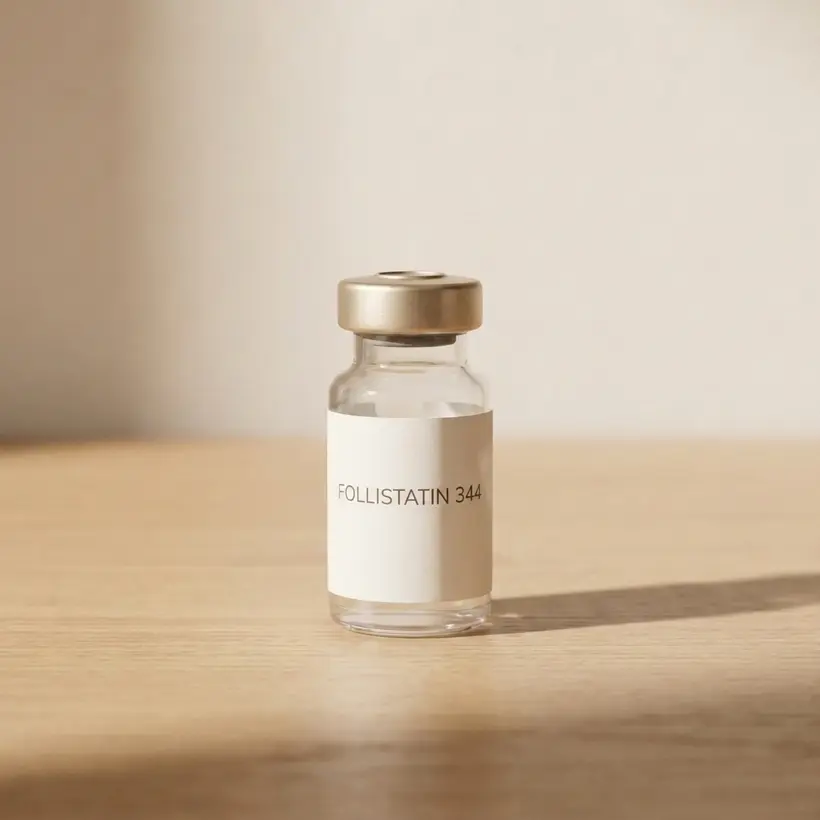
From the FormBlends catalog
Follistatin 344
Myostatin inhibitor studied for enhanced muscle growth · From $149/mo · compounded by a licensed 503A pharmacy, dispensed only after provider review.
Learn about Follistatin 344 →Table of Contents
- Evidence Ledger: What the Data Actually Shows
- Mechanism with Numbers: How These Peptides Drive Muscle Signaling
- Which Peptides Are Used for Muscle Growth and Why
- How to Inject Peptides: Site, Needle, and Technique
- Reconstitution Math and Label Literacy
- Timing and Dosing: What Protocols Actually Look Like
- What Most Pages Get Wrong About Peptide Injections for Bodybuilding
- Honest Head-to-Head: Peptides vs. Real Alternatives
- Storage, Stability, and the Chemistry Behind the Rules
- Risks, Failure Modes, and What to Watch For
- FAQ
Evidence Ledger: What the Data Actually Shows
| Claim | Best Evidence Type | Effect Direction | Confidence |
|---|---|---|---|
| CJC-1295 elevates GH and IGF-1 in healthy adults | Human RCT, dose-ranging (Ionescu and Frohman, J Clin Endocrinol Metab, 2006) | Positive, dose-dependent | High |
| Ipamorelin selectively stimulates GH release without cortisol spike | Human pharmacology study (Raun et al., Eur J Endocrinol, 1998) | Positive vs. GHRP-2 comparator | Moderate |
| GH secretagogues increase lean mass in GH-deficient adults | Multiple RCTs in clinical populations | Positive, modest | Moderate (clinical pop only) |
| GH secretagogues increase lean mass in healthy trained adults | No dedicated RCTs identified | Inferred from GH physiology | Very Low |
| IGF-1 LR3 promotes muscle protein synthesis in vitro | Cell culture and animal data | Positive | Low (does not prove human effect) |
| Subcutaneous route is adequate for GH secretagogue absorption | PK/PD data from clinical trials | Comparable to IV in GH AUC | High |
| Fasted state amplifies GH pulse from secretagogues | Mechanistic, some human PK data | Positive (glucose blunts GH) | Moderate |
| Long-term safety in healthy athletes | No data | Unknown | Very Low |
Mechanism with Numbers: How These Peptides Drive Muscle Signaling
Growth hormone secretagogues work through two complementary receptor families. GHRH analogs (CJC-1295) bind the GHRH receptor on anterior pituitary somatotrophs, activating adenylyl cyclase and increasing intracellular cAMP, which drives GH gene transcription and pulsatile release. GH-releasing peptides and ghrelin mimetics (Ipamorelin, GHRP-2) bind the GHS-R1a receptor, a distinct Gq-coupled pathway that raises intracellular calcium and potentiates the GHRH signal.
The downstream muscle effect is indirect. Secreted GH binds the GH receptor in liver and skeletal muscle, activating JAK2/STAT5 signaling. In the liver this drives IGF-1 synthesis and secretion; circulating IGF-1 then binds IGF-1R on myocytes, activating PI3K/AKT/mTORC1, the core anabolic pathway that increases rates of myofibrillar protein synthesis and inhibits protein breakdown via FOXO suppression.
Specific numbers from human data: Ionescu and Frohman (2006) showed that a single 30 mcg/kg IV dose of CJC-1295 (without DAC) produced mean peak GH increases of roughly 7 to 10-fold above baseline in healthy adults, with IGF-1 rising over the following 24 hours. The DAC-modified version achieved a half-life of approximately 6 to 8 days due to albumin binding at Lys38, allowing weekly dosing to maintain IGF-1 elevation.
What this mechanism does NOT prove: A GH pulse in a clinical pharmacology study does not establish that healthy, well-nourished, resistance-trained adults will gain measurably more lean mass on a defined timeline. GH and IGF-1 are permissive for anabolism, not sufficient on their own. The dose-to-muscle-gram translation has not been established in athletes.
Which Peptides Are Used for Muscle Growth and Why
| Compound | Class | Primary Target | Half-life (approx.) | Main Proposed Use | Human RCT Data? |
|---|---|---|---|---|---|
| CJC-1295 (no DAC) | GHRH analog | GHRH-R | Roughly 30 min | GH pulse amplification, paired with GHRP | Yes (PK/PD, not muscle outcomes) |
| CJC-1295 with DAC | GHRH analog, albumin-binding | GHRH-R | Roughly 6 to 8 days | Sustained IGF-1 elevation | Yes (PK/PD, not muscle outcomes) |
| Ipamorelin | Selective GHRP / ghrelin mimetic | GHS-R1a | Roughly 2 hours (animal data) | GH release without cortisol/prolactin rise | Limited |
| GHRP-2 | GHRP | GHS-R1a | Roughly 30 to 60 min | Strong GH release; older compound | Some human PK studies |
| IGF-1 LR3 | IGF-1 analog | IGF-1R | Roughly 20 to 30 hours (vs. 12 to 15 min for native IGF-1) | Downstream muscle signaling, bypass GH axis | No athletic trials |
| BPC-157 | Tissue repair peptide | Multiple, poorly defined | Unknown in humans | Recovery, joint; often co-used | No human RCTs for muscle hypertrophy |
How to Inject Peptides: Site, Needle, and Technique
Can you inject peptides into muscle (intramuscularly)? Technically possible, but not recommended for GH-axis peptides. Subcutaneous absorption produces adequate GH pulse data in clinical trials, intramuscular injection does not improve bioavailability in any published comparison for these compounds, and IM carries higher risk of vessel contact and nerve proximity. The only peptide class sometimes injected IM in clinical practice is certain analogs for other indications; for muscle growth protocols, subcutaneous is the standard.
Preferred injection sites:
- Abdomen: 2 to 3 inches from the navel, alternating sides. Most consistent fat layer, easiest pinch technique.
- Upper outer thigh: acceptable, slightly more painful for lean individuals.
- Lateral upper arm: use only if a second person assists; self-injection angle is difficult to maintain at 45 to 90 degrees.
Needle selection: 29 to 31 gauge, 5/16-inch (8 mm) needle on a U-100 insulin syringe. Inject at 45 degrees if the fat layer is thin (pinch the skin fold), or 90 degrees with a larger fold. Insert fully, inject slowly over 3 to 5 seconds, withdraw at the same angle. Do not rub the site; gentle pressure with a clean cloth is sufficient.
Rotation matters: Repeated injection into the same spot causes lipohypertrophy (fatty nodule formation) and impairs absorption consistency. Map a rotation grid across the abdomen and use a different spot each injection.
Reconstitution Math and Label Literacy
Bacteriostatic water vs. sterile water: Use bacteriostatic water (0.9% benzyl alcohol) for any vial you will use over multiple injections. Sterile water has no preservative and supports bacterial growth within hours once opened. The benzyl alcohol in BAC water provides roughly 28 days of antimicrobial protection at refrigerator temperature.
How to reconstitute:
- Wipe vial septa with 70% isopropyl alcohol. Allow to dry fully (15 seconds).
- Draw the chosen volume of BAC water into a fresh syringe.
- Insert the needle into the peptide vial and let the BAC water run down the interior glass wall, not directly onto the lyophilized powder cake. Pressure differentials can cause foaming that denatures the peptide.
- Swirl gently in a circular motion until fully dissolved. Never shake. Mechanical shearing disrupts peptide tertiary structure.
- The solution should be clear and colorless. Any cloudiness, particulate, or yellow discoloration indicates degradation or contamination. Discard.
Reconstitution math example:
| Vial Size | BAC Water Added | Concentration | Dose 100 mcg | Dose 200 mcg |
|---|---|---|---|---|
| 2 mg (2000 mcg) | 1 mL | 2000 mcg/mL | 0.05 mL (5 units on U-100 syringe) | 0.10 mL (10 units) |
| 2 mg (2000 mcg) | 2 mL | 1000 mcg/mL | 0.10 mL (10 units) | 0.20 mL (20 units) |
| 5 mg (5000 mcg) | 2.5 mL | 2000 mcg/mL | 0.05 mL (5 units) | 0.10 mL (10 units) |
Reading the COA: A legitimate certificate of analysis from a peptide supplier should show HPLC purity (look for 98% or above for research grade), mass spectrometry confirmation of molecular weight, and ideally endotoxin testing. Absence of endotoxin data on a product intended for injection is a significant gap. Sequence fidelity (confirming the correct amino acid chain) requires MS or NMR; UV purity alone does not confirm sequence.
Timing and Dosing: What Protocols Actually Look Like
The following reflects protocols described in the clinical literature and widely used in practice. These are not FormBlends recommendations for unsupervised use. Always verify regulatory status and work with a prescribing clinician where applicable.
| Compound | Common Dose Range | Frequency | Preferred Timing | Rationale |
|---|---|---|---|---|
| CJC-1295 (no DAC) + Ipamorelin | 100 to 300 mcg each | Once to twice daily | Pre-sleep and/or post-workout, fasted | Synergistic GH pulse; fasted state avoids glucose-mediated GH blunting |
| CJC-1295 with DAC | 1 to 2 mg | Once weekly | Morning, fasted | Long half-life allows infrequent dosing; weekly IGF-1 elevation |
| Ipamorelin alone | 200 to 300 mcg | Once to three times daily | Fasted, pre-sleep | Short half-life requires more frequent dosing for sustained signal |
| IGF-1 LR3 | 20 to 50 mcg (extrapolated from animal and clinical data) | Post-workout on training days | Immediately post-training | Uses post-exercise insulin sensitivity; long half-life does most of the work |
Cycle length in practice ranges from 8 to 16 weeks. Continuous use beyond this is thought to risk somatotroph desensitization and suppression of endogenous pulsatility, though systematic human data on this question in athletes is absent.
What Most Pages Get Wrong About Peptide Injections for Bodybuilding
1. They conflate clinical population data with athlete outcomes. The most-cited lean mass gains from GH secretagogues come from studies in elderly adults with below-normal GH or in GH-deficient patients. These populations are restoring a deficit. A young, well-trained athlete with normal GH pulsatility is starting from a different baseline. The marginal gain from further GH elevation in a normal individual is far smaller than the headline studies imply, and no well-controlled trials have been done specifically in that population.
2. They ignore the penetration and bioavailability problem with oral alternatives. Peptides of more than a few amino acids are largely degraded in the GI tract by proteases. That is why injection is required. No oral peptide claiming GH-secretagogue effects has published pharmacokinetic data showing it survives first-pass metabolism at a meaningful concentration. Injection is not just a preference; it is the only route with evidence of systemic effect for these molecule sizes.
3. They present purity as a binary. A vendor claiming 99% purity means 99% of the HPLC peak area is the target peptide. This does not tell you whether the 1% impurity is an inert truncation product or a biologically active contaminant. It does not tell you about endotoxin load, which causes injection site inflammation and systemic immune activation independent of the peptide itself. Endotoxin (pyrogen) testing is the missing data point on most COAs in the research-grade market.
4. They treat "subcutaneous" as one single thing. Subcutaneous absorption rate varies substantially with injection site (abdomen absorbs faster than thigh, which absorbs faster than upper arm for many compounds), ambient temperature (cold slows absorption), and the presence of lipohypertrophy nodules from poor rotation. These variables affect GH pulse timing relative to sleep or training windows, which affects the practical outcome even if the total dose is correct.
Honest Head-to-Head: Peptides vs. Real Alternatives
| Factor | GH Secretagogue Peptides | Exogenous rhGH (prescribed) | Creatine Monohydrate | Progressive Resistance Training alone |
|---|---|---|---|---|
| Human RCT lean mass data in athletes | Very limited | Modest gains; risk of side effects (HGH, Liu et al., Ann Intern Med, 2008) | Strong; multiple meta-analyses | Strong; dose-response well established |
| Mechanism specificity | Indirect (pulses native GH) | Direct GH receptor agonism | Phosphocreatine resynthesis, cell volumization | Mechanical loading drives satellite cells |
| Safety profile | Largely unknown long-term | Acromegaly risk, IGF-1-related cancer concerns at supraphysiologic doses | Extensive; no clinically significant adverse effects at standard doses | Risk is injury, not metabolic |
| Legal/regulatory status | Not FDA approved; WADA prohibited | Prescription-only; WADA prohibited in sport | Legal, OTC, unrestricted in sport | N/A |
| Cost | Moderate to high; variable purity | High; requires prescription | Very low (roughly 3 to 5 USD per month) | Gym membership |
| Where peptides lose | Evidence base, safety data, legal status, cost vs. creatine | Convenience, regulatory simplicity | Complexity, need for injection | Speed of initial gains |
The Liu et al. meta-analysis (Annals of Internal Medicine, 2008) covering rhGH in athletes found mean lean body mass gains of roughly 2 kg but no strength improvement and a doubled rate of adverse effects versus placebo. This is the most important cautionary data point for the broader GH-axis class, and peptide-focused pages almost universally omit it.
Storage, Stability, and the Chemistry Behind the Rules
Why you do not freeze reconstituted peptide: Peptides in solution are susceptible to physical aggregation and chemical degradation. During freezing, ice crystal formation creates localized high-concentration zones and mechanical shear forces at the crystal-liquid interface. This promotes intermolecular cross-linking and aggregation. The result is a solution that may visually appear clear after thawing but contains high-molecular-weight aggregates that do not bind receptors and may be immunogenic. Lyophilized (dry) powder can withstand freezing because the absence of water eliminates these pathways.
Why light matters: Many peptides contain aromatic amino acids (phenylalanine, tryptophan, tyrosine) that are susceptible to photo-oxidation under UV exposure. For Ipamorelin specifically, the structure includes a D-2-Nal (naphthylalanine) residue at position 2, which is light-sensitive. Store vials in the original opaque packaging or wrapped in foil.
Why heat accelerates degradation: Peptide bonds hydrolyze slowly in aqueous solution via simple water attack; this reaction follows Arrhenius kinetics, meaning the rate roughly doubles for every 10-degree Celsius increase in temperature. At 4 degrees Celsius (refrigerator), a reconstituted peptide solution degrades slowly enough to remain potent for weeks. At 25 degrees Celsius (room temperature), the same solution may lose a meaningful fraction of potency within days. This is not a precise, sourced stability constant for any specific peptide; it is the general principle governing peptide aqueous stability, and the actual rates vary by compound and pH.
Signs of a degraded product: Yellow or brown discoloration, cloudiness, visible particulate, or off-odor. A degraded product should be discarded. There is no visual test that confirms potency; degradation can occur without color change.
Risks, Failure Modes, and What to Watch For
This section is the most clinically important part of this page. The risks below are real, not theoretical, and most commercial peptide content minimizes them.
- Water retention and transient edema: GH elevation increases renal sodium reabsorption. This is consistent across GH-axis interventions and is usually dose-dependent and reversible.
- Glucose dysregulation: GH antagonizes insulin signaling. Supraphysiologic GH levels from aggressive secretagogue protocols can elevate fasting glucose and reduce insulin sensitivity. This is particularly relevant for individuals with any metabolic risk factors.
- Suppression of endogenous pulsatility: Continuous exogenous GHRH-like stimulation may blunt natural somatotroph pulsatility over time via receptor desensitization. This is mechanistically plausible and suggested by animal data; systematic human data in athletes is lacking.
- Injection site nodules: Poor rotation technique leads to lipohypertrophy, which impairs absorption and is uncomfortable. This is preventable with proper site rotation.
- Contamination from unregulated sources: Research-grade peptides are not manufactured under pharmaceutical GMP standards. Endotoxin contamination is a documented issue in this supply chain and causes fever, chills, and systemic inflammation independent of the peptide. Bacterial contamination is possible in improperly stored or reconstituted products.
- Acromegalic changes with chronic supraphysiologic GH: Long-term, sustained elevation of GH beyond physiologic range is associated with joint pain, soft tissue swelling, and in extreme cases structural changes. The risk at secretagogue-induced GH levels is far lower than with exogenous rhGH abuse, but "lower risk" is not "no risk," and long-term data in athletes do not exist.
FAQ
Can you inject peptides directly into muscle (intramuscular)?
Technically yes, but most growth-hormone-related peptides (GHRPs, GHRHs, IGF-1 analogs) are injected subcutaneously, not intramuscularly, because subcutaneous absorption is adequate and the injection is far less painful. Intramuscular injection does not meaningfully improve bioavailability for these compounds and increases the risk of hitting a vessel or nerve.
What is the best injection site for peptides used for muscle growth?
The abdomen (2 to 3 inches from the navel) is preferred for most users because the subcutaneous fat layer is consistent, the area is easy to pinch, and rotation within the region is simple. Thigh and upper arm are acceptable alternatives. Avoid scar tissue and the 2-inch zone directly around the navel.
How do you reconstitute peptides for injection?
Use bacteriostatic water (not sterile water) for multi-dose vials. Draw the BAC water down the side of the vial wall, not directly onto the lyophilized powder. Swirl gently, never shake. A common starting point: add 1 mL BAC water to a 2 mg vial to yield 2 mg/mL (2000 mcg/mL), then dose in fractions using an insulin syringe.
When is the best time to inject peptides for muscle growth?
Timing depends on the compound. GH secretagogues (CJC-1295/Ipamorelin) are most often dosed pre-sleep or post-workout when endogenous GH pulses are naturally high. IGF-1 analogs like IGF-1 LR3 are commonly used post-workout to coincide with insulin sensitivity windows. Fasted state amplifies GH pulse magnitude for secretagogues.
How long does it take for peptide injections to show muscle growth results?
Clinical GH secretagogue trials in adults with GH deficiency report measurable lean mass changes over 8 to 12 weeks of consistent use. In healthy, resistance-trained adults, the evidence is far thinner. Expect no perceptible change before 4 to 6 weeks, and recognize that most available human data is in clinical, not athletic, populations.
What needle size should I use to inject peptides subcutaneously?
A 29 to 31 gauge, 5/16-inch (8 mm) to 1/2-inch (12.7 mm) needle on an insulin syringe is standard for subcutaneous peptide injection. Longer or larger-gauge needles are unnecessary and add pain without benefit. Insulin syringes calibrated in units (U-100) require a conversion: 10 units on a U-100 syringe equals 0.1 mL.
Do peptide injections for muscle growth work without resistance training?
The mechanistic answer is no for practical purposes. GH and IGF-1 elevation from peptides creates an anabolic environment, but hypertrophy requires mechanical loading to drive satellite cell activation and myofibrillar protein synthesis. Clinical studies on GH in older or deficient adults show lean mass gains, but these populations are not a model for trained athletes at maintenance.
What is the difference between CJC-1295 and Ipamorelin for muscle growth?
CJC-1295 is a GHRH analog that extends the GH pulse duration. Ipamorelin is a GHRP that triggers GH release without significant cortisol or prolactin elevation, unlike older GHRPs such as GHRP-2. They are often combined because they act on complementary receptors (GHRH-R and ghrelin receptor/GHS-R1a) to produce a synergistic GH pulse.
Are injectable peptides for muscle growth legal?
Regulatory status varies by country and compound. In the US, most GH secretagogues are not FDA-approved drugs and are prohibited in compounded formulations for non-clinical use under recent FDA guidance. Many are prohibited in sport by WADA. Research-grade peptides are sold legally for laboratory use but are not approved for human administration. Always verify current regulations.
How should peptides be stored to maintain potency?
Lyophilized peptide powder is stable at room temperature short-term but should be stored at 2 to 8 degrees Celsius and kept away from light. Once reconstituted with bacteriostatic water, store at 2 to 8 degrees Celsius and use within 28 days. Never freeze a reconstituted solution; ice crystal formation physically fragments the peptide chain.
What are the main risks of injecting peptides for bodybuilding?
Key risks include injection-site reactions (redness, nodules), water retention, elevated fasting glucose from GH, acromegalic changes with prolonged supraphysiologic GH levels, and suppression of endogenous GH axis pulsatility. Contamination risk from unregulated sources is substantial. The long-term safety data in healthy athletes is essentially absent.
Can women use injectable peptides for muscle growth?
The same peptide compounds act through identical receptors in women, but female GH secretion is already higher amplitude than in men at baseline. Some clinical GH deficiency trials include women. There is no safety or efficacy data specific to healthy, resistance-trained women, making evidence-based dosing guidance impossible to give.
Sources
- Ionescu M, Frohman LA. "Pulsatile secretion of growth hormone (GH) persists during continuous stimulation by CJC-1295, a long-acting GH-releasing hormone analog." Journal of Clinical Endocrinology and Metabolism. 2006;91(12):4792-4797.
- Raun K, Hansen BS, Johansen NL, et al. "Ipamorelin, the first selective growth hormone secretagogue." European Journal of Endocrinology. 1998;139(5):552-561.
- Liu H, Bravata DM, Olkin I, et al. "Systematic review: the safety and efficacy of growth hormone in the healthy elderly." Annals of Internal Medicine. 2007;146(2):104-115.
- Liu H, Bravata DM, Olkin I, et al. "Systematic review: the effects
Related peptide guides
Browse the full catalog →Ready when you are
Follistatin 344
Myostatin inhibitor studied for enhanced muscle growth · From $149/mo · compounded by a licensed 503A pharmacy, dispensed only after provider review.
Learn about Follistatin 344 →