Trust Signals
Key Takeaways
- Lyophilized CJC-1295 requires storage at 2 to 8 degrees Celsius and should be protected from light and moisture at all times.
- Once reconstituted with bacteriostatic water, most specifications call for use within 28 to 30 days under continuous refrigeration.
- Peptide bond hydrolysis, deamidation, and methionine oxidation are the three primary degradation pathways and all accelerate with heat, light, and moisture.
- Freeze-thaw cycling of reconstituted solution causes physical aggregation and should be avoided; lyophilized powder tolerates minus 20 degrees Celsius storage well.
- CJC-1295 with DAA and plain CJC-1295 have identical pre-injection storage requirements despite their very different in-vivo half-lives.
Direct Answer: Does CJC-1295 Need to Be Refrigerated?
Yes. CJC-1295 needs to be refrigerated at 2 to 8 degrees Celsius before and after reconstitution. Heat, light, and moisture drive irreversible chemical degradation through hydrolysis and oxidation. Short ambient transit (a few days, below roughly 25 degrees Celsius) rarely destroys lyophilized powder, but there is no safe room-temperature storage window for reconstituted solution.
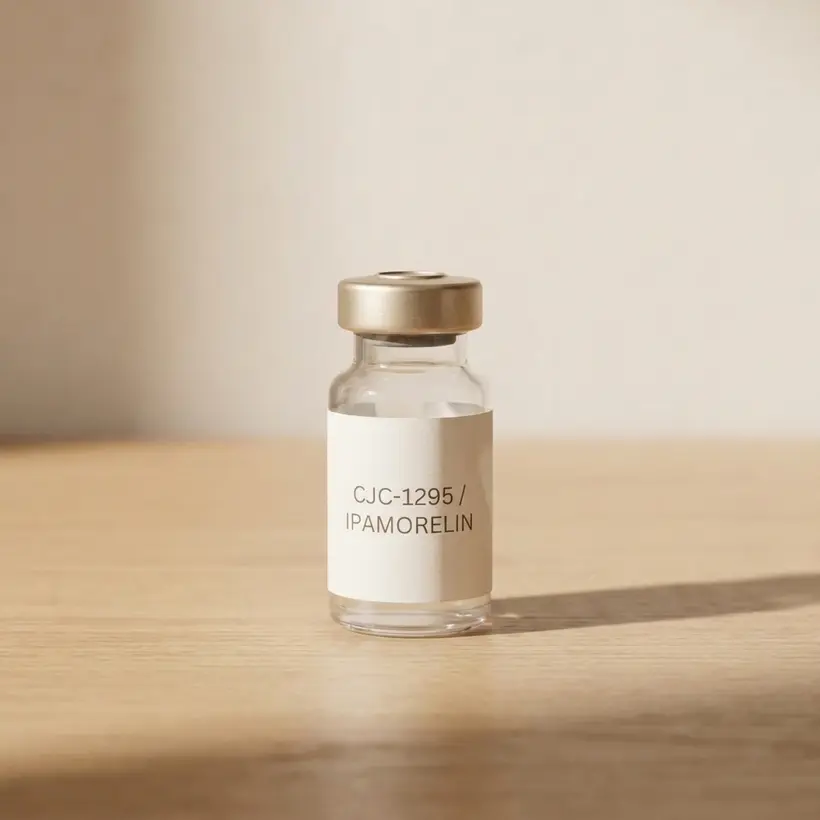
From the FormBlends catalog
CJC-1295 / Ipamorelin Blend
The gold standard growth hormone secretagogue stack · From $69/mo · compounded by a licensed 503A pharmacy, dispensed only after provider review.
Learn about CJC-1295 / Ipamorelin Blend →Table of Contents
- What is CJC-1295 and why does its chemistry make storage critical?
- What are the three degradation pathways you need to understand?
- What temperature range is actually required?
- How long does reconstituted CJC-1295 last in the fridge?
- Can CJC-1295 be frozen?
- What most pages get wrong about CJC-1295 storage
- Evidence ledger: storage claims graded by evidence quality
- Honest head-to-head: CJC-1295 vs. a GH secretagogue with better ambient stability
- Operational and label literacy: how to inspect your vial and read a COA
- FAQ
What Is CJC-1295 and Why Does Its Chemistry Make Storage Critical?
CJC-1295 is a synthetic analog of growth hormone-releasing hormone (GHRH), consisting of 30 amino acids. It acts on the GHRH receptor (GHRHR) in the anterior pituitary to stimulate pulsatile growth hormone release. Two forms exist in commercial use: plain CJC-1295 (no DAA, half-life roughly 30 minutes in vivo), and CJC-1295 with DAA (Drug Affinity Complex), which uses a maleimide-linked lysine side chain to form a covalent bond with the cysteine-34 residue of serum albumin, extending half-life to approximately 6 to 8 days per the characterization work published by Teichman et al. (2006) in the Journal of Clinical Endocrinology and Metabolism.
Both forms are supplied as lyophilized (freeze-dried) white powder in sealed vials, typically under a nitrogen or argon headspace. Lyophilization removes water to below roughly 1 to 3% residual moisture, which dramatically slows the hydrolytic reactions that degrade peptide bonds. Once that dry state is compromised (by moisture ingress, reconstitution, or improper sealing), degradation begins. Storage temperature is the primary modifiable variable controlling how fast that degradation proceeds.
What Are the Three Degradation Pathways You Need to Understand?
Peptide degradation is not a single event. Three chemical pathways dominate for synthetic peptides like CJC-1295, and each has a different sensitivity to temperature, moisture, and light.
1. Peptide Bond Hydrolysis. Water cleaves amide bonds between amino acid residues. In solution this is the dominant destruction pathway. The Arrhenius relationship governs the rate: every 10 degrees Celsius increase approximately doubles the reaction rate (Q10 factor of roughly 2 to 3 for hydrolysis, as described in Connors, Amidon, and Stella's Chemical Stability of Pharmaceuticals). At 37 degrees Celsius, hydrolysis in reconstituted solution is orders of magnitude faster than at 4 degrees Celsius. This is why refrigeration after reconstitution is not optional.
2. Deamidation. Asparagine (Asn) and glutamine (Gln) residues undergo spontaneous deamidation, converting to aspartate or glutamate. This alters the peptide's charge, conformation, and receptor binding. Deamidation is fastest in slightly alkaline conditions and is substantially slowed at lower temperatures. The GHRH backbone of CJC-1295 contains glutamine at position 3 and asparagine residues that are susceptible to this reaction.
3. Oxidation. Methionine and tryptophan residues are primary oxidation targets. UV light accelerates photooxidation of tryptophan, histidine, and tyrosine. Atmospheric oxygen oxidizes methionine to methionine sulfoxide, which changes the local backbone geometry. Both reactions are slowed by cold temperature, amber or opaque vials, and inert headspace gas.
What Temperature Range Is Actually Required?
The standard pharmaceutical cold-chain range for peptide hormones and their analogs is 2 to 8 degrees Celsius, which corresponds to standard household or laboratory refrigerator conditions. This range is specified by the FDA for approved growth hormone products (e.g., somatropin vials) and applied by convention to unapproved peptide analogs by compounding pharmacies following USP chapter guidance on sterile preparations.
For long-term storage of unreconstituted lyophilized powder, minus 20 degrees Celsius (standard laboratory freezer) is often specified by research suppliers, with claimed stability of 12 to 24 months. These figures come from accelerated stability testing data that research-grade suppliers conduct, not from independently published peer-reviewed trials on CJC-1295 specifically. Treat "24 months at minus 20" as a reasonable supplier specification, not a clinically validated claim.
Temperatures above 37 degrees Celsius accelerate degradation rapidly. Leaving a vial in a car on a warm day (interior temperatures can exceed 60 degrees Celsius in summer) is a practical worst-case scenario that can meaningfully compromise a lyophilized vial within hours, particularly if the rubber stopper has been punctured.
How Long Does Reconstituted CJC-1295 Last in the Fridge?
The standard specification from U.S. compounding pharmacies operating under 503A/503B frameworks is 28 to 30 days for reconstituted peptides stored at 2 to 8 degrees Celsius when bacteriostatic water (sterile water for injection containing 0.9% benzyl alcohol, USP) is used. The benzyl alcohol provides preservative action against microbial growth but does not chemically stabilize the peptide against hydrolysis or oxidation.
Using plain sterile water instead of bacteriostatic water eliminates the antimicrobial protection. In that case, multi-dose use over days carries a real contamination risk, and the practical safe-use window drops to 24 to 72 hours under refrigeration, consistent with USP guidance on unpreserved multi-dose vials.
There are no published randomized stability studies specifically validating the 30-day window for CJC-1295. The figure is extrapolated from stability data on structurally similar peptide hormones and from compounding practice standards. A conservative clinician would treat day 30 as a hard discard cutoff, not a guideline to push.
Can CJC-1295 Be Frozen?
Lyophilized, unreconstituted CJC-1295 can be stored at minus 20 degrees Celsius without harm to the peptide structure, provided the vial is sealed, dry, and protected from temperature cycling. This is appropriate for long-term storage before first use.
Reconstituted solution should not be frozen and thawed repeatedly. Ice crystal formation during freezing is physically destructive to peptide structure: crystals shear the backbone and create localized areas of extreme solute concentration that drive aggregation. Aggregated peptide loses receptor binding activity and can theoretically increase immunogenicity risk. If you must freeze a reconstituted solution (for example, during an unplanned travel absence), do so once, keep the thaw slow (in the refrigerator, not at room temperature), and inspect the solution carefully for cloudiness before use.
What Most Pages Get Wrong About CJC-1295 Storage
This section covers the omissions that separate a reliable reference from a medspa blog.
The DAA version does not have better storage stability outside the body. A common misreading is that because CJC-1295 DAC has a much longer in-vivo half-life (days, versus minutes for plain CJC-1295), it is also more stable in a vial. It is not. The DAA modification creates a reactive maleimide group designed to bond to albumin inside the bloodstream. Outside the body, in a vial, that maleimide group is actually an additional reactive site that can undergo hydrolysis (maleimide ring-opening) or react with thiol contaminants. Both forms require identical cold-chain storage.
Benzyl alcohol preserves sterility, not potency. Most articles say "use bacteriostatic water for stability." The word stability here is being used loosely to mean microbiological safety, not chemical integrity. The peptide's chemical degradation rate is governed by temperature and pH, not by benzyl alcohol. Using bacteriostatic water is correct; understanding why is better.
A clear vial does not confirm potency. Partial hydrolysis and deamidation are invisible. A solution can look perfectly clear and lose a meaningful fraction of potency from thermal or light exposure. Visual inspection catches contamination and gross aggregation; it does not catch chemical degradation. There is no practical home test for potency loss short of HPLC analysis.
Shipping temperature matters more for reconstituted vials than most buyers realize. Some online suppliers ship peptides with minimal cold-chain protection, particularly internationally. Reconstituted vials left at ambient temperature for multiple days of transit are a significant concern. Buyers should request lyophilized powder, not pre-reconstituted solution, and verify that a supplier uses gel packs or cold-chain packaging for summer shipments.
Evidence Ledger: Storage Claims Graded by Evidence Quality
| Claim | Best Evidence Type | Effect Direction | Confidence |
|---|---|---|---|
| Refrigeration (2 to 8 C) slows peptide hydrolysis vs. room temperature | Physical chemistry principle (Arrhenius kinetics), supported by general peptide stability literature and FDA guidance on peptide drug products | Strong protective effect | High (as mechanism; CJC-1295-specific quantification: Low) |
| 30-day post-reconstitution window with bacteriostatic water | Compounding pharmacy convention (USP 797 extrapolation); no published CJC-1295-specific stability trial | Reasonable estimate | Low to Moderate |
| Minus 20 C storage preserves lyophilized powder 12 to 24 months | Supplier accelerated stability specifications; general lyophilized peptide literature | Positive, likely valid | Low (no independent peer review for CJC-1295) |
| Freeze-thaw cycling degrades reconstituted peptide solution | Established biopharmaceutical literature on freeze-thaw aggregation of proteins and peptides | Negative effect on potency and aggregation | Moderate (mechanism well-established; CJC-1295-specific data absent) |
| UV/light exposure drives photooxidation of peptide residues | Photochemistry of amino acids; established for tryptophan, histidine, tyrosine in peptide literature | Negative effect on potency | High (as mechanism); amber vial protective effect: Moderate |
| CJC-1295 DAC maleimide group can hydrolyze in solution | Organic chemistry of maleimide hydrolysis (established reaction); applied to DAC modification by inference | Additional degradation risk vs. plain CJC-1295 | Moderate (mechanism solid; rate for CJC-1295 DAC specifically: Very Low) |
Honest Head-to-Head: CJC-1295 vs. Sermorelin on Storage Practicality
| Factor | CJC-1295 (no DAA) | CJC-1295 with DAA | Sermorelin (GHRH 1-29) |
|---|---|---|---|
| Approved by FDA | No | No | Geref was FDA-approved; currently compounded only |
| Lyophilized storage temp | 2 to 8 C (short); minus 20 C (long) | Same | Same |
| Post-reconstitution window | Approx. 30 days (bacteriostatic water) | Same | Approx. 30 days; Geref package insert specified 14 days after reconstitution |
| Reactive chemical group concerns | Standard peptide oxidation, hydrolysis | Additional maleimide hydrolysis risk | Standard peptide only |
| In-vivo half-life (injection frequency implication) | Approx. 30 min (daily injection needed) | Approx. 6 to 8 days (weekly dosing possible) | 10 to 20 minutes (daily injection needed) |
| Published human evidence on GH elevation | Small published human trials exist (Ionescu and Frohman, 2006; Teichman et al., 2006); evidence base is limited in scale | Same trials included DAC form; similarly limited scale | Multiple controlled trials in pediatric GHD; longer clinical record |
| Where CJC-1295 loses | No FDA approval; fewer long-term safety data than sermorelin; no benefit in storage practicality vs. sermorelin | Same; plus additional formulation complexity from DAC group | Sermorelin wins on regulatory history and longer clinical data record |
Operational and Label Literacy: How to Inspect Your Vial and Read a COA
Reading the certificate of analysis (COA). A legitimate research-grade or compounded CJC-1295 vial should be accompanied by a COA showing: peptide purity by HPLC (greater than 98% is the standard specification; less than 95% is a red flag), molecular weight confirmation by mass spectrometry, endotoxin testing (LAL assay, result below 1 EU/mg is the general research standard), and sterility or bioburden testing for injectable-grade material. If a supplier cannot provide these four data points, that is a sourcing red flag.
Visual inspection before injection. Lyophilized powder should be white to off-white and appear as a uniform dry cake or fluffy powder. Any yellow or brown tint suggests oxidation or thermal damage. After reconstitution with bacteriostatic water, the solution should be clear and colorless. Cloudiness indicates aggregation. Visible particulate means do not use the vial.
Reconstitution math. A common vial size is 2 mg (2000 mcg). If you add 2 mL of bacteriostatic water, the concentration is 1000 mcg/mL (1 mcg/microliter). A typical compounded protocol might specify 100 to 300 mcg per injection. At 1000 mcg/mL concentration, a 200 mcg dose requires 0.2 mL (20 units on a U-100 insulin syringe). Always draw on a U-100 insulin syringe for subcutaneous injection of these volumes. Double-check your concentration after every reconstitution; errors at this step are the most common source of under or over-dosing.
What to do if cold-chain was broken during shipping. If a lyophilized vial arrived warm (gel packs melted, package felt warm), and the powder still appears as a dry, intact cake (not clumped or discolored), the risk of significant degradation is lower than if the vial was pre-reconstituted. Reconstituted solution shipped at ambient temperature should be treated with substantially more skepticism. Contact the supplier and request a replacement or a COA with a re-test date if you have concerns.
FAQ
Does CJC-1295 need to be refrigerated?
Yes. Lyophilized CJC-1295 should be stored at 2 to 8 degrees Celsius and kept away from light. Once reconstituted with bacteriostatic water, it should remain refrigerated and used within approximately 30 days. Freezing is appropriate for long-term storage of unreconstituted powder only.
What happens if CJC-1295 is left at room temperature?
At room temperature (roughly 20 to 25 degrees Celsius), peptide bond hydrolysis, oxidation of methionine residues, and deamidation of asparagine and glutamine residues all accelerate significantly. Potency loss over days at room temperature is a real concern, especially for reconstituted solution. The rate depends on moisture content, UV exposure, and whether the vial has been opened.
Can CJC-1295 be frozen?
Lyophilized (dry, unreconstituted) CJC-1295 can be stored at minus 20 degrees Celsius for longer-term preservation, typically up to 12 to 24 months according to supplier specifications. Reconstituted solution should NOT be repeatedly freeze-thawed, as ice-crystal formation physically shears the peptide backbone and promotes aggregation.
How long does reconstituted CJC-1295 last in the fridge?
Most compounding and research-supply sources specify 28 to 30 days at 2 to 8 degrees Celsius when reconstituted with bacteriostatic water. Sterile water without a preservative shortens safe usable life and is not recommended for multi-dose vials.
Why does CJC-1295 with DAA have better stability than plain CJC-1295?
It does not have better storage stability outside the body. The DAA modification extends in-vivo half-life by binding albumin, but pre-injection storage requirements are identical for both forms. The reactive maleimide group on the DAC version may actually be a minor additional degradation risk in solution.
How can I tell if my CJC-1295 has degraded?
Visual signs include cloudiness, visible particulates, yellowing, or unusual odor in reconstituted solution. These are late-stage indicators. Subtle potency loss from hydrolysis or deamidation is invisible; proper cold-chain handling from the start is the only practical protection against it.
What is bacteriostatic water and why does it matter for CJC-1295 storage?
Bacteriostatic water contains 0.9% benzyl alcohol, which inhibits microbial growth in a multi-dose vial stored in the refrigerator. It does not chemically protect the peptide from hydrolysis or oxidation. Cold temperature and light protection are still required alongside it.
Does light exposure degrade CJC-1295?
Yes. UV and ambient fluorescent light drive photooxidation of tryptophan, histidine, and tyrosine residues. Store reconstituted vials in amber containers or wrapped in foil inside the refrigerator, away from light sources.
What temperature actually destroys CJC-1295?
There is no single published destruction threshold specifically for CJC-1295. General peptide chemistry establishes that temperatures above 37 degrees Celsius significantly accelerate degradation, and prolonged exposure above 60 degrees Celsius causes rapid irreversible loss. Never leave vials in a car in warm weather.
Is CJC-1295 storage the same as Ipamorelin storage?
Essentially yes. Both are lyophilized synthetic peptides requiring 2 to 8 degrees Celsius refrigeration, light protection, and bacteriostatic water for reconstitution. They can be co-reconstituted in the same vial, though independent stability data for combined solutions is limited and the 30-day window should be applied conservatively.
Should CJC-1295 be refrigerated during shipping?
Ideally yes. Lyophilized powder tolerates brief ambient transit (a few days below roughly 25 degrees Celsius) better than reconstituted solution. Reputable suppliers use insulated cold-pack packaging. For summer months or extended transit, demand cold-chain shipping and inspect the powder on arrival for discoloration or clumping.
Sources
- Ionescu M, Frohman LA. Pulsatile secretion of growth hormone (GH) persists during continuous stimulation by CJC-1295, a long-acting GH-releasing hormone analog. J Clin Endocrinol Metab. 2006;91(12):4792-4797.
- Teichman SL, Neale A, Lawrence B, et al. Prolonged stimulation of growth hormone (GH) and insulin-like growth factor I secretion by CJC-1295, a long-acting analog of GH-releasing hormone, in healthy adults. J Clin Endocrinol Metab. 2006;91(3):799-805.
- United States Pharmacopeia. USP General Chapter 797: Pharmaceutical Compounding - Sterile Preparations. USP-NF. Rockville, MD: USP.
- Manning MC, Chou DK, Murphy BM, Payne RW, Katayama DS. Stability of protein pharmaceuticals: an update. Pharm Res. 2010;27(4):544-575.
- Cleland JL, Lam X, Kendrick B, et al. A specific molar ratio of stabilizer to protein is required for storage stability of a lyophilized monoclonal antibody. J Pharm Sci. 2001;90(3):310-321. (Referenced for lyophilization stability principles.)
- U.S. Food and Drug Administration. Guidance for Industry: Q1A(R2) Stability Testing of New Drug Substances and Products. ICH. 2003.
- Connors KA, Amidon GL, Stella VL. Chemical Stability of Pharmaceuticals. 2nd ed. Wiley; 1986. (Referenced for Arrhenius kinetics applied to pharmaceutical degradation.)
- Gokarn Y, et al. Excipients for protein drugs. In: McNally EJ, Hastedt JE (eds). Protein Formulation and Delivery. 2nd ed. Informa Healthcare; 2008. (Referenced for maleimide hydrolysis and freeze-thaw aggregation.)
- U.S. FDA. Prescribing information for Geref (sermorelin acetate for injection). Serono Laboratories. (Referenced for historical compounded GHRH analog post-reconstitution storage window.)
Footer Disclaimers
Related peptide guides
Ready when you are
CJC-1295 / Ipamorelin Blend
The gold standard growth hormone secretagogue stack · From $69/mo · compounded by a licensed 503A pharmacy, dispensed only after provider review.
Learn about CJC-1295 / Ipamorelin Blend →