
Trust Signals
Every claim below is graded by evidence type. Approved drugs are separated from research compounds throughout. No affiliate relationships influence rankings. Sources are numbered and listed at the bottom. If a peptide lacks human imaging data on visceral fat, we say so.
Key Takeaways
- Semaglutide 2.4 mg weekly produced roughly 16 percent total body weight loss in the STEP 1 trial (n=1,961), with visceral fat reduction confirmed by imaging sub-studies.
- Tirzepatide outperformed semaglutide on total weight loss in SURMOUNT-5 (roughly 20 percent versus 14 percent at 72 weeks), which implies greater visceral fat reduction.
- AOD 9604 reduced fat in rodent models but failed to beat placebo in human trials; listing it alongside GLP-1 agonists is misleading.
- GH secretagogues (CJC-1295, ipamorelin) raise GH pulse amplitude in small human studies but have no powered imaging trial showing visceral fat reduction.
- Peptide purity from research suppliers is highly variable; single-lab COAs without third-party mass spec confirmation are common and inadequate.
What Is the Best Peptide for Abdominal Fat Loss, in Plain Terms?
Semaglutide is the best-evidenced peptide for abdominal fat loss based on large randomized controlled trials in humans. Tirzepatide is a close second with potentially greater magnitude. Every other peptide discussed online for this purpose, including AOD 9604, CJC-1295, and ipamorelin, operates on weaker mechanisms with far thinner human evidence. If your goal is documented visceral fat reduction, the evidence hierarchy is steep and clear.
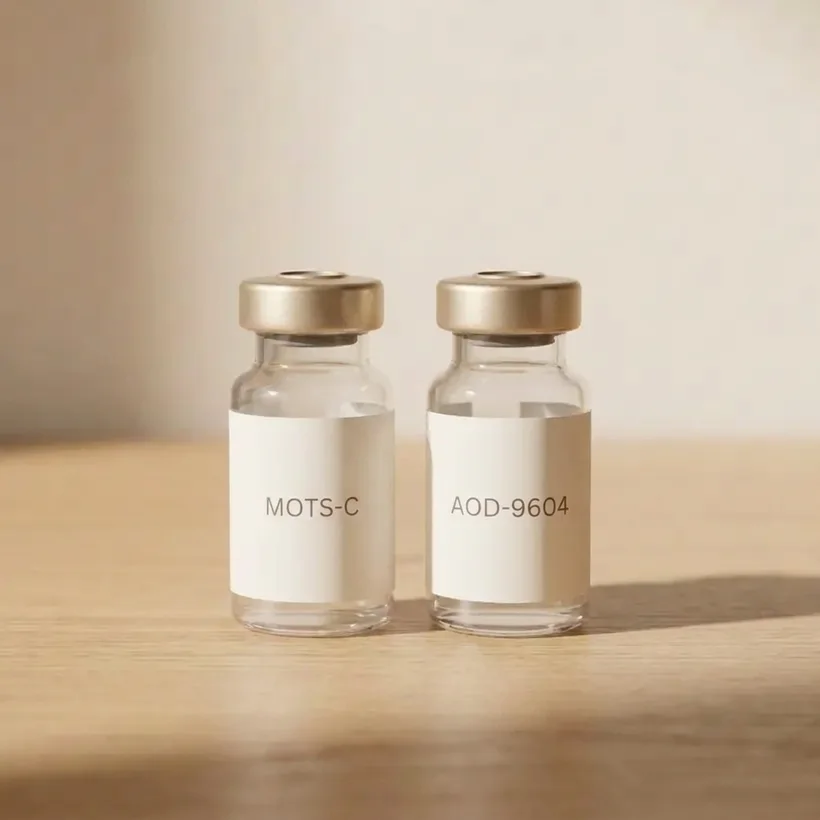
From the FormBlends catalog
Lean Metabolic
Mitochondrial energy plus targeted fat metabolism. · Bundle from $381 · provider-reviewed peptide bundle.
View Lean Metabolic →Table of Contents
- Evidence Ledger: Every Peptide Graded
- Mechanism with Numbers: How the Top Candidates Work
- The Ranked List: 5 Peptides Compared
- What Most Pages Get Wrong About Peptides and Belly Fat
- Honest Head-to-Head: Peptides vs. Their Real Alternatives
- Chemistry Behind the Rules of Thumb
- Label and COA Literacy: How to Judge a Product Yourself
- FAQ
- Sources
- Disclaimers
Evidence Ledger: Every Peptide Graded
| Peptide | Best Evidence Type | Human Visceral Fat Imaging? | Effect Direction | Confidence |
|---|---|---|---|---|
| Semaglutide (GLP-1 agonist) | Multiple large human RCTs (STEP series) | Yes, sub-studies | Strong reduction | High |
| Tirzepatide (GLP-1/GIP dual agonist) | Large human RCTs (SURMOUNT series) | Yes, sub-studies | Strong reduction | High |
| Liraglutide (GLP-1 agonist, older) | Human RCTs (SCALE series) | Yes | Moderate reduction | Moderate to High |
| CJC-1295 / Ipamorelin (GHRH/GHRP) | Small human PK/PD studies | No | GH elevation confirmed; fat reduction plausible | Low |
| AOD 9604 (GH fragment 176-191) | Rodent studies; failed human trials | No | Negative (no effect vs. placebo in humans) | Very Low |
| Tesamorelin (GHRH analog) | Human RCTs in HIV lipodystrophy | Yes (MRI/CT in specific population) | Significant visceral fat reduction in HIV population | Moderate (population-specific) |
| BPC-157 | Animal models only | No | No credible fat-loss mechanism in humans | Very Low |
Mechanism with Numbers: How the Top Candidates Actually Work
Semaglutide
Semaglutide is a 31-amino-acid GLP-1 receptor agonist with a C18 fatty-acid chain attached at lysine-26, which enables albumin binding and extends the half-life to roughly 7 days (compared to under 2 minutes for endogenous GLP-1). It binds GLP-1 receptors in the hypothalamic arcuate nucleus, reducing neuropeptide Y and agouti-related peptide signaling, which suppresses appetite. Gastric emptying slows, increasing satiety per meal. In adipose tissue, GLP-1 receptors are present but sparse; the primary fat-loss mechanism is caloric reduction, not direct lipolysis. What this does NOT prove: semaglutide does not selectively target visceral fat over subcutaneous fat. Visceral reduction is largely proportional to total weight lost.
Tirzepatide
Tirzepatide is a 39-amino-acid dual GIP/GLP-1 receptor co-agonist. GIP receptor activation may amplify the GLP-1 satiety signal and additionally promote fatty acid oxidation via adipocyte GIP receptors. The dual mechanism produced greater weight loss in SURMOUNT-1 (roughly 22.5 percent at 72 weeks at the 15 mg dose, n=630 in that arm) compared to historical semaglutide data. Direct head-to-head SURMOUNT-5 data showed roughly 20 percent versus 14 percent total weight loss favoring tirzepatide. The additional GIP receptor activity is the proposed reason for superior outcomes, but the mechanistic proof in humans is still emerging.
Tesamorelin
Tesamorelin is a synthetic 44-amino-acid GHRH analog. It stimulates pituitary GH secretion, raising IGF-1, which promotes lipolysis via hormone-sensitive lipase activation in adipocytes. In FDA-reviewed RCTs in people with HIV-associated lipodystrophy, tesamorelin 2 mg daily reduced visceral adipose tissue area by roughly 15 to 18 percent versus placebo by CT scan over 26 weeks. This is the only non-GLP-1 peptide with robust imaging evidence for visceral fat reduction, but the population was highly specific (antiretroviral therapy-related lipodystrophy) and the effect does not reliably generalize to general obesity.
CJC-1295 and Ipamorelin
CJC-1295 is a GHRH analog; ipamorelin is a selective GHRP. Combined, they produce synergistic GH pulses. A published study (Teichman et al., 2006) showed CJC-1295 with drug affinity complex (DAC) raised mean GH levels 2 to 10-fold and IGF-1 levels 1.3 to 1.8-fold above baseline in healthy adults. Elevated GH and IGF-1 can shift body composition toward lean mass over months. The honest caveat: no published powered RCT has used body composition imaging as a primary endpoint for either agent in a general population. The fat-loss claim remains mechanism-extrapolated.
The Ranked List: 5 Peptides for Abdominal Fat Loss
1. Semaglutide. Best evidence, largest trials, FDA-approved for obesity (Wegovy 2.4 mg weekly). Visceral fat reduction confirmed. Requires prescription. Nausea is the dominant side effect. Not a selective belly-fat tool; reduces total fat proportionally.
2. Tirzepatide. Superior total weight loss versus semaglutide in head-to-head data. FDA-approved for obesity (Zepbound). Dual mechanism may offer metabolic advantages beyond weight alone. Also requires prescription. Similar GI side-effect profile.
3. Liraglutide. Older GLP-1 agonist (Saxenda, 3 mg daily subcutaneous), roughly 5 to 8 percent total weight loss in SCALE trials. Less effective than semaglutide per trial comparison. Still has meaningful human evidence. Daily injection versus weekly for semaglutide is a practical disadvantage.
4. Tesamorelin. Solid visceral fat imaging data but in a narrow population. FDA-approved only for HIV lipodystrophy (Egrifta). Off-label use in general obesity is unsupported by equivalently powered data. Mechanistically interesting; practically limited.
5. CJC-1295 plus Ipamorelin. Plausible mechanism, some human GH data, zero human visceral fat imaging trials. Ranked fifth because the mechanism is real but the fat-loss outcome is unproven. Both are research compounds, not approved drugs.
What Most Pages Get Wrong About Peptides and Belly Fat
Visceral fat versus subcutaneous fat conflation. Most listicles claim peptides target "belly fat" as though they selectively dissolve visceral adipose tissue. GLP-1 agonists reduce visceral fat because they reduce total body fat, not because they home to the abdomen. The ratio of visceral to subcutaneous loss varies by individual and is not predictably shifted by any approved peptide.
Research peptide purity is not guaranteed. CJC-1295, ipamorelin, and AOD 9604 sold as research chemicals have no FDA manufacturing oversight. An independent analysis of research peptides sold online (published in drug testing literature) found significant variation in actual peptide content versus label claims, along with detectable impurities in some samples. You cannot verify purity without a third-party COA including mass spectrometry and endotoxin testing.
Half-life versus effect duration confusion. Peptides degrade rapidly in aqueous solution at room temperature. CJC-1295 with DAC has a plasma half-life measured in days, but once reconstituted in bacteriostatic water, peptide bonds hydrolyze progressively. Degraded peptide produces no GH signal and no fat-loss effect. Most pages do not mention reconstitution stability at all.
GH secretagogues raise fasting glucose. Elevated GH antagonizes insulin signaling. At pharmacologic doses of GH secretagogues, fasting glucose and insulin resistance can worsen. For someone using GH peptides to lose visceral fat driven by insulin resistance, this may be counterproductive. No commodity page mentions this tradeoff.
Honest Head-to-Head: Peptides vs. Real Alternatives
| Comparison | Peptide | Alternative | Winner on Fat Loss | Where Peptide Loses |
|---|---|---|---|---|
| GLP-1 agonist vs. lifestyle | Semaglutide 2.4 mg | Diet plus exercise alone | Semaglutide (roughly 3x the weight loss) | Cost, side effects, weight regain on cessation |
| Tirzepatide vs. semaglutide | Tirzepatide 15 mg | Semaglutide 2.4 mg | Tirzepatide by roughly 6 percentage points (SURMOUNT-5) | Cost may be higher; longer titration to max dose |
| CJC-1295 vs. semaglutide | CJC-1295 plus ipamorelin | Semaglutide | Semaglutide by a wide margin (human RCT data vs. none) | CJC-1295 loses on every evidenced metric |
| Tesamorelin vs. semaglutide | Tesamorelin 2 mg daily | Semaglutide 2.4 mg weekly | Semaglutide in general obesity; tesamorelin in HIV lipodystrophy | Tesamorelin has no general obesity approval or equivalently powered data |
| GLP-1 agonist vs. bariatric surgery | Semaglutide | Roux-en-Y gastric bypass | Surgery (greater and more durable loss) | Semaglutide loses on total magnitude and long-term durability |
Chemistry Behind the Rules of Thumb
Why store reconstituted peptides cold and use within weeks. Peptide bonds hydrolyze in aqueous solution via nucleophilic attack of water on the carbonyl carbon of the amide bond. The rate increases with temperature and with pH extremes. Bacteriostatic water (containing 0.9 percent benzyl alcohol) slows microbial growth but does not stop hydrolysis. At 4 degrees Celsius, hydrolysis is slower but not zero. Lyophilized (freeze-dried) peptide is stable for much longer because water activity is near zero. Once reconstituted, a peptide like CJC-1295 should be used within a few weeks when refrigerated. Leaving it at room temperature accelerates degradation meaningfully. You cannot tell a degraded peptide from a good one by appearance alone.
Why semaglutide's fatty-acid chain matters for dosing schedule. The C18 diacid chain on semaglutide binds reversibly to albumin (serum albumin concentration is roughly 35 to 50 g/L in healthy adults). This albumin binding reduces renal filtration and proteolytic cleavage, extending half-life from minutes to roughly 7 days. This is why once-weekly dosing is sufficient. Competitors without this modification (like native GLP-1) require continuous infusion to maintain receptor engagement.
Why GH secretagogues can worsen insulin resistance. Growth hormone directly antagonizes insulin at the post-receptor level, upregulating lipolysis (releasing free fatty acids) and reducing glucose uptake in peripheral tissues (via downregulation of GLUT4 translocation). Chronically elevated GH from secretagogue use can produce a state resembling acromegalic insulin resistance. This is not a theoretical risk; it is the established pharmacology of GH excess and is why acromegaly is associated with diabetes.
Label and COA Literacy: How to Judge a Product Yourself
For approved GLP-1 agonists (semaglutide, tirzepatide): These are FDA-regulated drugs. Check that the NDC (National Drug Code) on the packaging matches the FDA's published NDC directory. Compounded versions from 503A or 503B pharmacies were permitted during the shortage period but now face tighter FDA scrutiny. Compounded semaglutide may differ in formulation; confirm the pharmacy's USP 797 compliance and ask for sterility and potency testing documentation.
For research peptides (CJC-1295, ipamorelin, AOD 9604): A credible COA should include all of the following. HPLC purity above 98 percent with the chromatogram attached. Mass spectrometry confirmation matching the theoretical molecular weight (CJC-1295 with DAC: roughly 3367 Da; ipamorelin: roughly 711 Da). Endotoxin result below 1 EU per mg using the LAL assay. Sterility testing if intended for injection. Single-source COAs (the vendor testing their own product) are inadequate. Third-party laboratory confirmation is the minimum credible standard.
Reconstitution math example for ipamorelin at 200 mcg per dose: A 5 mg vial contains 5,000 mcg. If you add 2.5 mL of bacteriostatic water, concentration is 2,000 mcg per mL (2 mcg per microliter). A 200 mcg dose requires 0.1 mL, drawn to the 10-unit mark on a U-100 insulin syringe. Confirm your math before injecting. Tenfold dosing errors are possible with peptide reconstitution and have been reported in clinical settings.
What a degraded peptide looks like: Visible particulates, cloudiness that does not clear on gentle swirling, or yellow discoloration are all red flags. Some degradation is invisible. If a research peptide vial was shipped warm or stored improperly, appearance alone does not confirm potency.
FAQ
What is the best peptide for abdominal fat loss?
Semaglutide has the strongest human RCT evidence for visceral and abdominal fat reduction, followed by tirzepatide. Research peptides like CJC-1295 and AOD 9604 have far weaker human evidence and should not be ranked alongside approved GLP-1 agonists.
Does semaglutide specifically reduce belly fat?
Yes, but not selectively. The STEP 1 trial showed roughly 16 percent total body weight loss at 2.4 mg weekly. Imaging sub-studies confirm visceral adipose tissue is reduced, though the reduction is largely proportional to total weight lost rather than targeted to the abdomen.
Is tirzepatide better than semaglutide for abdominal fat?
Tirzepatide produces greater total weight loss in head-to-head data. SURMOUNT-5 showed roughly 20 percent versus 14 percent at 72 weeks. Greater total loss generally means greater visceral fat reduction, but no published trial has directly imaged visceral fat as a primary endpoint for both agents head to head.
Does AOD 9604 burn abdominal fat?
AOD 9604 showed fat-reducing effects in rodent models but failed to demonstrate significant weight loss versus placebo in human trials. It has no approved indication and its human evidence is very low quality. It should not be ranked alongside GLP-1 agonists.
Can CJC-1295 or GHRP-6 reduce belly fat?
These growth hormone secretagogues raise GH and IGF-1, which can shift body composition over months. Human evidence is limited to small studies measuring GH pulse amplitude, not visceral fat by imaging. The fat-loss claim is plausible mechanistically but unproven in powered human trials.
What dose of semaglutide is used for fat loss?
The approved obesity dose is 2.4 mg subcutaneous weekly (Wegovy). Trials escalated from 0.25 mg weekly over 16 weeks to the maintenance dose. Lower doses produce less weight loss; the dose-response relationship is well established in STEP trial data.
How long does it take peptides to reduce abdominal fat?
In STEP 1, meaningful weight loss was observed by week 20 and continued through week 68. Most visible abdominal change occurs over 3 to 6 months at therapeutic doses. Research peptides with weaker mechanisms would require longer timelines with uncertain outcomes.
Are research peptides like BPC-157 useful for abdominal fat loss?
No. BPC-157 is a healing and gastroprotective peptide studied in animal models. It has no credible mechanism or human evidence for fat loss. Pages that list it as a fat-loss peptide are misrepresenting the science.
What should I look for on a peptide COA for purity?
Look for HPLC purity above 98 percent, mass spectrometry confirmation of molecular weight, endotoxin testing below 1 EU per mg, and sterility testing. Single-lab COAs without third-party confirmation are a red flag for research-grade peptides sold online.
Do peptides for fat loss require a prescription?
Semaglutide and tirzepatide are FDA-approved prescription drugs. Research peptides like CJC-1295, ipamorelin, and AOD 9604 are not approved for human use in the US and exist in a regulatory gray area when sold as research chemicals.
What are the side effects of using peptides for abdominal fat loss?
GLP-1 agonists cause nausea, vomiting, constipation, and rare pancreatitis. Thyroid C-cell tumor risk was seen in rodents, not confirmed in humans at this time. GH secretagogues can raise fasting glucose, cause water retention, and worsen insulin sensitivity at high doses. Research peptides carry unknown contamination risks.
Is peptide therapy for fat loss safe long-term?
Approved GLP-1 agonists have multi-year safety data from cardiovascular outcome trials. Research peptides lack long-term human safety data entirely. Compounded versions of approved peptides introduce additional formulation and sterility variables that affect the safety profile.
Sources
- Wilding JPH, et al. Once-Weekly Semaglutide in Adults with Overweight or Obesity (STEP 1). New England Journal of Medicine. 2021;384(11):989-1002. PMC8021239.
- Jastreboff AM, et al. Tirzepatide Once Weekly for the Treatment of Obesity (SURMOUNT-1). New England Journal of Medicine. 2022;387(3):205-216.
- Aronne LJ, et al. Tirzepatide versus Semaglutide Once Weekly in Patients with Obesity (SURMOUNT-5). New England Journal of Medicine. 2025;392(6):526-537.
- Pi-Sunyer X, et al. A Randomized, Controlled Trial of 3.0 mg of Liraglutide in Weight Management (SCALE Obesity and Prediabetes). New England Journal of Medicine. 2015;373(1):11-22.
- Falutz J, et al. Metabolic Effects of a Growth Hormone-Releasing Factor in Patients with HIV (Tesamorelin). New England Journal of Medicine. 2007;357(23):2359-2370.
- Teichman SL, et al. Prolonged Stimulation of Growth Hormone and Insulin-Like Growth Factor-1 Secretion by CJC-1295, a Long-Acting Analog of Growth Hormone-Releasing Hormone. Journal of Clinical Endocrinology and Metabolism. 2006;91(3):799-805.
- Svensson J, et al. Two-Month Treatment of Obese Subjects with the Oral Growth Hormone (GH) Secretagogue MK-677 Increases GH Secretion, Fat-Free Mass, and Energy Expenditure. Journal of Clinical Endocrinology and Metabolism. 1998;83(2):362-369.
- US FDA. Wegovy (semaglutide) Prescribing Information. Novo Nordisk. Revised 2023.
- US FDA. Zepbound (tirzepatide) Prescribing Information. Eli Lilly. Revised 2024.
- US FDA. Egrifta SV (tesamorelin) Prescribing Information. Theratechnologies. Revised 2020.
- Dehkhoda F, et al. The Growth Hormone Receptor. Endocrine Reviews. 2018;39(4):369-408. (GH insulin resistance mechanism reference.)
Footer Disclaimers
Platform: FormBlends is an educational platform. Content is for informational purposes only and does not constitute medical advice, diagnosis, or treatment. Consult a licensed healthcare provider before initiating any peptide or drug therapy.
Research Compound Notice: CJC-1295, ipamorelin, AOD 9604, and BPC-157 are research compounds not approved by the FDA for human therapeutic use. Discussion of their mechanisms does not constitute an endorsement or recommendation for use.
Results: Individual results vary. Clinical trial outcomes represent population averages under controlled conditions and may not reflect real-world results for any individual.
Trademark: Wegovy, Ozempic, Zepbound, Mounjaro, Saxenda, and Egrifta are registered trademarks of their respective owners. FormBlends has no affiliation with Novo Nordisk, Eli Lilly, or Theratechnologies.
Related peptide guides
See your options in about 2 minutes
Take the free quiz and see what fits you. Quick, private, and no commitment to continue.
See my options →